

Irish surnames from Offaly carry the weight of ancient kings and scholars. County Offaly sits at the heart of Ireland, home to the O’Carroll dynasty, one of the mightiest Gaelic families in Leinster. The ancient monastery at Clonmacnoise stands on the Shannon in its western reaches. Carroll, Molloy, Egan, MacCoghlan, Dempsey — these names trace back to kings, lawyers, and warriors who shaped this island’s story. If your family carries an Offaly name, you carry a very old story.
Free Irish ancestry tool ☘️
Have an Irish surname? Find your ancestral Irish county — we’ll trace your name to where the family originated, with a short note on its history.
Irish Surnames from Offaly: The Territory of Ely O’Carroll
County Offaly was once part of Leinster’s great Gaelic heartland. The O’Carroll kings ruled a territory called Ely O’Carroll. In Irish, this was Éile Uí Chearbhaill. It covered most of modern County Offaly and stretched into north County Tipperary.
Ely was one of the oldest kingdoms in the midlands. The O’Carrolls held it as lords from early Christian times until the seventeenth century. Their main seat was at Birr, known in Irish as Biorra. The town sits near the meeting point of Offaly, Tipperary, and Galway.
Other Gaelic families held territories within Offaly. The Molloys ruled Fircall in the northwest. The MacCoghlans held Delvin MacCoghlan in the north. The Egans served as hereditary lawyers across the county. These families made Offaly a place of deep Gaelic culture and learning.
The Plantation of Leinster in the 1620s changed everything. English and Scottish settlers took land. The old Gaelic families lost their estates. Many stayed on as tenants on land they had once owned outright. Their surnames survived even when their land did not.
If you are tracing your roots, our guide to tracing your Irish ancestry covers every archive and database you need.
O’Carroll – Ó Cearbhaill: Kings of Ely O’Carroll
O’Carroll is the most powerful name in County Offaly’s history. The Gaelic form is Ó Cearbhaill — descendant of Cearbhall. The name Cearbhall meant fierce in battle. It described a warrior who fought without giving ground.
The O’Carrolls ruled Ely O’Carroll for centuries. Their seat was at Birr. They were Lords of Ely, one of the most important Gaelic lordships in Leinster. At their height, they stood among the most powerful families in the province.
The O’Carrolls built Leap Castle in the fifteenth century. The castle stands near Coolderry in County Offaly. It became the centre of their power in the south of the county. Today Leap Castle is one of Ireland’s most visited heritage sites.
The O’Carrolls were patrons of the Church. They supported Clonmacnoise and other monasteries throughout the county. Several members of the family are buried at Clonmacnoise, one of Ireland’s most sacred early Christian sites.
The family declined after the Plantation. Some went into exile in Europe as soldiers. Their descendants now carry the name Carroll in every English-speaking country. Carroll is one of the most common Irish-origin surnames in the United States today.
Molloy – Ó Maolmhuaidh: Lords of Fircall
Molloy is one of the most distinctly Offaly surnames in Ireland. The Gaelic form is Ó Maolmhuaidh — descendant of Maolmhuadh. The name meant noble chief. It described a leader who commanded respect by right of birth.
The Molloy sept ruled Fircall. Fircall covered the area around Kilcormac in northwest County Offaly. They held this land for centuries before the Plantation broke the Gaelic order in the midlands.
The Molloys resisted outside pressure for generations. They were a proud and independent sept. But they lost most of their land in the seventeenth century, like most Gaelic families across the county.
Today the name Molloy is common across County Offaly and the wider midlands. Large Molloy families settled in Boston and Chicago after the Famine. The name is well established in the Irish-American community.
Egan – Ó hAodhagáin: The Hereditary Lawyers
Egan is one of Ireland’s most learned surnames. The Gaelic form is Ó hAodhagáin — descendant of Aodhagán. The name comes from a short form of Aodh, meaning fire. Aodh was one of the most popular personal names in early medieval Ireland.
The Egan sept had territory near Shinrone in south County Offaly. They served as hereditary Brehon lawyers to the O’Carrolls and other powerful Offaly families. Brehon lawyers were the legal scholars of Gaelic Ireland. They kept the laws, settled disputes, and preserved legal tradition for the entire community.
The role of Brehon lawyer was hereditary. It passed from father to son for generations. The Egans held this role for centuries. They had a unique standing in Offaly society because of their learning and legal knowledge.
The Brehon law system ended in the seventeenth century when English common law replaced it. But the Egan families remained in County Offaly. The name is found across the midlands today and among Irish communities in Australia and North America.
☘️ Enjoying this? 65,000 Ireland lovers get stories like this every week.
Thinking about it for retirement?
If you’ve started thinking seriously about retiring there, our complete our full Retire in Ireland guide covers the visa, healthcare, cost-of-living, and the regions worth shortlisting.
Subscribe free →
MacCoghlan – Mac Cochláin: Lords of Delvin MacCoghlan
MacCoghlan is one of the most distinctly Offaly Gaelic surnames. The Gaelic form is Mac Cochláin — son of Cochlán. The exact meaning is uncertain. Cochlán may come from cochall, the Irish word for cloak or hood.
The MacCoghlans ruled Delvin MacCoghlan, a territory in north County Offaly. This area lay around Ferbane, on the banks of the River Shannon. They held this land from the early medieval period until the seventeenth century.
The MacCoghlans were major players in Offaly politics. They were allies of the O’Carrolls at times and rivals at others. They kept their Gaelic identity until the Plantation finally ended their lordship over the territory.
The name appears in several forms today. Coghlan, Coughlan, and MacCoghlan all trace back to the same Offaly sept. The name is most common in County Offaly and County Cork today.
Dempsey – Ó Díomasaigh: Lords of Clanmalier
Dempsey carries a strong sense of pride. The Gaelic form is Ó Díomasaigh — descendant of Díomasach. The name meant the proud one. It described someone who held themselves with dignity and did not bend to others easily.
The Dempsey sept ruled Clanmalier. Clanmalier lay on the border between County Offaly and County Laois. Their lands ran east towards the Slieve Bloom Mountains. It was rough, defendable terrain that they used well.
The Dempseys were fierce defenders of their territory. They fought against both Gaelic rivals and Norman settlers for generations. They kept power longer than many Leinster families because of their strong position on the border.
The family scattered after the Plantation. Many settled in different parts of the midlands and across Leinster. The Dempsey name is now found across Ireland and in large numbers in the United States.
How Offaly Surnames Crossed the Atlantic
County Offaly sits in the midlands, far from the main emigration ports. But its people left in large numbers, especially during the Great Famine of 1845 to 1852.
Most left through Dublin or Drogheda. They crossed to Liverpool and boarded ships for New York or Boston. Carroll, Molloy, Egan, and MacCoghlan families appear in early records of Irish communities in American cities.
An earlier wave left after the Williamite Wars at the end of the seventeenth century. Offaly Catholic families joined the Flight of the Wild Geese. They served as soldiers in France and Spain. Several Offaly officers rose to senior rank in European armies.
The Pennsylvania coalfields drew many midland Irish families in the nineteenth century. Offaly surnames appear in the mining towns of eastern Pennsylvania alongside families from Clare, Kilkenny, and Tipperary.
Their descendants now number in the millions. Offaly is a small county. But its surnames are spread across the English-speaking world.
Our Irish heritage trip planning guide explains how to visit your ancestral county in person.
How to Trace Your Offaly Ancestry
Offaly History Research Centre
Offaly History is based in Tullamore. The centre holds genealogical records for County Offaly. Their database links to the national network at rootsireland.ie. It is the best starting point for anyone researching an Offaly family.
Offaly County Archive
The Offaly County Archive in Tullamore holds estate papers, land records, and local government documents. This is a good starting point for families from the tenant farmer class who lost land during the Plantation era.
Griffith’s Valuation and Census Records
Griffith’s Valuation listed every landholder in County Offaly in the 1850s. You can search it free at askaboutireland.ie. The 1901 and 1911 census returns are fully searchable at census.nationalarchives.ie. These are the best starting points for Famine-era research.
For a full step-by-step guide, see our guide to tracing your Irish ancestry.
Where to Visit in Offaly to Connect with Your Heritage
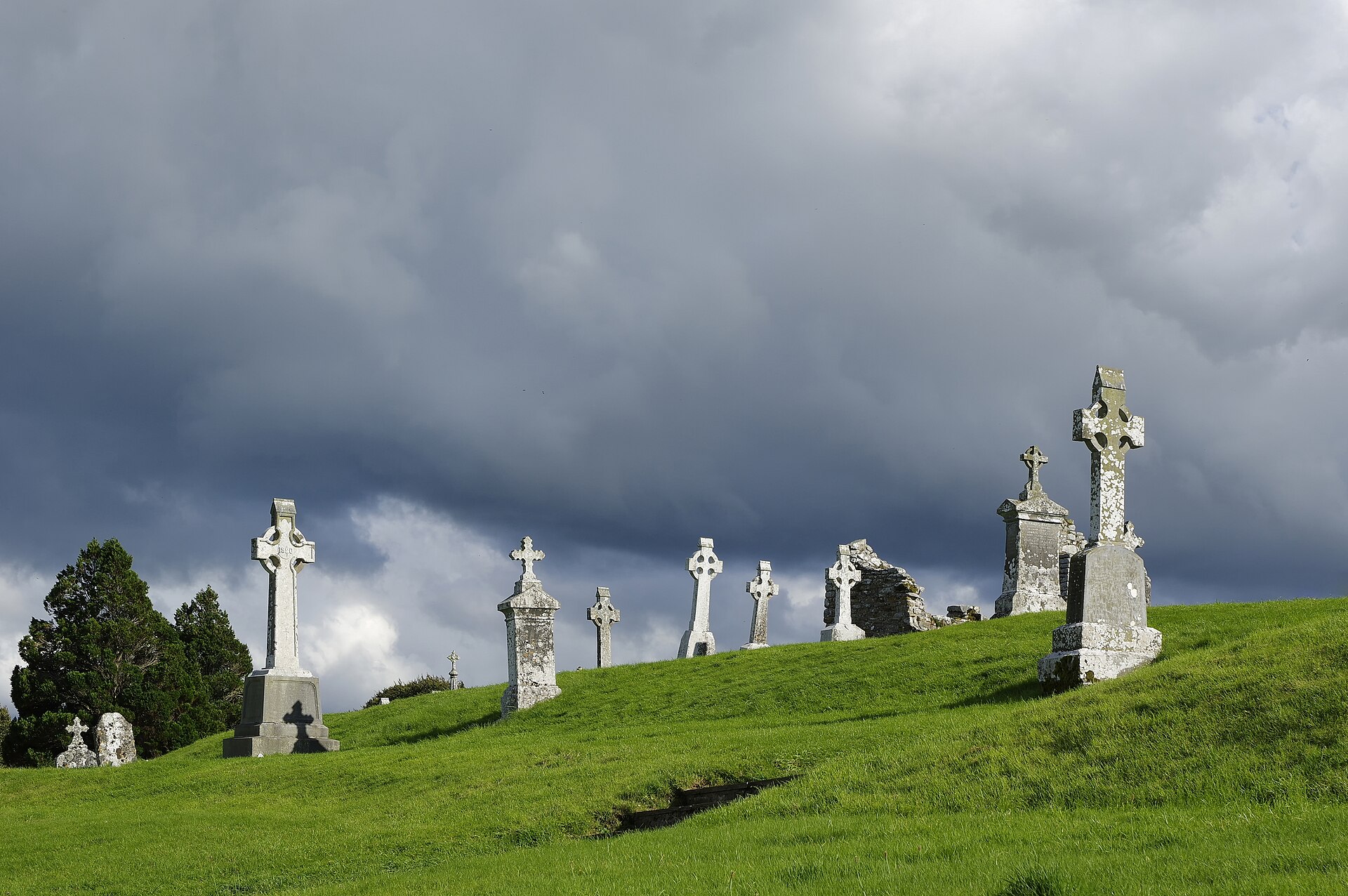
Clonmacnoise. Clonmacnoise stands on the east bank of the River Shannon. Saint Ciarán founded the monastery here in 544 AD. It became one of the most important centres of learning in early Christian Europe. Kings, scholars, and clergy came from across Ireland and beyond to study and pray here. The O’Carroll kings were patrons of this site. Walking the grounds, you walk land that Offaly’s greatest families considered sacred.
Birr Castle, Birr. Birr Castle was the seat of the O’Carroll lords for centuries before passing to the Parsons family, later Earls of Rosse. The castle and its famous gardens open to visitors in summer. The Parsons family built the Great Telescope of Birr here in the nineteenth century. For two decades it was the largest telescope in the world. The castle grounds hold deep layers of Offaly history.
Leap Castle, near Coolderry. Leap Castle is one of Ireland’s most visited heritage sites. The O’Carrolls built it in the fifteenth century. It changed hands several times over the centuries. The castle is open for tours and private visits. It sits in quiet countryside in the south of the county, far from the tourist trail.
Durrow Abbey, near Tullamore. Durrow was one of the great early monasteries of Ireland. Saint Columba founded it in the sixth century. The famous Book of Durrow, an illuminated gospel manuscript from the late seventh century, was created here. The original is now in Trinity College Dublin. The site still holds Durrow High Cross, one of the finest examples of early Irish carved stone work in the country.
Our 7-day Irish ancestry itinerary gives a full framework for visiting heritage sites across Ireland. Our guide to Irish surnames from Westmeath covers the county to the northeast. Our guide to Irish surnames from Longford covers the county to the north.
Frequently Asked Questions About Offaly Surnames
What are the most common Irish surnames from County Offaly?
The most historically significant surnames from County Offaly include O’Carroll (Carroll), Molloy, Egan, MacCoghlan (Coughlan, Coghlan), and Dempsey. O’Carroll was the dominant Gaelic dynasty, ruling as Kings of Ely O’Carroll for centuries. Molloy were the Lords of Fircall. Egan were the hereditary Brehon lawyers of the county.
What does Carroll mean in Irish?
Carroll comes from the Gaelic Ó Cearbhaill, meaning descendant of Cearbhall. The name Cearbhall meant fierce in battle. The O’Carrolls were Lords of Ely O’Carroll in County Offaly. They were one of the most powerful Gaelic families in Leinster. They built Leap Castle and were patrons of Clonmacnoise. Carroll is now one of the most common Irish surnames in the United States.
Who were the Egans of County Offaly?
The Egans (Ó hAodhagáin) were the hereditary Brehon lawyers of County Offaly. They served as legal scholars to the O’Carrolls and other Offaly families. Their name comes from Aodhagán, a short form of Aodh meaning fire. They held their legal role for centuries until the Brehon law system ended in the seventeenth century. The Egan name is still found across the midlands today.
Who were the MacCoghlans of Offaly?
The MacCoghlans (Mac Cochláin) were the Gaelic lords of Delvin MacCoghlan, a territory in north County Offaly around Ferbane on the Shannon. They were one of the major Gaelic families of the county. They held their territory until the seventeenth century. The name today appears as Coghlan, Coughlan, and MacCoghlan.
Where can I trace my County Offaly ancestry?
Start with Offaly History in Tullamore, which holds Offaly church records linked to the rootsireland.ie database. Use askaboutireland.ie for Griffith’s Valuation from the 1850s. Search the 1901 and 1911 census at census.nationalarchives.ie. The Offaly County Archive in Tullamore holds estate papers and local records for the county.
Your Offaly Roots Are Waiting
County Offaly does not pull the same crowds as Kerry or Galway. But it holds deep history. The O’Carroll kings ruled here for centuries. Clonmacnoise was one of the great centres of early Christian learning in Europe. The Brehon lawyers of the Egan family kept the law alive for generations while empires rose and fell around them.
If your surname is Carroll, Molloy, Egan, Coughlan, or Dempsey, your family was part of that story. Stand at Clonmacnoise and you stand where centuries of Irish history unfolded on the banks of the Shannon. Walk through Birr and you walk in the footsteps of the O’Carroll kings.
That name is yours now. Follow it home.
Explore more of our Irish surnames series — covering Cork, Galway, Kerry, Dublin, Clare, Mayo, Donegal, Tipperary, Limerick, Waterford, Wexford, Kilkenny, Sligo, Roscommon, Antrim, Down, Tyrone, Derry, Armagh, Fermanagh, Cavan, Monaghan, Leitrim, Longford, Westmeath, and more.
☘️ Join 65,000+ Ireland Lovers
Every Friday, get Ireland’s hidden gems, local secrets, and travel inspiration — the kind you won’t find in any guidebook.
Subscribe free — enter your email:
📲 Know someone who’d love this? Share on WhatsApp →
Love more? Join 43,000 Scotland lovers → · Join 30,000 Italy lovers → · Join 7,000 France lovers →
Free forever · One email per week · Unsubscribe anytime
Tours & experiences you might love


Powered by Viator. Some links are affiliate links — we may earn a small commission at no extra cost to you.
Secure Your Dream Irish Experience Before It’s Gone!
Planning a trip to Ireland? Don’t let sold-out tours or packed attractions spoil your journey. Iconic experiences like visiting the Cliffs of Moher, exploring the Rock of Cashel, or enjoying a guided walk through Ireland’s ancient past often sell out quickly—especially during peak travel seasons.

Booking in advance guarantees your place and ensures you can fully immerse yourself in the rich culture and breathtaking scenery without stress or disappointment. You’ll also free up time to explore Ireland’s hidden gems and savour those authentic moments that make your trip truly special.
Make the most of your journey—start planning today and secure those must-do experiences before they’re gone!
Subscribe Free