

County Donegal offers some of the most dramatic scenery in Ireland, a slower pace of life, and a genuine sense of community that is increasingly hard to find. People who move here — whether returning from the diaspora or arriving from abroad — rarely leave. The county stretches across the far northwest of the island, covering 4,861 square kilometres of coastline, mountains, and bogland, with a population of over 180,000. It is rugged, remote, and entirely unlike anywhere else in Ireland.
Why People Choose Donegal
Donegal draws people for different reasons. Some come for the landscape — the Slieve League cliffs rise 601 metres above the Atlantic, making them three times taller than the Cliffs of Moher. Others come for the language, because large parts of the county have active Gaeltacht communities that speak Irish daily, particularly around Gweedore and Gaoth Dobhair. Many come simply because they want out of the city, and Donegal offers exactly that.
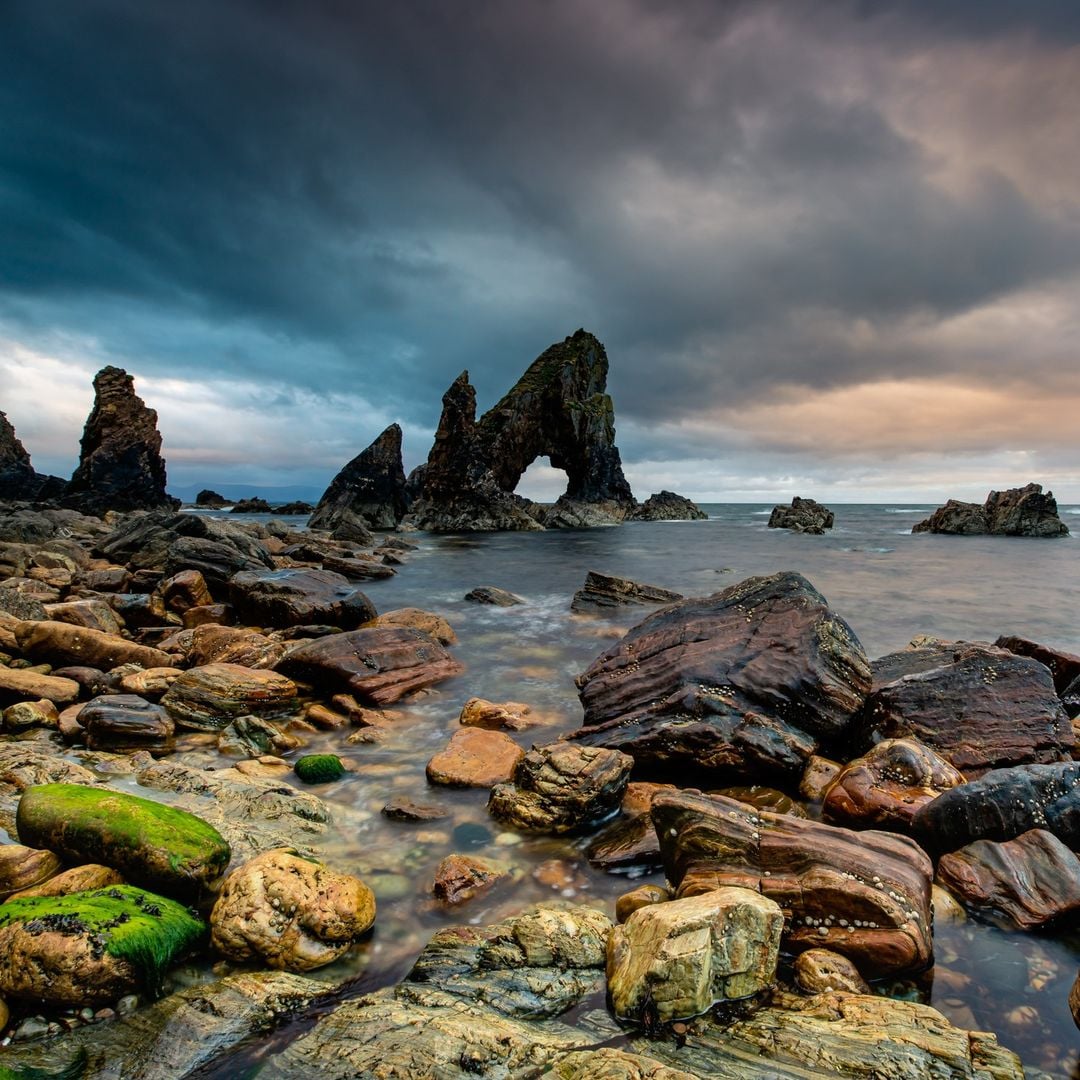
The Wild Atlantic Way runs along its coastline for over 250 kilometres. Beaches like Marble Hill, Five Fingers Strand, and Maghera Beach attract surfers from across Europe. Bundoran, on the southern border, has been an international surf destination for decades. Malin Head, at the northern tip of the county, is the most northerly point in Ireland — a wind-battered headland where the landscape feels older than time.
None of this is the reason most people stay. They stay because of the people.
🇮🇪 Discover Your Irish Heritage
Join 64,000 people staying connected to their Irish roots. Get our free Irish Ancestry Guide — surnames, counties, parish records and emigration history — when you subscribe free.
The Pace of Life in Donegal
Life in Donegal moves differently. Conversations take longer. Nobody rushes past you on the street. In smaller towns like Ardara, Dungloe, or Glenties, you quickly become a known face. The shopkeeper remembers your name. Your neighbours know when you are away. There is a particular quality to that kind of community that is almost impossible to explain to someone who has not lived it.
The county has one of the strongest GAA traditions in Ireland, and matches in summer are genuine community events. There are festivals throughout the year — the Earagail Arts Festival in July, the Donegal International Rally in June, and various trad sessions and cultural events in smaller venues year-round. The arts scene is stronger than most outsiders expect, with a long tradition of weaving, music, storytelling, and visual art.
That said, this is not a county for people who need constant stimulation. There is no nightclub in every town. The cinema is in Letterkenny. Dinner at 9pm is unusual. Donegal rewards people who enjoy walking, reading, cooking, and sitting quietly with good company.
☘️ Planning a trip to Ireland?
Our free 7-day road trip itinerary covers the Wild Atlantic Way from Dublin to the west — day-by-day driving guide with hidden gems, practical tips, and local secrets.
Donegal’s Towns and Communities
Letterkenny is the county’s largest town, with a population of over 22,000. It has most of the practical infrastructure — hospitals, retail, schools, a strong business community, and the Letterkenny Institute of Technology, now part of Atlantic Technological University. It is not a particularly beautiful town, but it is functional and growing.
Donegal Town, in the south of the county, is smaller — around 2,750 people — but considerably more charming. The Diamond (the town’s central square) has been the heart of community life for centuries. The ruins of Donegal Castle date from the early 16th century. There are good restaurants, independent shops, and a very manageable pace.
Bundoran is popular with surfers and weekend visitors. Ballyshannon, just a few kilometres away, is one of the oldest towns in Ireland and has a strong music heritage — it is the birthplace of Rory Gallagher, one of the greatest rock guitarists Ireland ever produced. Each of these communities has its own distinct character. Part of choosing Donegal is choosing which kind of Donegal you want.
The Natural Landscape You Wake Up To
Glenveagh National Park covers 16,000 hectares in the heart of the county. It shelters one of Ireland’s largest populations of red deer, and conservationists reintroduced golden eagles here in 2001. There are walking routes through the park that take you past Glenveagh Castle and along the shores of Lough Veagh, with views across a landscape that has changed little in centuries.
The Derryveagh Mountains run through the centre of the county, and Errigal Mountain — at 751 metres — is one of the most recognisable peaks in Ireland. It takes around two to three hours to climb and offers views on clear days that stretch as far as Scotland, 90 kilometres to the northeast.
The coastline is consistently remarkable. Fanad Head Lighthouse, which workers completed in 1817 after a major shipwreck claimed around 250 lives, sits at the entrance to Lough Swilly on one of the country’s most striking headlands. Inishowen Peninsula, which juts north into the Atlantic, has a landscape entirely its own — often overlooked, always worth the detour.
☘️ Enjoying this? 64,000+ Ireland lovers get stories like this every week. Subscribe free →
Cost of Living in Donegal
Donegal is consistently one of the most affordable counties in Ireland. House prices in towns like Ballyshannon, Donegal Town, and Dungloe are significantly lower than Dublin, Cork, or Galway. A three-bedroom house in a village can cost between €120,000 and €200,000. In Letterkenny, the same house might cost €200,000 to €280,000, but that is still far below prices in Ireland’s main cities.
Rent is also lower. A two-bedroom apartment in Letterkenny rents for approximately €900 to €1,100 per month — roughly half the equivalent Dublin rate. That gap matters if you are working remotely, which a growing number of people who move to Donegal do.
Groceries, petrol, and everyday services cost about the same as elsewhere in Ireland. The savings come from property. Many people who move to Donegal do so because they can afford to own a home here when they cannot in the cities. That financial breathing room changes how a life feels.
The Culture and the Irish Language
Donegal is part of the Ulster dialect region of the Irish language, and it has one of the largest Irish-speaking communities in the country. Around Gweedore, Falcarragh, and the Rosses, communities use Irish as their everyday language — in shops, at the school gate, at GAA matches. Even if you do not speak Irish, you will hear it regularly, and many people who move here find themselves picking up some phrases within a few years.
Donegal tweed has a weaving tradition stretching back centuries. Studios in Ardara produce fabric that weavers ship worldwide, and the craft of handweaving remains alive. There are independent craft shops throughout the county, and a strong culture of supporting local makers. Food is also taken seriously — there are excellent seafood restaurants along the coast, and local produce markets in several towns during summer months.
If you have Irish ancestry — particularly from the northwestern counties — there is a reasonable chance that Donegal features in your family story. The county was one of the primary departure points during the Famine emigrations of the 1840s and 1850s, with thousands leaving through the port at Derry, just across the border. For many in the diaspora, a move to Donegal is also a kind of return.
If you are seriously considering making the move, the full Move to Ireland guide covers everything from visas and residency to banking, healthcare, and what life actually costs once you arrive. It is the most practical starting point for anyone weighing up the decision.
What Surprises People Who Move Here
The weather surprises most people — not always pleasantly. Donegal is one of the wettest counties in Ireland, with an average of 1,200 to 1,600 millimetres of rain per year in inland areas. The west-facing coastline takes the full force of Atlantic storms from October through March. Winters are not severe, but they are wet, dark, and windy. People who thrive here tend to make peace with the rain early.
What genuinely surprises people is how connected they feel, relatively quickly. Donegal communities take newcomers seriously — people expect you to show up, get involved, contribute. Whether that means joining the GAA club, volunteering for the tidy towns committee, or simply being a regular at the local trad session, there are many ways in. People who remain slightly apart, treating the county as a scenic backdrop to their own private life, report finding it harder to settle.
The other common surprise is how far away everything feels — and how quickly that stops mattering. Dublin is a four-and-a-half hour drive. Belfast is two hours. Sligo, the nearest large town, is roughly an hour. If you need specialist medical care, a large airport, or a particular city service, you plan for it in advance. Most people find that within a year or two, they barely notice the distance, because they need less of what cities offer. If Donegal’s remoteness feels like a lot, it’s worth comparing it with somewhere gentler — our guide to living in West Cork covers a different, more sheltered side of rural Ireland.
What is the cost of living in County Donegal?
Donegal is one of Ireland’s most affordable counties. House prices in smaller towns often range from €120,000 to €250,000, and rent for a two-bedroom home in Letterkenny averages around €900 to €1,100 per month — roughly half the Dublin equivalent.
Is Donegal a good place to retire in Ireland?
Yes, Donegal is one of Ireland’s most popular counties for retirement. The lower cost of living, outstanding natural scenery, and strong community life appeal strongly to retirees. The county also has good healthcare provision in Letterkenny University Hospital, which serves the wider northwest region.
What is the Irish language like in Donegal?
Donegal has one of Ireland’s largest Irish-speaking (Gaeltacht) communities, particularly around Gweedore, Gaoth Dobhair, and the Rosses. The Donegal dialect of Irish is distinct from other regional varieties, and you will hear it used as an everyday community language in these areas.
How far is Donegal from Dublin?
Donegal Town is approximately 265 kilometres from Dublin — around a four-hour drive by road. Letterkenny is about 240 kilometres from Dublin, or roughly three and a half hours by the most direct route via Sligo.
☘️ Join 64,000+ Ireland Lovers
Every weekday morning, get Ireland’s hidden gems, local secrets, and travel inspiration — the kind you won’t find in any guidebook.
Subscribe free — enter your email:
Get the free guide
Enter your email and we will send you straight to the download.
📲 Know someone who’d love this? Share on WhatsApp →
Love more? Join 43,000 Scotland lovers → · Join 29,000 Italy lovers → · Join 7,000 France lovers →
Free forever · Unsubscribe anytime
Tours & experiences you might love


Powered by Viator. Some links are affiliate links — we may earn a small commission at no extra cost to you.
Secure Your Dream Irish Experience Before It’s Gone!
Planning a trip to Ireland? Don’t let sold-out tours or packed attractions spoil your journey. Iconic experiences like visiting the Cliffs of Moher, exploring the Rock of Cashel, or enjoying a guided walk through Ireland’s ancient past often sell out quickly—especially during peak travel seasons.

Booking in advance guarantees your place and ensures you can fully immerse yourself in the rich culture and breathtaking scenery without stress or disappointment. You’ll also free up time to explore Ireland’s hidden gems and savour those authentic moments that make your trip truly special.
Make the most of your journey—start planning today and secure those must-do experiences before they’re gone!