

The €0.17 Pint: Inside the Economics Closing Rural Ireland’s Locals
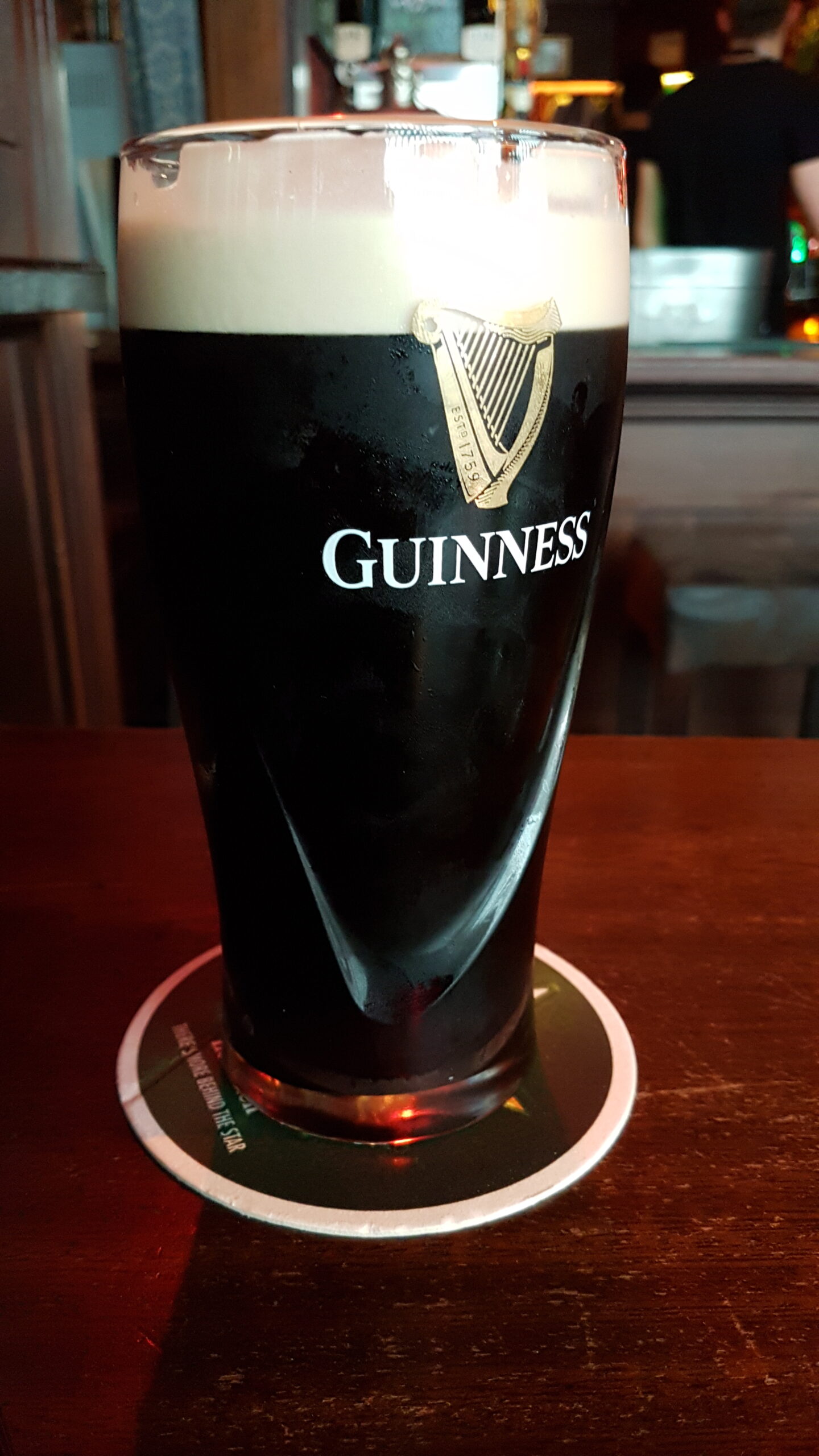
Start with a pint. Specifically, the average pint of beer in Ireland as measured by the Central Statistics Office in May 2024: €5.77. You hand over the money, watch the ritual pour, think nothing more of it. But run that €5.77 through the actual economics of a rural Irish pub and something remarkable happens to it.
The drink supplier takes the largest single cut: €2.06, a figure that itself bakes in the excise duty charged on the wholesale price. VAT takes €1.08. Staff wages — including employer’s PRSI — absorb €1.41. Overheads, covering rates, insurance and other fixed costs, take a further €1.05. Add up the government’s full direct take — VAT, excise and employer’s PRSI combined — and it comes to €1.77, more than ten times what’s left for the publican who pulled that pint and kept the lights on and the fire lit: on average, €0.17.
Seventeen cents. Per pint.
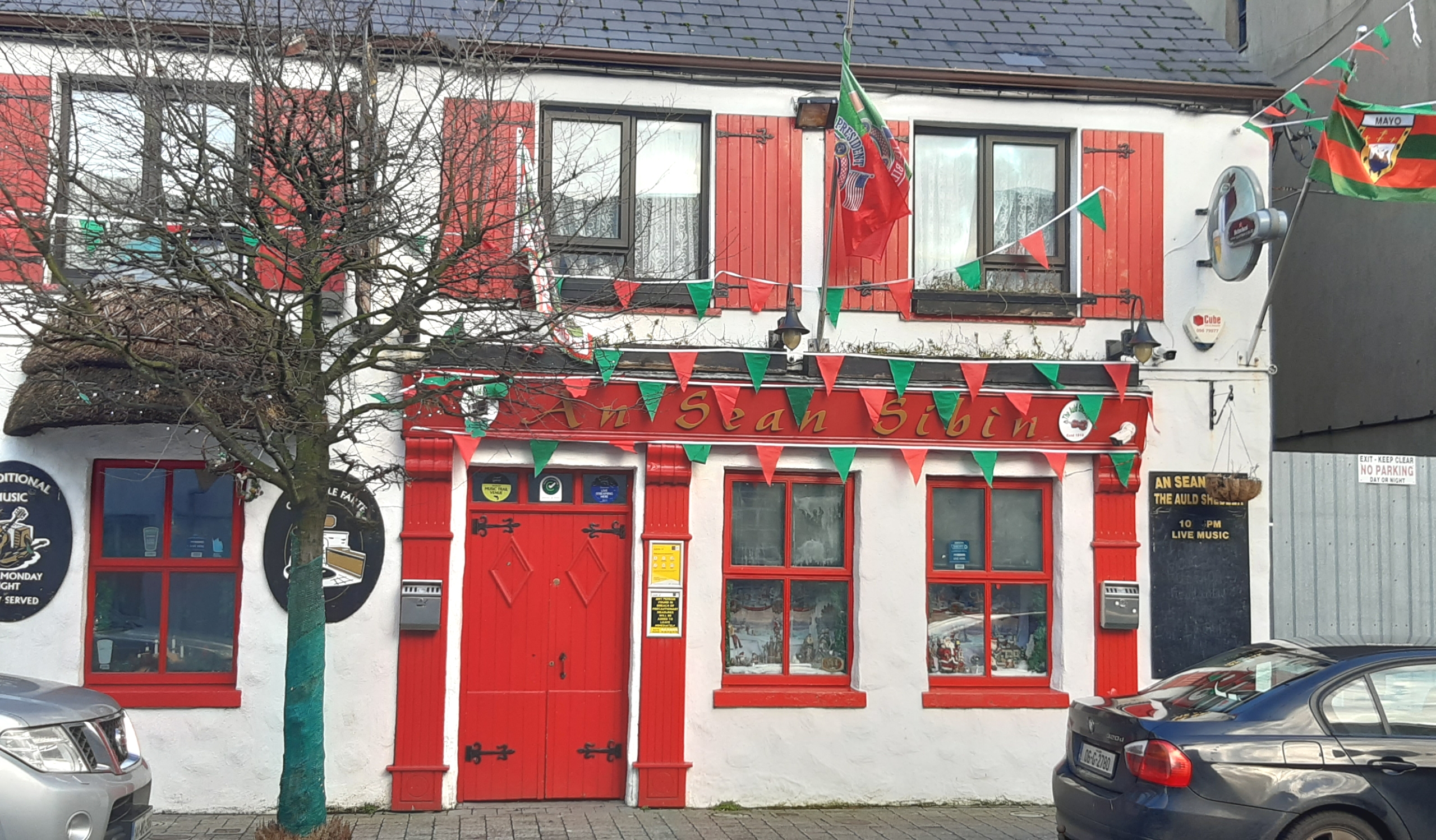
This is the figure that Pat Crotty, CEO of the Vintners Federation of Ireland, put in front of RTÉ in September 2024 as part of the VFI’s pre-Budget submission. It was not designed to make anyone comfortable. It was designed to explain why Ireland is currently closing pubs at a rate of roughly two per week — and why, barring something structural changing, it will keep doing so for years to come.
The Scale of It
In 2005, Ireland had 8,617 publican licences on the Revenue Commissioners’ register. By 2024, that number had fallen to 6,498. That is 2,119 pubs gone in nineteen years — and the running total, according to VFI testimony to the Oireachtas Joint Committee on Enterprise, Tourism and Employment in June 2026, has now passed 2,200.
The economist doing the counting is Anthony Foley, Associate Professor Emeritus at Dublin City University, who has been tracking the Revenue Commissioners’ licence register on behalf of the Drinks Industry Group of Ireland. His July 2025 report calculated the closure rate at approximately 128 per year during the 2019–2024 period. Two per week. Looking forward, his projections suggest a further 600 to 1,000 closures over the coming decade.
To put 2,200 in perspective: Ireland has lost roughly one in every four pubs it had twenty years ago.
Where the Losses Are Actually Happening
☘️ Researching your Irish roots?
Our free step-by-step guide walks you through every record, database, and DNA tool to trace your Irish family — no experience needed.
Here is the number that complicates any clean narrative about pubs being a dying institution everywhere: Dublin lost 1.7% of its pubs between 2005 and 2024. Thirteen fewer pubs in the country’s largest city, from 786 to 773, across nearly two decades.
Limerick lost 37.2% of its pubs in the same period. Cork lost 32.7% — 399 fewer pubs, from 1,221 down to 822. Offaly lost 34.1%.
Look at the county-level data from the VFI’s 2023 report — covering 2005 to 2022 — and the pattern is even starker. The ten counties with the highest closure rates are all rural: Limerick (32%), Roscommon (30.3%), Cork (29.9%), Laois (29.9%), Offaly (28.7%), Leitrim (28.6%), Tipperary (28.6%), Mayo (27.8%), Longford (26.5%), Donegal (26.3%). Dublin, in the same period, lost 3.4%.
This is not a story about Irish people drinking less or caring less about their local. It has a very specific geography. The rural local is what’s closing. The city pub, by and large, is hanging on.
What Everyone Assumes Is the Problem (It Isn’t)
The pub licence in Ireland carries a reputation for being expensive, bureaucratically tortuous, and tightly controlled. The system dates to Victorian-era legislation, and the actual process of obtaining a new one — through the courts, with potential objections from existing licence holders — is genuinely complex. But when you look at what the annual licence renewal actually costs a rural pub, you find something unexpected: it barely registers.
Renewal duty is charged on a sliding scale based on turnover. A pub with annual turnover under €190,500 — which covers a significant share of rural premises — pays €250 per year to renew its licence. The next band, covering turnover up to €380,999, costs €505. The maximum rate, for premises turning over more than €1.27 million, is €3,805. These figures come directly from the Revenue Commissioners’ own published tables, updated as of October 2025.
A quiet rural pub in Offaly or Roscommon turning over €150,000 a year pays €250 in annual licence renewal duty. That is not what is closing the rural local.
What Actually Is
The structural problem comes into focus when you look at labour. According to VFI benchmarking survey data cited in 2025, labour costs currently consume 36% of pub turnover across the sector. The VFI projects that figure will exceed 40% as the Living Wage continues to be phased in. One in five Irish pubs — 22%, per the same survey — reduced staffing in the previous twelve months, a sign of where the margin pressure is being absorbed first.
Labour at 36–40% of turnover creates a squeeze that operates very differently depending on your volume. A busy urban pub with high footfall generates the throughput to make those costs work. A rural pub with an ageing, thinning local population does not. The same wage bill, the same energy costs, the same insurance and commercial rates — applied to a fraction of the pints sold.
This is the core arithmetic of a rural pub closure: costs do not fall in proportion to volume. Fixed costs stay fixed. Variable costs have structural floors imposed by minimum wage legislation, energy pricing, and commercial rates that do not adjust themselves to reflect how many people now live within five kilometres of the front door. What changes — what keeps falling, year on year — is the number of customers.
By the VFI’s June 2026 survey data submitted to the Oireachtas, 65% of Irish publicans describe rising costs as having an “unsustainable impact on operations.” In June 2025, RTÉ gathered accounts from publicans across the country for a piece headlined “The show is basically over.” It is not difficult to locate the sentiment.
The Government’s Share of Each Round
The €1.77 the government takes from every €5.77 pint — VAT, excise duty and employer’s PRSI combined — is, in some ways, the part of this equation hardest to argue about publicly, since alcohol taxation is politically convenient revenue. What is less convenient is the ratio: the government’s take on each average pint is more than ten times the publican’s average margin of €0.17.
Crotty put the per-pint breakdown to RTÉ in September 2024 alongside the VFI’s pre-Budget call for excise relief. When Budget 2025 was announced the following month with no meaningful relief for the sector, he called it “a disaster,” warning that closures would accelerate. Budget 2026, announced in October 2025, again left alcohol excise duty unchanged, despite repeated VFI calls for a cut.
The closures have continued.
The Thing Underneath the Economics
None of the economics fully explain the rural closure rate without one underlying fact: Ireland’s rural population has been concentrating toward cities and larger towns for generations. A pub in a townland that had 400 people in it in 1985 and has 180 now is not experiencing a hospitality problem. It is experiencing the downstream consequence of a demographic shift that no licence reform or VAT cut was ever going to reverse on its own.
This is what makes the rural local different from almost any other small business. It is, in many places, the last remaining physical community infrastructure — after the post office closed, after the Garda station was consolidated, after the school shut and the primary-care centre moved to the nearest town. The pub stayed, often for decades, because the family who ran it had their identity and their life bound up in it. And then the numbers stopped working. It is a particular irony that Ireland has become skilled at manufacturing and exporting authentic pub interiors to bars around the world, even as the originals they’re modelled on run out of road at home.
The Foley analysis projects that current trends could remove a further 600 to 1,000 licensed premises by the mid-2030s. At the Oireachtas in 2026, the VFI described rural pubs as facing an “existential threat.” The Revenue Commissioners’ register — the most neutral data source available on this question — shows that the licences are simply not being renewed.
Two Pubs a Week
There is a tendency to abstract the numbers: two pubs a week sounds like a statistic. But each one is a building that may have been in continuous use as a licensed premises since the nineteenth century — or, in a handful of cases, far longer. A place where wakes were held and matches were debated and fundraisers organised and newcomers introduced to townlands they’d just moved into. The economics are real — the €0.17 is real, the 36% labour cost is real, the 2,200 figure is real — and so is what those economics are eroding.
The closures are not random. They are concentrated in the counties where populations have thinned most, where the fixed-cost floor is hardest to clear on low volume, where there is no passing tourist trade or commuter footfall to absorb the margins. The rural local is not losing to a competitor. It is losing to arithmetic.
Understanding the arithmetic does not solve it. But it is at least a clear-eyed account of what is actually happening — which is the only possible starting point for anything that might.
If you have ever walked into a small Irish country pub on a quiet Tuesday afternoon — the landlord at the bar, a fire going because someone lit it out of habit, two regulars on stools who have known each other for forty years — you have already sensed something these numbers confirm. These places are not economically robust. They are economically stubborn, kept open by community loyalty and family pride and the reluctance to be the generation that closes the doors. One by one, though, the doors are closing. And the numbers say the rate is not slowing.
Tours & experiences you might love


Powered by Viator. Some links are affiliate links — we may earn a small commission at no extra cost to you.
Secure Your Dream Irish Experience Before It’s Gone!
Planning a trip to Ireland? Don’t let sold-out tours or packed attractions spoil your journey. Iconic experiences like visiting the Cliffs of Moher, exploring the Rock of Cashel, or enjoying a guided walk through Ireland’s ancient past often sell out quickly—especially during peak travel seasons.

Booking in advance guarantees your place and ensures you can fully immerse yourself in the rich culture and breathtaking scenery without stress or disappointment. You’ll also free up time to explore Ireland’s hidden gems and savour those authentic moments that make your trip truly special.
Make the most of your journey—start planning today and secure those must-do experiences before they’re gone!