

Ireland’s bogs cover roughly one-sixth of the country’s land area. That’s a remarkable figure when you consider how ancient these landscapes are — some have been accumulating peat for more than 10,000 years, since the last Ice Age. Yet most visitors drive past them on the way to the coast or the mountains, barely giving them a second glance.
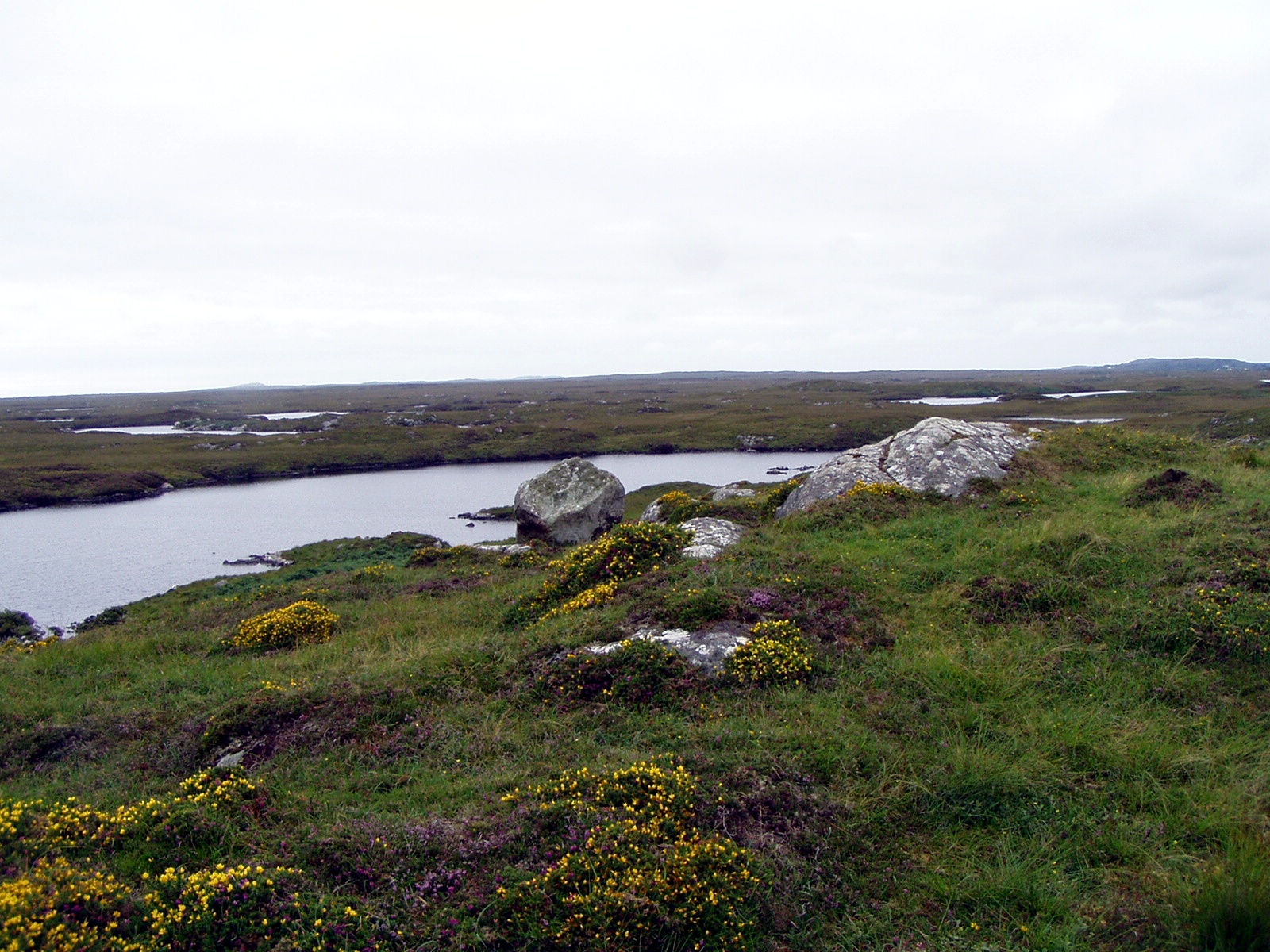
That’s changing. Ireland’s bogs and wetlands are now recognised as some of the most ecologically important habitats in Europe, and an increasing number of people are going out of their way to walk them, photograph them, and understand them. This guide covers the best of them, what makes each one worth visiting, and how to get there.
What Is an Irish Bog?
Ireland has two main types of bog: raised bogs and blanket bogs. Raised bogs developed in the midlands, where peat gradually built up over thousands of years in shallow lake basins. The surface of a raised bog is actually domed — raised above the surrounding landscape — because sphagnum moss absorbs water and swells upward over time.
Blanket bogs are found mainly along the west coast and in upland areas. They form where rainfall is so high and drainage so poor that waterlogging spreads across the land surface like a blanket. These are the dramatic, windswept bogs you see in Connemara and Donegal.
Both types are extraordinary habitats. They support rare plants, birds and insects, and they hold a remarkable amount of carbon — far more per hectare than tropical rainforest. When bogs are drained or cut for fuel, that carbon is released. When they’re left intact, they act as a natural climate buffer.
Ireland once had around 310,000 hectares of raised bog. Today, less than 1% of that remains in near-natural, actively growing condition. Most was cut for fuel or drained for agriculture over centuries. The blanket bogs of the west and uplands have fared somewhat better, but they too are under pressure. What remains is genuinely irreplaceable.
🇮🇪 Ireland’s Hidden Gems
Join 64,000 Ireland lovers and get our free 25 Hidden Gems of Ireland guide — places most tourists never find — when you subscribe free.
Clara Bog, County Offaly
Clara Bog is one of the largest and best-preserved raised bogs remaining in Ireland. It sits outside the town of Clara in the Irish Midlands and is managed by the National Parks and Wildlife Service (NPWS).
The bog covers around 464 hectares and reaches a depth of more than seven metres in places. A boardwalk trail runs into the heart of the site, giving you a safe and dry route across what would otherwise be very difficult terrain. The boardwalk is free to use and open year-round.
What makes Clara stand out is the quality of the peat. Most of Ireland’s raised bogs have been heavily cut, either by hand or by machine. Clara has remained largely uncut, which means you can see the natural vegetation — sphagnum moss pools, bog cotton, heather, and the occasional insectivorous sundew plant — in close to its original state.
The sundew is worth looking for. It’s a small plant with sticky red hairs that trap insects for nutrients — an adaptation to the nutrient-poor conditions of the bog. You’ll find it among the sphagnum moss on the wetter sections of the boardwalk.
Getting there: Clara Bog is signposted from the N80 near Clara town. Small car park at the entrance. No admission charge.
Connemara National Park, County Galway
The boglands of Connemara National Park are some of the most photographed in Ireland. This is blanket bog country — vast stretches of brown and purple moorland, broken by granite outcrops and dark loughs reflecting open sky.
The park covers 2,957 hectares and includes Diamond Hill, where a well-maintained trail gives you views across the bog to the sea. The lower loop of the Diamond Hill walk is about 2.8 kilometres and is suitable for most walkers. The upper loop is around 6 kilometres, with a full route to the summit of roughly 7 kilometres from the visitor centre, and gains significant height. From the summit, the bog stretches west toward the Atlantic, with the Twelve Bens mountains behind you.
The Visitor Centre at Letterfrack has exhibits on the geology and ecology of the park, and staff can advise on which trails are best for the conditions on the day. As of 2026 the Visitor Centre is open Wednesday to Sunday, 9am–5.30pm (closed Mondays and Tuesdays, except bank holidays) — check nationalparks.ie before travelling, as hours can change. Entry to the park itself is free year-round.
The bog surface around the lower trail is particularly vivid in late summer, when the heather is in full purple flower. In spring, the white heads of bog cotton catch the wind across the whole expanse.
Getting there: Letterfrack is on the N59 between Clifden and Westport. Ample parking at the Visitor Centre.
Céide Fields, County Mayo
Céide Fields is unlike anywhere else in Ireland. Beneath a stretch of blanket bog on the north Mayo coast lies the oldest known field system in the world — stone walls, field boundaries, and the remains of houses built more than 5,000 years ago, all preserved under the peat.
The bog grew over these Neolithic settlements gradually, sealing them in an airless environment that stopped decay. The fields were rediscovered in the 1930s when a local teacher, Patrick Caulfield, noticed unusually arranged stones while cutting turf. His son, archaeologist Seamus Caulfield, mapped the site over several decades of careful work. We’ve told the fuller story of that discovery in The Oldest Farmland in the World Was Hidden Under an Irish Bog.
The visitor centre sits on a clifftop above the Atlantic and gives context to what you’re looking at. Guided tours go out onto the bog surface itself, where iron probes are used to locate buried walls beneath your feet. When the guide pushes the probe down and hits stone three feet below the surface — stone that has not seen daylight in 5,000 years — the scale of it is genuinely striking.
Getting there: Céide Fields is on the R314 between Ballycastle and Belmullet in north Mayo. The site is managed by the OPW and has an admission charge. Check opening hours before travelling.
Deirbhile’s Twist, County Mayo
Fewer people know about Deirbhile’s Twist, but it’s one of the more dramatic bog landscapes on the Wild Atlantic Way. The site is at Falmore on the Mullet Peninsula in north Mayo — a remote piece of coastline that most visitors skip entirely.
The standing stones here sit directly on a peat bog, with the sea visible behind them. They form a distinctive spiral arrangement and are named after Saint Deirbhile, a sixth-century woman whose story is tied to this place. The stones have stood through several thousand years of bog growth and Atlantic weather, and the landscape around them has changed little in that time.
At sunrise, the light catches the wet peat and the stone simultaneously, creating the kind of scene that is difficult to photograph well but impossible to forget in person. There are no facilities, no admission charge, and very few other visitors. On a clear morning you can have the place entirely to yourself.
Getting there: Follow the R313 to Belmullet and then south toward Falmore. The site is signed locally. Allow extra time — the roads narrow considerably on the peninsula.
Glenveagh National Park, County Donegal
The blanket bogs of Glenveagh National Park in Donegal cover large areas of upland ground between the Derryveagh Mountains and Lough Veagh. The park is Ireland’s largest national park at 16,000 hectares, and a significant portion of it is open bogland.
Glenveagh is primarily known for its castle and formal gardens, but the surrounding landscape is far wilder. Walking trails lead out from the visitor centre and the castle into open bog ground where golden eagle, red grouse and peregrine falcon are all present.
The golden eagle was reintroduced to Glenveagh in the early 2000s after being extinct in Ireland for over a century. The bogland and mountainside above the lough provide the open hunting ground the birds need. Sightings are not guaranteed, but the park is one of the most reliable places in Ireland to look.
Getting there: The main car park is near Church Hill in Donegal. A bus service runs to the castle from the car park in the warmer months. The park is open year-round with no admission charge.
Pollardstown Fen, County Kildare
Most attention goes to the bogs, but Pollardstown Fen in County Kildare is a different and equally significant wetland habitat. It’s the largest spring-fed fen in Ireland, covering around 220 hectares, and it holds a Special Area of Conservation designation under EU law.
A fen is a wetland fed by groundwater rather than rainwater. The mineral-rich water that feeds Pollardstown supports plant communities entirely different from those on a bog — sedges, marsh orchids, saw sedge, and rare mosses that need chalk-rich water to survive. In June and July, the orchids in particular are impressive.
A boardwalk trail runs through part of the site. It’s open throughout the year and free to use. The fen is particularly good for birdwatching in winter, when large numbers of wildfowl come in to feed across the open water areas.
Getting there: Pollardstown Fen is near Newbridge, off the M7 motorway. It’s signposted from the local road network. Parking is limited — a small lay-by serves the entrance.
Practical Tips for Visiting Irish Bogs
Wear waterproof footwear. Even in dry weather, the surface of an active bog will be wet. Wellington boots or waterproof walking boots are essential. Ordinary trainers will be soaked within minutes.
Stick to marked paths. Bog surfaces can be deceptive. What looks solid may be a floating mat over deep, wet peat. Sites with boardwalks exist for good reason — use them and do not step off the edge to get a better view.
Visit in different seasons. Bogs look very different in summer (purple heather, white bog cotton, insect life) and winter (amber and brown tones, frost on the sphagnum, winter birds). Both are worth experiencing. May and June are particularly good for wildflowers.
Bring binoculars. Bogs are good for birds — curlew, lapwing, golden plover, merlin and hen harrier all use bogland habitats in Ireland. Curlew numbers have fallen sharply in recent decades, making any sighting more meaningful than it once was.
Check site access in advance. Some bogland sites are managed reserves with seasonal restrictions, particularly during the breeding season in spring. The NPWS website has current access information for all its managed sites.
Go slowly. Bogs reward patience. The landscape does not grab you immediately the way a cliff face or a waterfall does. Give it time — sit on the boardwalk and listen, watch the light change across the surface, look for the small things. That is when the place starts to make sense.
☘️ Join 64,000+ Ireland Lovers
Every weekday morning, get Ireland’s hidden gems, local secrets, and travel inspiration — the kind you won’t find in any guidebook.
Subscribe free — enter your email:
📲 Know someone who’d love this? Share on WhatsApp →
Love more? Join 43,000 Scotland lovers → · Join 29,000 Italy lovers → · Join 7,000 France lovers →
Free forever · Unsubscribe anytime
Tours & experiences you might love


Powered by Viator. Some links are affiliate links — we may earn a small commission at no extra cost to you.
Secure Your Dream Irish Experience Before It’s Gone!
Planning a trip to Ireland? Don’t let sold-out tours or packed attractions spoil your journey. Iconic experiences like visiting the Cliffs of Moher, exploring the Rock of Cashel, or enjoying a guided walk through Ireland’s ancient past often sell out quickly—especially during peak travel seasons.

Booking in advance guarantees your place and ensures you can fully immerse yourself in the rich culture and breathtaking scenery without stress or disappointment. You’ll also free up time to explore Ireland’s hidden gems and savour those authentic moments that make your trip truly special.
Make the most of your journey—start planning today and secure those must-do experiences before they’re gone!