

Why Did Irish Whiskey Almost Disappear — And How Did It Go From 3 Distilleries to 40?
Around the turn of the last century, Irish whiskey was the dominant spirit on the planet. The United States ran on it. Britain’s saloons poured it. Distilleries were operating across the island, producing millions of cases a year. If you had walked into a New York or London bar in 1900 and asked for a whiskey, Irish is what you would most likely have been poured.
By the mid-1970s, that same industry was selling somewhere between 400,000 and 500,000 cases a year — a fraction of its former scale — and holding less than one per cent of the global whiskey market. A handful of brands, effectively controlled by a single company, were keeping the whole enterprise alive. Barely.
Today, 40 distilleries operate across the island of Ireland. In 2021, the industry sold 14 million cases — 168 million bottles. The story of how Irish whiskey got from near-extinction to that number is not a simple tale of resilience and craft. It involves a world war, a failed American experiment with sobriety, a civil war, a boardroom siege in 1988, and one man who bought a former state-owned potato alcohol plant on a peninsula in County Louth and dared to make whiskey in it.
The World’s Whiskey
Irish whiskey’s 19th-century dominance was not a myth or a piece of nationalistic pub history. At its peak, around the turn of the twentieth century, the industry was producing approximately 12 million cases a year — roughly what it produces today, after decades of revival work. The big Dublin distilleries — Jameson, Powers, Roe — were the global standard. They had essentially invented the modern concept of premium exported spirits. Their whiskey was what people meant when they said whiskey.
What came next took that apart methodically, over roughly thirty years, in a way that no one event could have accomplished alone.
🇮🇪 Plan Your Perfect Ireland Trip
Join 64,000 Ireland lovers. Get weekly travel inspiration, hidden gems and local secrets — free every weekday.
The Perfect Storm That Was Actually Several Storms
No single blow destroyed Irish whiskey. What happened was a series of catastrophic events landing in sequence, each one leaving the industry less able to absorb the next.
First came the First World War, which disrupted shipping, trade, and the smooth operation of export markets across the board. Then, in 1919, the United States passed the Volstead Act — Prohibition. This was not a minor inconvenience. The US had been Irish whiskey’s single most important export market, and overnight it was legally closed. The scale of the dependency was the problem: Irish whiskey had built its global position on American demand, and American demand had just been made illegal.
The Scottish response to Prohibition, it should be said, was pragmatic to the point of cynicism: producers continued supplying the American market through whatever channels presented themselves. The Irish industry refused to participate in the illegal trade. They would not sell to bootleggers. They would not ship to speakeasies. It was, depending on how you read it, either a matter of principle or the most expensive decision in the history of Irish commerce. When Prohibition ended in 1933 and the American market reopened, Scottish blended whisky had spent more than a decade quietly taking over the shelves. The lighter, more accessible Scotch blends had reshaped American tastes. Irish whiskey came back to find its old customers had moved on.
Into all of this came the Easter Rising of 1916, the War of Independence, and then a civil war that tore the country apart through the early 1920s. Trade relationships frayed or collapsed. Markets that had taken generations to cultivate went dark. And underneath all of it ran a persistent, punishing structural problem: the industry had overproduced for decades, leaving warehouses full of stock that couldn’t be shifted at any useful profit.
The Great Depression added its weight on top of everything else. By the time the dust settled on all of these compounding catastrophes, Irish whiskey was producing a fraction of what it had in 1900, had lost its dominant position in almost every key export market, and faced a Scotch industry that had consolidated its gains and wasn’t giving them back.
The Merger That Saved Three Brands and Narrowed Everything Down
By the 1960s, the picture was stark. On March 8, 1966, the three surviving major producers — Cork Distilleries Company, John Jameson & Son, and John Power & Son — merged to form Irish Distillers Ltd. The logic was brutal but rational: none of them was going to survive independently. Together, they might.
The newly formed Irish Distillers then made a decision that would define the next two decades. Rather than maintain multiple production sites across Dublin and Cork, the company decided to close them all and consolidate everything into a single new purpose-built distillery at Midleton in County Cork, which opened in 1975. The Jameson distillery at Bow Street in Dublin, which had been at the heart of Irish whiskey production for generations, shut its doors in 1971. The Cork distilleries followed. Everything that remained of Irish whiskey was now essentially flowing from one place.
On one level, this was rational industrial management — a dying industry making itself as lean as possible to survive. On another, it made Irish whiskey extraordinarily fragile. The entire category now had one production centre and no competitive pressure whatsoever. Irish Distillers held what amounted to a monopoly over whiskey production on the island. And what that monopoly was selling, at its mid-1970s nadir, was somewhere between 400,000 and 500,000 cases a year — down from 12 million cases at its historical peak. The Irish Times would later describe the industry as lucky to have made “half a million cases” at its lowest point. Less than one per cent of the global whiskey market. A category in managed decline, if it was being managed at all.
The French Save It From the British
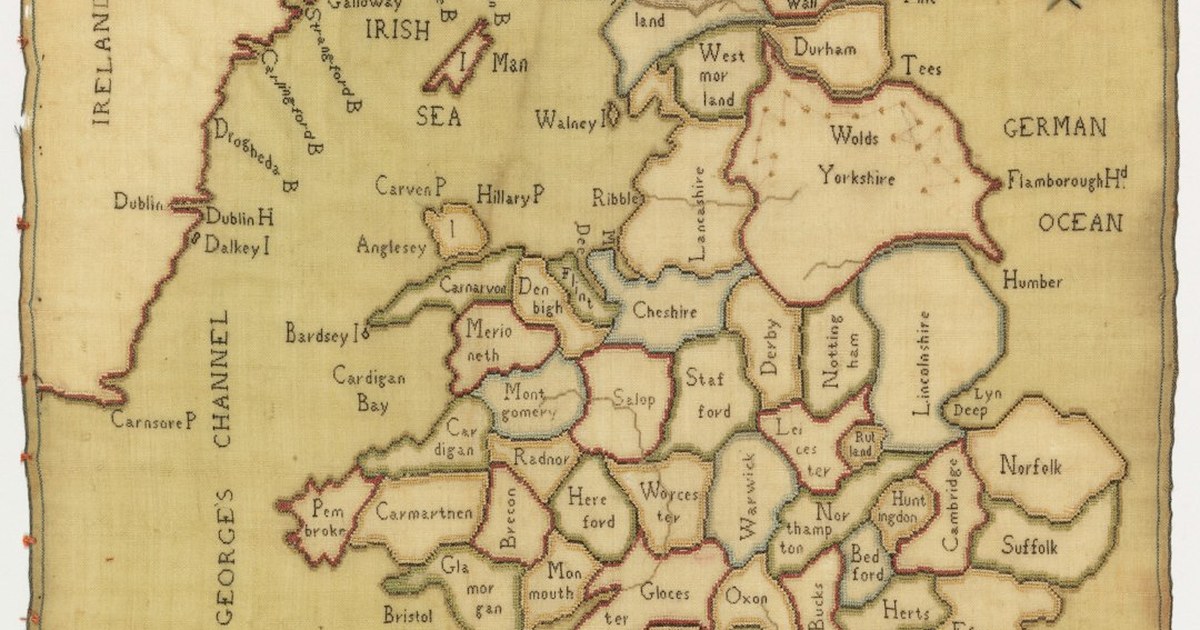
In 1988, Irish Distillers came extremely close to ceasing to exist as a coherent company.
A hostile consortium — Grand Metropolitan, Allied-Lyons, and Guinness — launched a bid for the company. Grand Metropolitan’s intention, as documented by the UK Takeover Panel’s own ruling at the time, was to break up Irish Distillers and distribute its assets. For a company already weakened by decades of market collapse, this was effectively an acquisition for dismemberment.
What arrived instead was a counter-bid from Pernod Ricard, the French drinks group. Pernod Ricard’s offer was, in financial terms, lower than the hostile bid. It won anyway. The Irish Distillers board accepted it because it came with a commitment that the hostile bid explicitly didn’t offer: Pernod Ricard “guaranteed the integrity of the company.” The brands would stay together. Midleton would keep running. The company would not be broken up and sold in pieces.
This is one of the more unexpected pivots in Irish industrial history — a French company, riding to the rescue of a near-dead Irish spirits industry with a promise to keep it whole, and a board that decided that promise was worth more than the higher cash offer. Pernod Ricard then invested in Irish Distillers, brought Jameson into its global distribution network, and began treating the category as something worth building rather than simply maintaining.
The results took time. These things always do. But by 2010, Irish whiskey was selling approximately five million cases a year — a meaningful recovery from the nadir, and evidence that the Pernod investment had done something real. The real acceleration, though, was still coming.
The Man Who Broke the Monopoly
Before Pernod Ricard’s investment started paying full dividends, before the wave of new distilleries, before any of the numbers that characterise the modern revival, there was John Teeling and a former state-owned potato alcohol plant on the Cooley Peninsula in County Louth.
Teeling founded Cooley Distillery in 1987 — a year before the Pernod Ricard takeover — by converting what had been an industrial facility producing alcohol from potatoes. It is not the most romantic origin story in the history of spirits. But what Teeling was actually doing, beyond making whiskey, was breaking a monopoly that had gone unchallenged for years. Cooley was the first new Irish whiskey distillery in decades. It operated independently of Irish Distillers and proved, simply by existing and producing, that the category could support more than one producer.
This mattered more than the product itself, at least at first. Cooley demonstrated that the Irish whiskey market was not a fixed, shrinking pie with room for only one player. It was an opportunity. The category had a future that didn’t run entirely through a single facility in County Cork. Other investors and distillers began to take notice.
Forty Distilleries and Counting
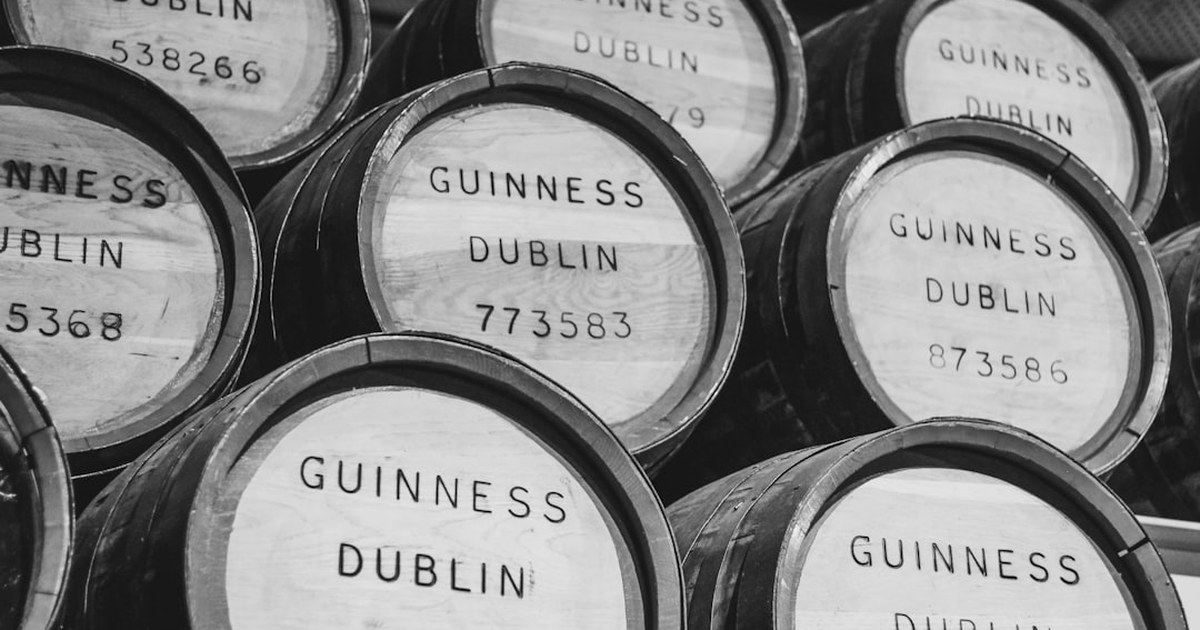
The revival accelerated through the 2010s in a way that would have seemed delusional to anyone watching the industry in 1980. Distilleries opened across the island — in Dublin, in Galway, in Westmeath, in Donegal, in places where whiskey had not been made in living memory. Some were small craft operations. Some had serious capital behind them. All were betting that the trajectory would hold. Several of the best now cluster along the Atlantic coast — see our guide to Ireland’s best small-batch whiskey distilleries for a west-coast visiting itinerary.
By 2022, 40 distilleries were operating across the island of Ireland. In 2021 alone, the industry sold 14 million cases — 168 million bottles — compared with approximately five million cases just over a decade earlier. To put that in context: the category’s revival-era output is now roughly comparable to its historical peak, before the compounding catastrophes of the twentieth century dismantled it.
The United States remains the largest market. Jameson, the brand that came within a board vote of being broken up and sold off in 1988, is now one of the fastest-growing whiskey brands in the world. The Midleton distillery in Cork — once the single consolidated site that represented the entire Irish whiskey industry — has been substantially expanded and now sits alongside dozens of competitors that simply did not exist a generation ago.
What the Turnaround Actually Means
We should be precise about what this story is and isn’t. It is not purely a story of Irish grit outlasting adversity. The revival required a French conglomerate’s capital and distribution network, a global wave of interest in craft and premium spirits, and changing American tastes that happened to bend back toward the category. The conditions that made recovery possible were largely external. The industry benefited from them, but it didn’t create them.
What the industry did do was survive long enough to capitalise — which, given what the mid-twentieth century threw at it, was no small feat. The specific knowledge of how to make Irish whiskey, the character that distinguishes it from every other style, the distillers who kept those skills alive during the decades when no one much wanted them — all of that made it through because enough people, and eventually enough capital, decided it was worth preserving.
A different outcome in a 1988 boardroom — a board that took the higher bid — and Jameson might be a footnote rather than a phenomenon. A John Teeling who decided potato alcohol was a more sensible business than whiskey, and the monopoly might have continued unchallenged for another decade.
Instead, the 40 distilleries operating across the island today are making something that nearly ceased to exist. Not just a spirit — a method, a character, a taste that developed over centuries on this particular island. That it’s back, in such abundance, is one of those stories where the detail matters: not just that it survived, but how close it came to not surviving at all. Every glass of Irish whiskey carries a little of that history in it, whether the person pouring it knows it or not.
☘️ Join 64,000+ Ireland Lovers
Every weekday morning, get Ireland’s hidden gems, local secrets, and travel inspiration — the kind you won’t find in any guidebook.
Subscribe free — enter your email:
📲 Know someone who’d love this? Share on WhatsApp →
Love more? Join 43,000 Scotland lovers → · Join 29,000 Italy lovers → · Join 7,000 France lovers →
Free forever · Unsubscribe anytime
Tours & experiences you might love


Powered by Viator. Some links are affiliate links — we may earn a small commission at no extra cost to you.
Secure Your Dream Irish Experience Before It’s Gone!
Planning a trip to Ireland? Don’t let sold-out tours or packed attractions spoil your journey. Iconic experiences like visiting the Cliffs of Moher, exploring the Rock of Cashel, or enjoying a guided walk through Ireland’s ancient past often sell out quickly—especially during peak travel seasons.

Booking in advance guarantees your place and ensures you can fully immerse yourself in the rich culture and breathtaking scenery without stress or disappointment. You’ll also free up time to explore Ireland’s hidden gems and savour those authentic moments that make your trip truly special.
Make the most of your journey—start planning today and secure those must-do experiences before they’re gone!