

Look at a map of Ireland long enough and patterns start to appear. The 32 counties — 26 in the Republic, 6 in Northern Ireland — have outlines that were shaped by rivers, coastlines, bog land, mountain ranges, and centuries of political boundary changes. The result is a collection of irregular shapes that, if you tilt your head slightly, start to look like something else entirely.
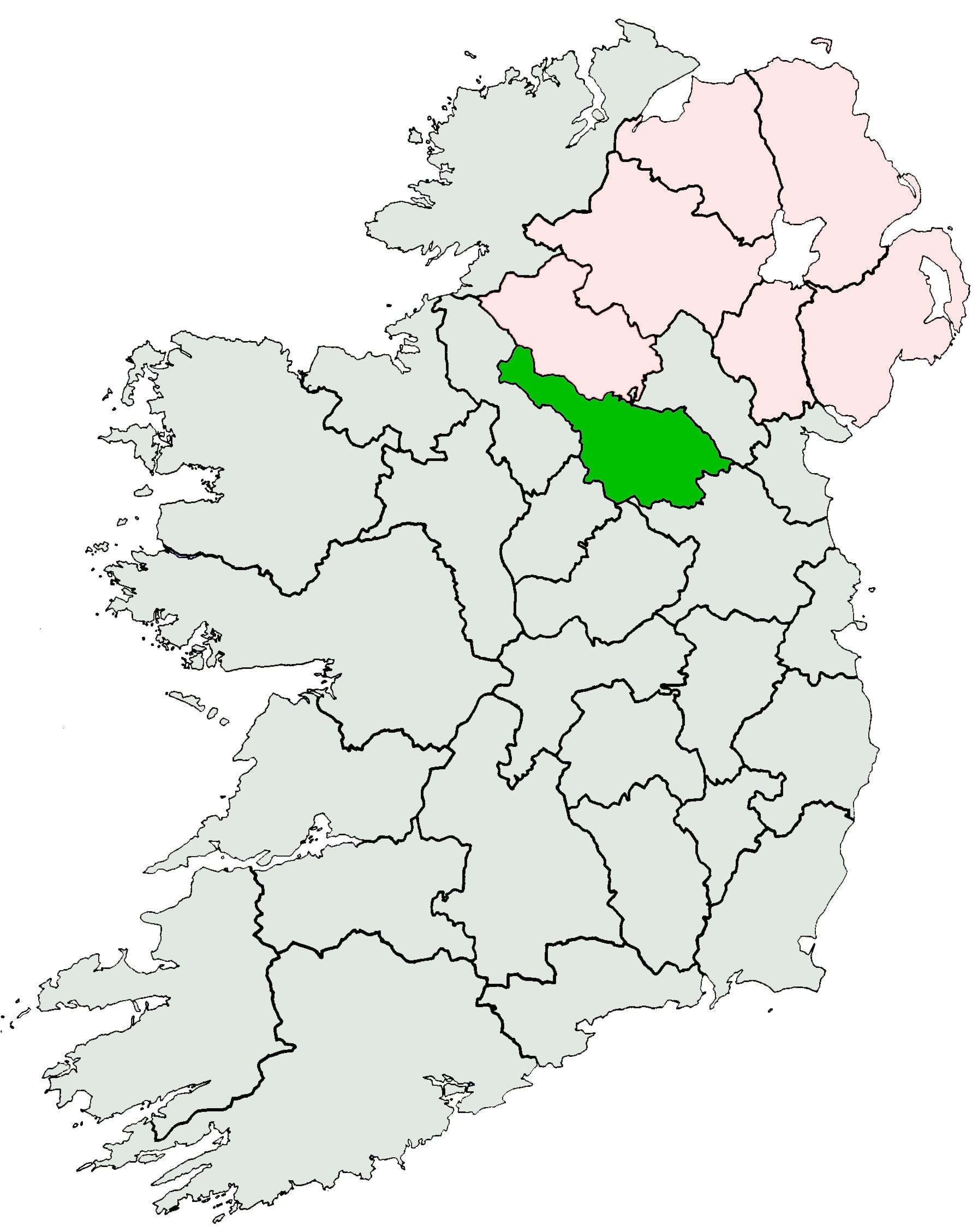
This is not a new observation. Irish people have been making this comparison for generations, and the debate over which county looks most like an animal is a lively one, with strong opinions on every side. Pull up any map of Ireland in a group of Irish people and someone will eventually point at Kerry and say something about a dog.
Why Irish County Outlines Look So Unusual
Before diving into the animal comparisons, it helps to understand why Irish county outlines look so jagged in the first place.
The 32 counties took their modern form largely during the 16th and 17th centuries under English rule. Boundaries were drawn along natural features — rivers, loughs, mountain ridges — and along the edges of ancient Gaelic territories. The western coastline is particularly ragged, carved by ice-age glaciers and shaped by thousands of years of Atlantic weather. Inlets, bays, peninsulas, and offshore islands all contribute to making the western county outlines look nothing like a standard rectangle or circle — part of the same coast-bog-forest-mountain patchwork covered in Ireland’s four landscapes.
The result is a map that rewards attention. Some counties have fairly clean edges. Others look as if the boundary was drawn freehand by someone who changed their mind several times. It is this variety that makes the animal game so compelling.
County Kerry: The Dog in the Southwest
Kerry is the most commonly cited answer when people are asked which county looks like an animal. The county sits in the southwest corner of Ireland and has one of the most distinctive outlines on the entire map.
Three major peninsulas jut into the Atlantic — the Dingle Peninsula, the Iveragh Peninsula (home to the Ring of Kerry), and the Beara Peninsula at the southern tip. These give Kerry’s western and southern edges a claw-like, reaching appearance. At 4,807 square kilometres, it is Ireland’s fifth-largest county, so there is a lot of outline to work with.
Many people see a dog when they look at Kerry — specifically a terrier, with its jaw open and pointing west. The peninsulas act as elongated limbs. Others see a crow’s foot, or a hand with fingers spread wide. Whatever you see, few people dispute that Kerry has one of the most interesting outlines on the island.
County Galway: The Rabbit or the Bird?
Galway splits naturally into two very different halves. The eastern section — Galway city, the agricultural lowlands — has a fairly square outline. The western part, known as Connemara, is a mass of peninsulas, inlets, and islands. Galway Bay takes a large bite out of the county’s southern edge.
Viewed from a certain angle, some people see a rabbit or hare — the rounded Connemara section forming the body, with Galway Bay creating a gap that suggests a leg tucked underneath. Others see a sitting bird with its wings folded. The Aran Islands sit off the Galway coast and are administratively part of the county, which adds further interest to the outline when they are included.
Galway is Ireland’s second-largest county and covers a huge range of terrain — from the lunar limestone of the Burren on its Clare border to the mountains of Connemara in the west. That variety is reflected in an outline that never quite settles into a predictable shape.
If you want more of this kind of content — curious facts, local debates, and the details about Ireland that travel guides tend to skip over — subscribe to our free newsletter and we will deliver it to your inbox each week.
County Donegal: The Duck in the North
Donegal sits in the far northwest and has an outline unlike any other county in Ireland. It is the fourth-largest county but has an unusual geographical position — it is technically a border county yet connects to the rest of the Republic only through a narrow strip of land near Ballyshannon. Most of Donegal is more accessible from Northern Ireland than from Dublin.
The county’s northern coastline sweeps in a wide curve, punctuated by Lough Swilly on the east side and the jagged Atlantic coast to the west. Many people see a duck or a goose in Donegal’s outline — the main body pointing east, with the long curve of the northern coastline suggesting a neck and beak stretching towards Scotland. Others see a bear looking sideways or a sitting bird with its beak raised.
Donegal’s relative isolation has helped preserve aspects of Irish culture that have disappeared elsewhere. It has the highest proportion of Irish language speakers of any county, and large parts of the county are designated Gaeltacht areas where Irish is still the community language. The outline is unusual; so is the county.
County Leitrim: The Eel of Ireland
Leitrim is Ireland’s smallest county by population and one of its strangest shapes. At its narrowest point near Lough Allen, it is only a few kilometres wide. The county stretches from a tiny sliver of Atlantic coastline in the northwest — Ireland’s shortest coastline, at roughly three kilometres — down through a much wider southern section.
From above, Leitrim looks like an eel or a tadpole. The narrow northern section tapers towards that sliver of coast, while the body widens as it moves south. Leitrim’s unusual shape is the direct result of historical boundary decisions that left it straddling very different types of terrain — a narrow pass through the hills in the north and flatter lakeland in the south.
The county borders no fewer than six other counties, which gives some indication of how it was squeezed and shaped by its neighbours over centuries of boundary decisions. (For the opposite extreme, see which Irish county has the fewest neighbours on the map.) If you are looking for the most improbable outline on the map, Leitrim is a strong contender.
County Cork: The Sleeping Giant
Cork is Ireland’s largest county, covering more than 7,500 square kilometres. Its outline is broad and relatively horizontal compared to Kerry’s jagged peninsulas, though Cork has several peninsulas of its own — the Mizen Head Peninsula and the Sheep’s Head Peninsula push south into the Atlantic and give the county’s lower edge a lumpy, irregular appearance.
Some people see a sleeping cat or a lion at rest when they look at Cork. Its sheer size and the way the southern coastline curves in and out give it a sprawling, relaxed quality. Cork borders four other counties, which has shaped its outline to fit a lot of internal Irish geography. The county also includes a section of coastline where the Titanic made its last port of call in 1912, at what was then known as Queenstown and is now called Cobh.
If Kerry is the excitable terrier of Irish counties, Cork is the large, unhurried animal resting in the corner of the room.
Our newsletter covers stories like this every week — the history, geography, and culture that make Ireland genuinely interesting. Sign up for free at loveireland.substack.com/subscribe and join thousands of readers who love Ireland.
What the Northern Counties Have to Offer
The six counties of Northern Ireland — Antrim, Down, Armagh, Fermanagh, Tyrone, and Londonderry/Derry — are part of Ireland’s 32 but are sometimes left out of this conversation. That is a mistake, because several of them have highly distinctive outlines.
County Fermanagh is dominated by the two sections of Lough Erne, which split the county into a narrow central strip with wide water on either side. The result is an outline that looks almost like a dumbbell, or a bowtie laid flat. County Down tapers to a point at the Mourne Mountains, giving it a wedge or boot-like shape. County Antrim has a relatively clean eastern edge along the coast but a much more irregular western boundary.
If you are working through this exercise with a physical map, it is worth spending time on the northern counties. They tend to be overlooked, but Fermanagh in particular has one of the most immediately striking outlines of all 32.
How to Play This Game Yourself
All you need is a clear map of Ireland’s counties. Physical road atlases show county outlines well, as do most tourist maps. Online, the Ordnance Survey Ireland website has detailed county-level maps. Google Maps will show county names and rough boundaries if you zoom to the right level and look for administrative boundary lines.
The exercise works best when you look at the whole county outline rather than focusing on individual towns or rivers. Try rotating the map slightly — sometimes the animal only appears at a particular angle. Kerry’s dog is most visible when the map is oriented with north pointing slightly to the right. Donegal’s duck tends to appear when you look from the south.
This is the kind of thing that turns a long car journey into an argument that lasts three days. Everyone has a different answer, and the arguments for each candidate are genuinely reasonable. The beauty of Irish county shapes is that they are irregular enough for almost any interpretation to be defensible.
Ireland’s 32 counties each have their own character, history, and outline. That is a lot of material to work with, and the animal debate is just one way in. If you want to keep exploring — the history behind county borders, the stories that come from each corner of the island, and the things that make Ireland different from anywhere else — subscribe to our free newsletter at loveireland.substack.com/subscribe. It is free, and it arrives in your inbox each week.
☘️ Join 64,000+ Ireland Lovers
Every weekday morning, get Ireland’s hidden gems, local secrets, and travel inspiration — the kind you won’t find in any guidebook.
Subscribe free — enter your email:
📲 Know someone who’d love this? Share on WhatsApp →
Free forever · Unsubscribe anytime
Tours & experiences you might love


Powered by Viator. Some links are affiliate links — we may earn a small commission at no extra cost to you.
Secure Your Dream Irish Experience Before It’s Gone!
Planning a trip to Ireland? Don’t let sold-out tours or packed attractions spoil your journey. Iconic experiences like visiting the Cliffs of Moher, exploring the Rock of Cashel, or enjoying a guided walk through Ireland’s ancient past often sell out quickly—especially during peak travel seasons.

Booking in advance guarantees your place and ensures you can fully immerse yourself in the rich culture and breathtaking scenery without stress or disappointment. You’ll also free up time to explore Ireland’s hidden gems and savour those authentic moments that make your trip truly special.
Make the most of your journey—start planning today and secure those must-do experiences before they’re gone!