

Ask ten people who have visited Ireland what they remember most, and you’ll get ten different answers. Some will mention the sea — the way it churns against dark cliffs or lies flat and grey under a November sky. Others will talk about the bogs, vast and open, stretching to the horizon without a tree in sight. A few will mention forests, or the mountains that rise out of nowhere in the west and south. Ireland is a small country, but its landscapes are remarkably varied. This article looks at all four — coast, bog, forest, and mountain — and what each one actually offers the traveller.
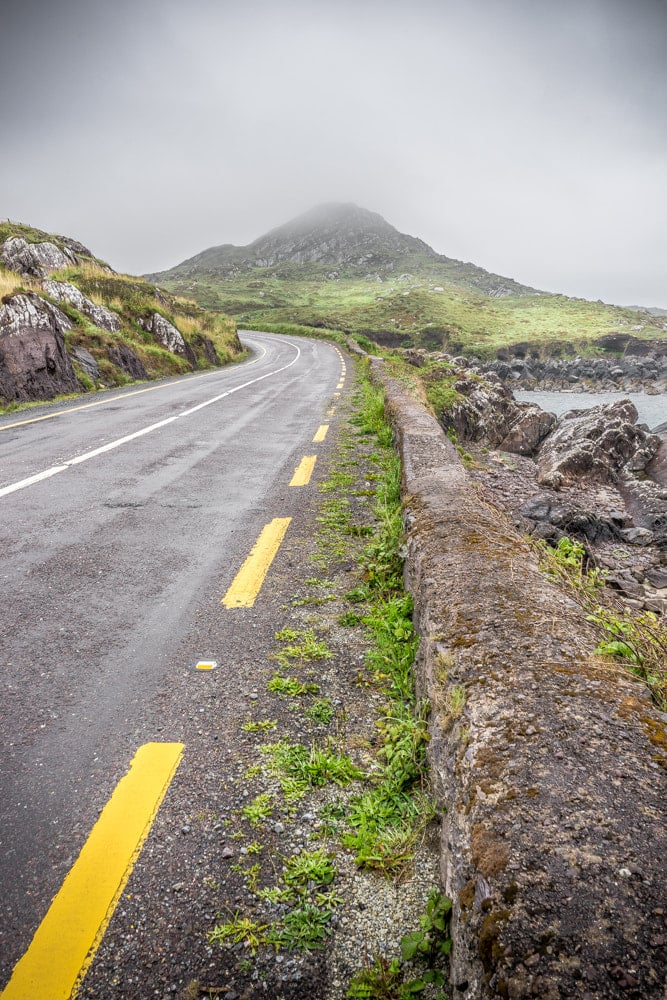
Whether you’re planning your first visit or your tenth, understanding Ireland’s different landscapes will help you get more out of your time there. Each one has its own character, its own best season, and its own set of places worth visiting.
Want more Ireland travel ideas delivered to your inbox? Subscribe to our free newsletter and we’ll send you guides, itineraries, and insider tips every week.
The Irish Coast
Ireland’s coastline is famously hard to pin down to one number — measured in broad strokes it runs to around 1,448 kilometres, but once every inlet, headland, and offshore island is traced it stretches to well over 3,000 kilometres. Either way, it covers everything from the dramatic sea cliffs of Clare and Donegal to the sandy beaches of Kerry and Wexford to the sheltered inlets of Cork. The coast is the landscape most visitors expect, and it rarely disappoints — but it’s worth knowing that Irish coastal weather is unpredictable. Even in July, you can have grey skies, strong winds, and horizontal rain. The light, though, is often extraordinary. Photographers make pilgrimages to the Cliffs of Moher and Slieve League precisely because the atmosphere changes every few minutes. (For a closer look at the coast’s most striking stretches, see Ireland’s Most Dramatic Coastlines Worth the Drive.)
The Wild Atlantic Way, which runs for around 2,500 kilometres from Donegal to Cork, is the most structured way to explore Ireland’s western coastline. It connects hundreds of individual beaches, headlands, and harbours. You don’t need to drive the whole thing — most visitors pick a region and explore it properly rather than rushing along the route. The Dingle Peninsula in Kerry, the Aran Islands off Galway, and the Causeway Coastal Route in Northern Ireland are three of the most visited stretches.
If you want beaches, Ireland has them. The strands at Inch, Barleycove, Mulranny, and Enniscrone are long, clean, and relatively uncrowded compared to Mediterranean destinations. Water temperatures stay between 10°C and 16°C most of the year, so swimming tends to be a brief and bracing affair unless you’re wearing a wetsuit. Surfing is popular along the west coast, especially around Lahinch in Clare and Bundoran in Donegal.
Coastal villages are part of the draw. Dingle, Dunmore East, Kinsale, and Ardara all offer a combination of good food, local character, and easy access to the water. None of them are large, and that’s the point.
The Boglands
Bogs cover roughly 17% of Ireland’s land area, which makes the country one of the most bog-rich in the world. They’re not a landscape most visitors put at the top of their list, but they should get more attention than they do — see our guide to Ireland’s most beautiful bogs for specific places to go. A peat bog in winter or spring, when the grasses have turned amber and rust, is one of the most distinctive sights in the country. In summer, bog cotton and heather add colour to what might otherwise look like bare ground.
There are two main types of bog in Ireland: raised bogs, found mainly in the Midlands, and blanket bogs, which cover much of the west and upland areas. The Midlands don’t attract many tourists, but the raised bogs around Clonmacnoise and Clara Bog are protected and have walking trails. In the west, bogland is often what you’re crossing when you drive through Connemara or the Mayo highlands — the dark, peaty ground stretching out on either side of the road, with turf stacks left to dry in rows.
Bogs are also where archaeologists find things. Ireland’s wet, acidic boglands have preserved wooden trackways, butter (buried thousands of years ago and still recoverable), and most famously, bog bodies — the remains of people who died in or near bogs centuries or millennia ago. The National Museum in Dublin holds the country’s best collection of bog finds, and it’s worth a visit before or after a trip to the landscape itself.
Blanket bog walking is possible at Céide Fields in Mayo, one of the oldest known field systems in the world, and at various points along the Nephin Beg range. These are quieter, more demanding landscapes than the coast, and they reward patience and decent waterproof gear.
Irish Forests and Woodlands
Ireland was once heavily forested. By the early twentieth century, tree cover had dropped to around 1% of the land, the result of centuries of clearance for farming, shipbuilding, and fuel. Today, the figure is around 11%, still well below the European average of 38%. Most of the current forest cover is commercial conifer plantation — Sitka spruce planted in rows for timber. These are functional rather than beautiful, and they’ve attracted criticism from ecologists for the damage they do to bog habitats when drained and planted.
But native woodland still exists, and where it does, it’s exceptional. Killarney National Park in Kerry contains some of the finest examples of oak woodland in western Europe, along with yew woods that have been growing since medieval times. Glenveagh National Park in Donegal has oak, birch, and rowan woodland along the valley floor. Coole Park in Galway, associated with the poet W.B. Yeats and Lady Gregory, has an autumnal wood that changes colour dramatically from late September onwards.
Several forest parks have been developed for walking and cycling, including Donadea in Kildare, Dun a Rí in Cavan, and Rossmore in Monaghan. These are family-friendly, easy to access, and free to enter. They’re not wilderness, but they give a sense of what a tree-covered Ireland looked like, and they’re popular with people who want a break from coastal or mountain landscapes.
We cover forest walks, national park guides, and seasonal tips in our newsletter. Sign up here — it’s free and you can unsubscribe any time.
The Mountains
Ireland’s mountains are modest by international standards. Carrauntoohil in Kerry is the country’s highest peak at 1,038 metres. But modest height does not mean easy walking. The terrain is often rough, boggy, and trackless. Navigation in poor visibility requires a map and compass, and the weather changes quickly. Experienced walkers from countries with higher mountains sometimes underestimate Irish peaks and run into difficulty. That said, the mountains are extremely rewarding and, outside of a few popular routes, relatively quiet — our roundup of the best walks and hikes in Ireland is a good place to plan from.
The MacGillycuddy’s Reeks in Kerry are the most visited mountain range. The Reeks Ridge is a long, exposed ridge walk that experienced hill walkers rate very highly. Carrauntoohil itself can be approached by several routes; the Devil’s Ladder is the most used and the most eroded. Torc Mountain, on the edge of Killarney National Park, is shorter and easier, with views over the lakes.
Elsewhere, the Wicklow Mountains National Park is the most accessible upland area from Dublin. The Wicklow Way, a long-distance walking route, passes through it. Lugnaquilla is the highest point in Leinster at 925 metres and can be reached in a day from the car park at Glenmalure. The Mournes in Northern Ireland offer granite peaks and a clearly defined character — they’re compact and easy to navigate compared to the boggy western ranges.
Croagh Patrick in Mayo deserves a mention not just as a mountain but as a cultural landmark. The pilgrimage to its summit has been made since early Christian times, and each year tens of thousands of people climb it, some barefoot, on the last Sunday of July. For non-pilgrims, the climb still gives one of the best views in Connacht — Clew Bay with its hundreds of drumlins spreading out below you to the west.
The Twelve Bens in Connemara are smaller but extremely rough. They combine mountain walking with bogland crossing and give a sense of just how remote the west of Ireland still is. The Maamturks, running parallel to the Twelve Bens, are less visited and just as good.
Which Landscape Suits You?
None of Ireland’s four main landscapes sits in isolation. A day’s drive through Connemara will take you across bog, past mountains, along coast, and through scrubby patches of oak woodland. The landscapes overlap and combine, which is one of the reasons Ireland rewards slow travel rather than ticking off highlights. The following rough guide may help you decide where to focus.
- If you want dramatic scenery with easy access, the coast is your best starting point. The Cliffs of Moher, the Ring of Kerry, and the Causeway Coast are all well-signposted and within reach of public transport hubs.
- If you want solitude and unusual ecology, seek out the boglands. Go to Connemara or the Mayo highlands in May or September, when visitor numbers are low and the colours are at their best.
- If you have children or want an easy day out, Ireland’s forest parks are underrated. They’re free, well-maintained, and far less crowded than the flagship national parks.
- If you’re a serious walker, the mountains of Kerry, Wicklow, or the Mournes will keep you busy for a week or more. Plan routes in advance, carry appropriate gear, and check the weather forecast before you set out.
Seasons matter. The west coast and mountains are at their most atmospheric in autumn — October in particular brings low light, golden colour, and far fewer people than summer. Spring is good for bog walking; the land is green and the birds are active. Summer is the most crowded but also the most accessible, especially for families. Winter is the quietest and, in good weather, the most spectacular — clear skies after a cold front make the mountains visible from miles away.
Whatever draws you to Ireland — the wide-open coast, the ancient bogs, the surviving woodland, or the tough mountain terrain — the country’s landscapes are best understood by getting into them rather than viewing them from a car window or a viewpoint car park. Hire a guide for the mountains if you’re unfamiliar with Irish conditions. Put on waterproofs before you need them. And give yourself enough time to sit still and take in what’s around you.
Planning a trip to Ireland? Our weekly newsletter covers itineraries, seasonal guides, and practical travel advice. Subscribe for free here and get your first issue within a week.
☘️ Join 64,000+ Ireland Lovers
Every weekday morning, get Ireland’s hidden gems, local secrets, and travel inspiration — the kind you won’t find in any guidebook.
Subscribe free — enter your email:
📲 Know someone who’d love this? Share on WhatsApp →
Love more? Join 43,000 Scotland lovers → · Join 29,000 Italy lovers → · Join 7,000 France lovers →
Free forever · Unsubscribe anytime
Tours & experiences you might love


Powered by Viator. Some links are affiliate links — we may earn a small commission at no extra cost to you.
Secure Your Dream Irish Experience Before It’s Gone!
Planning a trip to Ireland? Don’t let sold-out tours or packed attractions spoil your journey. Iconic experiences like visiting the Cliffs of Moher, exploring the Rock of Cashel, or enjoying a guided walk through Ireland’s ancient past often sell out quickly—especially during peak travel seasons.

Booking in advance guarantees your place and ensures you can fully immerse yourself in the rich culture and breathtaking scenery without stress or disappointment. You’ll also free up time to explore Ireland’s hidden gems and savour those authentic moments that make your trip truly special.
Make the most of your journey—start planning today and secure those must-do experiences before they’re gone!