

In 1593, an Irish chieftain sailed to Greenwich Palace to meet the Queen of England. She was 63 years old, had spent decades fighting English forces in Connacht, and had just had two of her sons and her half-brother taken prisoner by the English governor. She went to London not as a supplicant but as a negotiator — and she left having secured almost everything she asked for. Her name was Gráinne Mhaol. The English called her Grace O’Malley. History mostly forgot her. She deserves to be remembered.
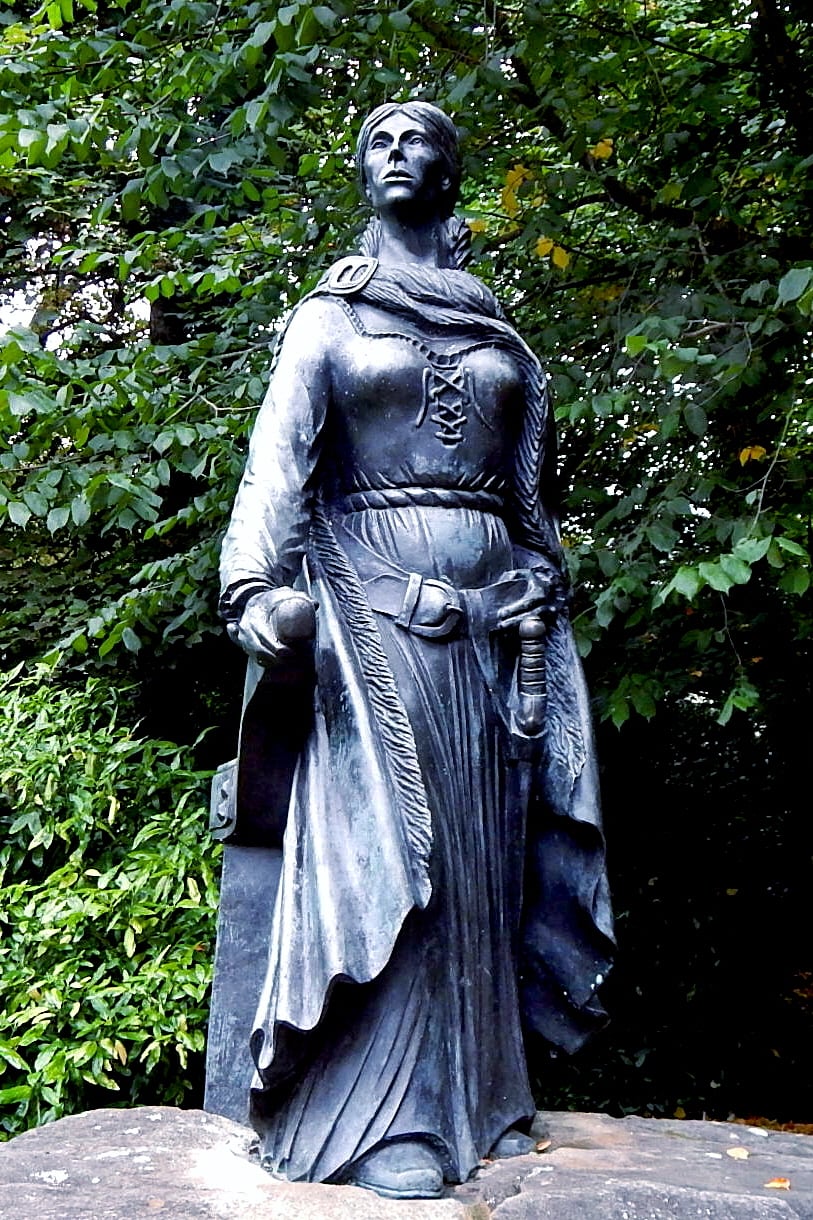
Who Was Grace O’Malley?
Gráinne Ní Mháille was born around 1530 on Clare Island off the coast of County Mayo. She grew up as the daughter of Owen O’Malley, chieftain of the O’Malley clan and lord of the seas between Connacht and Ulster. The O’Malley clan built their power entirely on the ocean — they taxed fishing fleets, ran trading routes to Scotland and Spain, and maintained a private fleet of galleys that gave them control over the inlets and islands of north Connacht.
Gráinne grew up sailing. When her father died, she took command of the family fleet — something English common law spreading across Ireland would never have allowed. But Irish Brehon law recognised a woman’s right to inherit, lead, and command. She married twice: first Donal an Chogaidh O’Flaherty, who ruled lands in Connemara, and after his death Richard Burke of Rockfleet Castle in north Mayo. Both marriages brought her additional castles, men, and trading connections.
By the time she reached her forties, she commanded a fleet of roughly 20 galleys and several hundred men. She used them to raid merchant ships, collect protection payments from fishing fleets, and support Irish chieftains in their periodic rebellions against English authority. English governors of Connacht spent years trying to suppress her. They arrested her, raided her castles, and seized her cattle. She kept coming back.
What Led to the 1593 Meeting
By the early 1590s, the situation had become unsustainable. Richard Bingham, the new governor of Connacht, ran a campaign of deliberate brutality against the province’s chieftains. He had Gráinne’s eldest son Owen killed in 1586. He seized her cattle and stripped her of her lands. He imprisoned her younger son Tibbott and her half-brother Donal.
In 1593, Gráinne did something no Irish chieftain of her position would normally attempt. She wrote directly to Queen Elizabeth I of England, bypassing Bingham entirely. Her letter, in Latin and now preserved in the State Papers at the National Archives in London, laid out her grievances and requests. She wanted the release of her son and half-brother. She wanted her lands back. She wanted the right to resume raiding — specifically, “to invade with sword and fire all Your Highness’s enemies.”
Elizabeth, curious enough to respond, sent back 18 questions — the Articles of Interrogatory — asking Gráinne to confirm details of her life, her marriages, and her income. Gráinne answered them all directly. Elizabeth then issued her a safe-conduct pass to travel to London.
☘️ Planning a trip to Ireland?
Our free 7-day road trip itinerary covers the Wild Atlantic Way from Dublin to the west — day-by-day driving guide with hidden gems, practical tips, and local secrets.
Get the Free 7-Day Itinerary →The Meeting at Greenwich Palace
Gráinne arrived at Greenwich Palace in the summer of 1593. She was 63. Elizabeth was 59. The meeting ran through translators — Gráinne had no English, and Elizabeth had no Irish. Historians believe they settled on Latin, which both women knew well.
Several stories circulate about the meeting, most of them apocryphal. The most famous involves a handkerchief: when Gráinne sneezed, a courtier handed her an embroidered one, which she used and then threw into the fire. The courtier was shocked. In Ireland, Gráinne explained, people disposed of used handkerchiefs rather than pocketing them. Whether this exchange happened or not, it captures something true about the encounter — two rulers from different worlds, meeting as apparent equals.
The meeting lasted several hours. Contemporary accounts describe Gráinne carrying herself like a chieftain — which, under Brehon law, she was. She had never submitted to English authority in any formal sense. She came to Greenwich not as a subject petitioning her queen but as one ruler conducting diplomacy with another.
What Grace O’Malley Won
The outcome was remarkable. Elizabeth granted Gráinne almost everything she had asked for.
- Elizabeth freed her son Tibbott-ne-Long Burke from English custody within weeks of the meeting
- The Crown also released her half-brother Donal, restoring two of her closest family members
- Bingham’s grip on power was broken — though he clung to the governorship for two more years, he was recalled to England in 1595 amid renewed unrest and investigated for misconduct
- Gráinne received a pension from the Crown, formalising her status in a way that shielded her from further arbitrary land seizures
- Elizabeth granted her the right to pursue her enemies — effectively legitimising her raiding activities under an English legal framework
The grant came with conditions. Gráinne agreed to maintain peace and stop supporting Elizabeth’s enemies. How strictly she kept this promise is another matter — she appears to have gone back to raiding English interests within a year. But she had achieved what she came to do. Her family was free. Her position was secure.
☘️ Enjoying this? 64,000+ Ireland lovers get stories like this every week. Subscribe free →
Why This Story Matters for Irish Heritage
The 1593 meeting is remarkable for several reasons. It stands as one of the few documented occasions in 16th-century Ireland where an Irish chieftain negotiated directly with the English Crown and got what they wanted. Most such encounters ended in submission, exile, or execution. Gráinne left Greenwich with her family freed and her enemy removed.
The meeting also gives us a rare record of a woman operating at the highest levels of political life in early modern Ireland. Under Brehon law, women could own property, lead clans, and command fleets. The English common law that spread across Ireland in this period removed these rights entirely. Gráinne’s career — and this meeting in particular — represents one of the last clear examples of a woman exercising full political authority under the old Irish system.
For the Irish diaspora in America, Gráinne Ní Mháille stands for something specific. She faced overwhelming institutional power and refused to let it erase her. She adapted, negotiated, and survived on her own terms, in her own language, under her own law. Her story resonates with the emigrant experience in a way that makes it worth knowing.
Where to See Grace O’Malley’s Ireland Today
Several sites in County Mayo connect directly to Grace O’Malley’s life and are open to visitors today.
- Clare Island — Her childhood home and main base of operations. The island has a ruined tower house on the western shore that local tradition links to her. Clare Island Abbey contains a ceiling fresco above what tradition marks as her grave. Ferries run from Roonagh Pier near Louisburgh, a 30-minute crossing costing around €17 return.
- Rockfleet Castle (Carrickahowley Castle) — Her second husband’s castle near Newport, County Mayo, which she reportedly kept after his death by invoking an old Irish law. The tower house is free to visit and stands on a tidal inlet with views across Clew Bay.
- Westport House — A stately home on the site of the O’Malley family’s castle at Cathair na Mart. The house is open to visitors and includes a heritage exhibition covering the O’Malley clan and Gráinne’s life.
- Clew Bay — The bay she controlled for decades, ringed by drumlins and dominated by Croagh Patrick. The view from the summit of Croagh Patrick gives a real sense of the territory she defended.
- National Museum of Ireland, Dublin — Holds artefacts from the Elizabethan period in Ireland, including documents relating to the English administration of Connacht during Gráinne’s lifetime.
- Kildavnet Castle, Achill Island — Another O’Malley stronghold guarding the sound between Achill and the mainland. See our full guide to Grace O’Malley’s Achill Island towerhouse.
How to Visit Clare Island
Clare Island lies 5 km off the Mayo coast. Ferries depart from Roonagh Pier, roughly 20 km from Westport. The crossing takes about 30 minutes each way and costs around €17 for adults return (2026 prices). The island has a small resident population, a few guesthouses, and one pub.
Day visitors can walk to the ruined tower house, explore the abbey, and walk the dramatic western cliffs. The abbey dates to the 12th century and has fragmentary medieval frescoes in the chancel. Local tradition places Gráinne’s grave in the chancel floor, though historians dispute this. A grave slab carries her name.
Who was Grace O’Malley?
Grace O’Malley (Gráinne Ní Mháille) was an Irish chieftain and sea captain born around 1530 on Clare Island, County Mayo. She commanded a fleet of galleys, controlled trade routes off the Connacht coast, and in 1593 negotiated directly with Queen Elizabeth I at Greenwich Palace, winning the release of her imprisoned family members.
Did Grace O’Malley really meet Queen Elizabeth I?
Yes — the meeting has full historical documentation. Gráinne’s letters to Elizabeth, Elizabeth’s responses (the Articles of Interrogatory), and the grants that followed survive in the State Papers at the National Archives in London. The meeting took place at Greenwich Palace in 1593 and ran for several hours, with both women communicating through translators.
Where can I visit Grace O’Malley sites in Ireland?
The main Grace O’Malley sites are on Clare Island (her castle ruins and the abbey local tradition links to her grave), Rockfleet Castle near Newport in County Mayo, and Westport House, which stands on the site of the O’Malley family stronghold. All are in County Mayo on Ireland’s west coast.
What did Grace O’Malley get from Queen Elizabeth?
Following the 1593 meeting, Elizabeth freed Grace O’Malley’s son Tibbott and her half-brother Donal, who the English governor of Connacht had held prisoner. She also granted Gráinne a pension from the Crown. Bingham himself wasn’t removed until 1595 — two years later — when he was recalled to England and investigated for misconduct, a delayed vindication after his decade-long campaign against her.
☘️ Join 64,000+ Ireland Lovers
Every weekday morning, get Ireland’s hidden gems, local secrets, and travel inspiration — the kind you won’t find in any guidebook.
Subscribe free — enter your email:
📲 Know someone who’d love this? Share on WhatsApp →
Free forever · Unsubscribe anytime
Tours & experiences you might love


Powered by Viator. Some links are affiliate links — we may earn a small commission at no extra cost to you.
Secure Your Dream Irish Experience Before It’s Gone!
Planning a trip to Ireland? Don’t let sold-out tours or packed attractions spoil your journey. Iconic experiences like visiting the Cliffs of Moher, exploring the Rock of Cashel, or enjoying a guided walk through Ireland’s ancient past often sell out quickly—especially during peak travel seasons.

Booking in advance guarantees your place and ensures you can fully immerse yourself in the rich culture and breathtaking scenery without stress or disappointment. You’ll also free up time to explore Ireland’s hidden gems and savour those authentic moments that make your trip truly special.
Make the most of your journey—start planning today and secure those must-do experiences before they’re gone!