

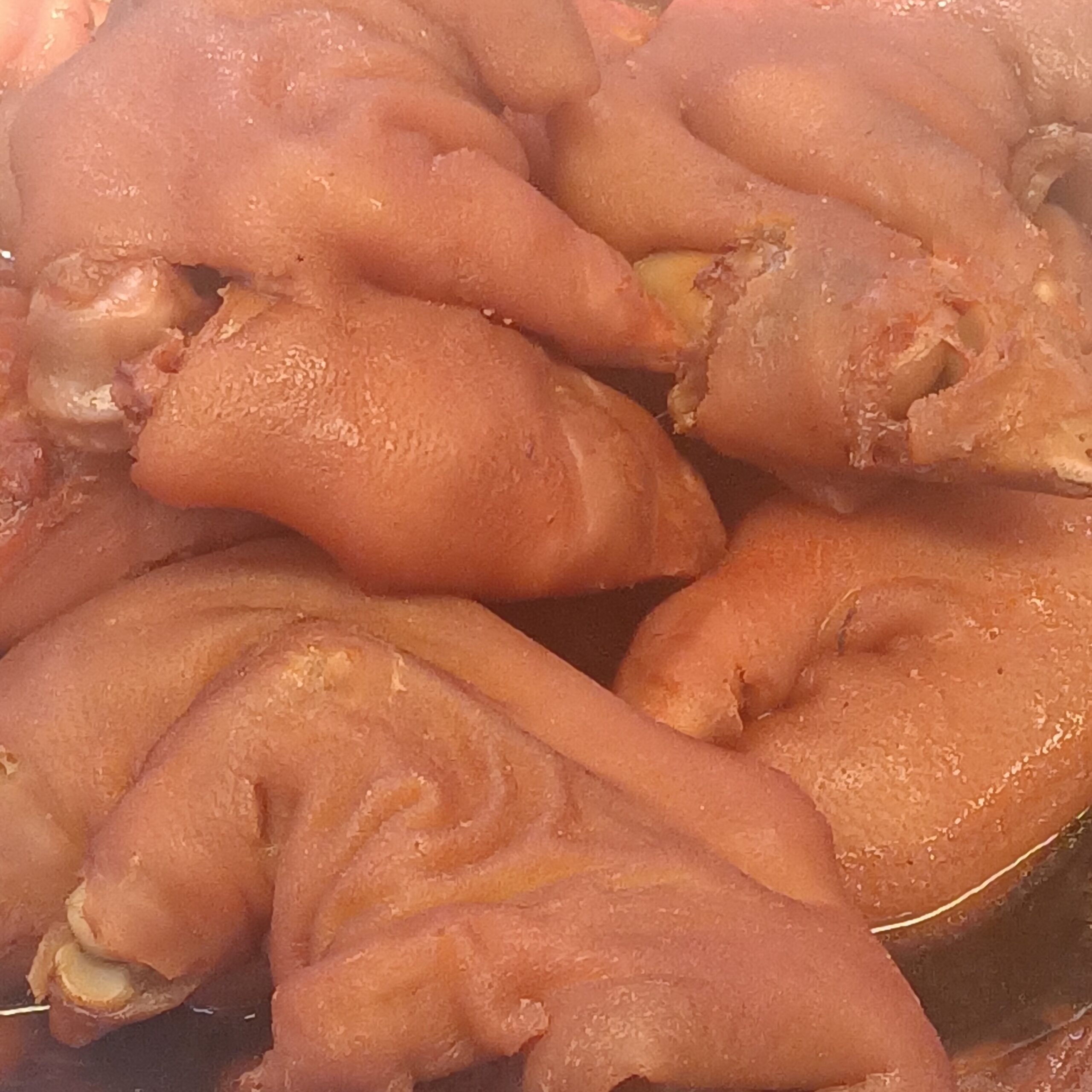
Crubeens Recipe: How to Cook Cork’s Beloved Boiled and Breaded Pig’s Trotters
Few dishes capture the soul of old Cork quite like crubeens — the gloriously sticky, deeply satisfying boiled and breaded pig’s trotters that were once as much a part of Friday night in the city as the sound of the Lee flowing past. The word itself comes from the Irish crúibín, meaning a small hoof or claw, and for generations of Cork folk, a paper bag of crubeens handed over the pub counter was the supper of champions. They were cheap, they were filling, and eaten with nothing more than a heel of soda bread and a pint of stout, they made a working man’s Friday feel like a feast.
Cork’s love affair with pork runs deep — the city was once known as the “pork capital of Ireland,” with a thriving meat-curing industry that made use of every part of the pig — and the trotter was no exception. Butchers and pub kitchens alike would boil trotters low and slow through the afternoon, then bread and fry them to order come evening. Traditionally sold on Friday nights — a nod to the Catholic practice of eating simply at the week’s end — crubeens were also a common sight at fairs and markets across Munster, wrapped in old newspaper and eaten standing up without ceremony or cutlery.
Crubeens have faded from pub menus in recent decades, which is a genuine shame, because made properly at home they are extraordinary. The long boil renders the skin gelatinous and yielding, the meat pulls from the bone in sweet, tender shreds, and the breadcrumb crust that forms in the pan gives a crunch that plays beautifully against all that richness within. This is nose-to-tail eating at its most honest — unhurried, economical, and deeply delicious.
Ingredients
- 4 pig’s trotters, split lengthways by your butcher
- 1 large onion, quartered
- 2 medium carrots, roughly chopped
- 2 celery sticks, roughly chopped
- 2 bay leaves
- 1 tsp black peppercorns
- 1 tsp salt
- A few sprigs of fresh thyme
- For the breadcrumb coating:
- 2 eggs, beaten
- 150g (5½ oz) plain flour, seasoned with salt and pepper
- 200g (7 oz) fine white breadcrumbs
- 2–3 tbsp lard or neutral cooking oil, for frying
Method
- Place the split trotters in a large, deep pot and cover generously with cold water. Bring to the boil, then drain and rinse both the trotters and the pot — this removes any impurities and ensures a cleaner-tasting broth.
- Return the trotters to the pot and cover again with fresh cold water. Add the onion, carrots, celery, bay leaves, peppercorns, salt and thyme. Bring to a steady simmer over a medium heat.
- Reduce the heat to low and simmer very gently, partially covered, for 3 to 3½ hours, until the skin is completely tender and the meat is soft enough to yield easily when pressed. Top up the water occasionally if needed to keep the trotters submerged.
- Carefully lift the trotters out of the stock and allow them to cool on a wire rack or tray until they are firm enough to handle — around 30 minutes at room temperature. At this stage they can be refrigerated overnight if you prefer to finish them the following day; chilling makes them easier to coat.
- Set up a breading station with three shallow dishes: seasoned flour in the first, beaten egg in the second, and breadcrumbs in the third. Working gently so the trotters hold together, coat each one first in flour, then dip in egg, then press firmly into the breadcrumbs until fully coated on all sides.
- Heat the lard or oil in a large, heavy-based frying pan over a medium heat. Fry the coated trotters for 4–5 minutes per side, turning carefully, until deeply golden brown and crisp all over. Do this in batches if necessary — do not crowd the pan.
- Drain briefly on kitchen paper and serve immediately while the crust is still shattering-crisp. Accompany with good soda bread, a wedge of lemon if you like, and a pint of stout.
Tips
- Ask your butcher to split the trotters in advance — it makes both the cooking and the eating considerably easier.
- The strained cooking stock is rich with gelatin and flavour; save it for soups, stews or colcannon broth. It will set like jelly when chilled.
- Fine dried breadcrumbs give a more even, traditional crust than coarse ones — blitz stale white bread in a processor and dry it out in a low oven at 120°C (250°F / Gas ½) for 20 minutes if making your own.
- Chilling the boiled trotters before crumbing is strongly recommended — they hold together far better and take the coating more neatly.
- A simple sharp piccalilli or a mustardy onion relish alongside cuts through the richness wonderfully.
There is something quietly wonderful about rescuing a dish like this from the edge of memory and bringing it back to the kitchen table. Crubeens ask for patience — that long, gentle simmer cannot be hurried — but they reward it handsomely, and eating them connects you to something very real about the way Cork people once lived, worked and celebrated the end of a long week. Make them once and you will understand exactly why the pub queues formed every Friday night.
Tours & experiences you might love


Powered by Viator. Some links are affiliate links — we may earn a small commission at no extra cost to you.
Secure Your Dream Irish Experience Before It’s Gone!
Planning a trip to Ireland? Don’t let sold-out tours or packed attractions spoil your journey. Iconic experiences like visiting the Cliffs of Moher, exploring the Rock of Cashel, or enjoying a guided walk through Ireland’s ancient past often sell out quickly—especially during peak travel seasons.

Booking in advance guarantees your place and ensures you can fully immerse yourself in the rich culture and breathtaking scenery without stress or disappointment. You’ll also free up time to explore Ireland’s hidden gems and savour those authentic moments that make your trip truly special.
Make the most of your journey—start planning today and secure those must-do experiences before they’re gone!