

Try the Guinness Timer ⏱️
A perfect pour takes 119.5 seconds — the rest, two minutes, gives the stout time to settle. Time your own pint and see if you wait long enough.
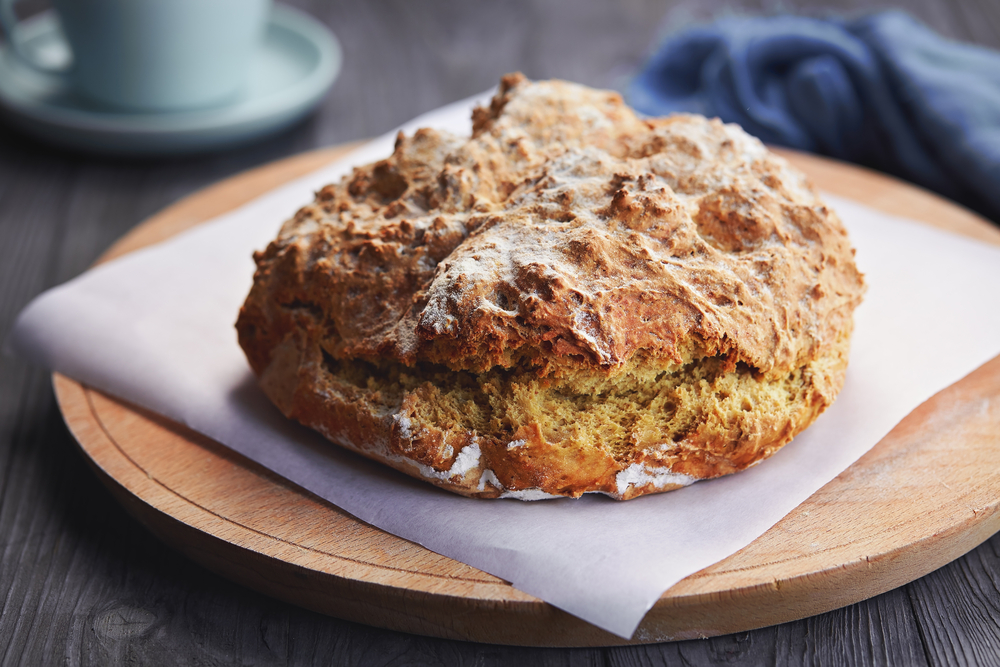
Guinness Brown Bread Recipe: A Dark, Malty Loaf Straight from the Irish Hearth
There are few smells more welcoming in an Irish home than a wholemeal loaf just out of the oven, its crust cracking gently as it cools on the rack. Brown bread has been a cornerstone of Irish daily life for generations — long before sourdough became fashionable or artisan bakeries lined every high street. It was the bread of farmhouse kitchens, of bed-and-breakfast tables laden with butter and marmalade, of fishermen’s lunches wrapped in cloth and tucked beside a flask of tea. Simple and sustaining, it asks very little of the baker and gives back an enormous amount.
What makes this particular version so special is the addition of Guinness stout and a spoonful of treacle — two ingredients that feel almost inevitable once you taste the result. Ireland’s most famous export lends the loaf a subtle bitterness and a rich, malty depth that plain water simply cannot replicate, while the treacle adds just a whisper of dark sweetness and helps give the crumb its characteristically deep brown colour. This is not a yeast bread; it is a soda bread at heart, raised by the reaction between bicarbonate of soda and the natural acidity in buttermilk. That means no kneading, no proving, no waiting — just mixing and baking, which is exactly how the Irish countryside liked it.
You will find a version of this loaf on the breakfast table of nearly every good guesthouse from the Aran Islands to the Antrim coast. It is the bread that arrives alongside smoked salmon, that gets torn apart to mop up a bowl of seafood chowder, and that reappears the next morning, sliced thick and toasted, with a generous spread of salted butter. It is, in the very best way, completely ordinary and completely irreplaceable.
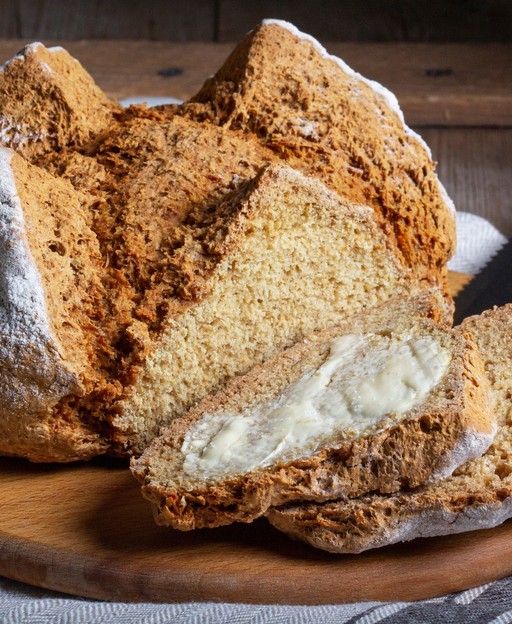
Guinness Brown Bread
Ingredients
Equipment
Method
- Heat the oven to 200°C (180°C fan) / 400°F / Gas 6. Butter a 900 g / 2 lb loaf tin well and dust it with a little wholemeal flour, tipping out the excess.
- In a large bowl, mix the wholemeal flour, plain flour, bread soda, salt and brown sugar so the soda is spread evenly.
- Rub the cold butter into the flour with your fingertips until it looks like coarse crumbs.
- In a jug, whisk the Guinness, buttermilk, egg and treacle together until the treacle has dissolved.
- Pour the wet mix into the dry and stir with a spoon or spatula only until no dry flour is left. It should be a thick, wet batter, too soft to knead.
- Scrape the batter into the tin and smooth the top with a wet spoon. Scatter a few oats or seeds on top if you like.
- Bake in the centre of the oven for 45-50 minutes, until well risen, dark brown and cracked on top, and a skewer pushed into the middle comes out clean. If the top darkens too fast, lay a sheet of foil loosely over it for the last 10 minutes.
- Turn the loaf out and tap the base: it should sound hollow. If it does not, put it back in the oven without the tin for 5 minutes.
- Cool on a wire rack for at least 30 minutes before slicing, or the middle will be gummy.
Notes
Tips
- Room temperature Guinness matters. A cold stout from the fridge can tighten the batter and slow the rise; let it sit out for twenty minutes before you begin.
- Do not be tempted to knead. This is a batter loaf, not a dough. Over-stirring will toughen it.
- Treacle can be sticky and stubborn. Measure it into a spoon that you have first dipped in hot water — it will slide off cleanly.
- Leftovers make extraordinary toast. Slice the next day, toast until the edges catch slightly, and serve with smoked butter or good sharp cheddar.
- The loaf freezes beautifully. Slice it before freezing and you can pull out individual pieces as needed.
There is something quietly joyful about making this bread — it takes about an hour in the oven and half an hour to cool, yet it tastes as though it has taken considerably longer. The Guinness gives it a complexity that surprises people the first time they try a slice, and the crumb is tender and moist in a way that keeps it good for several days. Whether you bake it to bring a little piece of Ireland into your own kitchen, or you have come home from a trip across the water and are already missing those guesthouse breakfasts, this loaf is the perfect edible memory to make again and again. If you enjoyed this bake, try our soda farl recipe or another stout-based classic, our Porter Cake, and see what else pairs perfectly with a warm loaf of soda bread.
Brown bread has been baked in Irish homes for generations — and the tradition travelled with Irish emigrants to every corner of the world. If your family has Irish heritage, they almost certainly baked a version of this bread in the county they came from. Our free Irish Ancestral Heritage Guide helps you trace which county and townland your family called home before emigrating. Discover your ancestral Irish county — free.
Free PDF by email. You’ll also get a few short emails from us; unsubscribe any time.
Tours & experiences you might love


Powered by Viator. Some links are affiliate links — we may earn a small commission at no extra cost to you.
Secure Your Dream Irish Experience Before It’s Gone!
Planning a trip to Ireland? Don’t let sold-out tours or packed attractions spoil your journey. Iconic experiences like visiting the Cliffs of Moher, exploring the Rock of Cashel, or enjoying a guided walk through Ireland’s ancient past often sell out quickly—especially during peak travel seasons.

Booking in advance guarantees your place and ensures you can fully immerse yourself in the rich culture and breathtaking scenery without stress or disappointment. You’ll also free up time to explore Ireland’s hidden gems and savour those authentic moments that make your trip truly special.
Make the most of your journey—start planning today and secure those must-do experiences before they’re gone!