

Fadge Recipe: How to Make Traditional Ulster Potato Farls
If you have ever sat down to a proper Ulster fry, you will know that something sets it apart from its counterparts elsewhere on the island. That something is fadge — the soft, golden, pan-fried potato bread that tucks itself alongside the soda bread, the bacon, and the eggs with an almost humble confidence. Known interchangeably as potato farls or potato bread across Northern Ireland and the border counties, fadge is one of those quietly magnificent things that locals take entirely for granted and visitors never forget. The word farl comes from the Scots fardel, meaning a fourth part, and refers to the way the round of dough is cut into four triangular quarters before cooking.
Potato bread has deep roots in Ulster’s culinary history, shaped almost entirely by necessity. When the potato became the staple crop of rural Ireland in the seventeenth and eighteenth centuries, nothing was ever wasted. Leftover mashed potato was stretched with a little flour and cooked on a griddle over the hearth — a thrifty, filling food that could feed a large family from very modest means. The griddle, a heavy cast-iron plate suspended over the fire, was the heart of the Irish kitchen for centuries, and fadge was one of its most reliable productions. Even today, in kitchens across Belfast, Derry, Tyrone, and Fermanagh, the recipe passed down through families differs only in the smallest of details.
What makes fadge so distinctly Northern Irish is the way it is finished — fried in a little butter or bacon fat until the outside develops a crisp, slightly blistered crust while the inside stays pillowy and soft. Eaten straight from the pan alongside a fried egg and a mug of strong tea, it is one of the most comforting things you can put on a plate. It is also wonderfully simple to make at home, requiring nothing more than a few floury potatoes, a handful of plain flour, and a hot pan.
Ingredients
- 450g (1 lb) floury potatoes, such as Maris Piper or Roosters, peeled and cut into chunks
- 100g (3½ oz / ¾ cup) plain flour, plus a little extra for dusting
- ½ teaspoon fine salt
- 25g (1 oz) butter, melted
- A little butter or neutral oil for frying
Method
- Boil the potatoes in well-salted water until completely tender, about 15–20 minutes. Drain thoroughly and leave them in the colander for a minute or two to allow as much steam as possible to escape — this is important, as excess moisture will make the dough sticky and difficult to work with.
- Return the potatoes to the warm, dry pan and mash them until completely smooth. There should be no lumps. Allow the mash to cool for about 5 minutes until it is warm but not scalding hot.
- Add the melted butter and salt to the mash and stir to combine. Tip in the flour and mix with a wooden spoon or your hands to bring the mixture together into a soft, pliable dough. It should not be sticky — if it is, add a little more flour, a tablespoon at a time.
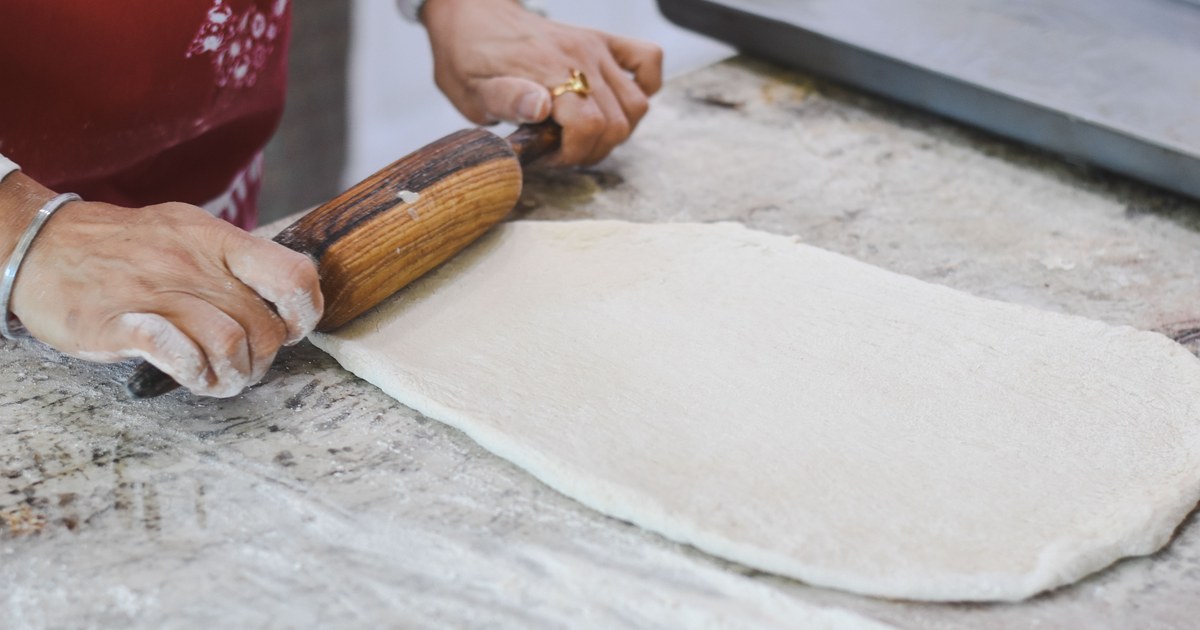
- Lightly flour a clean work surface and turn the dough out onto it. Gently roll or pat the dough into a round roughly 5mm (¼ inch) thick and about 23cm (9 inches) in diameter. Do not overwork it.
- Cut the round into four equal triangular quarters — your farls.
- Heat a heavy frying pan or cast-iron skillet over a medium heat. Add a small knob of butter or a drizzle of oil. When the butter is foaming, lay the farls into the pan.
- Cook for 4–5 minutes on the first side until the underside is golden with patches of brown. Flip carefully and cook for a further 4–5 minutes on the other side. Both sides should be well coloured and the farls cooked through.
- Serve immediately as part of a full Ulster fry, or simply with butter and a fried egg.
Tips
- Use floury rather than waxy potatoes — varieties like Maris Piper, King Edward, or Roosters give the lightest, fluffiest result.
- Getting rid of steam is crucial. Wet mash produces dense, sticky farls, so do not rush this step.
- Fadge is best eaten fresh from the pan, but any leftovers can be stored in the fridge and re-fried the following morning — they are arguably just as good the next day.
- Bacon fat left in the pan from frying rashers is the traditional and arguably most delicious medium in which to fry your farls.
- For a slightly crispier result, press the farls gently with a spatula while they cook.
There is something genuinely moving about a dish this simple carrying this much history. Fadge asks almost nothing of you — a few potatoes, a handful of flour, a warm pan — and in return it gives you a little square of Ulster life that has nourished people for generations. Whether you are making a full Saturday morning fry for the family or just want something warming and honest on a quiet weekday, potato farls are one of Ireland’s loveliest gifts to the breakfast table, and once you have made them yourself, the shop-bought version will never quite do again. If you would like to see another take on this classic bake, our Potato Farl Recipe guide covers the full griddle-bread method in more detail.
☘️ Join 64,000+ Ireland Lovers
Every weekday morning, get Ireland’s hidden gems, local secrets, and travel inspiration — the kind you won’t find in any guidebook.
Subscribe free — enter your email:
Already subscribed? Download your free Ireland guide (PDF)
📲 Know someone who’d love this? Share on WhatsApp →
Love more? Join 43,000 Scotland lovers → · Join 29,000 Italy lovers → · Join 7,000 France lovers →
Free forever · Unsubscribe anytime
Tours & experiences you might love


Powered by Viator. Some links are affiliate links — we may earn a small commission at no extra cost to you.
Secure Your Dream Irish Experience Before It’s Gone!
Planning a trip to Ireland? Don’t let sold-out tours or packed attractions spoil your journey. Iconic experiences like visiting the Cliffs of Moher, exploring the Rock of Cashel, or enjoying a guided walk through Ireland’s ancient past often sell out quickly—especially during peak travel seasons.

Booking in advance guarantees your place and ensures you can fully immerse yourself in the rich culture and breathtaking scenery without stress or disappointment. You’ll also free up time to explore Ireland’s hidden gems and savour those authentic moments that make your trip truly special.
Make the most of your journey—start planning today and secure those must-do experiences before they’re gone!