

Kinsale is a harbour town of about 6,000 people on the south coast of Cork. It has a working fishing fleet, a 17th-century fort, colourful shopfronts, and a reputation for food that has been building for fifty years. Today it is considered one of Ireland’s finest food destinations — not because of a single restaurant or a celebrity chef, but because the entire town has committed to doing it properly.
This Kinsale food guide covers where to eat, what to order, and why the town earned its place on the map. It also covers what else is worth your time when you visit. For the wider picture, see our complete guide to Kinsale, and for a shorter restaurant-by-restaurant rundown, our guide to where to eat in Kinsale.
Want more guides like this? Subscribe to our free Ireland newsletter — practical, honest, no fluff.
Why Kinsale Became Ireland’s Food Capital
The story starts in the 1970s. A group of local restaurant owners, frustrated by the inconsistency of dining out in Ireland at the time, formed the Kinsale Good Food Circle. The idea was straightforward: commit to using local ingredients, maintain a genuine standard, and market the town collectively rather than competing against each other. It was an unusual approach, and it worked.
The timing helped. Kinsale sits at the mouth of the Bandon River, where it meets the sea. The fishing grounds nearby produce crab, lobster, prawns, cod, haddock, and monkfish. Much of the seafood on local menus is landed close by. That is not marketing language — it is geography. The town has built its food identity around exactly that fact.
By the 1980s and 1990s, Kinsale had a culinary reputation that stretched well beyond Cork. Chefs wanted to cook there. Food tourists began making specific trips. The Good Food Circle expanded its membership and raised its standards. The town’s annual Gourmet Festival, held each October, became a fixture of the Irish food calendar.
What makes Kinsale different from most “food towns” is that the quality is not concentrated in one or two expensive restaurants. It runs across the whole range: the harbour takeaway, the gastropub, the bistro, the fine dining room. That breadth is the real achievement.
Where to Eat in Kinsale
Fishy Fishy is one of the best-known seafood restaurants in Kinsale, at Crowley’s Quay. It is open seven days a week from noon, serving both lunch and dinner, with last bookings at 9pm (hours can differ in winter, so check before you go). The menu is built around what has been caught. Chowder, grilled fish, crab claws, and prawns are the things to order. The room is bright and informal. If you are visiting Kinsale for one seafood meal, this is a strong choice.
The Bulman sits out at Summercove, a short walk from Charles Fort, and has Toddies restaurant attached. It is a proper pub with serious food, best known for its seafood, and it looks back across the water to the town. On a clear afternoon it is a fine spot for a pint with a view. For more on the town’s bars, see our piece on Kinsale’s pubs.
Jim Edwards on Market Quay is a family-run bar and restaurant that has been feeding people in Kinsale since 1971. It is a long-standing Good Food Circle member and a good example of the gastropub end of the town’s food scene, with seafood a strong suit.
Bastion is where Kinsale moves into more ambitious territory. It holds a Michelin star and serves a tasting menu built around local seasonal ingredients, with seafood a highlight. It is open for dinner only, on a limited number of evenings a week, so this is the place for a proper dinner that takes its time. Booking ahead is essential.
For something casual, Bruno’s on Main Street does wood-fired pizza and homemade pasta. The Blue Haven is a boutique hotel on Pearse Street with a bar and bistro, a seafood café with an oyster bar, and more dining options besides — central and dependable.
The town also has a number of good food shops and bakeries, and a year-round farmers’ market on Short Quay every Wednesday. It is not a difficult place to eat well at any budget.
What to Order
Seafood is the obvious answer, but it is worth being specific about what Kinsale does particularly well.
Kinsale chowder is a rich, cream-based soup thick with fish, prawns, and sometimes shellfish. There are variations — some add smoked fish, some are heavier than others — but the basic version is very good across most of the town’s restaurants. It has become something of a local signature dish.
Crab claws from the nearby waters are served in garlic butter in most seafood restaurants. When they are fresh, they are exceptional. Ask the restaurant when the crab was caught if you want reassurance.
Prawns — Dublin Bay prawns, also known as langoustines — show up on menus in several forms: sautéed, grilled, in a bisque. Again, freshness is the key variable and Kinsale’s fishing access makes fresh prawns easier to find here than in many places.
For non-seafood options, local lamb and beef from Cork farms appear frequently. The county has strong dairy farming too, and local cheeses feature on many menus and in the town’s shops.
Love reading about Ireland’s best food towns and hidden gems? Subscribe free to our weekly newsletter and we’ll bring the best of Ireland straight to your inbox.
What Else to Do in Kinsale
The food is the main draw, but Kinsale has enough else going on to justify a full day or an overnight stay.
Charles Fort is a 17th-century star-shaped fortress at Summercove, about 3km from the town centre. It is one of the best-preserved star forts in Ireland. The site is managed by the Office of Public Works and charges a small entry fee. Give it at least an hour — the views over the harbour and out to sea are worth the walk alone. Our complete guide to Charles Fort has opening times and tickets.
James Fort sits across the water from Charles Fort, on the Castlepark peninsula at the western side of the harbour entrance. It was built between 1602 and 1604, some 70 years before Charles Fort, and is less well preserved, but it is free to visit and the coastal walk out to it from town (about 3km) is pleasant.
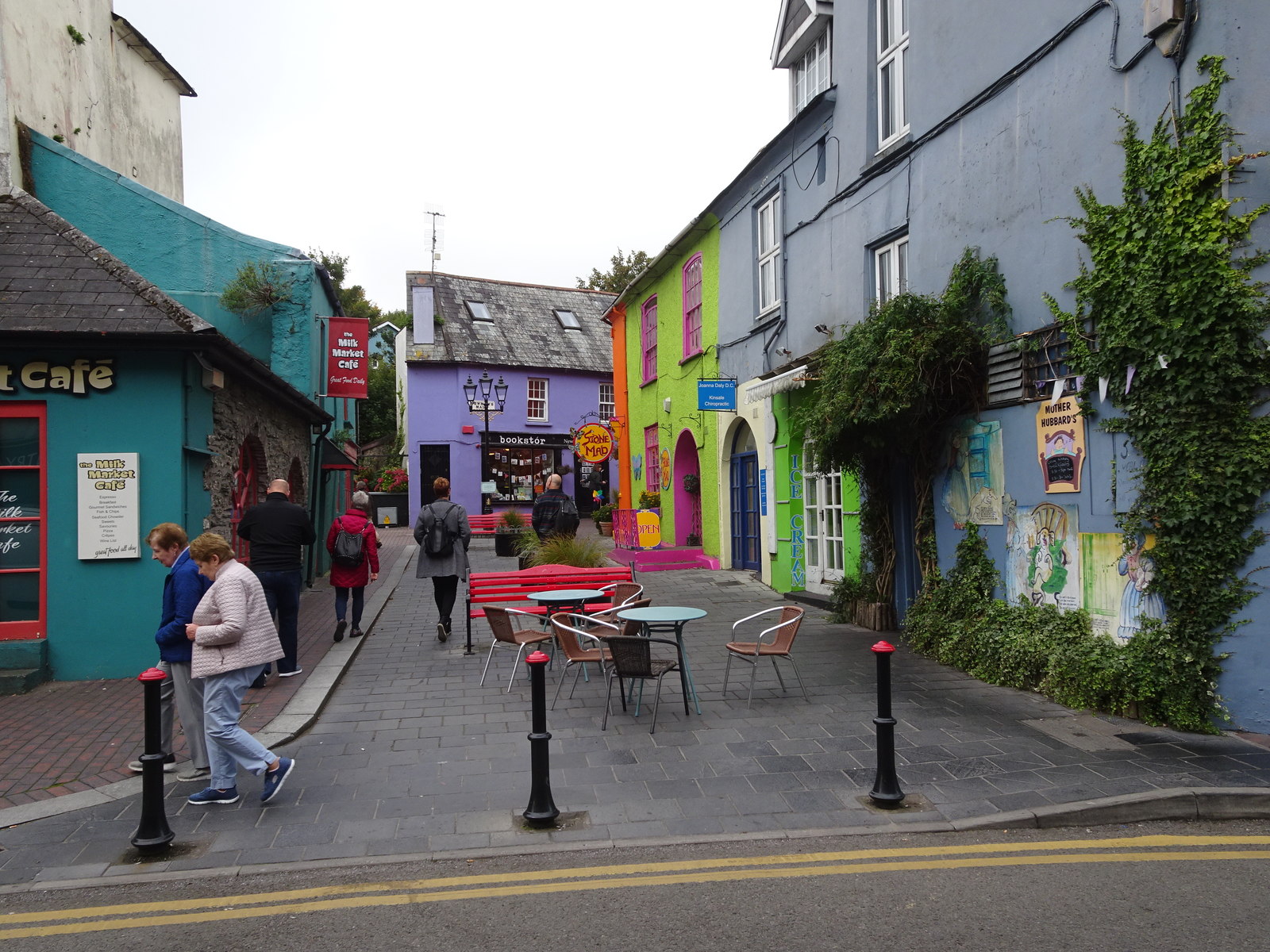
The town itself is compact and worth wandering on foot. The streets around Market Square and Pearse Street have the highest concentration of the colourful painted shopfronts that Kinsale is known for. The harbour is a working one — you will usually see fishing boats alongside leisure craft — and the waterfront is a good place to spend time without spending money.
Desmond Castle, also known as the French Prison, is a tower house in the town centre dating from around 1500. It houses the International Museum of Wine, which tells the story of Ireland’s “Winegeese” — a name with its roots in the “Wild Geese,” the Irish soldiers who left for France after the Treaty of Limerick in 1691 — and the wine trade that followed. Opening is seasonal and tours are best pre-booked, so check the Heritage Ireland listing before you go. It is an unusual and genuinely interesting piece of Irish history.
For those who like the water, the Bandon estuary and Kinsale’s inner harbour are popular with kayakers and sailors, and a longer Bandon-to-Kinsale blueway has been proposed by Cork County Council. The Old Head of Kinsale, about 15km south-west, is one of the most dramatic headlands on the Irish coastline. Access to the headland itself is restricted — the Old Head Golf Links occupies the promontory and there is no public right of access to it — but there is a signposted walking loop of roughly 6km from the Speckled Door pub near Ballinspittle that gives cliff views without crossing the course.
When to Visit Kinsale
Kinsale is busiest in July and August. Restaurants fill up, parking gets difficult, and the narrow streets become slow to navigate. If you have a choice, late May, June, or September offer similar weather odds with fewer crowds.
The Kinsale Gourmet Festival is held each autumn, traditionally in October, with special menus and events at participating Good Food Circle restaurants. Check the Good Food Circle’s festival page for current dates. It is worth planning around if food is your primary reason for visiting.
The town is accessible year-round. Winter brings quieter streets and lower accommodation prices. Many restaurants stay open through the colder months, though hours may be reduced and some close on certain days, so check before you go. The harbour looks particularly good on clear winter days when the light is low and the crowds have gone.
Getting There and Getting Around
Kinsale is about 30km south of Cork city, roughly a 35 to 40-minute drive. There is no train service. Bus Éireann route 226 runs between Cork (Kent Station) and Kinsale via Cork Airport throughout the day; the journey takes about an hour, so check the timetable before you travel.
Driving is the most flexible option, particularly if you want to visit Charles Fort, the Old Head, or the surrounding countryside. Parking in the town centre can be tight in summer — there is a large car park on the pier which is usually the most reliable option.
Cork Airport is about 20km from Kinsale and has direct flights from the UK and several European cities. If you are flying into Ireland specifically to visit Kinsale, Cork is the airport to use.
A Practical Note on Booking
Kinsale’s top restaurants fill up quickly in summer, particularly at weekends. Book Fishy Fishy and Bastion as soon as you know your travel dates. Bastion in particular takes reservations well ahead and is open for dinner only. For the pubs and more casual places you can usually walk in, but earlier in the evening is safer than later.
Accommodation in Kinsale is largely small hotels, guesthouses, and B&Bs (see our guide to B&Bs in Kinsale). Prices reflect the town’s reputation — it is not cheap — but staying in the town rather than driving in from Cork means you can walk between restaurants and not worry about the roads.
Fifty years of serious cooking does not happen by accident. Kinsale made a deliberate choice in the 1970s to do things properly, and it has kept that commitment ever since. If you have been meaning to go, go. If you want to know what else the town is known for beyond its food, read why Kinsale is famous.
Get our full Ireland travel guide delivered to your inbox — restaurants, towns, hidden stops. Subscribe free here.
Tours & experiences you might love


Powered by Viator. Some links are affiliate links — we may earn a small commission at no extra cost to you.
Secure Your Dream Irish Experience Before It’s Gone!
Planning a trip to Ireland? Don’t let sold-out tours or packed attractions spoil your journey. Iconic experiences like visiting the Cliffs of Moher, exploring the Rock of Cashel, or enjoying a guided walk through Ireland’s ancient past often sell out quickly—especially during peak travel seasons.

Booking in advance guarantees your place and ensures you can fully immerse yourself in the rich culture and breathtaking scenery without stress or disappointment. You’ll also free up time to explore Ireland’s hidden gems and savour those authentic moments that make your trip truly special.
Make the most of your journey—start planning today and secure those must-do experiences before they’re gone!