

Kinsale is one of those Irish towns that rewards you for making the detour. Located on the south coast of County Cork, about 25 kilometres from Cork City, it sits where the River Bandon meets the sea. It’s a compact, walkable place with genuine history, good food, and a harbour that draws people back year after year. Whether you’re planning a day trip or a longer stay, here’s what you need to know. This Kinsale guide covers everything you need for a day trip or a longer stay.
Getting to Kinsale
Kinsale doesn’t have its own train station, so you’ll need to drive or take a bus. From Cork City, the journey by car takes around 30 minutes via the R600. Bus Éireann runs regular services from Cork Bus Station on Parnell Place directly to Kinsale, with the trip taking roughly 50 minutes. If you’re travelling from Dublin, the drive south takes around two and a half to three hours depending on traffic.
Parking is available at the pier and along the seafront. The town itself is compact enough to walk everywhere once you’ve arrived, so the car can stay parked for most of your visit.
Love stories like this? Get the best of Ireland — history, travel tips, food, and hidden gems — delivered straight to your inbox. Subscribe to the Love Ireland newsletter →
The History Behind the Town
Kinsale has played a significant role in Irish history. The Battle of Kinsale in 1601 was a turning point in the island’s story. A combined force of Irish chieftains and Spanish troops faced off against English forces here, and the defeat that followed led to what historians call the Flight of the Earls — when the Gaelic aristocracy left Ireland for good. That single event reshaped the country’s culture and politics for centuries.
That history is still visible around the town today. Charles Fort, on the eastern shore of the harbour at Summer Cove, is one of the finest examples of a star-shaped fort in Europe. Built in the 1670s, it remained in military use until 1922. Today it’s managed by the Office of Public Works and is open to visitors year-round, though hours vary by season. Entry costs around €5 for adults. The views from the ramparts across the harbour and out to sea make the climb well worth it.
James Fort, built in 1603 in the wake of the Battle of Kinsale, sits on the opposite shore. It’s less developed as a visitor site and, unlike Charles Fort, has no scheduled public ferry or shuttle — it’s reached by road, though summer harbour cruises pass close by and give good views of it from the water. Seeing the two forts facing each other across the water gives you a real sense of how the harbour was once defended and how important this stretch of coastline was to those in power.
The Colourful Streets of the Town Centre
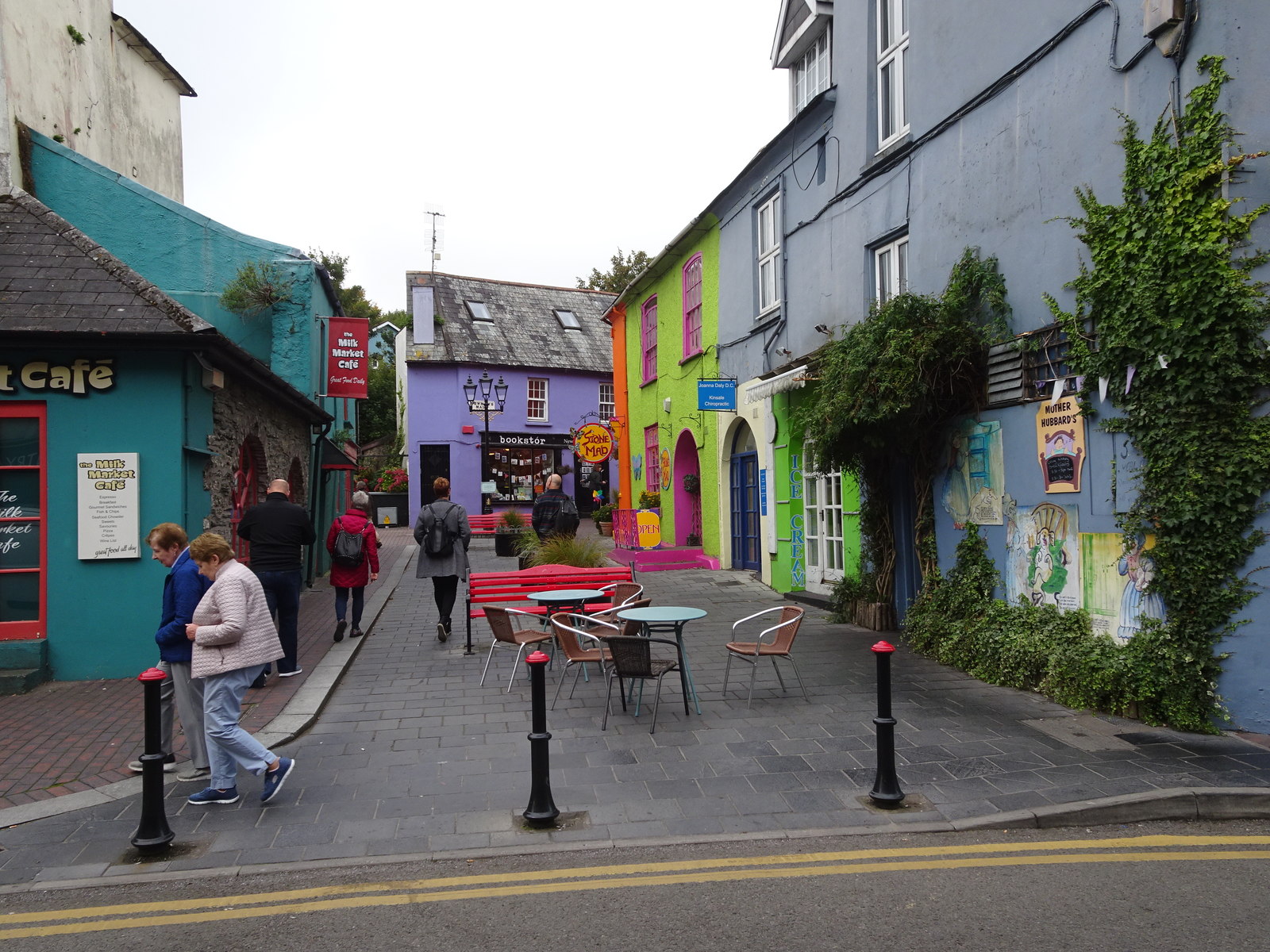
One of the most photographed parts of Kinsale is its town centre. The buildings along Market Street, Main Street, and Pearse Street are painted in bold, vivid colours — deep yellow, orange, cobalt blue, rich red — and the effect is striking on a clear day. The town has long maintained this look, and it makes Kinsale instantly recognisable.
The narrow lanes running between the main streets are worth exploring at a slow pace. Bow Lane and the streets around Market Square have a mix of independent shops, delis, and cafés. It’s not a high-street shopping destination, but you’ll find decent bookshops, craft goods, and locally made food products that make for better souvenirs than most.
The town also has a good selection of traditional pubs. Many are centuries old, and several have live music on weekend evenings during the summer months.
Food: Kinsale’s Best-Known Claim
Kinsale markets itself as the gourmet capital of Ireland. While that’s partly a tourism line, the standard of eating here genuinely is higher than in many similarly sized Irish towns. The town hosts the Kinsale Gourmet Festival each October, which draws chefs and food producers from across the country.
The Fishy Fishy Restaurant is probably the most well-known spot in town. It focuses on locally landed seafood and books up quickly during summer months, so reservations are worth making well in advance. For something more casual, the Market Bar and the Spaniard Inn are both reliable options. The Spaniard, located in the village of Scilly just outside the town centre, has been serving food and drink since around 1650 and is one of the oldest pubs in Ireland.
Fresh fish and seafood are the obvious local speciality. Kinsale is a working fishing port, and you’ll find catches of the day on menus throughout the town. Even a straightforward chowder eaten at the pier can be a highlight of a visit here.
Love stories like this? Get the best of Ireland — history, travel tips, food, and hidden gems — delivered straight to your inbox. Subscribe to the Love Ireland newsletter →
Walking Around the Harbour
The harbour walk is one of the nicest ways to spend an hour in Kinsale without spending a penny. The path runs along the waterfront from the town pier towards the marina, with views across to the wooded slopes on the far bank. In good weather, the boats moored in the harbour and the reflections on the water make for a genuinely pleasant scene.
From the marina, you can continue along the shore towards Summercove, a small village on the eastern side of the harbour, and from there up to Charles Fort. The full walk from the town centre to Charles Fort takes around 30 to 40 minutes on foot. The terrain is mostly flat until the final approach to the fort itself.
Boat trips are also available from the pier during summer. These include short harbour cruises and longer trips out to the Old Head of Kinsale, a dramatic headland about 15 kilometres south of the town. The Old Head has a working lighthouse and striking cliff views, though much of the headland is privately owned and only partially accessible to visitors. The headland is also home to Old Head Golf Links, one of the most dramatic cliff-top golf courses in the world — several holes play along sheer Atlantic cliffs, and the course has drawn celebrities and pros since opening in 1997. Green fees run into the hundreds of euro and tee times are usually booked well in advance, but even non-golfers often stop for a look at the setting.
Where to Stay
Accommodation in Kinsale ranges from small B&Bs in the town centre to larger hotels on the outskirts. The Actons Hotel overlooks the harbour and is one of the more established options in town. The Blue Haven Hotel, on Pearse Street, is centrally located with its own restaurant and bar. Both get busy during the summer season, so booking ahead is strongly recommended if you’re visiting between June and August.
There are also self-catering options and holiday homes in and around Kinsale, which can work well for longer stays or family groups looking for more space and flexibility.
When to Visit
Summer — June to August — is the busiest period, and the town can feel crowded on warm weekends. It’s at its most scenic during these months, but expect higher accommodation prices and limited parking. The shoulder months of May and September offer a good chance of decent weather without the peak-season congestion.
For a beach day, Garretstown Beach is about 15 minutes’ drive south of town — a long sandy strand popular for surf lessons and one of the better swimming beaches in the area.
Out of season, Kinsale is quieter but many restaurants and visitor attractions operate on reduced hours, so it’s worth checking ahead before you travel.
The Kinsale Arts Weekend in July is one of the better-regarded arts festivals in Munster. The Gourmet Festival in October is the other major annual event worth timing a trip around. Both bring a strong atmosphere to the town and attract visitors from across Ireland and beyond.
Love stories like this? Get the best of Ireland — history, travel tips, food, and hidden gems — delivered straight to your inbox. Subscribe to the Love Ireland newsletter →
Planning Your Visit
Kinsale works well as a day trip from Cork City, but it genuinely rewards a longer stay. With the forts, harbour walks, food scene, and surrounding coastline, there’s enough here to fill two to three days without rushing. The Wild Atlantic Way passes close to the town, so it can also be incorporated into a broader road trip along Ireland’s southern and western coasts.
If you’re building an itinerary for Cork and surrounds, Kinsale pairs well with a visit to Cobh, the Jameson Distillery in Midleton, or Blarney Castle — all within an hour’s drive. Cork City itself is worth a day of its own, and the combination makes for a strong few days in Munster.
For a town of its size, Kinsale punches above its weight on almost every measure — history, scenery, food, and atmosphere. It’s a straightforward choice for anyone building a Cork County itinerary.
Thinking about it seriously?
If you’ve started actually planning a move, our complete the full Move to Ireland guide walks through every step, every cost, and the paperwork that catches most people out.
Tours & experiences you might love


Powered by Viator. Some links are affiliate links — we may earn a small commission at no extra cost to you.
Secure Your Dream Irish Experience Before It’s Gone!
Planning a trip to Ireland? Don’t let sold-out tours or packed attractions spoil your journey. Iconic experiences like visiting the Cliffs of Moher, exploring the Rock of Cashel, or enjoying a guided walk through Ireland’s ancient past often sell out quickly—especially during peak travel seasons.

Booking in advance guarantees your place and ensures you can fully immerse yourself in the rich culture and breathtaking scenery without stress or disappointment. You’ll also free up time to explore Ireland’s hidden gems and savour those authentic moments that make your trip truly special.
Make the most of your journey—start planning today and secure those must-do experiences before they’re gone!
Subscribe Free