

County Roscommon sits in the heart of Connacht. It has no dramatic coastline. It does not appear on the tourist circuit between Dublin and Galway. For Americans who want a quieter, more connected life in Ireland, this is exactly the point. Roscommon offers something the well-known counties cannot: genuine, unhurried Irish life at a pace most visitors never find.
What County Roscommon Actually Looks Like
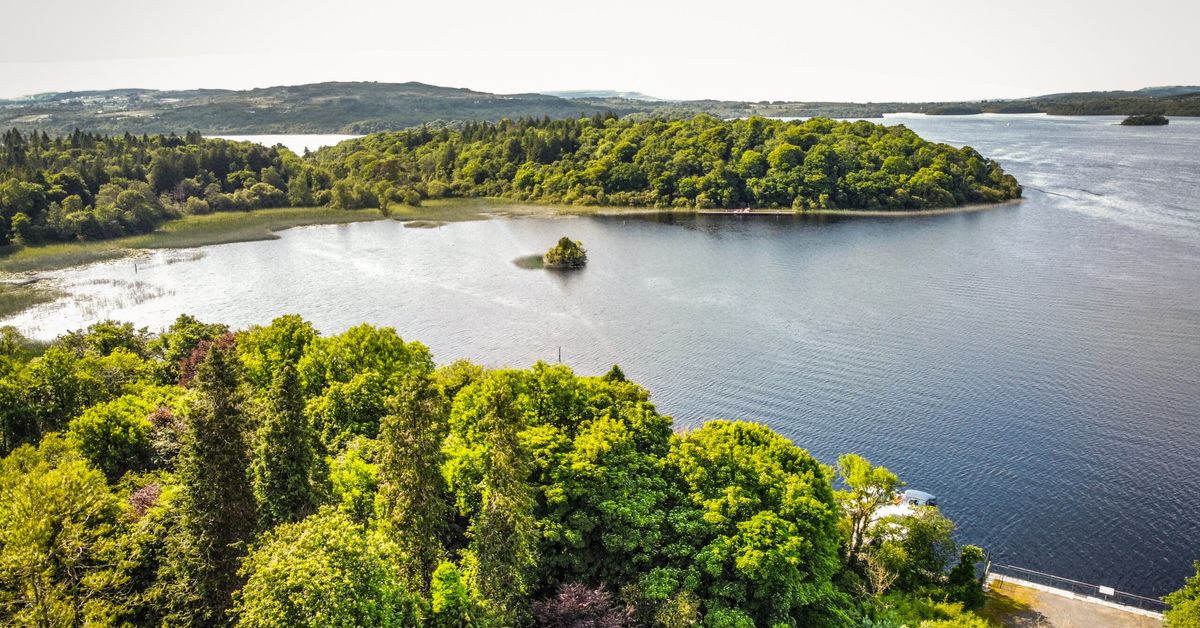
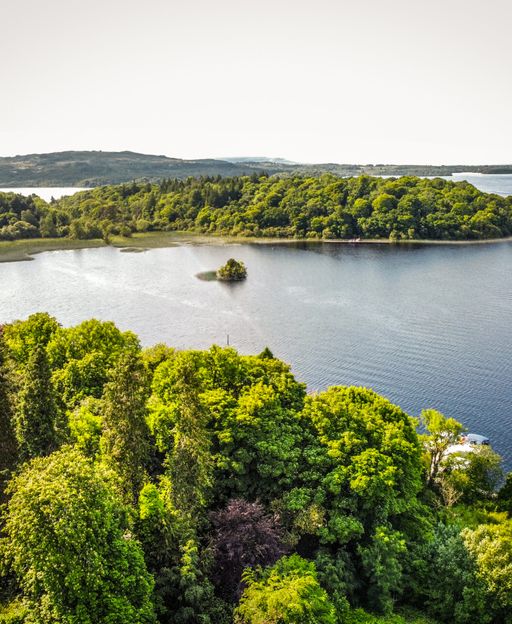
Roscommon covers roughly 2,500 square kilometres of central Connacht. Lakes define the landscape. Lough Key is the county’s most celebrated. It lies just outside Boyle in the north. Forest park, woodland paths, and small wooded islands sit across still water. It does not look real.
Beyond the water, the land rolls in wide pastures. Stone walls cross the fields. Villages appear every few kilometres — some with a post office and a pub, others with less. Roscommon town holds about 6,500 people. It functions as the county’s main hub. Boyle, in the north, is the historic market town where Boyle Abbey has stood since 1161.
This is not a county that sells itself hard. It does not need to. For a fuller look at the county’s sights, see our complete guide to County Roscommon.
Why Americans Are Discovering Roscommon
Three things draw Americans to Roscommon in particular.
The first is cost. Property costs largely less than in Kerry, Clare, or Galway — in line with the wider trend our cost of living in rural Ireland guide covers. The county sits beyond the tourist trail and prices reflect that. For Americans from high-cost cities, the difference is striking.
The second is ancestry. Roscommon was one of the hardest-hit counties during the Great Famine of 1845 to 1852. Its population fell from around 250,000 in 1841 to well under 200,000 by 1851. Many of those who left went to America — Boston, New York, Chicago, and the mill towns of New England. A substantial share of Irish-American families with Connacht roots trace them to Roscommon — see our guide to Irish surnames from Roscommon.
Strokestown Park is the county’s most important site for understanding this. The Famine Museum holds the original letters from one of the largest organised Famine evictions in Irish history. In 1847, landlord Denis Mahon chartered four ships to carry nearly 1,500 tenants to Canada. The letters and ledgers are on display at Strokestown. Visitors often arrive expecting a museum and leave something different.
The third draw is simplicity. Roscommon has no airport, no motorway junction, no commuter sprawl. Towns close early. People know their neighbours. For Americans tired of city life, this is not a problem. It is the whole point.
☘️ Researching your Irish roots?
Our free step-by-step guide walks you through every record, database, and DNA tool to trace your Irish family — no experience needed.
Life in Roscommon’s Towns
Roscommon town is the county capital. It has a medical centre, secondary schools, and a small number of restaurants. The ruins of a 13th-century Dominican priory stand in the town centre. The castle stands at the edge of town. Built in 1269 by Justiciar Robert de Ufford, it is partially restored and free to visit.
Boyle, 25 kilometres north, is the county’s other main centre. It sits beside the Boyle River, just below Lough Key. The town has a reputation as a base for walkers and cyclists. The Lough Key Forest Park and Miners Way and Historical Trail are both nearby. Boyle Abbey, founded in 1161, is one of the best-preserved medieval monasteries in Ireland.
Strokestown lies to the south. It is a planned estate town, built in the early 1700s. One wide street runs through the centre, with matching houses on each side. It is small, quiet, and unlike any other town in Ireland.
Castlerea, in the west, serves the rural villages around it. Clonalis House is a few kilometres outside town. It is the ancestral home of the O’Conor Don — one of Ireland’s oldest Gaelic families.
What to Expect Day to Day
Life in Roscommon runs at a different tempo from Dublin or Cork. Here is what residents describe:
- Commuting: Roscommon town is roughly 145 km from Dublin, about 2 hours via the M6 and N61. Boyle has a direct rail link to Dublin Connolly taking around 2.5 hours. For remote workers, both options make occasional city trips manageable.
- Schools: Primary and secondary schools serve all main towns. Galway and Athlone offer further education within an hour.
- Healthcare: Roscommon University Hospital is the county’s main facility. University Hospital Galway is under an hour by car.
- Shopping: Roscommon town has the main supermarkets. Athlone and Galway provide the wider range most households need.
- Community: GAA clubs, tidy towns committees, drama groups, and walking clubs form the social backbone of most towns. Americans who join one often find the rest follows.
Roscommon and the Irish-American Connection
For many Irish-Americans, Roscommon is not just a place to live. It is a place to reconnect. The county sent a large share of its people to America during the Famine years. Families from Boyle, Elphin, and Ballaghaderreen appear in ships’ manifests from the 1840s, heading for Boston and New York.
The Strokestown Famine Museum holds the actual estate papers from one of the largest organised Famine emigrations. In 1847, landlord Denis Mahon sent nearly 1,500 tenants to Canada on four chartered ships. One ship, the Virginius, had a mortality rate above 30% on the crossing. The original letters and ledgers are at Strokestown Park today.
For Americans who trace their Connacht roots, Strokestown becomes a kind of pilgrimage. It makes the abstract personal.
☘️ Enjoying this? 64,000+ Ireland lovers get stories like this every week. Subscribe free →
What Makes Roscommon Difficult
Roscommon is not for everyone. These are the genuine challenges residents mention:
- A car is essential: Without one, daily life outside the main towns is very difficult. Rural bus routes are limited. Plan to drive.
- Limited nightlife and dining: Roscommon has good pubs and a small number of restaurants. It does not have a city’s range. If variety matters to you, this will be a real adjustment.
- Weather: Connacht gets heavy rainfall. The county averages around 1,000 millimetres per year. Winters are mild but grey. This suits some people perfectly. Others find it hard by February.
- Internet coverage: Coverage is improving but still patchy in some rural townlands. Check your specific location before committing to remote work from the countryside.
For Americans who want quiet, town life, and real Irish life, Roscommon delivers. It is one of Ireland’s most overlooked counties for this reason.
Thinking seriously about making the move? The guide to moving to Ireland covers the process in full — from first steps to life once you arrive.
Frequently Asked Questions
Is County Roscommon a good place to live for Americans?
County Roscommon suits Americans who want real rural Irish life. It costs less than Kerry or Clare. It has good road and rail links and strong town life ties. It does not suit those who need a city’s pace. For slow-living movers, it is one of Ireland’s most overlooked gems.
How far is County Roscommon from Dublin?
Roscommon town is roughly 145 kilometres from Dublin. The drive takes about 2 hours via the M6 motorway and N61. Boyle has a direct rail service to Dublin Connolly, taking around 2.5 hours. For remote workers who need occasional city access, both routes are practical.
What is Strokestown Park and why do Irish-Americans visit it?
Strokestown Park is a Georgian estate with a Famine Museum in County Roscommon. It holds the original letters from one of the largest organised Famine evictions in Irish history. In 1847, landlord Denis Mahon chartered four ships for nearly 1,500 tenants bound for Canada. The papers survive at Strokestown. For Irish-Americans tracing Connacht roots, it provides a direct, documented connection to the emigration that created the Irish diaspora.
What is Lough Key Forest Park in County Roscommon?
Lough Key Forest Park covers 350 hectares of mixed woodland near Boyle. It has walking and cycling trails, a treetop walk, boat hire, and castle ruins on an island in the lake. It is one of the most beautiful inland parks in Ireland. It is a big reason Boyle has grown in appeal for both visitors and new residents.
Many visitors to Roscommon come this Family History Month to trace Connacht roots. Our free Irish Ancestry Guide covers parish records, the 1926 Census, and the key databases for tracing Connacht family lines: see the free Irish Ancestry Guide.
☘️ Join 64,000+ Ireland Lovers
Every weekday morning, get Ireland’s hidden gems, local secrets, and travel inspiration — the kind you won’t find in any guidebook.
Subscribe free — enter your email:
Already subscribed? Download your free Ireland guide (PDF)
📲 Know someone who’d love this? Share on WhatsApp →
Love more? Join 43,000 Scotland lovers → · Join 29,000 Italy lovers → · Join 7,000 France lovers →
Free forever · Unsubscribe anytime
Tours & experiences you might love


Powered by Viator. Some links are affiliate links — we may earn a small commission at no extra cost to you.
Secure Your Dream Irish Experience Before It’s Gone!
Planning a trip to Ireland? Don’t let sold-out tours or packed attractions spoil your journey. Iconic experiences like visiting the Cliffs of Moher, exploring the Rock of Cashel, or enjoying a guided walk through Ireland’s ancient past often sell out quickly—especially during peak travel seasons.

Booking in advance guarantees your place and ensures you can fully immerse yourself in the rich culture and breathtaking scenery without stress or disappointment. You’ll also free up time to explore Ireland’s hidden gems and savour those authentic moments that make your trip truly special.
Make the most of your journey—start planning today and secure those must-do experiences before they’re gone!