

Cesair is the first person to land in Ireland, according to the old stories. She arrives by sea with fifty women and three men. Then the Flood comes. Only one of them lives to tell the tale. The story is a legend from medieval Irish manuscripts, and it says a lot about how the Irish saw their own past.
Most people know Fionn and Cú Chulainn. Fewer know where the Irish said it all began. It began with Cesair, a woman who ran from a flood and found a western island at the edge of the world.
Who Was Cesair in Irish Mythology?
Cesair (also spelt Cessair) is the leader of the very first group to reach Ireland. Her story sits in the Lebor Gabála Érenn. English speakers call it the Book of Invasions. Monks compiled it between the 9th and 12th centuries.
Those monks had a puzzle. Ireland had its own old tales. The Bible had its own history of the world. They wanted the two to fit together. So they made Cesair a granddaughter of Noah in many versions. Her father Bith is a son of Noah in the best-known telling.
That means the story is partly folklore and partly clever medieval scholarship. It is not history. It is a window into how early Irish writers thought about their land. We tell the wider tale in our guide to the six mythological invasions of Ireland.
The Voyage to the Edge of the World
In the story, Noah refuses Bith a place on the Ark. So Bith decides to find a land the Flood will never reach. He asks his daughter Cesair for advice. She tells him to build a boat and sail to a far western island.
Different tellings give different crews. Many say three men and fifty women set out. The men are Bith, a steersman called Ladra, and Fintan mac Bóchra, Cesair’s husband. The rest are women.
They sail for years. Some tellings say they crossed from Egypt, others from further east. Everyone agrees on one thing. They reached Ireland 40 days before the Flood.
Landing at Bantry Bay
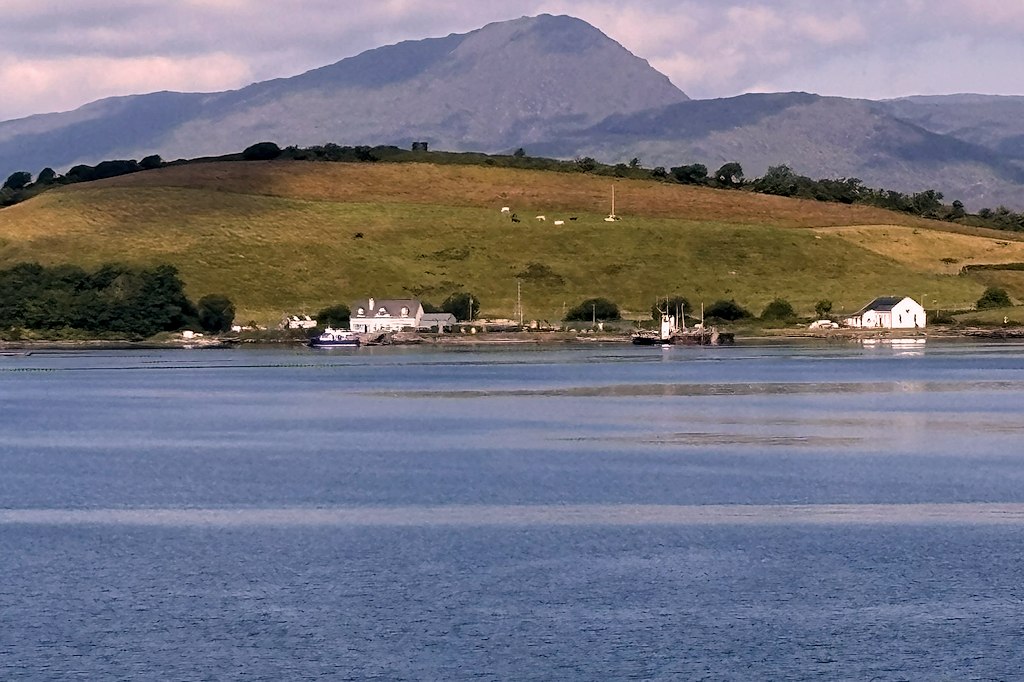
The old writers name the landing place as Dún na mBárc, “the fort of the ships”. The Annals of the Four Masters place it on Bantry Bay, on the County Cork coast near the modern town of Bantry — the townland of Donemark still carries the old name today. That is the bay shown above.
It is hard to imagine a better spot for such a legend. Hills fold down to the water on every side, and Whiddy Island sits out in the bay. On a clear day you can see for miles down the inlet. On a misty one, it feels as if the world stops.
The group had not planned well. There were three men and fifty women. They soon split the women between the men. Each man took a share. Fintan, as Cesair’s husband, took a large group. The old tales then say Ladra died first, and the rest fell apart.
☘️ Enjoying this? 64,000 Ireland lovers get stories like this every week. Subscribe free →
The Flood and the Man Who Survived
Then the water rose. Bith and Ladra died. Cesair is said to have died of grief, though the tellings disagree about where. Many place her death at Cúil Ceasra in Connacht. The rest of her followers drowned.
Only Fintan mac Bóchra lived. Here the story turns magical. He used shape-shifting to survive. He became a salmon and rode out the Flood. Later he took the shape of an eagle and a hawk.
The tales say Fintan lived for thousands of years after the Flood. He watched every later wave of settlers arrive. He became Ireland’s living memory. He is the one who “remembered” the past for the later kings. Read more about that kind of memory-keeper in our piece on Fionn mac Cumhaill.
What Does the Cesair Story Mean?
Scholars see several layers in this tale. Here are the main ideas:
- A Christian frame. The monks tied Ireland to the Bible. That gave Irish history the same ancient roots as the rest of Europe.
- A woman at the start. Ireland itself is named after women in the later invasions. Cesair fits a long pattern of female figures at the heart of the land.
- An older myth, reworked. Some scholars think the story hides an earlier pagan tale about a goddess. The monks may have given her a new name and a Christian setting.
- A memory that outlives disaster. Fintan survives so that someone can remember. That idea runs through all Irish storytelling.
You can see the same love of island, sea and Otherworld in the tale of Manannán mac Lir. A shape-shifting survivor also sits close to the bold romance in Étaín and Midir. And the name Ériu, from which “Ireland” comes, appears in the ancient legends behind Ireland’s best-loved names.
Where to Feel the Legend Today
You can visit the landscape that the old writers had in mind.
- Bantry, County Cork. The town that gives its name to the bay the old writers linked to Cesair’s landing.
- Donemark. A townland just outside Bantry whose name is a modern form of Dún na mBárc, keeping the old story on the map.
- Whiddy Island. The island out in Bantry Bay, reachable by a short passenger ferry from Bantry town.
Check opening times and ferry details with local sources before you travel. Atlantic weather on the west Cork coast changes quickly, so bring a waterproof jacket and good boots.
If you enjoy the older side of Irish culture, our guide to the Dagda is a good next read.
A Story Told at the Edge of the Sea
Irish families have told stories like this by the fire for many years. They carried them to Boston, Chicago and Sydney. The details change. The feeling stays the same.
Cesair is a small, sad, brave figure. She finds a home at the end of the world and loses it within weeks. Yet the story lives on. Next time you stand on a West Cork shore and look at the sea, think of her. In Ireland, the coast has always had a story to tell.
Frequently Asked Questions
Who was Cesair in Irish legend?
Cesair was the leader of the first people to reach Ireland. The Book of Invasions makes her the daughter of Bith, a son of Noah in many versions. She came before the Flood.
Where did Cesair land in Ireland?
The old texts name Dún na mBárc, which the Annals of the Four Masters place on Bantry Bay in County Cork. The name means “the fort of the ships”.
What happened to Cesair?
The tellings differ. Many say she died of grief before or during the Flood. Her death is often placed at Cúil Ceasra in Connacht.
Who survived the Flood in the Cesair story?
Only Fintan mac Bóchra, her husband, survived. The tales say he used shape-shifting to live through it, and later became Ireland’s living memory.
Is the story of Cesair true?
No. It is a medieval legend written by monks in the Book of Invasions. It shows how early Irish writers linked their land to the Bible, not what happened.
☘️ Join 64,000+ Ireland Lovers
Every Friday, get Ireland’s lesser-known corners, local stories and secrets, straight to your inbox.
Subscribe free — enter your email:
Already subscribed? Download your free Ireland guide (PDF)
📲 Know someone who’d love this? Share on WhatsApp →
Free forever · One email per week · Unsubscribe anytime
Tours & experiences you might love


Powered by Viator. Some links are affiliate links — we may earn a small commission at no extra cost to you.
Secure Your Dream Irish Experience Before It’s Gone!
Planning a trip to Ireland? Don’t let sold-out tours or packed attractions spoil your journey. Iconic experiences like visiting the Cliffs of Moher, exploring the Rock of Cashel, or enjoying a guided walk through Ireland’s ancient past often sell out quickly—especially during peak travel seasons.

Booking in advance guarantees your place and ensures you can fully immerse yourself in the rich culture and breathtaking scenery without stress or disappointment. You’ll also free up time to explore Ireland’s hidden gems and savour those authentic moments that make your trip truly special.
Make the most of your journey—start planning today and secure those must-do experiences before they’re gone!