

Beef Dripping on Toast Recipe: The Old-Fashioned Irish Farmhouse Snack Worth Reviving
There are few things more deeply rooted in the everyday life of the Irish farmhouse kitchen than a thick slice of brown bread, toasted over a range, and spread generously with salted beef dripping. Long before supermarket shelves were lined with spreads and cooking oils, rendered beef fat was the quiet workhorse of the rural Irish kitchen — saved carefully from the Sunday roast, poured into a stone crock, and kept cool in the pantry for the week ahead. Nothing was wasted, and this simple snack was proof that the most humble of ingredients could produce something genuinely satisfying.
For generations of Irish farming families, beef dripping on toast was far more than a snack — it was sustenance. Farmhands might take it as an early breakfast before milking, children would come in from the cold to find a slice waiting by the fire, and it was the kind of thing a grandmother made without a recipe, guided entirely by habit and instinct. The dripping itself, when properly rendered and left to set, separates into two layers: the firm white fat on top and the darker, intensely savoury jelly beneath — known as the “brown jelly” — which many considered the best part of all.
This recipe nearly vanished entirely during the latter half of the twentieth century, when animal fats fell out of fashion and convenience foods took over. But it never quite disappeared from memory. Ask anyone who grew up on a farm in Tipperary, Galway, or Donegal in the 1950s or 60s, and you will almost certainly find someone with a vivid, fond recollection of that dark, savoury smell rising from the range. Today, with a renewed appreciation for traditional cooking and nose-to-tail eating — see also our crubeens recipe for another old farmhouse classic — beef dripping deserves its proper place back on the Irish table.
Ingredients
- 500g (about 1 lb 2 oz) raw beef fat or suet, trimmed from a joint, or good-quality collected roasting drippings
- 120ml (½ cup / 4 fl oz) cold water (for the rendering process)
- ½ to 1 tsp fine sea salt, to taste
- 4 thick slices of good Irish brown soda bread (try our treacle bread recipe) or wholemeal batch loaf
- Flaky sea salt, for finishing
- Freshly ground black pepper, optional but traditional
Method
- If using raw beef fat, cut it into small pieces roughly 2cm (¾ inch) in size. Place it in a heavy-bottomed saucepan with the cold water. The water prevents scorching at the start and evaporates as the fat renders.
- Set the pan over a low heat — no higher than about 120°C / 250°F if using an oven method, or the lowest possible flame on the hob. Allow the fat to melt slowly, stirring occasionally. This will take approximately 45 minutes to 1 hour. Do not rush it with high heat, or the dripping will taste bitter and greasy rather than clean and savoury.
- Once the fat is fully liquid and any solid pieces (the “cracklings”) have turned lightly golden and crisp, remove the pan from the heat. Allow to cool for five minutes.
- Strain the liquid fat through a fine-mesh sieve or a piece of muslin cloth into a clean heatproof bowl or ceramic crock. Discard the solids, or salt them lightly and eat them as a cook’s treat — they are delicious.
- Stir in the fine sea salt while the fat is still liquid. Pour into a clean jar or stone crock and allow to cool at room temperature for 20 minutes before transferring to the refrigerator.
- After several hours in the fridge, the dripping will have set firm and pale on top, with a layer of dark, gelatinous meat juices beneath. Both layers are correct and both are to be used.
- When ready to serve, toast your brown bread to a good, firm, dark crust — not pale. Irish farmhouse toast was never anaemic.
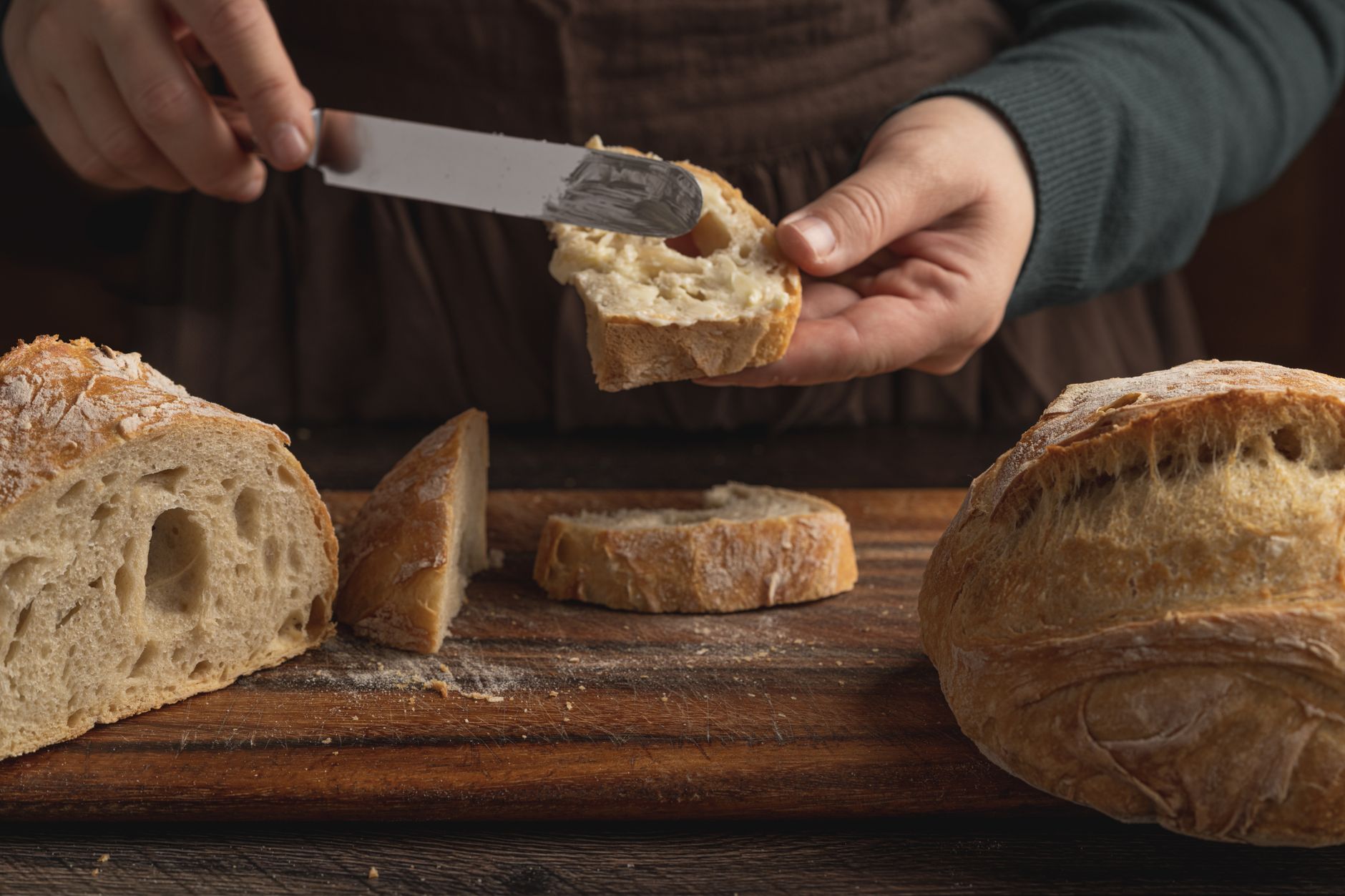
- While the toast is still hot, spread it generously with the dripping, scooping through both the white fat and the brown jelly layer for full flavour. Finish with a pinch of flaky salt and a little black pepper if you like. Eat immediately.
Tips
- The brown jelly beneath the fat is intensely flavoured — do not discard it. It is arguably the finest part of the whole crock.
- Good brown soda bread or a seeded wholemeal loaf works best; a thin white sliced loaf will not support the weight of the dripping or do justice to the flavour.
- Stored in a sealed jar in the refrigerator, properly rendered dripping will keep well for up to three weeks.
- If you do not have raw beef fat, the collected drippings from a roast rib of beef or a brisket work beautifully — simply strain, cool, and salt in the same way.
- A very light scraping of the dripping on hot toast is pleasant; a generous, ungrudging spread is the traditional way, and the right way.
There is something quietly moving about a recipe this simple surviving as long as it has — passed not through cookbooks but through kitchens, from one pair of hands to another, across generations of Irish family life. Beef dripping on toast asks nothing of you except good bread, good fat, and a little patience at the stove, and in return it gives you something that no modern spread has ever quite managed to replicate: that deep, roasted, savoury warmth that feels, above all else, like home.
☘️ Join 64,000+ Ireland Lovers
Every Friday, get Ireland’s hidden gems, local secrets, and travel inspiration — the kind you won’t find in any guidebook.
Already subscribed? Download your free Ireland guide (PDF)
Free forever · One email per week · Unsubscribe anytime
Tours & experiences you might love


Powered by Viator. Some links are affiliate links — we may earn a small commission at no extra cost to you.
Secure Your Dream Irish Experience Before It’s Gone!
Planning a trip to Ireland? Don’t let sold-out tours or packed attractions spoil your journey. Iconic experiences like visiting the Cliffs of Moher, exploring the Rock of Cashel, or enjoying a guided walk through Ireland’s ancient past often sell out quickly—especially during peak travel seasons.

Booking in advance guarantees your place and ensures you can fully immerse yourself in the rich culture and breathtaking scenery without stress or disappointment. You’ll also free up time to explore Ireland’s hidden gems and savour those authentic moments that make your trip truly special.
Make the most of your journey—start planning today and secure those must-do experiences before they’re gone!