

One Christmas cake feels like plenty today. But in the Irish kitchens of our great-grandparents it was usual to bake three: one for Christmas Eve, one for New Year’s Eve and one for Little Christmas in January. The old accounts are in Ireland’s National Folklore Collection. Here is the story behind the three cakes, and our recipe for a rich Irish Christmas cake to bake now, in November, so it has time to mature.
Not one, not two, but three
In 2020 the food writer Kate Ryan went looking for forgotten Irish Christmas food lore. She searched the Main Manuscripts Collection of the National Folklore Collection, recorded between 1935 and 1970 by a small group of folklorists who wrote down the everyday lives of ordinary people, including their Christmas customs.
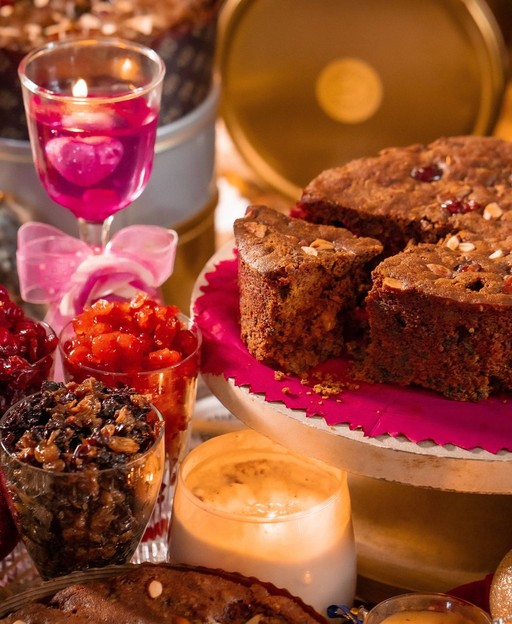
What she found, she wrote in the Cork paper The Echo, was that it was usual practice to make not one but three Christmas cakes, “rich with fruit, spices and alcohol”. They were eaten over the twelve days of Christmas, and each one had its own night.
The first cake: midnight on Christmas Eve
☘️ Join 64,000+ Ireland Lovers
Every weekday morning, get Ireland’s hidden gems, local secrets, and travel inspiration — the kind you won’t find in any guidebook.
Subscribe free — enter your email:
Free forever · Unsubscribe anytime
The first cake was cut at midnight on Christmas Eve, to mark the end of the Christmas fast. The grown-ups had it with whiskey punch, the children with a fruit wine punch, or it came simply with cups of tea.
After the cake came biscuits, homemade or expensive bought ones, flavoured with festive spices such as mace, nutmeg or cinnamon. The men took them with a drop of whiskey, the women with a glass of porter or wine. Ryan suggests that our habit of getting in, or giving, a tin of fancy biscuits at Christmas could be traced back to that Christmas Eve plate.
The Night of Two Suppers
Christmas Eve was a fasting day, and Ryan writes that many people still keep it that way. The fast was broken around 6pm with a simple supper of salted fish (usually ling in Cork), potatoes and a white sauce. Then came the visits: neighbours, the elderly and widows were brought gifts of a Yule log, cakes or tea, before everyone went to Mass.
Back home after midnight, the feast began: a slice of Christmas cake, biscuits, cups of tea and slices of ham that had hung for a couple of weeks, gently smoking, inside the chimney over the open fire. Two meals in one night gave Christmas Eve its old name, the Night of Two Suppers.
Cake left out for the fairies
The folklore accounts also tell of a table set for visitors nobody could see. Before bed, bread, “nice cakes” and wine were put on the kitchen table, and a Christ Candle, carved out of a turnip, was lit on the windowsill to welcome in the fairies on Christmas night. Others left the front and back doors unlocked for Mary and Joseph, and one account said the feast was for the dead to come back and enjoy themselves. Ryan points out how close this is to leaving out cookies and milk for Santa and a carrot for his reindeer. For more old customs around the day, see our Irish Christmas traditions, then and now.
The second and third cakes
The second cake was cut on New Year’s Eve, and the third at Epiphany, 6 January, which in Ireland is called Little Christmas. So the last slice of Christmas came almost two weeks after the first.
The rest of the Irish Christmas table is in Irish Christmas food: pudding, cake, turkey and brandy butter, with the classic Irish Christmas pudding, Cork spiced beef and the Christmas goose that came before turkey.
Cook the Irish classics at home ☘️
Get our free Irish recipes, with the traditional method for each dish.
How to make an Irish Christmas cake (one 20 cm cake, about 20 slices)
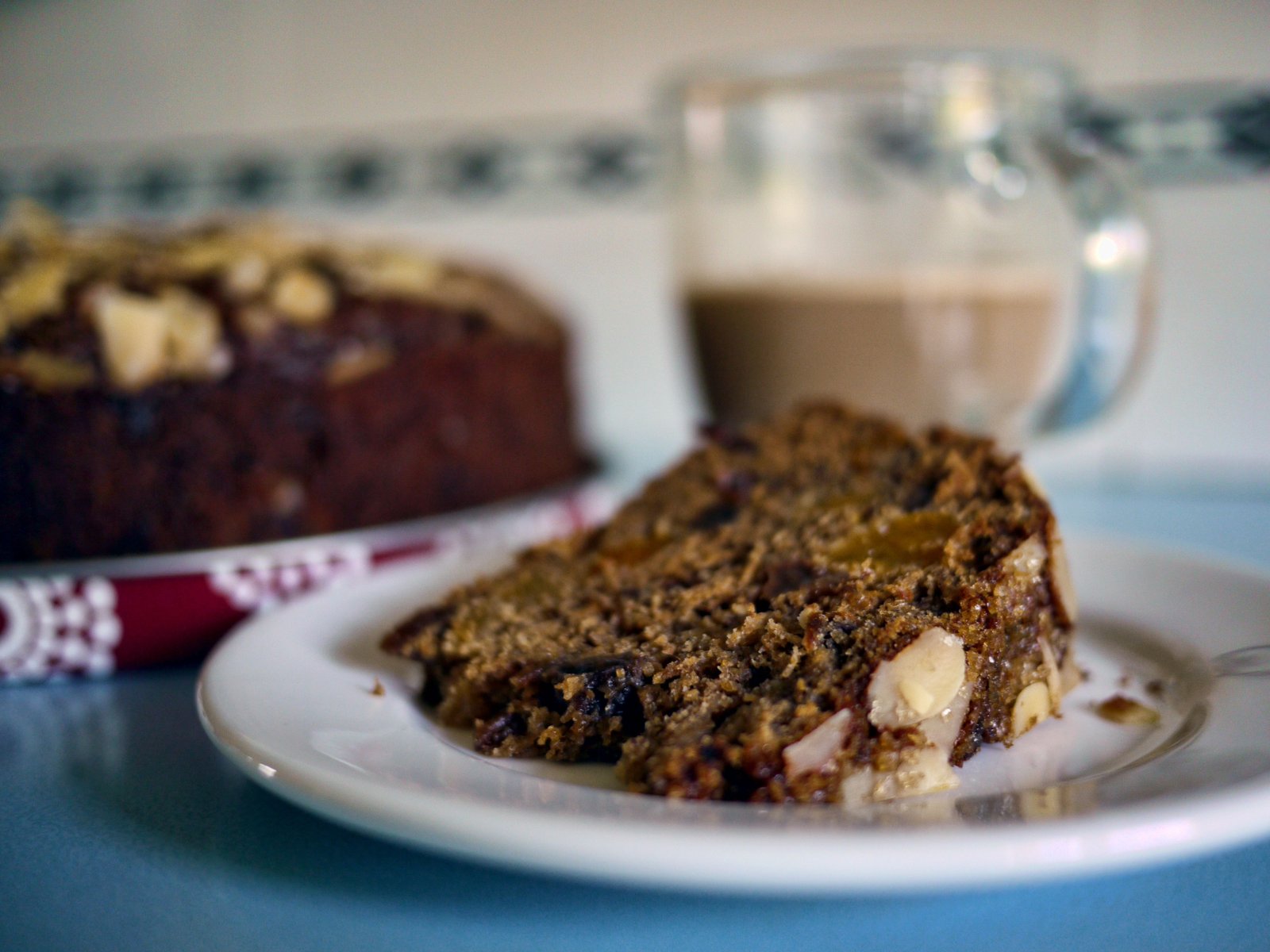
This is our own recipe for a classic dark Irish Christmas cake, fed with Irish whiskey. Many cooks bake it in November and feed it every week or two until Christmas, then cover it with marzipan and white icing in the last week. For a version with Guinness in the fruit, see Chris’s traditional Irish Christmas cake.
Ingredients
- 350 g raisins
- 350 g sultanas
- 200 g currants
- 100 g glacé cherries, halved
- 50 g mixed peel
- Grated zest and juice of 1 orange
- 150 ml Irish whiskey, plus 2 to 3 tablespoons for feeding
- 225 g butter, softened
- 225 g soft dark brown sugar
- 4 large eggs, beaten
- 1 tablespoon black treacle
- 250 g plain flour
- 50 g ground almonds
- 1 teaspoon mixed spice, half a teaspoon of ground cinnamon and a quarter teaspoon of grated nutmeg
- A pinch of salt
Method
- The night before, put all the dried fruit, cherries and peel in a large bowl with the orange zest, orange juice and 150 ml whiskey. Stir, cover and leave overnight.
- Heat the oven to 140°C (120°C fan, 275°F). Line a deep 20 cm (8 in) round tin with a double layer of baking paper that stands well above the rim, and tie a band of brown paper or newspaper around the outside.
- Beat the butter and sugar until light and fluffy. Add the eggs a little at a time, beating well, then beat in the treacle.
- Fold in the flour, ground almonds, spices and salt, then the soaked fruit and any liquid left in the bowl.
- Spoon into the tin, level the top and make a slight hollow in the middle so the cake rises flat.
- Bake for 3 and a half to 4 hours, until a skewer pushed into the centre comes out clean. If the top browns too quickly, lay a sheet of foil over it.
- Leave to cool completely in the tin. Prick the top with a skewer, spoon over a tablespoon of whiskey, then wrap in baking paper and foil and keep in a tin in a cool place.
- Feed with a tablespoon of whiskey every week or two until Christmas. In the last week, cover with marzipan and white icing.
To bake three cakes the old way, divide the mixture between three 15 cm (6 in) round tins. The cakes will be shallower, so start checking with a skewer after 1 hour 45 minutes. Cut the first on Christmas Eve, the second on New Year’s Eve and the third on Little Christmas.
Did your family cut the Christmas cake on Christmas Eve, or wait for the day itself?
Sources
- Not one, not two, but three cakes at Christmas time – here’s some old traditions, Kate Ryan, The Echo (Cork), 4 December 2020
- The National Folklore Collection on dúchas.ie
Checked November 2026.
Tours & experiences you might love


Powered by Viator. Some links are affiliate links — we may earn a small commission at no extra cost to you.
Secure Your Dream Irish Experience Before It’s Gone!
Planning a trip to Ireland? Don’t let sold-out tours or packed attractions spoil your journey. Iconic experiences like visiting the Cliffs of Moher, exploring the Rock of Cashel, or enjoying a guided walk through Ireland’s ancient past often sell out quickly—especially during peak travel seasons.

Booking in advance guarantees your place and ensures you can fully immerse yourself in the rich culture and breathtaking scenery without stress or disappointment. You’ll also free up time to explore Ireland’s hidden gems and savour those authentic moments that make your trip truly special.
Make the most of your journey—start planning today and secure those must-do experiences before they’re gone!