

Every box of Barry’s Tea goes back to one man and one shop in Cork in 1901. This is the story of Barry’s Tea, from a counter on Prince’s Street to kitchens across Ireland, and the plain Irish scones we would put beside the cup.
Baking for the Irish Christmas table? ☘️
Our free Irish Christmas Baking Guide has traditional Irish scones, soda bread, the Christmas cake and the pudding, step by step.
1901: James J. Barry and a shop in Cork
Barry’s Tea was founded in Cork in 1901 by James J. Barry. TeaTime magazine, which profiled the company in March 2021, says he set out to blend and sell only quality teas. The family’s own history says that until the 1960s their teas came mostly from India and Sri Lanka, and were sold mainly from one shop on Prince’s Street, Cork.
Think about that for a moment. For about sixty years, Barry’s was a tea you bought over a shop counter in Cork city. It was a Cork tea long before it was an Irish one.
1934: a cup for blending
☘️ Join 64,000+ Ireland Lovers
Every weekday morning, get Ireland’s hidden gems, local secrets, and travel inspiration — the kind you won’t find in any guidebook.
Subscribe free — enter your email:
Free forever · Unsubscribe anytime
The second generation took the craft further. In 1934 James’s son, Anthony Barry, was awarded the Empire Cup for tea blending. Both the company and TeaTime magazine point to it as proof of the family’s skill in the tea trade.
1960: the tea leaves the shop
The big change came with the third generation. In 1960 Anthony’s son, Peter Barry, started selling the tea wholesale and began buying tea from East Africa. The company says the new blends drew an “incredible reaction”, and that their freshness, flavour and “distinctive golden colour” became a Barry’s signature.
Then the tea travelled, one step at a time: first to other shops in Cork, then out to the suburbs, then to the rest of the country. In time, the company writes, Barry’s became “a much loved national brand”, and it puts that growth down to word of mouth.
The man who tastes it three times a day
Every blend needs someone to taste it. When TeaTime magazine wrote about the company in 2021, the master tea blender was Denis Daly, who trained under Anthony Barry and had been blending and buying its tea for more than 50 years. Tasting, usually three times a day, was a big part of his job, and once a year he visited tea gardens in Rwanda, Kenya and the Assam Valley in India to meet the growers.
A taste of home for the Irish abroad
Here is the part we think many Irish-American families will recognise. Camille O’Flanagan, speaking for Barry’s Tea, told TeaTime that the brand has a long reputation “in Ireland and abroad, especially amongst ex-pats”. “Many of our customers have grown up with our tea, and it reminds them of home or of a loved one,” she said. And: “Drinking our tea is often a source of comfort and familiarity, especially to those living overseas.”
Their Gold Blend, she added, “would be a staple item in many households in Ireland”. If you have ever had tea in an Irish kitchen, you will know it rarely comes alone. A scone, a slice of tea brack or a biscuit from the tin usually turns up beside it.
What goes with the pot: plain Irish scones
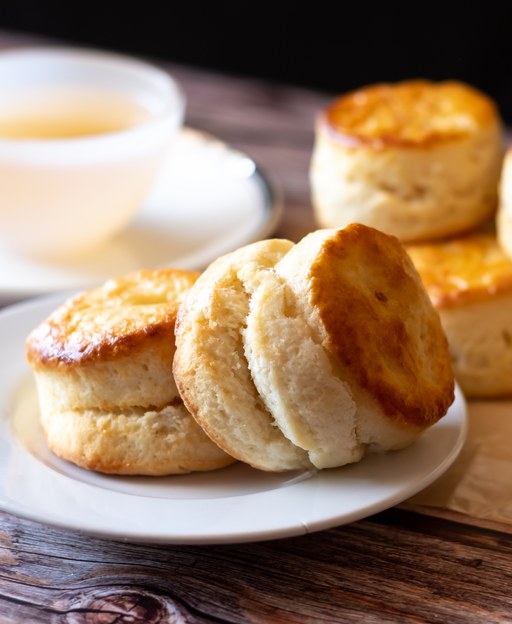
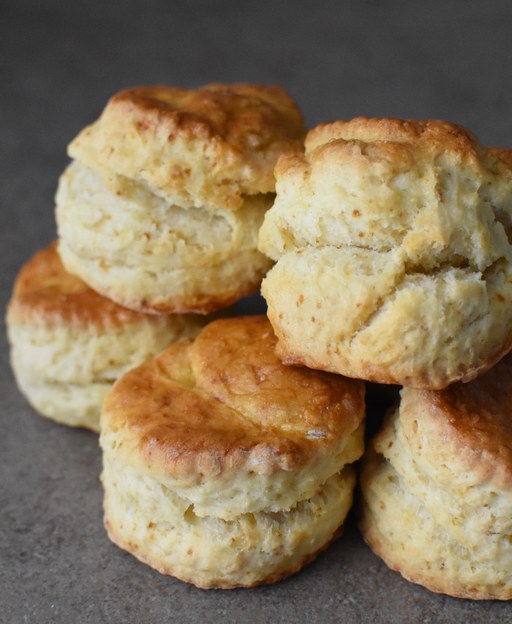
Neither source gives a recipe, so this one is our own plain method: no creaming, a light hand and a hot oven. For more versions, see our traditional Irish scones, the raisin scones from the Irish baker abroad, Irish soda scones and the scone masterclass with Patrick Ryan.
How to make plain Irish scones (makes about 10)
Ingredients
- 450 g plain flour, plus a little for the table
- 4 teaspoons baking powder
- A pinch of salt
- 50 g caster sugar
- 100 g cold salted Irish butter, in small cubes
- 1 large egg
- About 220 ml milk, plus a little to brush the tops
- Butter and jam, to serve
Method
- Heat the oven to 220°C (200°C fan) and dust a baking tray with flour.
- Sift the flour, baking powder and salt into a large bowl and stir in the sugar.
- Rub the cold butter into the flour with your fingertips until it looks like fine breadcrumbs.
- Beat the egg with the milk. Make a well in the flour, pour in most of the liquid and mix with a knife or your hand to a soft, slightly sticky dough. Add the rest of the milk only if dry bits remain.
- Turn the dough onto a floured table and pat it, without kneading, to about 2.5 cm thick.
- Cut straight down with a 6 cm cutter (do not twist), gather the scraps once and cut again. Put the scones on the tray, close together, and brush the tops with milk.
- Bake for 12 to 15 minutes, until risen and golden and they sound hollow underneath.
- Cool for a few minutes on a wire rack, then split and serve warm with butter, jam and a pot of tea.
Bake the Irish Christmas classics ☘️
Get our free Irish Christmas Baking Guide: traditional Irish scones, soda bread, Christmas cake and Christmas pudding.
Have you ever carried a box of Irish tea home in your suitcase?
Sources
- Our Story, Barry’s Tea (company history page)
- Barry’s Tea, TeaTime magazine, 8 March 2021
Checked November 2026.
Secure Your Dream Irish Experience Before It’s Gone!
Planning a trip to Ireland? Don’t let sold-out tours or packed attractions spoil your journey. Iconic experiences like visiting the Cliffs of Moher, exploring the Rock of Cashel, or enjoying a guided walk through Ireland’s ancient past often sell out quickly—especially during peak travel seasons.

Booking in advance guarantees your place and ensures you can fully immerse yourself in the rich culture and breathtaking scenery without stress or disappointment. You’ll also free up time to explore Ireland’s hidden gems and savour those authentic moments that make your trip truly special.
Make the most of your journey—start planning today and secure those must-do experiences before they’re gone!