

Ireland’s abbeys, cathedrals, and ancient churches are among the most atmospheric and historically rich sites on the island. From soaring Gothic cathedrals in the heart of thriving cities to lonely monastic ruins perched on Atlantic rock, these sacred places tell the story of Irish faith, learning, and resilience across nearly 1,500 years. Here is your guide to the finest ecclesiastical heritage sites in Ireland.
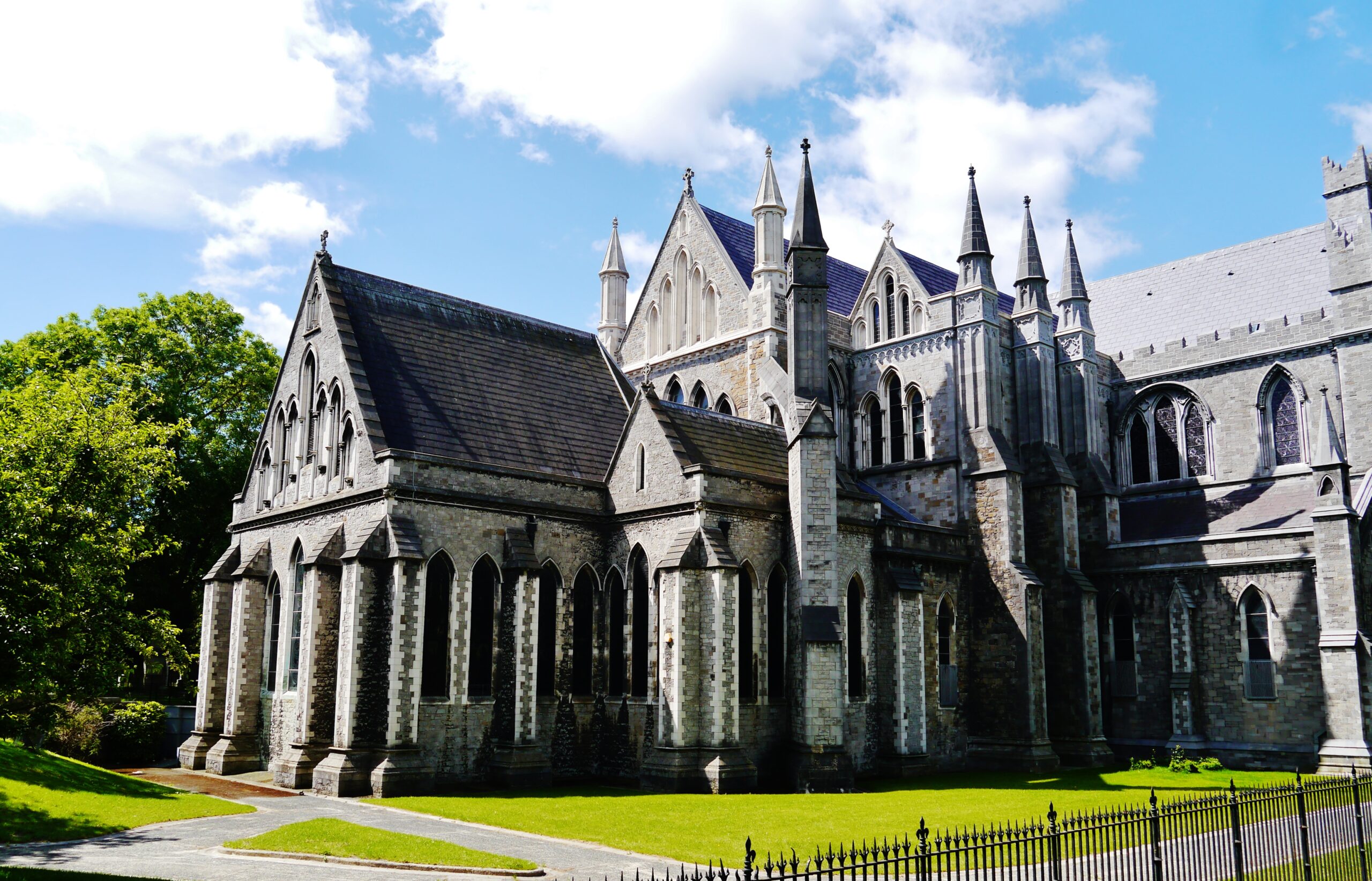
Ireland’s Great Cathedrals
From medieval foundations to Victorian masterpieces, Ireland’s cathedrals are among the most magnificent buildings on the island.
St Patrick’s Cathedral, Dublin
St Patrick’s Cathedral in Dublin, founded in 1191, is the national cathedral of the Church of Ireland and the largest church in Ireland. Standing alongside the older Christ Church Cathedral, it has served as a centre of worship and learning for over 800 years. Jonathan Swift, author of Gulliver’s Travels, served as Dean from 1713 to 1745 and is buried within the cathedral. The building features stunning medieval architecture, beautiful stained glass windows, and a peaceful close that feels a world apart from the bustle of the city outside.
Saint Mary’s Cathedral, Limerick
Saint Mary’s Cathedral, founded in 1168, stands majestically over the city of Limerick on the banks of the River Shannon. It is the oldest building in Limerick still in daily use and one of the finest medieval churches in Ireland. Highlights include the unique 15th-century misericords — carved oak choir stalls depicting mythical creatures, angels and animals — the only set of their kind in Ireland. The Romanesque west doorway and the pre-Reformation stone altar are among its most treasured features, while the cathedral’s peaceful grounds offer panoramic views across the Shannon.
St Colman’s Cathedral, Cobh
St Colman’s Cathedral dominates the skyline of Cobh, its soaring single spire rising above tiers of colourful Victorian houses overlooking Cork Harbour. Built between 1868 and 1915 in the Gothic Revival style, it took 47 years to complete and its 91-metre spire makes it the tallest church in Ireland. The cathedral houses a 49-bell carillon — the largest in Ireland and one of the largest in Europe — which rings out across the harbour. Inside, the cathedral features richly decorated marble floors, ornate mosaics, and stunning stained glass windows.
Saint Fin Barre’s Cathedral, Cork
Saint Fin Barre’s Cathedral rises majestically in the heart of Cork City, a masterpiece of French Gothic Revival architecture designed by William Burges and consecrated in 1870. Built on the site where St Fin Barre founded his monastery in the 7th century, the cathedral features an extraordinary richness of sculpture, stained glass, and mosaic work throughout its interior. The three soaring spires and the gilded “Resurrection Angel” atop the east end are landmarks of the Cork skyline. The cathedral is widely regarded as one of the finest examples of Gothic Revival architecture in Ireland.
St Mel’s Cathedral, Longford
St Mel’s Cathedral in Longford, built between 1840 and 1856, is the cathedral church of the Diocese of Ardagh and Clonmacnois. Designed in the neoclassical style with an imposing Ionic portico, it was devastated by fire on Christmas Day 2009 and underwent a painstaking five-year restoration. Reopened in 2014, the restored cathedral is considered one of the finest ecclesiastical buildings in Ireland, with a stunning new ceiling, restored stained glass, and a remarkable resilience that mirrors the spirit of the Longford community.
Ancient Abbeys & Monasteries
Ireland’s ruined abbeys and monastic settlements are windows into a thousand years of religious life — from the earliest Celtic monks to the great Cistercian foundations.
Glendalough, County Wicklow
For thousands of years people have been drawn to “the valley of the two lakes” for its spectacular scenery, rich history and abundant wildlife. Glendalough is one of Ireland’s most important monastic settlements, founded by St Kevin in the 6th century. The remains include a near-perfect round tower, stone churches, decorated crosses, and the atmospheric cathedral — all set against the dramatic backdrop of the Wicklow Mountains. The valley is also the starting point for some of the best walking trails in the east of Ireland. Read our complete Glendalough guide for more.
Bective Abbey, County Meath
Bective Abbey was founded in 1147 for the Cistercian Order by Murchad O’Maeil-Sheachlainn, King of Meath. Ireland’s second Cistercian abbey and a “daughter house” to nearby Mellifont, Bective played a significant role in medieval Irish politics — its abbot held a seat in the Parliament of the Pale. The impressive ruins include a fortified tower, a beautiful cloister, and substantial remains of the chapter house. More recently, the abbey gained fame as a filming location for Braveheart.
Jerpoint Abbey, County Kilkenny
Jerpoint Abbey is a ruined Cistercian abbey founded in the second half of the 12th century, near Thomastown in County Kilkenny. One of the finest monastic ruins in Ireland, it features an outstanding collection of medieval stone carvings — the cloister arcade is decorated with remarkable sculptured figures of knights, bishops, saints, and mythical creatures. The abbey’s Romanesque architecture, peaceful setting beside the Little Arrigle River, and atmospheric graveyard make it one of the most rewarding heritage sites to visit in the southeast. See our full guide to Jerpoint Abbey for more.
Sligo Abbey
This Dominican friary has dominated Sligo town centre since the mid-13th century, when it was founded by Maurice FitzGerald. Despite being damaged by fire and conflict over the centuries, substantial remains survive including an impressive carved altar — the only medieval sculpted altar still in its original position in any Irish monastic church. The delicate Gothic and Renaissance tomb sculptures and the well-preserved cloister make Sligo Abbey one of the best-preserved medieval monuments in the west of Ireland.
Rock of Cashel, County Tipperary
Perched dramatically atop a limestone outcrop in County Tipperary, the Rock of Cashel is one of Ireland’s most spectacular archaeological sites. This collection of medieval buildings includes a round tower, high cross, Romanesque chapel, Gothic cathedral, and a 15th-century castle — all within a fortified enclosure. The site was the traditional seat of the Kings of Munster for several hundred years before being granted to the Church in 1101. Cormac’s Chapel, completed in 1134, is considered the finest example of Romanesque architecture in Ireland, with its vaulted stone roof, frescoes, and ornate carved doorway. Read our full Rock of Cashel visitor’s guide for opening hours and tips.
Sacred & Historic Sites
Some of Ireland’s most powerful places of pilgrimage and spiritual heritage stand apart from the traditional abbey or cathedral.
Skellig Michael
Skellig Michael is a twin-pinnacled crag rising from the Atlantic Ocean 12 kilometres west of the Iveragh Peninsula in County Kerry. A UNESCO World Heritage Site, it is home to one of the most remarkable monastic settlements in the world — a cluster of six beehive huts, two oratories, and a small church clinging to a rocky ledge 180 metres above the sea. Founded in the 6th century, the monastery was occupied by monks for over 600 years, enduring extreme isolation and Atlantic storms. More recently, the island gained worldwide fame as a filming location for Star Wars. Access is by boat from Portmagee, weather permitting, and is limited to protect this extraordinary site.
Drumcliffe Church & Yeats’ Grave
Drumcliffe is world-renowned as the final resting place of William Butler Yeats, Ireland’s Nobel Prize-winning poet. Yeats chose to be buried here beneath the shadow of Ben Bulben, the dramatic flat-topped mountain that inspired much of his poetry. His grave bears the epitaph he composed himself: “Cast a cold eye on life, on death. Horseman, pass by!” The site has been an important religious centre since the 6th century, when St Columba founded a monastery here, and a fine high cross from that era still stands in the churchyard.
This guide covers 12 of Ireland’s finest abbeys, cathedrals, and sacred sites — updated for 2026.
Read Next
Plan the rest of your trip with 73 top tourist attractions in Ireland.
Cong, Inistioge and Ardmore, all with ruined abbeys or churches nearby, are among our seven small villages.
Frequently Asked Questions
Are Ireland’s historic sites open to the public?
Many of Ireland’s heritage sites are managed by the Office of Public Works (OPW) and are open to the public year-round, though hours vary seasonally. The Heritage Card (heritageireland.ie) gives unlimited access to OPW-managed sites for a single annual fee — excellent value for heritage enthusiasts.
What is the best way to explore Ireland’s historic sites?
Combining self-guided exploration with occasional guided tours gives the best experience. Local guides bring history to life with stories that aren’t in any guidebook. Many heritage towns offer walking tours — check with the local tourist office on arrival.
How well-preserved are Ireland’s ancient monuments?
Ireland has remarkably well-preserved ancient monuments thanks to its largely rural landscape and relatively low levels of industrial development. Sites like Newgrange, Knowth, and the Rock of Cashel are UNESCO World Heritage sites recognised for their exceptional condition.
Can you visit Ireland’s heritage sites independently or do you need a guide?
Most sites welcome independent visitors and provide informational panels and audio guides. However, for deep historical context and access to areas not open to the public, booking a specialist heritage tour with a qualified Irish guide is highly recommended.
☘️ Join 64,000+ Ireland Lovers
Every Friday, get Ireland’s hidden gems, local secrets, and travel inspiration — the kind you won’t find in any guidebook.
Subscribe free — enter your email:
Free forever · Unsubscribe anytime
Tours & experiences you might love


Powered by Viator. Some links are affiliate links — we may earn a small commission at no extra cost to you.
Secure Your Dream Irish Experience Before It’s Gone!
Planning a trip to Ireland? Don’t let sold-out tours or packed attractions spoil your journey. Iconic experiences like visiting the Cliffs of Moher, exploring the Rock of Cashel, or enjoying a guided walk through Ireland’s ancient past often sell out quickly—especially during peak travel seasons.

Booking in advance guarantees your place and ensures you can fully immerse yourself in the rich culture and breathtaking scenery without stress or disappointment. You’ll also free up time to explore Ireland’s hidden gems and savour those authentic moments that make your trip truly special.
Make the most of your journey—start planning today and secure those must-do experiences before they’re gone!
Subscribe Free