

Blackrock Castle stands on the bank of the River Lee, about two kilometres south-east of Cork city centre. It is widely regarded as the oldest surviving structure still in active use in Cork, and its story spans more than 500 years of Irish history — from a defensive fortification guarding river access to the city, to the functioning observatory and visitor attraction it is today.
If you are planning a trip to Cork, Blackrock Castle is worth more than a passing glance. This is a place where history, science, and the natural beauty of the River Lee come together in one location.
Want more of Ireland’s hidden gems delivered to your inbox? Subscribe to our free newsletter and we’ll send you the best of Ireland every week.
A Castle Built to Guard the River
The first tower on this site was built in 1582 by the citizens of Cork. Its purpose was practical: to control river traffic coming in and out of the city and to collect customs duties from merchant vessels sailing up the Lee. The location was well chosen. Positioned on a rocky outcrop at a natural bend in the river, the castle gave clear sightlines in both directions and made it difficult for ships to slip past unnoticed.
The original tower was largely destroyed by fire in 1827. What you see today is a reconstruction, rebuilt in the castellated Gothic Revival style between 1828 and 1829 by architects George and James Pain. The rebuild was funded by Cork Corporation, and the current structure reflects the architectural tastes of the early nineteenth century rather than the medieval period. That said, the castle still sits on the original foundations, and the site’s strategic importance is unchanged.
Over its long history, Blackrock Castle has served a remarkable range of purposes. It has functioned as an Admiralty Court, a lighthouse, a signal station, and a gun battery — each role reflecting the changing needs of Cork Harbour at different points in history. The lighthouse role was particularly important during the age of sail, when navigating the Lee at night was genuinely dangerous.
From Gun Battery to Observatory
By the late twentieth century, the castle had fallen into disrepair and sat largely unused. The transformation came in the early 2000s when Cork Corporation reacquired the building and commissioned a major restoration project. The most significant change came in 2007 when Blackrock Castle Observatory (BCO) was established inside the building, in partnership with Cork City Council and Cork Institute of Technology.
The observatory is a partnership between Cork Institute of Technology (now Munster Technological University) and Cork City Council. It is a genuine research facility, not a replica or a museum exhibit. BCO is an outreach partner of the European Southern Observatory (ESO), and its team carries out real astronomical research, including analysis of exoplanet data — planets outside our solar system — in the search for Earth-like worlds. For the latest on current research and events, check the observatory’s own site.
This combination of a working observatory inside a historic river fortress is genuinely unusual. Very few places in Ireland — or anywhere in Europe — offer this kind of overlap between scientific research and medieval history.
What You’ll Find Inside Today
Visitors to Blackrock Castle can explore interactive science and space exhibitions on the ground and upper floors. The exhibits are designed to be accessible to all ages, with a particular focus on making astronomy approachable for children and families. You do not need any prior knowledge of science to enjoy a visit here.
The Cosmos at the Castle exhibition covers topics including the solar system, the Milky Way, and the search for life beyond Earth. There are interactive displays, a planetarium-style presentation area, and hands-on activities that allow visitors to engage with the material rather than simply reading about it.
The castle also has a café on site, which makes it a practical stop for a morning or afternoon visit. The riverside terrace is a particularly good spot on fine days — you get an uninterrupted view of the Lee and the green banks on the far side.
Opening hours and admission prices do change seasonally, so it is worth checking the BCO website before you travel. Group bookings and school visits are available, and the observatory occasionally runs evening events including telescope viewings on clear nights.
Enjoying this kind of local Irish history? Join our free newsletter for stories, guides, and travel tips from across Ireland — delivered straight to your inbox.
The River Lee at Sunset
One of the best times to visit Blackrock Castle is in the evening, when the setting sun lights up the stonework and reflects off the river. The castle faces roughly south-west, which means the light falls directly on the towers in the late afternoon and early evening during summer months. Photographers frequently come out to this stretch of the Lee specifically to capture the castle at golden hour.
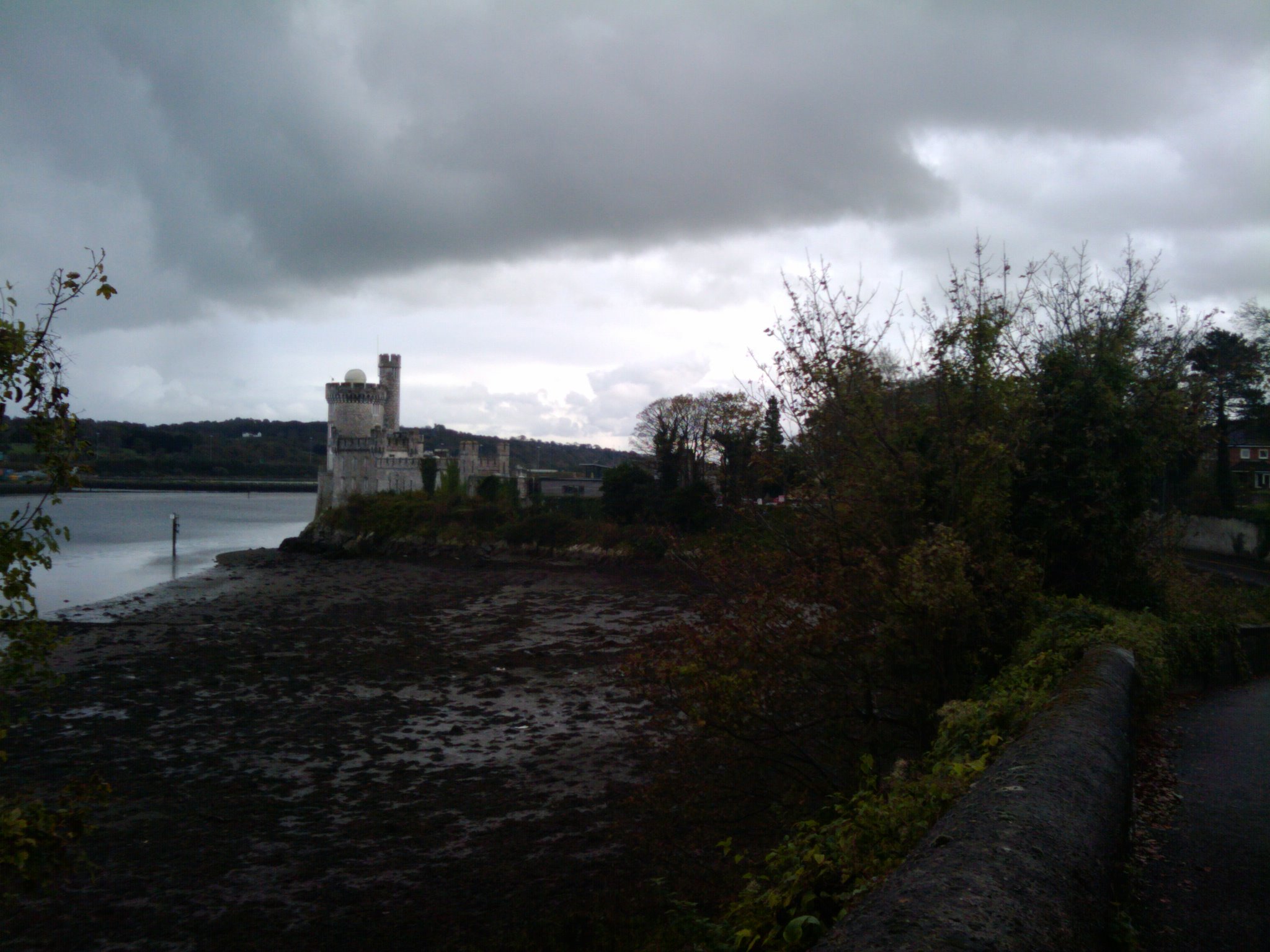
The surrounding area has been developed as a riverside walkway, so you can approach the castle on foot from Cork city centre by following the Lee Fields path along the south bank. The walk takes around 30 to 40 minutes from the city, passes through pleasant green space, and gives you a chance to see the castle gradually appear as you round the bend in the river. It is a much more satisfying approach than arriving by car.
If you do drive, there is car parking available at the castle site, though spaces can fill up on busy summer weekends. Arriving by foot or bicycle remains the better option for most visitors.
Planning Your Visit to Blackrock Castle
Blackrock Castle is located at Blackrock, Cork, T12 YW52. It is approximately 2 km from Cork city centre and easily reached on foot, by bicycle, or by car. Bus routes from Cork city centre stop nearby, making it accessible without a vehicle.
The castle is open most days throughout the year, with extended hours during the summer season. Admission fees apply for the observatory exhibitions; the riverside exterior and grounds can be viewed for free. The café is open during visitor hours.
If you are travelling with children, allow at least 90 minutes inside the exhibitions. Adults with a specific interest in astronomy may want longer. The riverside walk adds another 30 to 60 minutes depending on how far you go in either direction.
Blackrock Castle pairs well with other Cork attractions. Blarney Castle is about 20 minutes’ drive north-west of Cork city, while the English Market in the city centre is a worthwhile stop for lunch before or after your visit. The Crawford Art Gallery and Cork City Gaol are also within easy reach. For a deeper dive into Cork’s harbour history, the story of Cobh — departure point for around 2.5 million of the six million Irish men, women and children who emigrated between 1848 and 1950 — is just 24 km east of the city.
Other Castles Worth Visiting in County Cork
County Cork has a remarkable number of historic fortifications beyond Blackrock. Here are a few that are worth adding to an itinerary:
Blarney Castle — The most visited castle in Ireland, famous for the Blarney Stone. The castle dates from the fifteenth century and the grounds include a rock garden, poison garden, and ancient woodland. Located in the village of Blarney, about 8 km north-west of Cork city.
Barryscourt Castle — A well-preserved tower house in Carrigtwohill, east of Cork city. Managed by the Office of Public Works (OPW) and open to visitors in summer. The castle is a good example of a late medieval Irish fortification and gives a strong sense of what life would have looked like inside a working castle.
Desmond Castle, Kinsale — A sixteenth-century tower house in the town of Kinsale, now operating as the International Museum of Wine. The castle has a dark history — it was used as a prison during the eighteenth century and was the site of a catastrophic fire in 1747 in which 54 prisoners perished. Kinsale itself is one of the most attractive towns in Cork.
Charles Fort, Kinsale — A star-shaped fortification just outside Kinsale, built between 1677 and 1682 and in continuous military use until 1921. Managed by the OPW and open to visitors year-round. The site has sweeping views over Kinsale Harbour and is one of the best-preserved examples of a star fort in Europe.
Each of these sites tells a different part of Cork’s history, from medieval tower houses to post-medieval military engineering. If you are spending more than a day in the county, they are all worth the trip.
Why Blackrock Castle Stands Apart
Most historic castles in Ireland are preserved as ruins or museums — fascinating, but frozen in time. Blackrock Castle is different. It is an active research facility where real scientific work is being carried out today, inside walls that have stood since the sixteenth century. That combination is rare, and it gives the visit a quality that goes beyond simply looking at old stonework.
Whether you come for the history, the astronomy, the riverside views, or simply to explore one of Cork’s most distinctive landmarks, Blackrock Castle is a place that earns its reputation as the oldest structure still in use in the city. It has survived fire, reconstruction, and centuries of change — and it is still very much open for business.
Discover more of Ireland’s remarkable history and hidden places — sign up to our free newsletter and join thousands of Ireland lovers who get the best stories delivered every week.
☘️ Join 64,000+ Ireland Lovers
Every weekday morning, get Ireland’s hidden gems, local secrets, and travel inspiration — the kind you won’t find in any guidebook.
Subscribe free — enter your email:
📲 Know someone who’d love this? Share on WhatsApp →
Free forever · Unsubscribe anytime
Tours & experiences you might love


Powered by Viator. Some links are affiliate links — we may earn a small commission at no extra cost to you.
Secure Your Dream Irish Experience Before It’s Gone!
Planning a trip to Ireland? Don’t let sold-out tours or packed attractions spoil your journey. Iconic experiences like visiting the Cliffs of Moher, exploring the Rock of Cashel, or enjoying a guided walk through Ireland’s ancient past often sell out quickly—especially during peak travel seasons.

Booking in advance guarantees your place and ensures you can fully immerse yourself in the rich culture and breathtaking scenery without stress or disappointment. You’ll also free up time to explore Ireland’s hidden gems and savour those authentic moments that make your trip truly special.
Make the most of your journey—start planning today and secure those must-do experiences before they’re gone!