

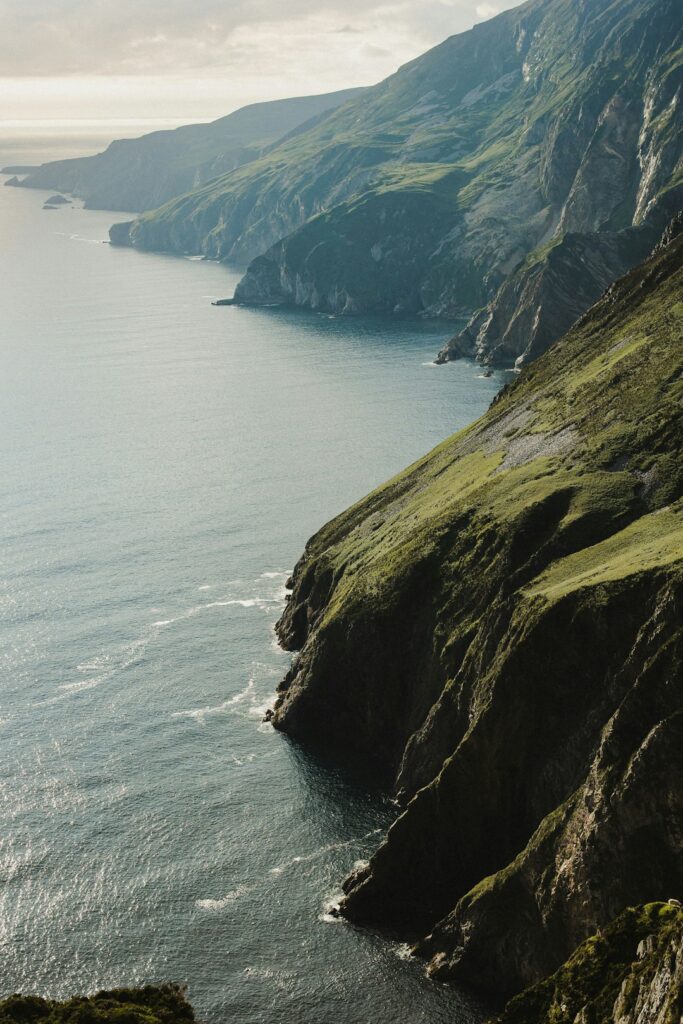
You know how it goes. The tab stays open for weeks — flights to Dublin, return dates flexible, the cursor hovering over “search” but never quite clicking. You’ve saved the Instagram post of the Connemara mountains at golden hour. You’ve half-read three different itineraries for the Wild Atlantic Way. And every time someone asks where you’d go if you could go anywhere, the answer is the same one it’s always been. Ireland. It’s always Ireland. So let me ask you something directly: what exactly are you waiting for?
This isn’t a guilt trip — it’s a genuine question, and I ask it because I’ve been on both sides of it. I’ve been the person with the open tab and the wavering cursor, and I’ve been the person on the other side, standing in a field in Connemara in the early morning, watching mist come off the water, thinking about the version of me who almost didn’t come. The difference between those two people is a clicked button and a booked flight. That’s it. Ireland is waiting, and it is worth every bit of the effort it takes to get there.
Why Ireland Keeps Calling You Back
Ireland has an unusually powerful pull on the diaspora — the roughly 70 million people worldwide who claim Irish heritage. But even for those without Irish roots, the country has a quality that’s difficult to name and impossible to fake. It has something to do with scale: Ireland is a small country (about the size of Indiana, or slightly smaller than the island of Great Britain minus Scotland), which means you can move through dramatically different landscapes in the space of a single day. Atlantic coastline in the morning, medieval city in the afternoon, mountain bog at dusk.
It also has something to do with the light. Irish weather gets a bad reputation — and the reputation isn’t entirely unearned — but what nobody tells you about Irish weather is that the rain and the mist are what produce the light. The quality of afternoon sun in the west of Ireland, when it breaks through after a grey morning, is unlike light anywhere else I’ve experienced. It sits low and golden and makes everything look like it’s lit from within. Photographers travel from around the world for it. Painters have been chasing it for centuries. Once you’ve seen it, you understand why.
What Ireland Actually Looks Like Beyond the Postcard Shots
The famous photographs of Ireland — the Cliffs of Moher, the Giant’s Causeway, the Ring of Kerry, Blarney Castle — are all genuine and worth visiting. But they’re not the whole story, and for many of the most devoted Ireland travellers, they’re not even the best story. The best story is the Ireland you stumble into: the pub in a village so small it’s not on most maps, where a session has been running since 6pm and won’t stop until midnight; the beach in Donegal that stretches for 5 kilometres without a single footprint; the ruined abbey in a field of sheep in County Roscommon that nobody visits because it’s not in the guidebook.
This is the Ireland that rewards the traveller who slows down. Who takes the smaller roads. Who stops when something catches the eye rather than pressing on to the next scheduled sight. The Republic of Ireland has 2,500 kilometres of coastline, approximately 30,000 kilometres of roads (including some of the smallest and most beautiful you’ll ever drive), and a density of history per square kilometre that rivals anywhere in Europe. There are more than 30,000 recorded archaeological monuments in the country — from the 5,200-year-old passage tomb at Newgrange (built before Stonehenge and before the Egyptian pyramids) to 18th-century estate walls hidden in woodland that nobody has documented properly since the Ordnance Survey of the 1830s.
☘️ Enjoying this? 64,000+ Ireland lovers get stories like this every week. Subscribe free →
How to Structure an Ireland Trip That Actually Delivers
The single biggest mistake first-time visitors make in Ireland is trying to see too much. Ireland is small but not fast — the roads are narrow, the scenic routes take longer than any map suggests, and the best experiences are the unplanned ones that require you to have time available. A rule of thumb I’d offer: plan to cover no more than 200 kilometres per day if you’re driving, and build in at least one day per week where you have no fixed destination at all.
A two-week Ireland itinerary that works: start in Dublin (two nights minimum — Trinity College, the National Museum of Ireland, a genuine Dublin pub crawl that doesn’t start on Temple Bar); head south to Kilkenny and the Wicklow Mountains; cross to Cork and the south-west; up the Wild Atlantic Way through Kerry and Clare; across to Galway; north through Connemara and Mayo; and finish in Sligo with its extraordinary Yeats country. That’s a genuine route and it’s manageable. If you have three weeks, add Donegal to the north — it’s the most underrated county in Ireland and it will be the part you talk about longest when you get home.
For anyone visiting with a roots angle — a county to trace, a family name to research — Ireland’s network of local heritage centres is extraordinary. There are approximately 35 county genealogy centres across the island, most of them well-staffed and equipped with records going back to the 1800s. If you know your family’s county of origin, a half-day with a local genealogist can produce genuinely surprising results. There is something about standing in the parish where your great-grandparents were baptised — often still recognisable from the maps of the 1850s — that no amount of online research quite replicates.
The Practical Bit: Getting There, Getting Around
Dublin Airport is the main international gateway, with direct flights from North America (New York JFK, Boston, Chicago, Philadelphia, Toronto, and other cities via Aer Lingus and United Airlines), Australia (via connecting hubs in the Middle East or the US), and dozens of European cities. Shannon Airport in County Clare offers a valuable alternative for west of Ireland trips — it has direct transatlantic routes and puts you an hour from the Cliffs of Moher rather than three hours from Dublin. Cork Airport serves the south-west and has good connections from UK and European cities.
Hiring a car is, for most visitors, the only way to properly experience Ireland outside of Dublin. Public transport exists but is patchy outside cities, and Ireland’s greatest treasures are rarely near a bus stop. Driving on the left is something most visitors from non-UK countries adapt to within a day or two — the main challenge is the narrowness of rural roads rather than the direction of travel. Petrol costs roughly €1.70–€1.90 per litre as of 2026, and most of Ireland’s main attractions are within a short drive of each other once you’re in the relevant region.
What Ireland Does to You (The Part Nobody Puts in the Brochures)
I want to end with something that’s harder to quantify than distances or prices. Ireland does something specific to a certain kind of traveller — the kind who’s been carrying an idea of the place for years, sometimes their whole life. It validates the feeling. Not in a cheesy, touristy way; in a real, solid, this-is-what-I-thought-it-would-be way that is genuinely rare in travel. Most places disappoint in some proportion. Ireland tends not to — or at least, it compensates for any disappointment by delivering unexpected things that are better than what you expected.
The people are a significant part of this. Irish hospitality is not a cliché. It’s a genuine cultural feature — a warmth and a willingness to talk, to give directions, to recommend the local place rather than the tourist one, to make you feel like a guest rather than a revenue source. In 64,000-person communities like the one here at Love Ireland, we hear from people after their trips constantly, and the thing they come back to most often isn’t a specific sight or experience. It’s the feeling the country gave them. Something like welcome. Something like recognition. Something like: I should come back.
Close the laptop. Buy the ticket. Ireland will do the rest.
FAQ: Planning Your Ireland Adventure
When is the best time to visit Ireland?
The honest answer is that there’s no bad time, but each season offers something different. May and June give you long evenings (sunset after 9:30pm in late June), wildflowers in the hedgerows, and the best weather odds of the year before the main tourist crowds arrive. July and August are busy but buzzing — festivals, outdoor sessions, warm evenings. September and October are arguably the finest months for scenery: the light is extraordinary, the crowds have thinned, and the country has an atmospheric quality that’s hard to describe. November through March is quiet, often dramatic, and significantly cheaper — not for everyone, but for the right kind of traveller, deeply rewarding.
How much should I budget for two weeks in Ireland?
A comfortable mid-range budget for two people sharing for two weeks — including flights from North America, car hire, B&Bs and guesthouses, meals, and admissions — would be approximately €4,000–€5,500 all in, or around $4,500–$6,200 USD at current rates. Budget travellers staying in hostels and self-catering can do it for considerably less. Those wanting luxury hotels and fine dining should budget upward from €7,000. The Republic of Ireland is not a cheap country, but value is available everywhere if you’re willing to eat where locals eat and sleep where locals recommend.
Do I need to speak Irish (Gaelic) to get around?
No — English is universally spoken throughout the Republic of Ireland. Irish (Gaeilge) is an official language and is taught in schools, but daily life in almost every part of the country operates in English. The exception is the Gaeltacht regions — Irish-speaking communities concentrated in parts of Donegal, Galway (particularly Connemara), Kerry, and a few other areas — where Irish is the dominant community language. Road signs in these areas are in Irish only, which can occasionally cause navigational confusion, but locals will always help. Learning a few phrases of Irish is a charming gesture that will be warmly received; it’s not a necessity.
Is Ireland safe for solo travellers?
Ireland consistently ranks as one of the safest countries in the world for travellers, and solo travel here — including for women — is generally very safe. The Global Peace Index regularly places Ireland in the top 10 safest countries globally. Normal urban precautions apply in Dublin and other cities (particularly late at night), but rural Ireland is extraordinarily safe. Locals are typically helpful and alert to visitors who seem lost or in difficulty. Public transport in cities is reliable and safe. It’s the kind of country where you genuinely don’t need to worry much — which is part of what makes it so restorative.
☘️ Join 64,000+ Ireland Lovers
Every weekday morning, get Ireland’s hidden gems, local secrets, and travel inspiration — the kind you won’t find in any guidebook.
Subscribe free — enter your email:
📲 Know someone who’d love this? Share on WhatsApp →
Free forever · Unsubscribe anytime
Tours & experiences you might love


Powered by Viator. Some links are affiliate links — we may earn a small commission at no extra cost to you.
Secure Your Dream Irish Experience Before It’s Gone!
Planning a trip to Ireland? Don’t let sold-out tours or packed attractions spoil your journey. Iconic experiences like visiting the Cliffs of Moher, exploring the Rock of Cashel, or enjoying a guided walk through Ireland’s ancient past often sell out quickly—especially during peak travel seasons.

Booking in advance guarantees your place and ensures you can fully immerse yourself in the rich culture and breathtaking scenery without stress or disappointment. You’ll also free up time to explore Ireland’s hidden gems and savour those authentic moments that make your trip truly special.
Make the most of your journey—start planning today and secure those must-do experiences before they’re gone!