

Cobh, County Cork sits on a natural harbour that once saw 2.5 million Irish men and women board ships for America, Australia, and Canada. Between 1848 and 1950, more people left Ireland through Cobh than any other port in the country. The Cobh Heritage Centre, housed in the original Victorian railway station, lets you trace the emigrants who passed through — and find out if any of them were your own family.
What Is the Cobh Heritage Centre?
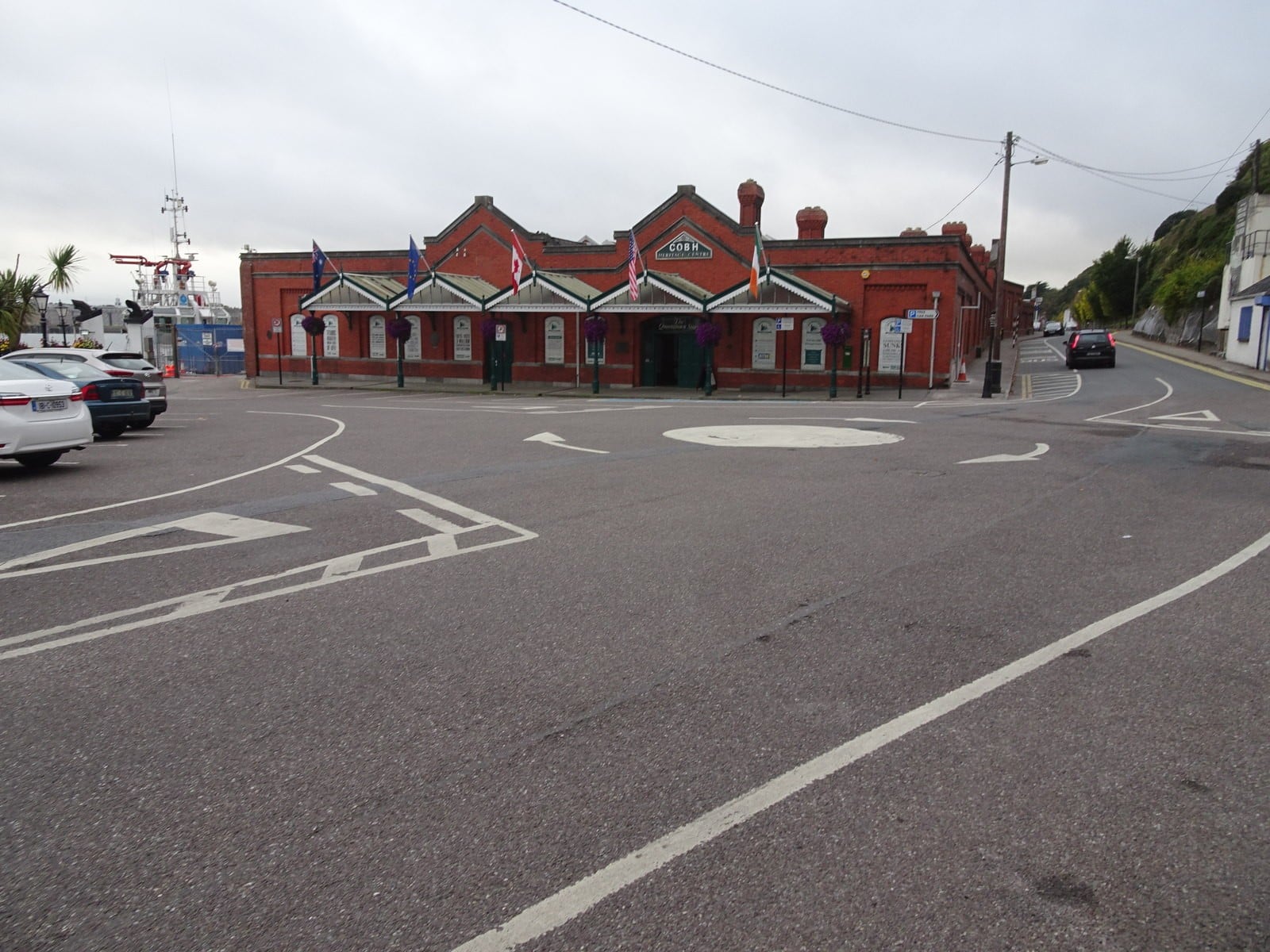
The Cobh Heritage Centre opened in 1993 in the original Cobh railway station. The building dates from 1862 — the same era when millions of Irish people were boarding ships in the harbour outside. The centre tells the story of Irish emigration from the Famine era through to the early 20th century. At its heart is the Queenstown Story exhibition, which covers the entire history of emigration through Cobh (then called Queenstown).
Watch: Do You Qualify for an Irish Passport?
Tracing your Irish family? If one of your grandparents was born in Ireland, you may be able to become an Irish citizen. This 14-minute guide explains who qualifies, what it costs and how long it takes. Thinking of making the move? Get the free Moving to Ireland checklist.
The heritage centre sits right beside the pier where emigrant ships docked. From the windows, you can see the same stretch of water that emigrants crossed on their way to the open Atlantic. The building and the view make the history feel immediate and real.
What Does the Queenstown Story Cover?
The permanent exhibition covers four main phases of emigration:
- The Great Famine (1845–1852) — Over 1 million people died; another million emigrated in just 5 years. Cobh (Queenstown) was one of the main departure points.
- Post-Famine emigration (1852–1900) — A steady stream of Irish people continued to leave. Most went to the United States, particularly New York, Boston, and Chicago.
- The White Star Line and transatlantic shipping — Cobh was the last port of call for several major liners, including the Titanic in April 1912.
- The early 20th century — Emigration continued after Irish independence; Cobh remained the principal departure point until air travel took over in the 1960s.
The exhibition includes original artefacts, reconstructed ship interiors, and personal testimonies from emigrants and their descendants. One of the most moving sections covers the children who left alone, sent by families who could not afford to keep them.
Tracing Your Ancestors Through Cobh
The heritage centre offers a passenger record search service. If your ancestors left Ireland through Cobh between 1848 and the 1950s, you may be able to find their name in the departure records. The centre holds digitised passenger lists and cross-references with other genealogical databases. For a fuller research itinerary, see our 5-day Cork heritage research plan.
How to Use the Genealogy Service
The centre’s genealogy service is available in person during opening hours. Staff can help you search the passenger databases and cross-reference emigrant records with Irish birth and census records. If you plan to use this service, bring as much information as you have:
- Full name of your ancestor (including maiden name if relevant)
- Approximate year of emigration
- County of origin in Ireland, if known
- Destination country and city, if known
- Any family stories about the emigration (ship name, who they went with)
Even partial information can be enough to identify an ancestor in the records. The centre staff are experienced genealogists. They often find connections that online searching misses.
Online Research Before You Visit
Several free databases can help you prepare before visiting the centre:
- IrishGenealogy.ie — Free civil registration records for births (1864–1921), marriages (1845–1946), and deaths (1864–1968)
- nationalarchives.ie — Free access to the 1901, 1911, and 1926 Irish censuses (the old census.nationalarchives.ie address is being retired in favour of this site). If your ancestor left after 1900, they almost certainly appear in one of these
- AncestryIreland.com — Cork county genealogy centre, which holds county-level records not always available nationally
- Ellis Island records — libertyellisfoundation.org lists 51 million immigrants processed at Ellis Island between 1892 and 1957. Many Cork emigrants appear here
What Cobh Was Like When the Emigrants Left
Walking through Cobh today, the town’s Georgian and Victorian architecture gives a strong sense of the era when emigration was at its peak. The terraced houses climbing the hillside — brightly painted now, but originally more austere — date from the same period as the emigrant ships.
St Colman’s Cathedral dominates the skyline. Building began in 1868 and took until 1919 to complete. The cathedral’s 47-bell carillon (the largest in Ireland) plays hourly. If you are standing on the pier when the bells ring, the sound is the same one emigrants heard as their ships left the harbour.
The town’s most famous landmark is the row of terraced houses along the seafront, known locally as the Deck of Cards because of the way they step up the hill in alternating colours. This row dates from the 1850s — the heart of the emigrant era.
☘️ Enjoying this? 64,000+ Ireland lovers get stories like this every week. Subscribe free →
Planning Your Visit to Cobh Heritage Centre
The Cobh Heritage Centre is open year-round. Here are the practical details for planning your visit.
Getting to Cobh
Cobh sits on Great Island in Cork Harbour, about 23 km from Cork city. You can reach it by:
- Train — Iarnród Éireann (Irish Rail) runs regular services from Cork’s Kent Station to Cobh. The journey takes about 25 minutes and costs approximately €7–10 return. Cobh station is directly beside the heritage centre.
- Car — Take the N25 east from Cork and follow the signs for Cobh. Parking is available along the seafront and in car parks near the town centre.
- Bus — Bus Éireann route 225 connects Cork city centre with Cobh several times daily.
Opening Hours and Admission
The centre is open 7 days a week from 09:30 to 17:30, with last admission at 16:30. Adult admission is €15, with reduced rates for seniors and students (€12) and children (€8–€9.50 depending on age; under-6s go free). A family ticket (2 adults + 2 children) costs €37. Check cobhheritage.com for current prices and any seasonal changes before you visit.
Other Heritage Sites in Cobh
Cobh has several other significant sites worth visiting alongside the heritage centre:
- Titanic Experience Cobh — Located in the former White Star Line offices on Casement Square, this museum traces the final hours of the Titanic’s last stop. It sits on the exact quayside where Titanic’s last 123 passengers boarded a tender to reach the ship. Read more: Cobh, Ireland: The Emigration Port Where Titanic Made Its Last Stop.
- St Colman’s Cathedral — Open to visitors daily. The cathedral museum inside holds records and artefacts related to the town’s history. Admission is free, though donations are welcome. Read more: Cobh, County Cork: Ireland’s Emigration Port and St. Colman’s Cathedral.
- The Deck of Cards street — The famous painted terrace requires no admission. Walk up for views across the harbour. Read more: Cobh’s Deck of Cards: Ireland’s Most Colourful Street.
- Cobh Museum — A local history museum with additional material on the town’s maritime and emigrant heritage. Modest admission fee.
What the Emigrant Experience Really Meant
Standing on the pier at Cobh, it is easy to understand what the emigrant experience meant on an emotional level. For the vast majority, leaving through Cobh was a one-way journey. Many never returned. They carried the name of their townland, their parish, and their county with them — and that is why the Irish diaspora today still identifies so strongly with specific parts of Ireland.
If your family left Ireland through Cobh, you are connected to a story that shaped not just Ireland but the countries that received the emigrants. In the United States alone, 32 million people claim Irish ancestry — a significant portion of them descended from people who passed through this harbour.
The Cobh Heritage Centre gives that story a physical location. It shows you the scale of what happened, introduces you to individual emigrants through their records and testimonies, and gives you a starting point for your own research.
Going deeper on ancestry? If you want to trace the specific townland your family left from, our Irish Townlands: The Complete Ancestry Research Guide walks you through Griffith’s Valuation, 1901 census records, and how to locate the exact townland — right down to a few fields and a cluster of stone walls.
Frequently Asked Questions
Can I trace my ancestors at the Cobh Heritage Centre?
Yes. The Cobh Heritage Centre offers a passenger record search service. Staff can help you search emigrant databases to find ancestors who left through Cobh. Bring any information you have — name, approximate emigration date, and destination. The centre’s genealogy staff are experienced at finding records even with limited information.
How many Irish emigrants left through Cobh?
Approximately 2.5 million people emigrated from Ireland through Cobh (known as Queenstown until 1922) between 1848 and the 1950s. The peak was during and immediately after the Great Famine of 1845–1852. Cobh was the main embarkation point for emigrants bound for North America and Australia.
Is the Cobh Heritage Centre worth visiting for heritage tourists?
Yes, especially if you have Irish roots or are interested in the history of emigration. The Queenstown Story exhibition covers the full history of Irish emigration in depth, with original artefacts and personal accounts. The genealogy service adds a personal dimension that most museums cannot offer. The town itself is worth a half-day to explore. Most heritage visitors combine the centre with the Titanic Experience and a walk along the seafront.
How far is Cobh from Cork city?
Cobh is about 23 km from Cork city centre. By train from Cork’s Kent Station, the journey takes approximately 25 minutes. By car, the drive takes about 30 to 40 minutes depending on traffic. The train is the easiest option — the station sits right beside the heritage centre and the pier.
☘️ Join 64,000+ Ireland Lovers
Every weekday morning, get Ireland’s hidden gems, local secrets, and travel inspiration — the kind you won’t find in any guidebook.
Subscribe free — enter your email:
📲 Know someone who’d love this? Share on WhatsApp →
Love more? Join 43,000 Scotland lovers → · Join 29,000 Italy lovers → · Join 7,000 France lovers →
Free forever · Unsubscribe anytime
Tours & experiences you might love


Powered by Viator. Some links are affiliate links — we may earn a small commission at no extra cost to you.
Secure Your Dream Irish Experience Before It’s Gone!
Planning a trip to Ireland? Don’t let sold-out tours or packed attractions spoil your journey. Iconic experiences like visiting the Cliffs of Moher, exploring the Rock of Cashel, or enjoying a guided walk through Ireland’s ancient past often sell out quickly—especially during peak travel seasons.

Booking in advance guarantees your place and ensures you can fully immerse yourself in the rich culture and breathtaking scenery without stress or disappointment. You’ll also free up time to explore Ireland’s hidden gems and savour those authentic moments that make your trip truly special.
Make the most of your journey—start planning today and secure those must-do experiences before they’re gone!