

Cobh sits on the south coast of County Cork, arranged in terraced rows of brightly painted houses that rise steeply above one of the finest natural harbours in the world. It looks like a picture postcard. But the beauty of this place is inseparable from its grief. More than two and a half million people boarded ships here between the 1840s and the early 20th century, most of them leaving Ireland for good. For many, the coloured houses of Cobh were the last thing they ever saw of home.
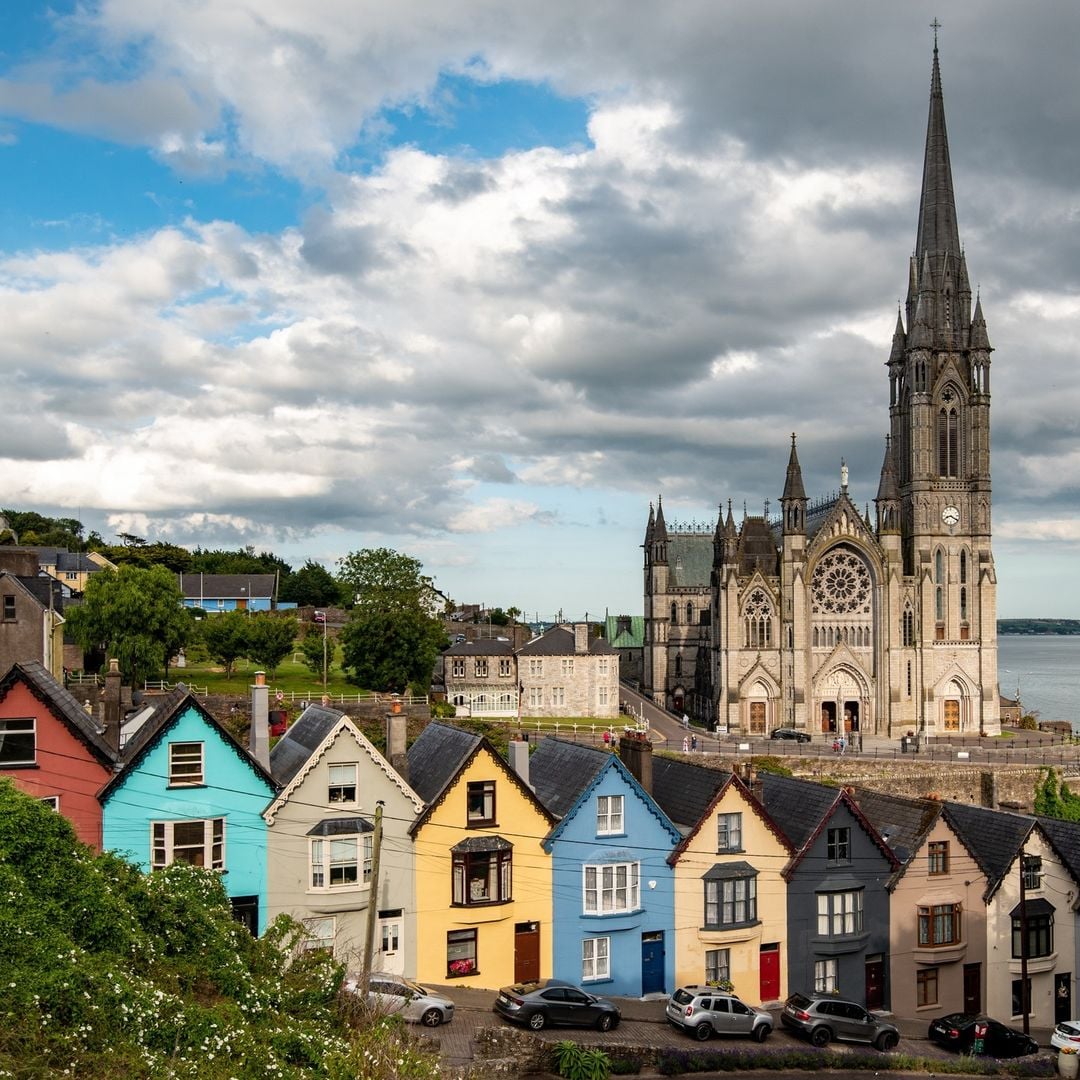
Pronounced “cove,” Cobh has worn several names. For centuries it was simply known as the Cove of Cork. During the Victorian era it was renamed Queenstown, in honour of a visit by Queen Victoria in 1849. It reverted to Cobh after Irish independence. Each name marks a different chapter in the town’s long and layered history.
Enjoy reading about Ireland?
Get the best of Irish travel, history, and hidden gems delivered to your inbox every week. Subscribe to the Love Ireland newsletter →
The Famine Years and the Mass Departure
The story of Cobh cannot be told without the Great Famine. Between 1845 and 1852, Ireland lost roughly one quarter of its population to death and emigration. The potato blight wiped out the staple crop for three successive years, and the British government’s response was catastrophically inadequate. Over a million people died. Another million left.
Cobh was the principal departure point for those crossing the Atlantic. Families who had often walked barefoot to the coast boarded overcrowded ships bound for Quebec, New York, and Boston. The conditions were brutal. These vessels were commonly known as “coffin ships” — poorly ventilated, dangerously overcrowded, and rife with typhus and dysentery. Death rates on the crossing were sometimes as high as 30 per cent.
After the Famine, emigration did not stop. It became a permanent feature of Irish life. Generation after generation left through Cobh — economic migrants, political exiles, young people with no prospects at home. By the early 20th century, the number who had passed through the harbour had reached into the millions. The town became so accustomed to farewell that a specific word entered the Irish-American vocabulary: “the American wake.” Families held an all-night gathering the night before a departure, because they knew, in most cases, they would never see the person again.
The Cobh Heritage Centre
The single best place to understand this history is the Cobh Heritage Centre, housed in the old Victorian railway station on the waterfront. The exhibition covers Irish emigration in full: the Famine, the coffin ships, the arrival at Ellis Island, and the lives emigrants built in their new countries.
One figure stands out in the exhibition. Annie Moore was a 17-year-old girl from County Cork who sailed from Cobh in 1891 with her two younger brothers. On 1 January 1892, Ellis Island officially opened as America’s main immigration station — and Annie Moore was the very first person processed. She received a ten-dollar gold coin. A bronze statue of Annie stands at the Heritage Centre, a twin of the one at Ellis Island in New York.
The Heritage Centre is practical, informative, and not given to sentimentality. It tells the story plainly, with photographs, passenger records, and maps. Many visitors use the genealogy service to trace ancestors who left through the harbour. If your family has Irish roots, there is a reasonable chance that someone in your line once stood on this quayside.
The Titanic Connection
Cobh holds one other famous place in maritime history. On 11 April 1912, RMS Titanic made its final port of call at Queenstown — as Cobh was then named — before setting out across the Atlantic. It took on 123 passengers, mostly third-class Irish emigrants hoping for a new life in America. Four days later, the ship struck an iceberg and sank. Of those 123 passengers who boarded at Queenstown, only 44 survived.
A local photographer named Francis Browne was aboard for the leg from Southampton to Queenstown and disembarked here. His photographs are among the only images ever taken of the Titanic while it was at sea. Cobh’s connection to the disaster is commemorated throughout the town, and the Heritage Centre features a dedicated Titanic section.
Three years later, in May 1915, Cobh played another role in a maritime tragedy. The Lusitania was torpedoed by a German U-boat off the Old Head of Kinsale, roughly 11 nautical miles (about 13 miles) from the coast. Of the 1,198 people who died, many were brought to Cobh. The town’s residents helped recover bodies from the water and took in survivors. Mass graves from the Lusitania disaster can still be visited at the Old Church Cemetery.
Stories like this, every week.
The Love Ireland newsletter covers the history, places, and people that make Ireland so compelling. Join thousands of readers and subscribe free →
St Colman’s Cathedral
Perched at the top of the town, St Colman’s Cathedral is impossible to miss. The Gothic Revival building was constructed between 1868 and 1919 (its spire was completed in 1915), and that spire rises 91 metres above the harbour. It dominates the Cobh skyline completely, and it is the first thing you see when approaching by water.
Inside, the cathedral houses one of the finest carillons in the British Isles — a set of 49 bells that are played regularly throughout the week. The building is free to enter. Take the time to walk around the exterior first: the view back down across the harbour and the coloured houses is one of the finest in County Cork.
The Town Itself
Cobh is a working town, not a theme park. The coloured houses are real homes. The pubs are local pubs. The harbour is still an active port — cruise ships dock here regularly, and the naval base at Haulbowline Island is visible across the water.
The town is straightforward to explore on foot. The main street runs along the waterfront, and almost everything worth seeing is within easy walking distance. Allow a full day if you want to visit the Heritage Centre properly, climb to the cathedral, and have time to sit by the water. Cobh is 25 kilometres from Cork city and accessible by a direct rail service — the journey takes roughly 25 minutes and the line runs along the harbour edge for much of the route, giving good views of the water.
The best time to visit is mid-week and outside of high summer, when cruise ship arrivals can bring large crowds to a relatively small town centre. That said, even on a busy day, you can escape the crowds quickly by heading up the steep streets above the main waterfront strip.
Practical Information
Getting there: Train from Cork Kent station to Cobh, roughly every 30 minutes during the day. Journey time approximately 25 minutes. By car, take the N25 east from Cork and follow signs for Cobh via the Fota Island causeway.
Cobh Heritage Centre: Open daily. Adult admission €15 (check the centre’s website for current concession and family rates). Genealogy research service available on-site. The centre is well-signposted from the train station.
St Colman’s Cathedral: Open to visitors daily, free entry. Bell recitals take place on Sundays and selected weekdays — check locally for current times.
Where to eat: The Cobh waterfront has a good selection of cafés and pubs. The Titanic Bar & Grill, in the former White Star Line ticket office on the quay, and The Rob Roy are reliable options for food. Cobh is a small town — booking ahead is recommended on summer weekends.
Combining with other stops: Fota Wildlife Park is located on the causeway between Cork and Cobh and is worth including if you are travelling with children. Spike Island — once one of the world’s largest prisons — is reachable by ferry from Cobh and offers a fascinating half-day visit.
Why Cobh Stays With You
Most visitors come to Cobh expecting something pretty. They get that. The houses are genuinely lovely, the cathedral is striking, and the harbour views are among the best in the south of Ireland. But the place does something to you that a pretty town alone cannot do.
It is the weight of the departures. Standing at the quayside, you are standing where generations of families stood and watched their children sail away. Where Annie Moore stood at seventeen with her brothers, not knowing what awaited her. Where 123 people boarded the Titanic. The ground holds that history whether you look for it or not.
Cobh is not a sad town. It is a lively, proud, and genuinely welcoming place. But it carries its past honestly, and that honesty is what makes it worth visiting. There are prettier harbours in Ireland. There is none with more to say.
Never miss an Irish story worth reading.
From Cobh to Connemara, the Love Ireland newsletter brings you the best of Ireland every week — history, travel, and the places that stay with you. Subscribe now, it’s free →
☘️ Join 64,000+ Ireland Lovers
Every weekday morning, get Ireland’s hidden gems, local secrets, and travel inspiration — the kind you won’t find in any guidebook.
Subscribe free — enter your email:
📲 Know someone who’d love this? Share on WhatsApp →
Love more? Join 43,000 Scotland lovers → · Join 29,000 Italy lovers → · Join 7,000 France lovers →
Free forever · Unsubscribe anytime
Tours & experiences you might love


Powered by Viator. Some links are affiliate links — we may earn a small commission at no extra cost to you.
Secure Your Dream Irish Experience Before It’s Gone!
Planning a trip to Ireland? Don’t let sold-out tours or packed attractions spoil your journey. Iconic experiences like visiting the Cliffs of Moher, exploring the Rock of Cashel, or enjoying a guided walk through Ireland’s ancient past often sell out quickly—especially during peak travel seasons.

Booking in advance guarantees your place and ensures you can fully immerse yourself in the rich culture and breathtaking scenery without stress or disappointment. You’ll also free up time to explore Ireland’s hidden gems and savour those authentic moments that make your trip truly special.
Make the most of your journey—start planning today and secure those must-do experiences before they’re gone!