

County Carlow is Ireland’s second smallest county by area, but within its gentle Barrow Valley landscape lies a depth of history that stretches back over 5,000 years. Sitting in the sunny southeast corner of Ireland’s Ancient East, Carlow is a county of dolmens, Norman castles, magnificent gardens, and a river that many consider the most beautiful in Ireland. It never appears on the tourist brochures, which is exactly why you should go.
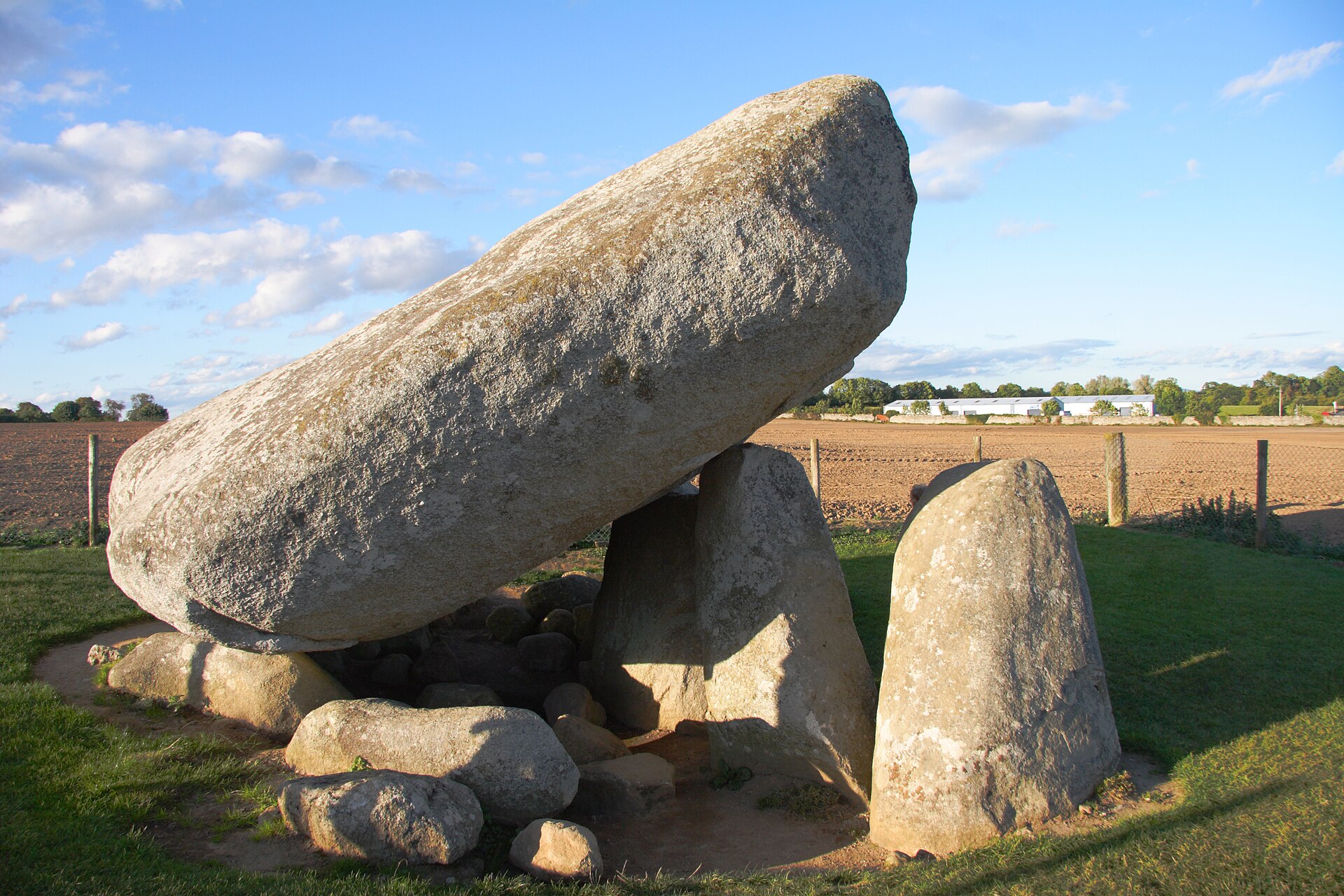
Browneshill Dolmen: Ireland’s Mightiest Stone
Just outside Carlow town stands the Browneshill Dolmen, the most impressive portal tomb in Ireland. Its capstone — estimated to weigh over 100 tonnes — is the heaviest in Europe. How Neolithic people raised it into position around 3000 BC remains one of archaeology’s great mysteries. The dolmen sits in a quiet field with open access, and on a still morning with the mist rising from the grass, it is a genuinely humbling sight. Five thousand years ago, someone decided this spot mattered enough to move a stone heavier than a blue whale.
The River Barrow: Ireland’s Most Peaceful Waterway
The River Barrow — Ireland’s second longest river — flows through the heart of Carlow, and the Barrow Way towpath offers one of the finest walking and cycling experiences in the country. The trail follows the old canal towpath from Lowtown in Kildare to St Mullins in south Carlow, passing through quiet villages, under stone bridges, and alongside lock-keeper’s cottages with smoke curling from their chimneys.
The stretch from Graiguenamanagh to St Mullins is particularly beautiful. The river widens as it approaches the tidal reach, and the monastic settlement of St Mullins — with its round tower stump, high crosses, and Norman motte — sits at the head of navigation like a full stop at the end of a perfect sentence.
☘️ Love Ireland?
Join 64,000+ readers who get the best of Ireland delivered to their inbox every week — heritage, hidden gems, and travel tips you will not find in any guidebook.
Altamont Gardens
Altamont Gardens, on the Carlow-Wexford border, is one of the finest gardens in Ireland and was described by the late garden writer Helen Dillon as the “most romantic garden in Ireland.” Spread over 16 hectares, it blends formal terraces and herbaceous borders with wild woodland walks that lead down through an ancient oak glen to the River Slaney. The garden was created over a century by the Lecky-Watson family, and its centrepiece — the Broad Walk of Irish yews — is one of the most photographed garden scenes in the country.
Altamont is managed by the OPW and entry is free, which makes it one of the best-value garden visits in Ireland. Visit in May for the rhododendrons and azaleas, or in October when the autumn colours along the woodland walks are extraordinary.
Carlow Town and Its Norman Heritage
Carlow Castle, built around 1207, was once one of the finest Norman fortresses in Ireland. Today only a single wall with two towers remains — the rest was accidentally destroyed in 1814 when a local doctor tried to convert it into a mental asylum using explosives. The surviving fragment, standing alone on the banks of the Barrow, is oddly more dramatic for its incompleteness.
The town itself has excellent museums, including the Carlow County Museum — one of Ireland’s best small museums — which houses the pulpit from Carlow Cathedral and artefacts spanning from the Bronze Age to the 1798 Rebellion. The Visual Centre for Contemporary Art, housed in a striking modern building, adds an unexpected cultural dimension to this compact county town.
Duckett’s Grove: A Gothic Fairytale Ruin
Duckett’s Grove is the kind of place that appears in dreams. This castellated Georgian country house, with its Gothic towers and turrets, was gutted by fire in 1933 and left to the elements for decades. Now stabilised as a ruin and surrounded by a walled garden restored by local volunteers, it is one of the most atmospheric places in Leinster. The combination of the ruined towers, the restored rose gardens, and the farmers’ market held in the courtyard on Sundays makes for a visit that is equal parts melancholy and charm.
Practical Tips for Visiting Carlow
Carlow is just over an hour from Dublin by car or train, making it an easy day trip or a weekend base for exploring the sunny southeast. The Barrow Way is best walked or cycled between April and October when the towpath is dry. Combine Carlow with neighbouring Kilkenny and Wexford for a rich circuit through Ireland’s Ancient East. For food, Carlow town’s Lennons at Visual and several excellent farm-to-fork restaurants reflect the county’s position at the heart of Ireland’s most fertile farming land.
☘️ Want More Hidden Ireland?
Join 64,000+ subscribers who discover Ireland’s best-kept secrets every week.
Subscribe Free — Join the Community →
Free forever · Unsubscribe anytime · No spam
📥 Free Download: Ireland Travel Planning Guide
Our most popular resource — itineraries, insider tips, and the 50 places you must not miss.
Planning a trip to Ireland?
Download our Free Ireland Travel Planner 2026 — the complete guide to planning your perfect Irish adventure. Join 170,000+ subscribers who love Ireland!
Tours & experiences you might love


Powered by Viator. Some links are affiliate links — we may earn a small commission at no extra cost to you.
Secure Your Dream Irish Experience Before It’s Gone!
Planning a trip to Ireland? Don’t let sold-out tours or packed attractions spoil your journey. Iconic experiences like visiting the Cliffs of Moher, exploring the Rock of Cashel, or enjoying a guided walk through Ireland’s ancient past often sell out quickly—especially during peak travel seasons.

Booking in advance guarantees your place and ensures you can fully immerse yourself in the rich culture and breathtaking scenery without stress or disappointment. You’ll also free up time to explore Ireland’s hidden gems and savour those authentic moments that make your trip truly special.
Make the most of your journey—start planning today and secure those must-do experiences before they’re gone!