

If you’re planning a trip to the Emerald Isle and want the freedom to explore at your own pace, driving in Ireland for Americans is one of the best decisions you can make. A hire car unlocks the hidden Ireland that coach tours miss — the coastal passes, the stone-walled lanes, the villages with the finest pubs. But it comes with a learning curve, and the more prepared you are before you land, the more you’ll enjoy every mile. This guide covers everything you need to know, from left-side driving to roundabouts, car hire tips, speed limits, and planning your route.
Why Driving in Ireland for Americans Is the Best Way to See the Country
Ireland is compact but layered. You could spend a lifetime exploring it and still find something new. Public transport gets you to the cities, but the real Ireland — the kind that makes you pull over and stare at the landscape for ten minutes — lives out on the back roads. When you have your own hire car, you can stop wherever you like, reach places buses simply don’t go, and adjust your itinerary on the fly when you discover a signpost for somewhere you’d never heard of.
Whether you’re following a 7-day Ireland itinerary from the USA or tackling a longer journey, having your own car is almost essential outside of Dublin. The country rewards those who wander, and wandering is much easier behind a steering wheel.
The Golden Rule: You Drive on the Left
This is the single most important thing to internalise before you collect your hire car. In Ireland, you drive on the left side of the road. The steering wheel is on the right side of the car. If you’ve never driven in a country that follows the left-hand rule, it can feel deeply unnatural — but most Americans adjust within an hour or two of setting off.
Tips for Adjusting to Left-Side Driving
- Keep the kerb on your left, the centre line on your right. This mental cue works better than any map or instruction.
- Take roundabouts slowly. Roundabouts are where visitors are most likely to slip back into right-side habits — more on those below.
- Use a passenger as your co-pilot. If you’re travelling with someone, have them remind you at junctions and when pulling out of car parks.
- Start on a quieter road. If you’re flying into Dublin, leave the city on the motorway — it’s the least demanding driving environment. Avoid narrow country roads on day one.
- Don’t drive straight off a long overnight flight. Fatigue and unfamiliar road rules are not a safe combination. If you land early, consider resting before you pick up the car.
Renting a Car in Ireland as an American
Most major car hire companies operate in Ireland — Hertz, Enterprise, and Europcar all have desks at Dublin, Cork, Shannon, and Belfast airports. There are also excellent local firms. Here’s what to know before you book.
Manual vs. Automatic Gearbox
The vast majority of hire cars in Ireland are manual (stick shift). Automatics are available but limited in number and more expensive. If you’re not confident driving manual, book your automatic well in advance — particularly if you’re travelling in peak season (June to August), when availability is tight. Bear in mind that driving a manual car on the left side of the road means your left hand operates the gearstick rather than your right, which takes some adjustment even for experienced manual drivers.
Insurance and the Excess
When you collect your car, you’ll be offered a range of insurance options. Your US credit card may provide some collision damage waiver (CDW) cover — check with your card issuer before you travel, as the terms vary considerably. Most standard hire agreements include basic third-party insurance, but you’ll face a large excess (the amount you’d pay in the event of a claim, sometimes €2,000 or more). A full excess waiver reduces this to zero and is generally worth the extra daily cost for peace of mind, particularly given the narrow roads you’ll inevitably encounter.
Understanding Irish Road Types
Motorways and National Roads
Ireland’s motorway network (M-roads) is modern and well-signed. The M1 runs north from Dublin towards Belfast, the M7 and M8 head south-west towards Cork, and the M6 travels west towards Galway. These feel familiar — dual carriageways with clear lane markings — the only difference being that you keep to the left lane. National primary (N) roads connect the main towns and cities. They’re generally well-maintained but narrower, and you’ll encounter roundabouts frequently.
Regional Roads — Narrow, Beautiful, and Unmissable
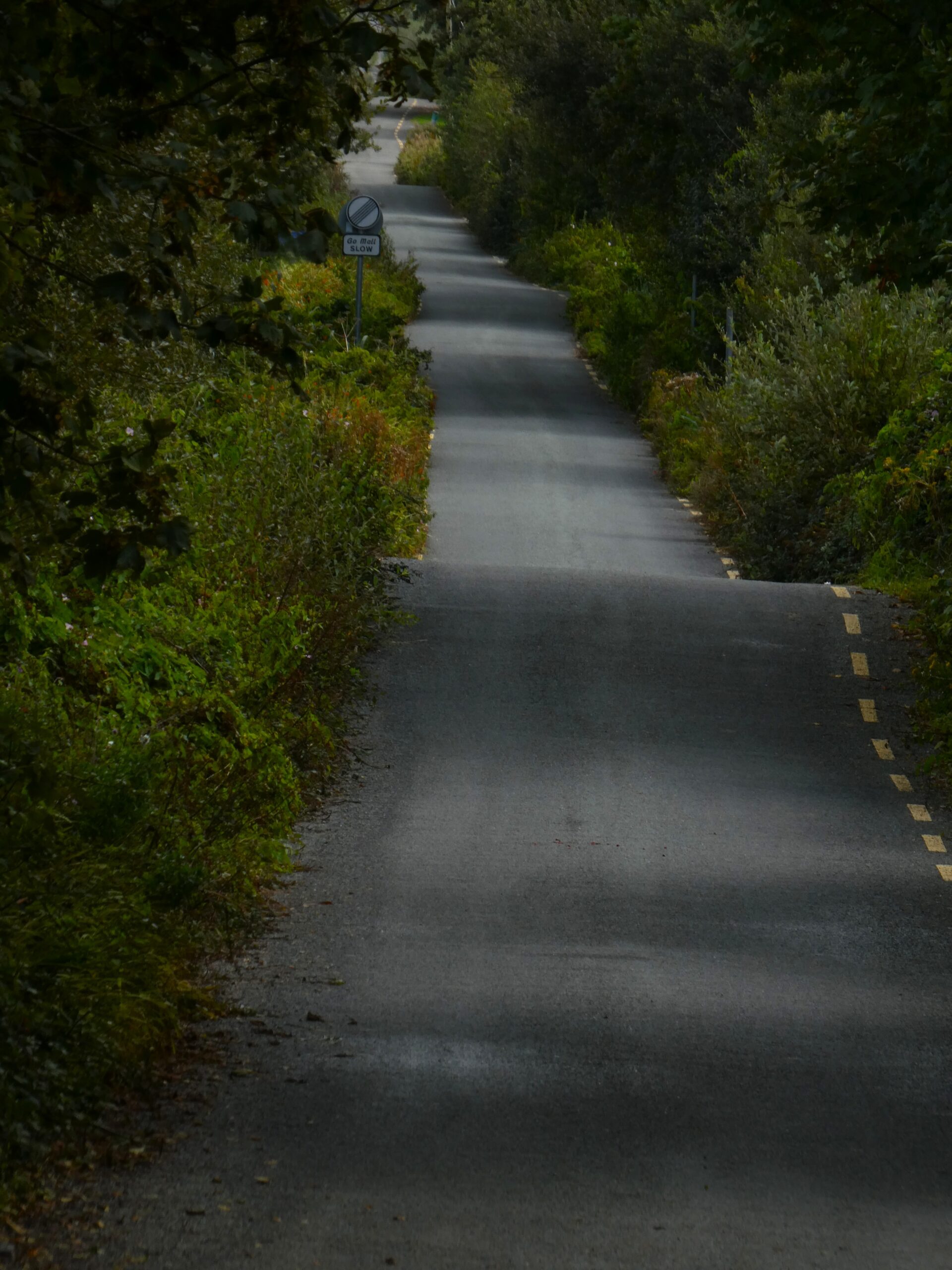
This is where Ireland truly opens up. Regional roads (R-roads) and local lanes can be extraordinarily narrow — sometimes single-track with passing places cut into the hedgerows. These are the roads that lead to the Cliffs of Moher, the Dingle Peninsula, the Connemara coast, and the Ring of Kerry. They’re also the roads that will give you some of the most astonishing scenery you’ve ever seen through a windscreen.
- When two cars meet on a narrow road, the driver nearest a passing place reverses
- Slow right down before bends — a tractor or a flock of sheep may be waiting on the other side
- Wing mirrors do get clipped by hedgerows and stone walls — it happens to experienced drivers too
- Do not assume speed means you’re coping — steady and alert beats fast, every time
Speed Limits, Signs, and Roundabouts
Speed Limits Are in Kilometres Per Hour
Ireland uses kilometres per hour (km/h), not miles per hour. The key limits to know are:
- Motorways: 120 km/h (approximately 75 mph)
- National roads: 100 km/h (approximately 62 mph)
- Regional roads: 80 km/h (approximately 50 mph)
- Rural local roads: 60 km/h (approximately 37 mph) — lowered from 80 km/h in February 2025
- Urban areas: 50 km/h (approximately 31 mph)
- School zones and special areas: 30 km/h
Speed cameras operate throughout Ireland and fines are strictly enforced. Most hire car speedometers display km/h by default. Road signs are in both English and Irish (Gaeilge) — distances shown are always in kilometres.
Roundabouts — Priority Goes to Traffic Already on the Roundabout
Roundabouts are everywhere in Ireland, from city centres to rural junctions. The rule is simple: give way to vehicles already on the roundabout, approaching from your right. Enter when it’s clear. Many visitors make the mistake of treating roundabouts like four-way stop signs — they are not. Traffic already circulating has right of way. Take your time and watch how other drivers handle them; you’ll find your rhythm quickly.
Parking, Tolls, and Fuel
Parking: Most Irish towns use pay-and-display machines or multi-storey car parks. In rural areas and at many scenic sites, parking is free. Read road markings carefully: yellow lines indicate parking restrictions — single yellow means time-limited, double yellow means no parking at any time. Disc parking is used in some towns, requiring a paper disc showing your arrival time, available from newsagents and post offices.
Tolls: Several routes carry tolls, particularly around Dublin and on the M1, M4, M7, and M8. Tolls for cars are generally in the range of €1.90–€3.60 (the M4 is currently the priciest single crossing). Some are traditional barrier tolls accepting cash or card; others are barrier-free electronic systems (eFlow) that photograph your number plate and bill remotely. When collecting your hire car, ask whether the vehicle has an eFlow transponder — if not, you’ll need to pay manually via the eFlow website within 24 hours of passing a toll plaza.
Fuel: Petrol stations are plentiful on major routes but sparse in remote rural areas — plan ahead. Diesel is the most common fuel type in Irish hire cars, so always confirm before filling up. Fuel is priced per litre in euro, typically between €1.70 and €1.95 depending on location and time of year.
Planning Your Irish Road Trip Route
Ireland rewards those who plan ahead — not because spontaneity doesn’t work, but because accommodation in popular areas fills up quickly in summer, and some of the best attractions (the Cliffs of Moher, Newgrange, Skellig Michael boat trips) require tickets booked well in advance. A rough day-by-day plan also helps you avoid unnecessary backtracking, which can eat into both time and fuel budget.
Before you finalise anything, visit the Ireland trip planning hub, which walks you through the full planning process — from deciding when to travel to sorting accommodation, car hire, and essential pre-bookings.
For ready-made driving routes, our 4-day Ireland road trip loop is designed specifically around the car and is an ideal first route for Americans new to Irish roads. If you have a full week, the 7-day Ireland itinerary from the USA covers the country’s greatest highlights at a comfortable pace. And before you leave home, make sure you’ve read the Ireland packing list — it covers the practical essentials American visitors most often overlook, including plug adaptors, which you will need.
Final Thoughts
Driving in Ireland for Americans can feel daunting in the days before you land — left-side roads, unfamiliar signage, narrow lanes, roundabouts at every junction. But almost every visitor who makes the leap says the same thing once they’re out there: it’s easier than expected, and it was the best decision they made for the whole trip. The roads are quiet outside the cities, the scenery makes every unplanned detour worthwhile, and the freedom of a hire car gives your journey a shape that no coach tour can replicate.
Take it slow for the first hour. Keep left. Give way on the roundabouts. And enjoy every single kilometre.
Thinking about it for retirement?
If you’ve started thinking seriously about retiring there, our complete our full Retire in Ireland guide covers the visa, healthcare, cost-of-living, and the regions worth shortlisting.
Tours & experiences you might love


Powered by Viator. Some links are affiliate links — we may earn a small commission at no extra cost to you.
Secure Your Dream Irish Experience Before It’s Gone!
Planning a trip to Ireland? Don’t let sold-out tours or packed attractions spoil your journey. Iconic experiences like visiting the Cliffs of Moher, exploring the Rock of Cashel, or enjoying a guided walk through Ireland’s ancient past often sell out quickly—especially during peak travel seasons.

Booking in advance guarantees your place and ensures you can fully immerse yourself in the rich culture and breathtaking scenery without stress or disappointment. You’ll also free up time to explore Ireland’s hidden gems and savour those authentic moments that make your trip truly special.
Make the most of your journey—start planning today and secure those must-do experiences before they’re gone!