

Grace O’Malley: The Irish Pirate Queen Who Sailed to Meet Queen Elizabeth I — and Won
In 1593, a 63-year-old Irish sea chieftain sailed from Connacht to Greenwich Palace and demanded a meeting with Queen Elizabeth I. She got it. The two women spoke for hours — reportedly without a translator, in Latin — and Grace O’Malley (Gráinne Mhaol in Irish) walked away with what she came for: the release of her son and her half-brother, and the right to continue commanding her fleet. No other Irish chieftain of the era managed anything close to it.
This is not myth or embellishment. The meeting of September 1593 is documented in state papers held in London. Elizabeth’s reply to Grace’s petition — known as the “Eighteen Articles of Interrogatory” — survives in the Public Record Office. Grace O’Malley is one of the few women of the 16th century whose voice reaches us directly through the historical record, and what it says is remarkable.
Who Was Grace O’Malley?
Grace O’Malley (c. 1530–1603) grew up on Clare Island, a small island at the mouth of Clew Bay in County Mayo. Her father, Eoghan Dubhdara Ó Máille, led the O’Malley clan — a seafaring dynasty that had controlled the western approaches to Connacht for generations. The O’Malleys’ motto was Terra Marique Potens: “Powerful by Land and Sea.”
From an early age, Grace took to ships. The legends say her father refused to take her on voyages because her long hair would catch in the rigging — so she cut it short and appeared on the dock the next morning. Whether that story is true or not, by her twenties she commanded her own vessels and her own fleet of followers, operating out of Rockfleet Castle on the shores of Clew Bay.
Her business model was clear: she taxed ships passing through the waters she controlled, offered protection to those who paid, and took by force from those who refused. English officials described her as “a most famous feminine sea captain” and “nurse of all rebellions in Connacht.” Neither description was meant as a compliment. Both were accurate.
Two Husbands and One Castle
Grace married twice. Her first husband, Donal O’Flaherty, died in 1565. Her second, Richard Burke (known as Iron Richard), she reportedly married under a Brehon Law provision that allowed a trial marriage of one year. The story holds that after exactly 12 months, she locked him out of Rockfleet Castle and declared the marriage dissolved — while retaining the castle for herself. Whether this happened exactly as told, Rockfleet (also called Carraigahowley Castle) did remain under her control for the rest of her life.
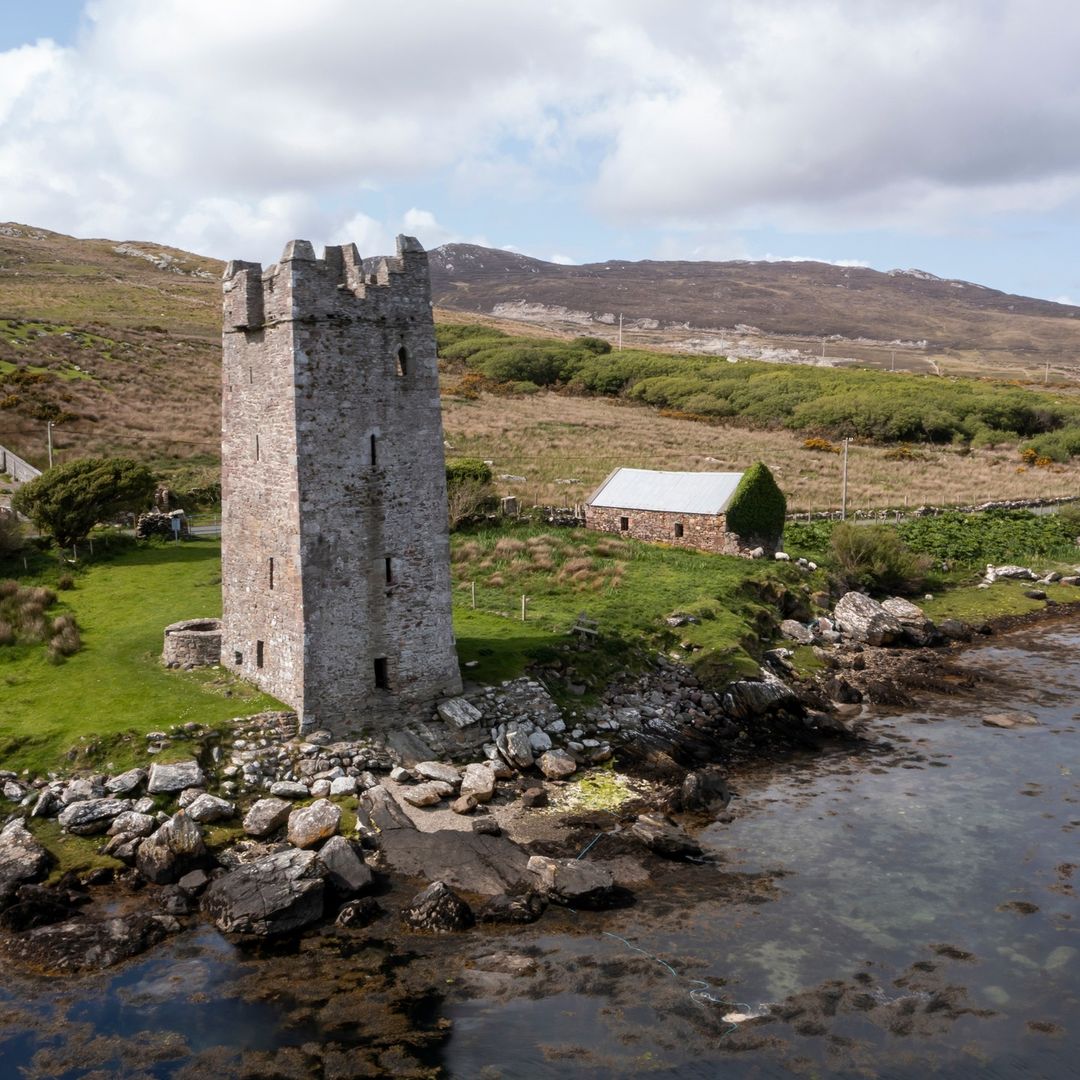
Rockfleet Castle still stands on the shore of Clew Bay. You can visit it today — it’s one of the few genuinely intact tower houses in Mayo, and its position, right on the water’s edge, tells you everything about how Grace used the sea as both a highway and a defence.
The Years of Conflict
The second half of the 16th century brought sustained English pressure on Connacht. The Crown’s programme of “surrender and regrant” aimed to replace the Gaelic clan system with English-style land tenure and loyalty to the Crown. For Grace, this meant a series of confrontations with English governors.
She had direct clashes with Sir Richard Bingham, the English governor of Connacht from 1584. Bingham seized her cattle, executed one of her sons, and arrested her. She spent time imprisoned at various points. In 1586, Bingham described her as “a woman that hath impudently passed the part of womanhood” — which, again, she likely took as confirmation she was doing something right.
- 1566: Grace led an assault on Hen’s Castle on Lough Corrib, reportedly using lead from the castle’s roof, melted and poured on the attackers below to repel them.
- 1574: She repelled an English naval assault on Rockfleet Castle — the attacking fleet withdrew after a 3-week siege failed to dislodge her.
- 1586: Bingham arrested her and planned to execute her. She survived through negotiation involving her son-in-law Richard Burke.
- 1593: With her son Tibbot-ne-Long and her half-brother Donal-na-Piopa held prisoner by Bingham, she bypassed the governor entirely and petitioned the Queen directly.
☘️ Enjoying this? 64,000+ Ireland lovers get stories like this every week. Subscribe free →
The Meeting at Greenwich, 1593
The petition Grace submitted to Elizabeth in 1593 survives. In it, she outlines her situation in precise legal terms: Bingham holds her son and half-brother without just cause, she asks for their release, and she offers to direct her fleet against the Queen’s enemies for the rest of her life in return. She signs herself “Grany Ni Mhailly.”
Elizabeth sent back a list of 18 questions — the “Eighteen Articles of Interrogatory” — asking Grace to verify facts about her life and circumstances. Grace answered each one directly. Her answers form one of the few first-person accounts by an Irish woman of the 16th century that has survived in the historical record.
The in-person meeting at Greenwich followed. What exactly passed between the two women in that room is not documented in detail — both left no personal account of it. What is documented is the outcome. Elizabeth wrote to Bingham ordering the release of Grace’s family members and acknowledging her right to “maintenance” from her territories for the rest of her life. Bingham was furious. He complied.
The famous story that Grace produced a handkerchief during the audience, blew her nose, and threw the handkerchief into the fire — because, she explained to the horrified courtiers, in Ireland you did not put a soiled cloth back in your pocket — may or may not be true. It has the ring of something that got told and retold because it captured something real about the encounter between two very different worlds.
What Made Her Negotiation Work?
Several factors gave Grace leverage that no other Irish chieftain of her era held.
First, she operated outside the network of male Gaelic lords who had already made their submissions to the Crown. She had no formal position that the English legal system recognised — which paradoxically meant she fell outside Bingham’s jurisdiction in certain respects. She could argue, correctly, that she personally had never surrendered.
Second, her fleet had genuine strategic value. The western approaches to Ireland mattered to Elizabeth’s government. Spain was a constant threat, and anyone who controlled those sea lanes had something worth negotiating over.
Third — and this is the factor that tends to get overlooked — she went to the Queen directly. She bypassed Bingham, bypassed the Privy Council, and made her case to the one person whose authority nobody in England could override. Elizabeth respected directness. She also, by all accounts, found the meeting genuinely interesting.
Where Grace O’Malley Lived: Places You Can Visit
Grace O’Malley’s world was concentrated along the Mayo coast and the islands of Clew Bay. Several of the places she controlled still stand and still carry her name.
- Rockfleet Castle (Carraigahowley), County Mayo — Her primary base in later life. Right on the water, small, fiercely functional. Free to visit; the key is available from a nearby house. Coordinates: 53.8961° N, 9.6270° W.
- Clare Island, County Mayo — Her childhood home and the island she controlled for most of her life. The ruined abbey on the island is said to hold her grave. Ferry from Roonagh Pier near Louisburgh.
- Westport, County Mayo — The nearest town to most Grace O’Malley sites, and a good base for exploring the area. The Pirate Queen pub and local heritage centre carry information on her story.
- Clew Bay — The bay she commanded. Legend holds it contains 365 islands, one for every day of the year. The view from above, particularly from the viewpoint above Westport on the Croagh Patrick road, makes the scale of her maritime territory immediately clear.
- Achill Island, County Mayo — Grace also held a tower house here, a short detour from the Clew Bay sites. See Grace O’Malley’s Achill Island towerhouse for the full story of that castle.
What Happened After the Meeting
Bingham released Grace’s family as Elizabeth ordered. He continued to harass her for the remaining years of his governorship. Grace continued to operate her fleet. The Nine Years’ War (1593–1603) put her in a complicated position — her son Tibbot eventually supported the English side, while other Connacht lords joined the rebellion. She remained active into her seventies.
Grace O’Malley died in 1603, the same year as Queen Elizabeth I. The exact date and place of her death remain uncertain. Clare Island is the most likely location. She outlived Bingham by four years — he died in 1599 — which she would probably have considered satisfying.
Her reputation faded after her death, kept alive mainly in Irish-language poetry and local Connacht oral tradition. It revived strongly in the 19th century, and again in the late 20th, when she became a subject of serious historical research. The musical The Pirate Queen, which opened on Broadway in 2007, introduced her story to a much wider international audience — though historians note it plays fairly loose with the facts.
For more on planning a trip to Mayo and the west of Ireland, the Love Ireland trip-planning guide covers the region in detail. And if the Grace O’Malley story has made you curious about your own Connacht ancestry — the O’Malleys, O’Flahertys, and Burkes of Mayo are all well-documented in Irish genealogical records — the heritage and ancestry section is a good place to start.
If your family came from Mayo, Galway, or the west of Ireland more broadly, the surnames Grace O’Malley dealt with — O’Malley, Burke, O’Flaherty, Bourke — appear throughout the genealogical records of Connacht. The Irish townlands ancestry research guide can take you from a family name right down to the specific townland your ancestors left from — often with baptismal records, land valuation surveys, and even photographs of the land itself.
Frequently Asked Questions
Did Grace O’Malley really meet Queen Elizabeth I?
Yes — the meeting is documented in state papers held in London. Both Grace’s petition and Elizabeth’s “Eighteen Articles of Interrogatory” response survive in the Public Record Office, and Elizabeth’s letter ordering the release of Grace’s family members is also on record.
Where is Grace O’Malley buried?
Tradition holds that she is buried at the Cistercian abbey on Clare Island, County Mayo — the island where she grew up and which she controlled for much of her life. The abbey ruin still stands on the island, and a worn tomb slab there is associated with her name.
What does Gráinne Mhaol mean?
Gráinne Mhaol is Irish for “Bald Gráinne” — the mhaol (meaning bald or cropped) is a reference to the legend that she cut her hair short as a young woman to join her father’s voyages. The nickname stuck throughout her lifetime.
Can you visit Grace O’Malley’s castle in Ireland?
Yes — Rockfleet Castle (Carraigahowley) in County Mayo is open to visitors and free to enter. It sits right on the edge of Clew Bay and remains structurally intact. The key is available from a nearby house, signposted at the site.
Was Grace O’Malley a pirate?
She operated a fleet that taxed ships, offered protection for payment, and took goods by force — which English authorities called piracy. In Irish law and tradition, she functioned as a sea chieftain operating within the Brehon Law framework that governed Gaelic Ireland. Whether she counts as a pirate depends on whose legal system you apply.
☘️ Join 64,000+ Ireland Lovers
Every weekday morning, get Ireland’s hidden gems, local secrets, and travel inspiration — the kind you won’t find in any guidebook.
Subscribe free — enter your email:
📲 Know someone who’d love this? Share on WhatsApp →
Love more? Join 43,000 Scotland lovers → · Join 29,000 Italy lovers → · Join 7,000 France lovers →
Free forever · Unsubscribe anytime
Tours & experiences you might love


Powered by Viator. Some links are affiliate links — we may earn a small commission at no extra cost to you.
Secure Your Dream Irish Experience Before It’s Gone!
Planning a trip to Ireland? Don’t let sold-out tours or packed attractions spoil your journey. Iconic experiences like visiting the Cliffs of Moher, exploring the Rock of Cashel, or enjoying a guided walk through Ireland’s ancient past often sell out quickly—especially during peak travel seasons.

Booking in advance guarantees your place and ensures you can fully immerse yourself in the rich culture and breathtaking scenery without stress or disappointment. You’ll also free up time to explore Ireland’s hidden gems and savour those authentic moments that make your trip truly special.
Make the most of your journey—start planning today and secure those must-do experiences before they’re gone!