

Ask any Irish person what they miss most when they’re abroad and brown bread will come up within the first three answers. Not because it’s fancy. Not because it takes skill to make. But because it’s honest food — and in Ireland, brown bread is as much a part of daily life as the kettle on the hob.
The question of which county produces the best brown bread is one that sparks real opinions. It’s not a pub quiz question with a clear answer. Every county has its version, every granny has her recipe, and every bakery has its loyal following — brown bread is just one entry on Ireland’s list of most beloved traditional dishes. But there are some parts of Ireland where the brown bread conversation runs particularly deep.
This article looks at the counties most often mentioned when the debate comes up — and what it is about each place that gives their bread its reputation.
Love Irish food, culture, and travel? Join thousands of readers who get the best of Ireland delivered to their inbox each week. Subscribe to our free newsletter →
What Is Irish Brown Bread, Exactly?
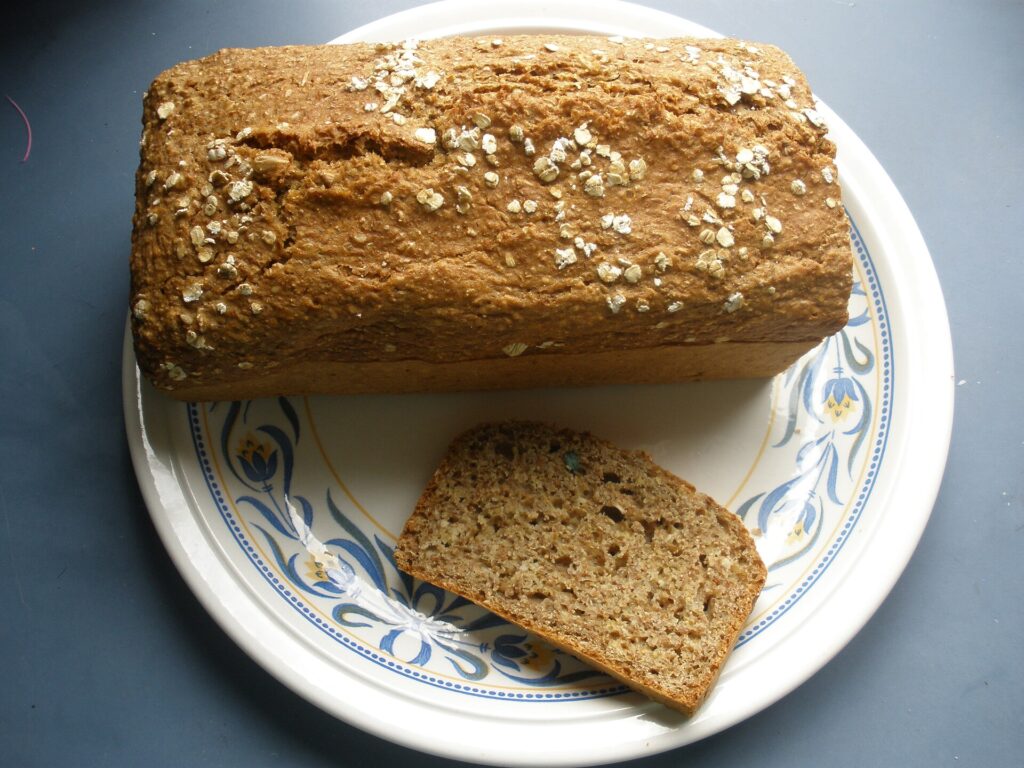
Before getting into the county debate, it helps to be clear about what we’re talking about. Irish brown bread is a soda bread — meaning it uses bicarbonate of soda as the raising agent rather than yeast. The base is wholemeal flour, often mixed with white flour, buttermilk, a pinch of salt, and sometimes a small amount of treacle or rolled oats on top.
It’s not a sourdough. It’s not a sandwich loaf. It’s dense, slightly nutty, and best eaten within a day of baking — ideally still warm, with good butter. The crust should have some give. The crumb should be moist but not gummy.
Because the recipe is simple, the quality of the ingredients matters enormously. The flour, the buttermilk, the water — all of it shows up in the final loaf. This is why geography plays a bigger role than you might expect.
Clare: The County Most Often Mentioned
County Clare comes up time and again in the brown bread conversation. The county has a strong tradition of home baking, and the bread you’ll find in Clare — whether in a farmhouse B&B, a village café, or a pub in Doolin — tends to be made from scratch rather than bought in.
Part of the reason Clare’s brown bread has a reputation is the buttermilk. Local dairies in Clare have long supplied fresh, good-quality buttermilk, and that makes a measurable difference to the texture and taste of the finished loaf. A loaf made with fresh, locally sourced buttermilk has a different character to one made with supermarket supplies — more tang, better rise, softer crumb.
The other factor is simply habit. In parts of Clare, particularly in the rural west of the county, brown bread has been made at home for generations. Families have their own recipes passed down over decades, and the variations — an extra handful of oats here, a spoonful of treacle there — are treated as closely as any family secret.
Kerry: Where the Bread Comes With the Scenery
Kerry has a case to make. The county’s food culture is strong, and brown bread is central to it. Visit any guesthouse on the Dingle Peninsula or the Ring of Kerry and you’ll almost certainly be handed a basket of brown bread with your soup. It’s not an afterthought — it’s expected.
Kerry bakers tend to favour a slightly denser loaf, often with a thick, firm crust. Some add a handful of sunflower seeds or oats to the top. The bread is meant to hold up to hearty food — to be used for mopping up chowder or eaten alongside smoked salmon, both of which Kerry has in abundance.
The county has also been ahead of the curve on local food sourcing. There is a well-established culture of farmers’ markets and artisan producers in Kerry, and bread-making has benefited from that ecosystem. Visitors often remark on how good the bread is before they’ve had a chance to notice anything else about the food.
Cork: The Food Capital Makes Its Claim
Cork has a well-earned reputation as Ireland’s food capital, and it would be odd if brown bread were an exception. The English Market in Cork city has been selling quality food since 1788, and the culture of good ingredients runs through the county at every level.
Cork’s brown bread tends to be lighter in texture than what you’d find in the west of Ireland. Some Cork bakers use a higher ratio of white flour to wholemeal, producing a loaf with a finer crumb and a milder flavour. Others stick to the traditional wholemeal-heavy recipe. There’s no single Cork style — but there is a consistent commitment to doing it well.
The city’s café culture has also pushed the standard higher. When customers expect good bread, bakers rise to the occasion. In Cork, that expectation is built in.
Donegal: Where the Recipe Hasn’t Changed
Donegal is sometimes overlooked in the national food conversation because it sits apart from the rest of the country, both geographically and culturally. But that isolation has preserved something important: recipes here tend not to have changed much in decades.
The brown bread you’ll find in Donegal is often the plainest on this list — wholemeal flour, buttermilk, soda, salt. No seeds, no treacle, no embellishments. Just the four ingredients, done correctly. For purists, this is the ideal. There’s nowhere for flaws to hide when the recipe is that simple.
Donegal also benefits from proximity to good dairy. The county has a long history of small-scale farming, and fresh buttermilk — the ingredient that most affects the quality of soda bread — is easy to source locally. The bread reflects that.
Enjoying this? Every week we share the best of Irish food, travel, heritage, and culture — straight to your inbox, for free. Join the community here →
Galway and Mayo: The West Has a Strong Case
The west of Ireland as a whole — and Galway and Mayo in particular — has a legitimate claim on the brown bread title. This is partly tradition and partly geography. The Atlantic climate produces good dairy, and the farming culture here has always been tied closely to self-sufficiency.
In Galway city, the food scene has grown significantly in recent years, and quality bread has come along with it. You’ll find brown bread in Galway that would hold its own against anything from further south. But it’s in the rural parts of Galway and Mayo — in small B&Bs, farmhouse kitchens, and local cafés — where the bread often reaches its best.
What these areas share is a directness about food. Brown bread is not presented as a speciality or a feature — it’s just what’s on the table. That attitude often produces the best results.
What Actually Makes the Difference?
Setting county loyalties aside for a moment, there are a few factors that consistently separate good Irish brown bread from great Irish brown bread.
Buttermilk quality. Fresh, locally sourced buttermilk produces a better loaf than the long-life variety. It has more active cultures, better flavour, and gives the bread a more complex tang. The difference is noticeable.
Flour type. Coarse wholemeal flour — the kind you’d buy from a local mill rather than a supermarket shelf — produces a denser, more flavoursome loaf. Fine wholemeal gives a lighter texture. Neither is wrong, but they produce different results.
Baking time and temperature. Brown bread needs a hot oven initially to get the rise, then a lower temperature to bake through without burning. Getting this balance right is where experience shows. A bread baked hundreds of times comes out differently to one baked for the first time from a recipe card.
How it’s served. Brown bread eaten warm from the oven with proper Irish butter — salted, full-fat — is a different thing entirely to the same bread served cold the next day. Timing matters.
The Honest Answer
There is no definitive answer to which county makes the best brown bread. Anyone who claims otherwise is working with a limited sample size.
What is true is that the best brown bread in Ireland tends to come from places where it’s made regularly, with local ingredients, by people who have been doing it for years. That can happen in Clare, in Kerry, in Donegal, in Cork, or anywhere else across the island.
The county debate is a useful shorthand — a way of talking about tradition, ingredients, and regional character. But the real question isn’t about geography. It’s about whether someone cared enough to use good buttermilk, bought flour from the right place, and pulled the loaf out of the oven at the right time.
By those measures, the best brown bread in Ireland is probably within driving distance of wherever you’re sitting right now — if you know where to look.
Want more stories about Irish food, culture, and travel? Our free weekly newsletter goes out every week with the best of Ireland. Sign up here — it’s free →
☘️ Join 64,000+ Ireland Lovers
Every weekday morning, get Ireland’s hidden gems, local secrets, and travel inspiration — the kind you won’t find in any guidebook.
Subscribe free — enter your email:
📲 Know someone who’d love this? Share on WhatsApp →
Free forever · Unsubscribe anytime
Tours & experiences you might love


Powered by Viator. Some links are affiliate links — we may earn a small commission at no extra cost to you.
Secure Your Dream Irish Experience Before It’s Gone!
Planning a trip to Ireland? Don’t let sold-out tours or packed attractions spoil your journey. Iconic experiences like visiting the Cliffs of Moher, exploring the Rock of Cashel, or enjoying a guided walk through Ireland’s ancient past often sell out quickly—especially during peak travel seasons.

Booking in advance guarantees your place and ensures you can fully immerse yourself in the rich culture and breathtaking scenery without stress or disappointment. You’ll also free up time to explore Ireland’s hidden gems and savour those authentic moments that make your trip truly special.
Make the most of your journey—start planning today and secure those must-do experiences before they’re gone!