

How Baileys Irish Cream Was Invented in London by Two Men Who’d Never Been to Ireland
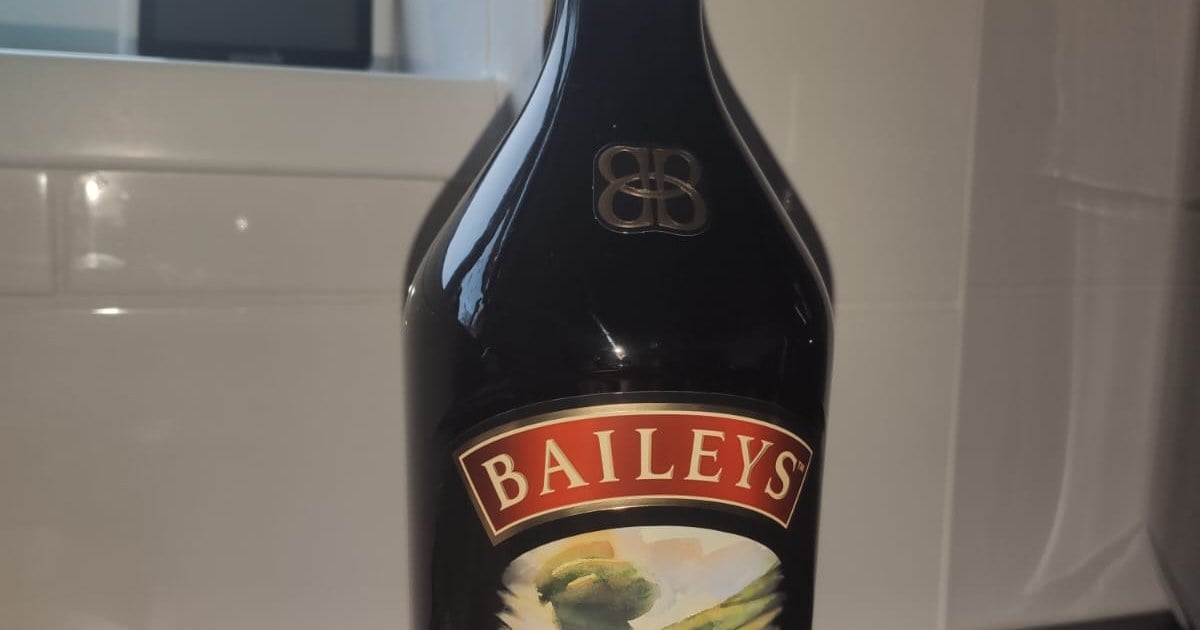
The bottle on your shelf has a signature on it. R.A. Bailey. It looks like the kind of handwriting that belongs to a ruddy-faced Irish dairyman, third generation at least, whose family has been turning County Monaghan cream into something worth drinking since before your grandfather was born.
R.A. Bailey has never existed. The “Dairy Distillery, County Monaghan” printed beneath the signature is equally invented. Baileys Irish Cream — the world’s best-selling liqueur, sold across more than 180 countries at a rate of over 8 million cases a year — was conceived in a Soho office kitchen in London in 1973 by two men who had nipped out to the local supermarket for ingredients.
It took them forty-five minutes.
The Vaguest Brief in the Drinks Industry
David Gluckman was a South African-born new product developer working in London — by his own account not a marketer, not an ad man, but someone whose specific job was conjuring drinks brands from nothing. In 1973, his consultancy received a commission from International Distillers & Vintners, the conglomerate that controlled Gilbeys of Ireland. The brief, as Gluckman later recalled it, was almost comically underspecified: make something Irish.
Behind the vagueness were two very specific problems in search of a single solution. IDV’s parent company, Grand Metropolitan, owned Express Dairies, and the growing popularity of semi-skimmed milk had left them sitting on surplus fresh cream. Gilbeys, meanwhile, operated a money-losing Irish distillery producing surplus whiskey. An Irish export drink that used both would solve two balance sheet problems at once. There was a further incentive: the Irish government was offering a ten-year tax holiday for successful export brands. Gluckman’s total fee for developing the product was approximately £3,000.
He brought his business partner, Hugh Seymour-Davies, to the International Stores supermarket on Berwick Street in Soho. Neither of them had any particular expertise in what they were about to attempt. This, Gluckman would later reflect, was probably an advantage.
Forty-Five Minutes and a Schweppes Bottle
🇮🇪 Discover Hidden Ireland
Get our free 25 Hidden Gems of Ireland guide — the places most visitors never find — when you join 64,000 Ireland lovers.
Get My Free Hidden Gems Guide →
Free. No spam. Unsubscribe any time.
The question they were working on — what would happen if you mixed Irish whiskey with cream? — seems obvious enough in retrospect. What made it genuinely novel was that nobody had ever made it work at commercial scale. The problem, which Gluckman and Seymour-Davies did not fully understand at the time, was physics: alcohol and cream do not naturally coexist. Leave them alone and the fat globules in the cream aggregate and separate, turning your sophisticated liqueur into something that looks deeply alarming within hours. There was no consumer cream liqueur category in 1973 because no one had solved the shelf-stability problem.
Gluckman and Seymour-Davies mixed their Jameson, their single cream, and their Cadbury’s Powdered Drinking Chocolate in the office kitchen, blissfully unaware of any of this. The first result was, in Gluckman’s word, “bloody awful.” They added sugar. The addition of the Cadbury’s chocolate transformed it into something genuinely pleasant — smooth, sweet, indulgent in a way that nothing on the spirits market was offering. Gluckman poured the prototype into a cleaned-out Schweppes tonic bottle and took it to his client.
The actual technical challenge would be solved not in a Soho kitchen but in a laboratory in Harlow, Essex, by a Gilbeys research scientist named Mac Macpherson. To keep cream stable in alcohol at room temperature for two years required developing a proprietary homogenization process in which the fat globules in the cream are reduced to less than two microns in diameter — smaller than the wavelength of visible light — and coated with whiskey through high-pressure emulsification. Without Macpherson’s work, the prototype in the Schweppes bottle would never have become a commercial product. Gluckman has acknowledged him as one of the genuine heroes of the story. Macpherson’s name rarely appears in the popular telling of it.
Building Ireland from a Greek Street Window
The drink now existed. It needed to be Irish in a way consumers could feel rather than just read.
Gluckman knew the template. He had previously been involved with Kerrygold, the Irish butter brand that had successfully sold Irish dairy produce to British consumers by drawing on images of green pastures and traditional farming craft. For Baileys, he applied the same logic deliberately: cows, green fields, the suggestion of accumulated expertise, pastoral imagery that would make the product feel rooted in a landscape rather than manufactured in a plant. The bottle was brown glass, its aesthetic borrowed from the Redbreast whiskey look — weighty, traditional, nothing like the bright packaging of the confectionery aisle even though the product was, in texture and flavour, closer to a sophisticated milkshake than to a spirit.
The brand name came from a restaurant Gluckman could see from his new office on Greek Street: Baileys Bistro, tucked beneath the Pillars of Hercules pub in Soho. The name had the quality he was looking for — Anglo-Irish without being whimsically Irish, easy to pronounce in export markets, carrying no baggage. “R.A. Bailey,” the signature on every bottle, was constructed from scratch: a fictional founding figure whose initials were borrowed from golf’s Royal and Ancient governing body and whose existence the label implies but never states. The address beneath the signature — “The Dairy Distillery, County Monaghan” — was written at the same desk in Greek Street where the recipe had been assembled.
Designer Bob Wagner produced roughly twenty label concepts. The one that went to market combined pastoral illustration with old-fashioned typography, communicating an Ireland that was emotionally resonant if not factually based. “I used what I knew about how people saw Ireland,” Gluckman wrote. “The cows, the green fields, the traditional image.”
The Focus Groups Were a Disaster
Before the product could reach consumers, IDV ran it through standard market research. The results were almost uniformly hostile.
Male focus group participants dismissed it as a girl’s drink, with most of the group agreeing. Female participants were not uniformly warmer: one woman’s comparison to Kaolin & Morphine — a chalky diarrhea remedy common in British medicine cabinets at the time — was repeated at IDV for years afterward. When the product reached the attention of a prominent US distributor named Abe Rosenberg — the man credited with making J&B Rare the top-selling Scotch whisky in America, whose opinion carried considerable weight in the global drinks trade — his verdict was delivered without ambiguity. “That shit will never sell,” he said. Gluckman eventually made this the title of his memoir.
IDV launched Baileys in Dublin anyway, in November 1974, as the world’s first commercially produced Irish cream liqueur. During the development period, an informal test at the Allsop Arms pub in London had produced one encouraging data point: two policemen had reportedly worked through an entire bottle in a single afternoon. It was not exactly a statistically robust proof of concept, but it was something.
Seven Years, Then Everything
The drinks industry remained roughly aligned with Rosenberg’s view for longer than the product’s eventual champions would have liked. Gluckman has described approximately seven years of doubt — a period during which seventy-five competing cream liqueurs emerged to test the category’s viability while the original held its ground without yet demonstrating the scale that would later seem inevitable.
The first real breakthrough came not in Ireland or Britain, but in Australia, where liquor stores were reportedly displaying “arriving next week” signs before shipments arrived and selling through inventory faster than distributors had expected. The Australian market’s enthusiasm helped make the commercial case during the long years in which the established view was still broadly that R.A. Bailey’s product had no real future.
The timeline of what followed runs in one direction only. By 1984, Baileys had reached approximately 50 million bottles annually. By December 2007 — thirty-three years after the Dublin launch — the company produced its one billionth bottle. The second billion arrived twelve years after that. Today, more than 40 per cent of annual sales happen in the six weeks around Christmas, making Baileys the most festive product in the global drinks industry by some distance — a seasonal skew that has occasionally prompted sustained campaigns aimed at persuading consumers that the product is also appropriate in July.
The Ireland That Grew Up Around the Bottle
Here is the strange final turn in the story: the fictional Ireland that David Gluckman assembled in a Soho office window in 1973 is, in most of the ways that matter, now real.
Baileys is produced today at facilities on Nangor Road in Clondalkin, Dublin, and at a second plant in Mallusk, Northern Ireland. The glass bottles are made exclusively at Encirc Glass Plant in Derrylin, County Fermanagh. The cream — which makes up roughly half of every bottle by volume — arrives fresh from approximately 1,500 farms across Ireland within 36 hours of leaving the farm, drawn from a dairy herd of around 40,000 cows. Each year, Baileys requires more than 200 million litres of fresh Irish milk. The brand now accounts for roughly half of all Irish spirits exports.
The Irish whiskey in every bottle is triple-distilled in Ireland. The cocoa and vanilla that complete the flavour profile travel from West Africa and Madagascar — these are not Irish, and the company does not suggest otherwise. But the essential quality of the drink, the dairy weight and texture that has never been matched by any of the seventy-five or so competitors who appeared in its wake, depends entirely on Irish land and Irish farms. The brand was built on borrowed credibility. It now rests on the genuine article.
R.A. Bailey still does not exist. No Dairy Distillery has ever operated in County Monaghan. The name came from a bistro in Soho that has long since closed. But the Ireland Gluckman sketched on a label — the one with the cows and the green fields and the implication of centuries of accumulated dairy wisdom — turned out, over fifty years, to describe something true. The signature is invented. The landscape it stands for is not. And somewhere in that gap between the fiction and the fact is the strangest commercial origin story the drinks industry has ever produced: a product that talked its way into Ireland before Ireland had anything to do with it, and then became something Ireland genuinely could not do without.
David Gluckman received £3,000 for the afternoon’s work. He was not, he has noted with characteristic cheerfulness, on royalties.
☘️ Join 64,000+ Ireland Lovers
Every weekday morning, get Ireland’s hidden gems, local secrets, and travel inspiration — the kind you won’t find in any guidebook.
Subscribe free — enter your email:
📲 Know someone who’d love this? Share on WhatsApp →
Love more? Join 43,000 Scotland lovers → · Join 29,000 Italy lovers → · Join 7,000 France lovers →
Free forever · Unsubscribe anytime
Tours & experiences you might love


Powered by Viator. Some links are affiliate links — we may earn a small commission at no extra cost to you.
Secure Your Dream Irish Experience Before It’s Gone!
Planning a trip to Ireland? Don’t let sold-out tours or packed attractions spoil your journey. Iconic experiences like visiting the Cliffs of Moher, exploring the Rock of Cashel, or enjoying a guided walk through Ireland’s ancient past often sell out quickly—especially during peak travel seasons.

Booking in advance guarantees your place and ensures you can fully immerse yourself in the rich culture and breathtaking scenery without stress or disappointment. You’ll also free up time to explore Ireland’s hidden gems and savour those authentic moments that make your trip truly special.
Make the most of your journey—start planning today and secure those must-do experiences before they’re gone!