

To trace your Donegal ancestors, you need civil registration records, Catholic parish registers, Griffith’s Valuation, and — in many cases — the Public Record Office of Northern Ireland (PRONI). Donegal is one of Ireland’s most rewarding counties for genealogy research. The records exist. The archives are accessible. And the townland your family came from is almost certainly still on the map today.
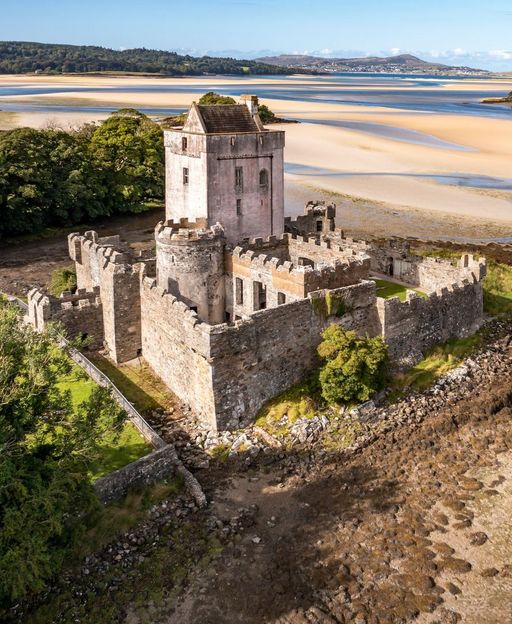
Donegal sits in Ireland’s northwest corner, on the Atlantic edge of the province of Ulster. It is Ireland’s most northerly county. Its Gaelic families — the Gallaghers, the O’Dohertys, the Sweeneys, the Friels — spread across North America, Australia, and Britain during the 19th century. If you carry one of these names, your family very likely came from Donegal. Before you start, read our full guide to tracing your Irish ancestry to understand the record landscape across Ireland.
Watch: Do You Qualify for an Irish Passport?
Tracing your Irish family? If one of your grandparents was born in Ireland, you may be able to become an Irish citizen. This 14-minute guide explains who qualifies, what it costs and how long it takes. Thinking of making the move? Get the free Moving to Ireland checklist.
Why Donegal Research Is Different
Donegal has one feature that sets it apart from most other Irish counties. It is part of the Republic of Ireland, but its records are split between two jurisdictions.
Many Donegal records are held at the Public Record Office of Northern Ireland (PRONI) in Belfast. This surprises researchers who expect everything to be in Dublin. PRONI holds Church of Ireland registers, estate papers, and valuation records that cover the entire Ulster province — including Donegal. If your research stops at the National Archives in Dublin, you are missing half the picture.
The Ulster Plantation of 1610 also shaped Donegal’s record landscape. Scottish and English settlers arrived in significant numbers in the early 17th century. Their records sit alongside the older Gaelic family records. If your Donegal family carries a Scottish-sounding name — Henderson, Hamilton, Stewart — your ancestors may have been planted settlers, not Gaelic Irish. Both have records. Both have townlands.
Knowing what your Irish surname reveals will tell you quickly whether your family was Gaelic or planted. Ó and Mac prefixes — O’Donnell, Mac Sweeney, O’Doherty — are Gaelic. English-style surnames without these prefixes often indicate plantation descent.
Donegal’s Key Family Names and Where They Came From
Donegal has a small set of very dominant surnames. If you carry one of these names, Donegal is almost certainly where your research begins.
- Gallagher (Ó Gallchobhair) — the most common surname in County Donegal. They were hereditary lords of a territory in the south of the county. Gallaghers are found across every Donegal barony.
- O’Doherty (Ó Dochartaigh) — the dominant family of the Inishowen Peninsula in northeast Donegal. Powerful lords who held Inishowen for centuries before the Plantation.
- Friel (Ó Frighil) — concentrated in northwest Donegal, particularly the Rosses and the Gweedore area.
- Diver — a distinctive northwest Donegal name. Common around Creeslough and Gweedore.
- McGinley (Mag Fhionnghaile) — central and north Donegal.
- Sweeney (Mac Suibhne) — a Gallowglass family from Scotland who settled in Donegal from the 1300s. They became the bodyguard of the O’Donnell lords. The name is dense across the county.
- Ward (Mac an Bhaird) — the hereditary bards of the O’Donnell clan, based in Donegal Town and southwest Donegal.
- Boyle (Ó Baoill) — southeast Donegal, particularly around Ballyshannon.
On the feast of Lughnasadh each August, families in the mountain parishes of Donegal gathered at high places to mark the harvest and remember the names of the dead. These community assemblies were how townland memory was kept alive — and why Donegal oral genealogical traditions often stretch further back than the written records. If your Donegal family carried this tradition to America, you may have more family information than you realise.
The Civil Registration Records: 1864 Onwards
Civil registration of births, marriages, and deaths began across Ireland in 1864. This is your first port of call for recent generations.
The indexes are free to search at irishgenealogy.ie and civilrecords.ie. You can find a name, narrow it to the Donegal registration district, and order a copy of the original certificate. The certificate will give you the parents’ names, the townland of birth, and the name of the registered informant — usually a close family member.
Donegal had several civil registration districts. The main ones were Donegal, Glenties, Inishowen, Letterkenny, Milford, and Stranorlar. When you search the indexes, filter by these district names to narrow your results. A Gallagher from Letterkenny district is a different family from a Gallagher from Glenties — though both are in Donegal.
For a full guide to these records, see our complete guide to Irish civil registration records, which covers how to read the original certificates and what each field tells you.
Catholic Parish Registers: Back to the 1820s
☘️ Enjoying this? 64,000 Ireland lovers get stories like this every week. Subscribe free →
Most Catholic parish registers in Donegal begin in the 1820s to 1840s. Some start earlier; a few begin later. They record baptisms and marriages, not deaths.
The National Library of Ireland holds microfilmed copies of most Donegal Catholic registers. These are available to view in the NLI reading room at Kildare Street in Dublin. Many are also available online at IrishGenealogy.ie — you can search and view them from anywhere in the world, free of charge.
To use the parish registers, you need to know the approximate townland your family came from. Registers are organised by parish, not by county. Donegal had around 40 Catholic parishes. A townland in one parish will not appear in the registers of the neighbouring parish. Get the townland right, and you will find the family.
Griffith’s Valuation: Placing Your Family in the 1850s
Griffith’s Valuation surveyed every property in Ireland between 1847 and 1864. In Donegal, the survey ran in 1857 and 1858. It named every head of household in every townland in the county.
Search Griffith’s for free at askaboutireland.ie. Type in your surname and select County Donegal. The results will list every person of that name in the county, with their townland, the property they occupied, and the name of their landlord. This is your map to the exact townland your family lived in during the 1850s.
Cross-reference Griffith’s with the Tithe Applotment Books from 1834. The Tithe Books also list heads of household, about 20 years before Griffith’s. If your surname appears in the same townland in both records, your family was rooted there for at least two generations before they emigrated. The Tithe Books are free at nationalarchives.ie.
The 1901 and 1911 Census Returns
Ireland’s 1901 and 1911 census returns are fully searchable and free at census.nationalarchives.ie. Every household in every townland in Donegal is listed. You can see the names of all family members, their ages, their religion, and whether they could read or write.
The census returns are the best starting point if your family emigrated after 1880. Work backwards from the US immigration record to find the Irish family in the 1901 or 1911 census. Many researchers find the whole family — parents, siblings, younger children who never emigrated — in a single search.
The 1926 Irish Census is also now online at nationalarchives.ie. It covers the Free State, including Donegal. This extends your census coverage into the post-independence period. If your family emigrated in the 1920s or 1930s, the 1926 census is your primary Irish source.
PRONI and the Northern Ireland Connection
The Public Record Office of Northern Ireland in Belfast holds records that cover the whole Ulster province, including County Donegal. This matters for several record types.
PRONI holds Church of Ireland (Protestant) registers for many Donegal parishes. If your ancestor attended the Church of Ireland — common among plantation descendants and some mixed families — their baptism and marriage may be in a PRONI register rather than a Catholic parish register.
PRONI also holds the estate papers of major Donegal landlords. The great estates — the Conyngham estate, the Murray-Stewart estate, the Clements estate in Leitrim — kept tenant lists, rent books, and sometimes eviction records. These documents name individual families in specific townlands, often going back to the late 1700s. If your ancestor was a tenant farmer in Donegal, the landlord’s estate papers may name them decades before any parish register begins.
PRONI is open to researchers. You can book a visit at nidirect.gov.uk/proni. Many of their records are also available through Ancestry.com and FindMyPast.
DNA Testing for Donegal Ancestry
DNA testing has changed what is possible for Donegal researchers. The county’s genetic signature is distinctive. Donegal lies at the Atlantic edge of the Irish gene pool, with strong input from the ancient Gaelic population and measurable input from the Scottish Gallowglass families who settled there from the 1300s.
AncestryDNA’s Ireland ethnicity estimate often specifies a Munster, Connacht, or Ulster/Leinster sub-region. A high Ulster result combined with a Donegal surname is strong evidence of northwest Irish origin.
Surname DNA projects are particularly useful for Donegal research. The Gallagher DNA Project, the O’Doherty DNA Project, and the Sweeney Family DNA Project each collect Y-DNA results to map the genetic diversity within those families. A match in one of these projects can connect you to a specific sept within a large surname family.
The Irish DNA Atlas, a research project from Trinity College Dublin, mapped the regional genetic structure of Ireland using samples from people whose grandparents all came from the same county. Donegal has its own genetic cluster in this dataset. This research confirms that regional DNA patterns within Ireland are measurable and meaningful for ancestry research.
Visiting Donegal: Archive Resources on the Ground
If you plan to travel to Donegal as part of your research, these are the key resources to visit:
- Donegal Ancestry (Ramelton) — the county’s dedicated genealogy centre. Based in the historic town of Ramelton. Staff can search local records and church registers on your behalf. Pre-book before you visit.
- Donegal County Archives (Lifford) — holds county council records, local estate papers, and other materials not available elsewhere. Lifford is the county town, just across the border from Strabane.
- Local parish churches — many Donegal parishes keep their own original registers. Some will allow researchers to view them. Ask at the parochial house.
- Donegal County Museum (Letterkenny) — has exhibitions on Donegal history and emigration. A good starting point for understanding the county’s social history before you search the records.
Arranmore Island, off the northwest coast, was one of Donegal’s most prolific emigration points. Several ships from Arranmore landed in Philadelphia and Boston in the 1800s. The island still has an active genealogical society. If your family name includes Boyle, Gallagher, or Rodgers — and your family claimed Donegal origin — Arranmore may be worth investigating specifically.
Frequently Asked Questions
What are the most common surnames in County Donegal?
Gallagher is the most common surname in Donegal by a significant margin. It is followed by O’Doherty (concentrated in Inishowen), Friel, Sweeney, McGinley, Diver, and Boyle. Cannon, Ward, and Bonner are also strongly associated with specific parts of the county. If you carry one of these names, Donegal should be your first research focus.
Where are Donegal genealogy records held?
Donegal records are split between several archives. Civil registration indexes are at irishgenealogy.ie. Parish registers are at the National Library of Ireland and partly online. Griffith’s Valuation is at askaboutireland.ie. Estate papers and Church of Ireland registers are mostly at PRONI in Belfast. The Donegal County Archives at Lifford holds local council and estate records. No single archive holds everything.
When do Donegal parish registers begin?
Most Catholic parish registers in Donegal begin in the 1820s or 1830s. A small number begin in the 1810s. Some begin later, in the 1840s or 1850s, particularly in remote western areas. The registers cover baptisms and marriages only — not deaths. To search them, identify the specific Catholic parish that covered your ancestor’s townland. The National Library of Ireland’s parish register search at registers.nli.ie will help you find the right parish.
Was my Donegal ancestor Irish or Scottish?
Most Donegal families with Gaelic surnames (Ó or Mac prefix) are of ancient Irish Gaelic origin. However, some Mac names — particularly MacSweeney — are Gallowglass families from Scotland who settled in Donegal from the 14th century. English-style surnames without an Ó or Mac prefix often indicate descent from Ulster Plantation settlers who arrived after 1610. DNA testing can help clarify this if you are uncertain which line your family came from.
How do I find the specific townland my Donegal ancestor came from?
Start with Griffith’s Valuation at askaboutireland.ie. Search for your surname in County Donegal. The results will list your ancestor’s townland name directly. Cross-reference with the 1901 and 1911 census at census.nationalarchives.ie. If you have a US immigration record, check whether it includes a parish or county in Ireland — many do. DNA matching with living Donegal relatives can also pinpoint a townland if the paper records are thin.
☘️ Join 64,000+ Ireland Lovers
Every Friday, get Ireland’s hidden gems, local secrets, and travel inspiration — the kind you won’t find in any guidebook.
Subscribe free — enter your email:
📲 Know someone who’d love this? Share on WhatsApp →
Love more? Join 43,000 Scotland lovers → · Join 29,000 Italy lovers → · Join 7,000 France lovers →
Free forever · One email per week · Unsubscribe anytime
Tracing your Donegal roots connects you to one of Ireland’s most historically rich emigration stories — the county sent thousands of families to America, Scotland, and Australia across the 18th, 19th, and early 20th centuries. If you’d like to go beyond Donegal and trace your complete Irish family line, our free Irish Ancestral Heritage Guide covers county-by-county emigration records, townland maps, and DNA research methods. Get the free ancestry guide here.
Tours & experiences you might love


Powered by Viator. Some links are affiliate links — we may earn a small commission at no extra cost to you.
Secure Your Dream Irish Experience Before It’s Gone!
Planning a trip to Ireland? Don’t let sold-out tours or packed attractions spoil your journey. Iconic experiences like visiting the Cliffs of Moher, exploring the Rock of Cashel, or enjoying a guided walk through Ireland’s ancient past often sell out quickly—especially during peak travel seasons.

Booking in advance guarantees your place and ensures you can fully immerse yourself in the rich culture and breathtaking scenery without stress or disappointment. You’ll also free up time to explore Ireland’s hidden gems and savour those authentic moments that make your trip truly special.
Make the most of your journey—start planning today and secure those must-do experiences before they’re gone!