

Ireland has approximately 65 surviving round towers, built between the 9th and 12th centuries. They rise from monasteries, churchyards, and hilltops across the country — slender, tapering, and unmistakably Irish. Ireland’s round towers have fascinated visitors for generations. For over 200 years, historians have argued about exactly what these extraordinary structures were built to do. Were they bell towers? Watchtowers? Places of refuge when Vikings arrived? The truth, most archaeologists now believe, is more complicated than any single theory suggests.
What Are Ireland’s Round Towers?
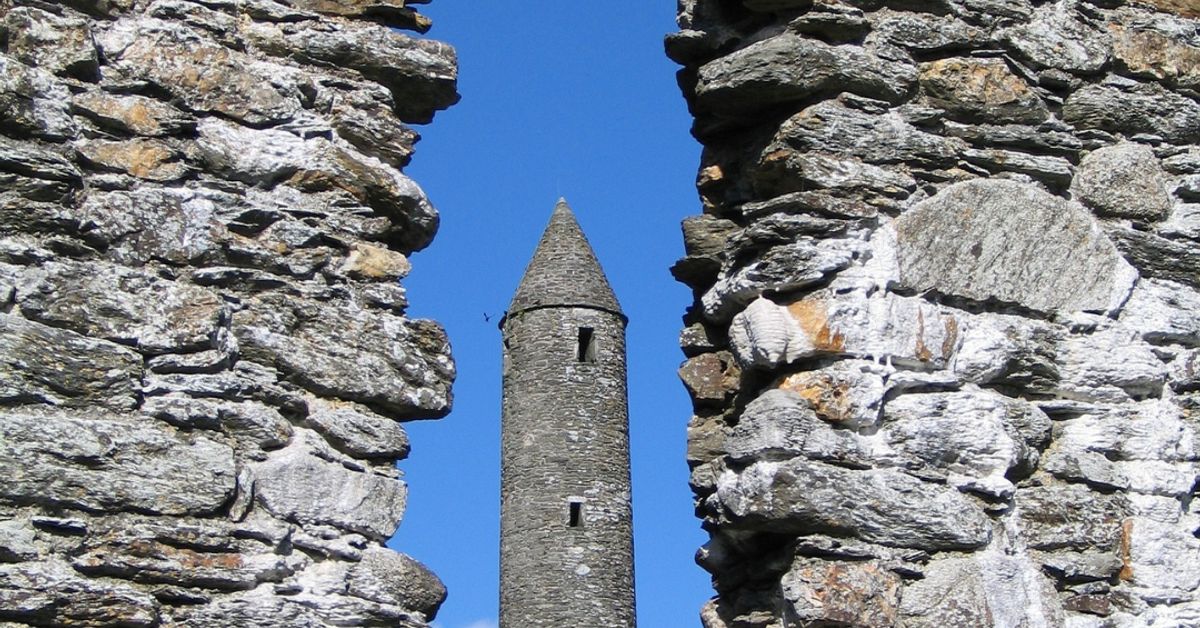
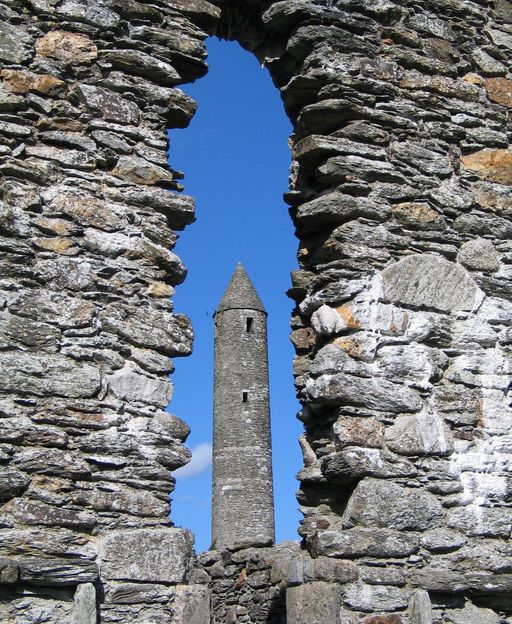
Ireland’s round towers (called cloigtheach in Irish, meaning bell-house) are free-standing stone structures that builders created almost exclusively on this island. They typically stand between 20 and 40 metres tall, taper slightly as they rise, and end in a conical cap. Almost all of them sit within or immediately beside early medieval monastic settlements — beside ruined churches, high crosses, and the remains of scriptoria where monks copied manuscripts by hand.
The structures date from roughly 900 to 1200 CE, though some builders may have started work as early as the late 8th century. At their peak, Ireland may have had as many as 120 round towers. Approximately 65 survive today in various states of preservation — from almost perfectly intact examples at Glendalough and Ardmore to broken stumps barely recognisable above ground.
England has no round towers of this type. Scotland has none. France has none. They are, in the most literal sense, an Irish invention — and the fact that no one is entirely certain why Irish builders invented them makes them all the more compelling.
The Most Important Clue — The Elevated Doorway
The most distinctive feature of Ireland’s round towers is not their height. It is where their builders placed their doors.
In almost every surviving round tower, the entrance doorway sits between 1.5 and 4 metres above ground level. No external staircase leads to it. To enter, you would need a ladder — which you could pull up behind you from the inside. At the Glendalough round tower in County Wicklow, the door begins approximately 3.5 metres above the ground.
Medieval builders did not waste stone or effort on accidental features. Every construction choice had a reason. The question is: what reason justified placing a door 3 metres above the ground on hundreds of separate towers across the island? Two centuries of scholarship have not produced a definitive answer.
Theory One — Bell Towers for Monastic Communities
The most widely accepted theory is also the simplest: Irish round towers functioned as bell towers. The Irish word cloigtheach (bell-house) supports this interpretation directly. Medieval monastic communities structured their days around bells that called monks to prayer at fixed hours — the same pattern that Christian communities across Europe followed from the 6th century onward.
A tall stone tower amplified the sound of a bell across the surrounding landscape far more effectively than any low-lying church structure. On a clear day in the flat midlands of Ireland, a bell rung from 30 metres could carry for several kilometres. This coordinated the daily rhythms of the monastery and signalled its presence to travellers and pilgrims approaching from a distance.
The placement of round towers beside churches at major monasteries like Glendalough, Clonmacnoise, and Ardmore is entirely consistent with a bell tower function. Most European monasteries had bell towers in some form. Ireland’s round towers may simply represent the distinctive local expression of a universal monastic need.
☘️ Enjoying this? 64,000+ Ireland lovers get stories like this every week. Subscribe free →
Theory Two — Refuge Towers Against Viking Raiders
Vikings first raided Ireland’s monasteries in 795 CE — just decades before round tower construction intensified. Monasteries made extremely rich targets. They held illuminated manuscripts, gold and silver reliquaries, metalwork of extraordinary quality, and substantial food stores. They had no armies to defend themselves.
A stone tower with a door 3 metres above ground offered an effective refuge. Monks could carry valuables inside, climb up, pull the ladder up behind them, and shelter in relative safety while raiders looted the monastery buildings below. Stone construction made the towers fire-resistant. The conical cap prevented attackers from lowering burning materials into an open shaft from above.
The timing of tower construction — coinciding almost exactly with the Viking raiding period of 795 to 1100 CE — gives this theory significant credibility. If round towers existed purely as bell towers, the elevated door makes far less sense. If builders also intended them as refuges, the elevated door becomes the key defensive feature of the entire design.
Theory Three — Treasuries for Manuscripts and Sacred Objects
A related theory proposes that round towers served primarily as secure storage for a monastery’s most valuable possessions: illuminated manuscripts, sacred relics, and liturgical metalwork. Irish monks produced works of extraordinary cultural value during this period. The Book of Kells, the Book of Armagh, and the Ardagh Chalice all emerged from exactly this monastic culture between 800 and 1200 CE.
A dry stone structure accessible only by ladder offered some of the most secure storage available in medieval Ireland. Surviving round towers were large enough to hold several internal wooden floors connected by ladders, providing separate storage levels for different categories of goods. Some towers may have housed the monastery’s entire treasury within their walls.
This theory and the refuge theory reinforce each other naturally. The most valuable things to protect during a Viking raid were not the monks themselves but the irreplaceable manuscripts and reliquaries they had spent decades creating. A tower that sheltered both the monks and the treasures answered both needs simultaneously.
What Most Historians Now Believe
Contemporary scholarship tends toward a multiple-purpose explanation. Round towers almost certainly served as bell towers — the Irish name alone confirms this. They very likely also served as places of refuge and secure storage during Viking raids. They probably functioned as landmarks visible from a great distance across flat Irish landscapes, signalling the location of the monastic settlement to approaching travellers.
Medieval builders did not waste resources on single-purpose structures when several uses were achievable in the same design. The round tower answered the bell tower need, the storage need, the refuge need, and the navigation landmark need — all in one elegant, remarkably durable form. The fact that approximately 65 of them survive after 1,000 years says something about how well the design worked.
If you want to plan a visit to Ireland, adding at least one round tower to your itinerary gives you access to a part of Irish history that no guidebook fully conveys until you stand at the base of one and look up.
The Best Round Towers to Visit in Ireland
Glendalough, County Wicklow — One of Ireland’s most visited heritage sites. The round tower here stands approximately 33 metres tall and survives in almost complete condition, including its original conical cap. St Kevin founded the monastic settlement at Glendalough in the 6th century. The valley contains cathedral ruins, high crosses, and a pair of glacial lakes. The site sits about one hour from Dublin, along some of Ireland’s most scenic routes east of the capital.
Clonmacnoise, County Offaly — This exceptional site beside the River Shannon preserves two round towers alongside cathedral ruins, multiple high crosses, and a castle. St Ciarán established Clonmacnoise in 544 CE, and it grew into one of the most important monastic settlements in early medieval Europe. The two towers — Temple Finghin Tower and O’Rourke’s Tower — stand at different stages of completion, giving visitors a rare chance to compare their construction.
Rock of Cashel, County Tipperary — The round tower here attaches to the cathedral complex rather than standing free. The Kings of Munster held the Rock of Cashel as their seat of power until they transferred it to the church in 1101. The combined site — tower, cathedral, Cormac’s Chapel, cross, and graveyard — ranks among the most spectacular in Ireland.
Kilmacduagh, County Galway — Ireland’s most dramatic surviving round tower stands approximately 34 metres tall and leans noticeably — approximately 40 centimetres off vertical — earning it the nickname of Ireland’s leaning tower. The surrounding ruined monastery draws fewer visitors than more famous sites, giving the place an atmosphere of complete solitude. A short drive from Gort in County Galway brings you there.
Ardmore, County Waterford — One of the best-preserved surviving examples stands about 30 metres tall and dates from the 12th century. Tradition links Ardmore to St Declan, whose monastic community predates St Patrick’s arrival in Ireland. The round tower and surrounding cathedral ruins sit dramatically on a coastal headland above the sea. The village below ranks among Ireland’s most charming coastal settlements.
What did Ireland’s round towers serve as?
Most historians believe Ireland’s round towers served multiple purposes simultaneously: as bell towers for monastic communities, as places of refuge during Viking raids, and as secure storage for manuscripts and sacred objects. The elevated doorway — typically 1.5 to 4 metres above ground — allowed inhabitants to pull a ladder up behind them and deny entry to attackers below.
How many round towers remain in Ireland today?
Approximately 65 round towers survive in Ireland in various states of preservation. Ireland may have had as many as 120 round towers at their peak. Builders constructed them between roughly 900 and 1200 CE, coinciding with the period of Viking raids on Irish monasteries that began in 795 CE.
Where can I see the best round towers in Ireland?
The most impressive round towers include Glendalough in County Wicklow (33 metres tall, approximately one hour from Dublin), Clonmacnoise in County Offaly (two towers beside the River Shannon), Kilmacduagh in County Galway (34 metres tall and leans approximately 40 centimetres off vertical), and Ardmore in County Waterford on a scenic coastal headland.
Why do Irish round towers have their doors so high off the ground?
The elevated doorway — typically between 1.5 and 4 metres above ground — most likely served as a defensive feature. During Viking raids, monks could climb inside, carrying their most valuable manuscripts and relics, then pull a ladder up behind them, making entry impossible for raiders below. Stone construction also made the towers fire-resistant against attack.
☘️ Join 64,000+ Ireland Lovers
Every weekday morning, get Ireland’s hidden gems, local secrets, and travel inspiration — the kind you won’t find in any guidebook.
Subscribe free — enter your email:
📲 Know someone who’d love this? Share on WhatsApp →
Free forever · Unsubscribe anytime
Tours & experiences you might love


Powered by Viator. Some links are affiliate links — we may earn a small commission at no extra cost to you.
Secure Your Dream Irish Experience Before It’s Gone!
Planning a trip to Ireland? Don’t let sold-out tours or packed attractions spoil your journey. Iconic experiences like visiting the Cliffs of Moher, exploring the Rock of Cashel, or enjoying a guided walk through Ireland’s ancient past often sell out quickly—especially during peak travel seasons.

Booking in advance guarantees your place and ensures you can fully immerse yourself in the rich culture and breathtaking scenery without stress or disappointment. You’ll also free up time to explore Ireland’s hidden gems and savour those authentic moments that make your trip truly special.
Make the most of your journey—start planning today and secure those must-do experiences before they’re gone!