

When the sun shows up in Ireland, it deserves a proper response. These city parks and squares across Ireland are the places to go — find a bench, get a coffee, and watch the city do its thing. Each one has a different feel, a different crowd, and a different reason to linger. If you want a wider mix of town squares, see our companion guide to Ireland’s best public squares to sit in on a sunny day; this one focuses on city parks and the green spaces beside the food markets.
Want more Ireland travel guides straight to your inbox? Subscribe to our free newsletter and we’ll send you the best of Ireland every week.
Merrion Square, Dublin
Merrion Square is one of Dublin’s finest Georgian spaces. The park covers just under five hectares (about 12 acres) and is surrounded by red-brick townhouses, many of which once housed notable residents — Oscar Wilde grew up at Number 1 (he was born nearby on Westland Row), and a colourful statue of him now sits on the north-west corner of the park, facing the house. It’s one of the more popular photo stops in the city, and our guide to Dublin’s Georgian doors explains the colourful front doors you’ll pass on the way.
The park itself is open daily and free to enter. Wide, flat paths circle the interior, with plenty of benches and open lawn. Flowerbeds are well maintained, and the space has a calm, unhurried quality that sets it apart from the busier St. Stephen’s Green nearby. On sunny weekdays you’ll share the park with civil servants and professionals from the surrounding government offices eating lunch outside. On Sundays around 200 artists hang their work along the railings in the Merrion Square Open Air Art Gallery, a tradition that has been formally licensed by Dublin City Council since 1985.
Merrion Square is about a ten-minute walk from Grafton Street and is right beside the National Gallery of Ireland, which is free to enter if you want to combine an afternoon inside and outside. For more ideas, see the best things to do in Dublin.
St. Stephen’s Green, Dublin
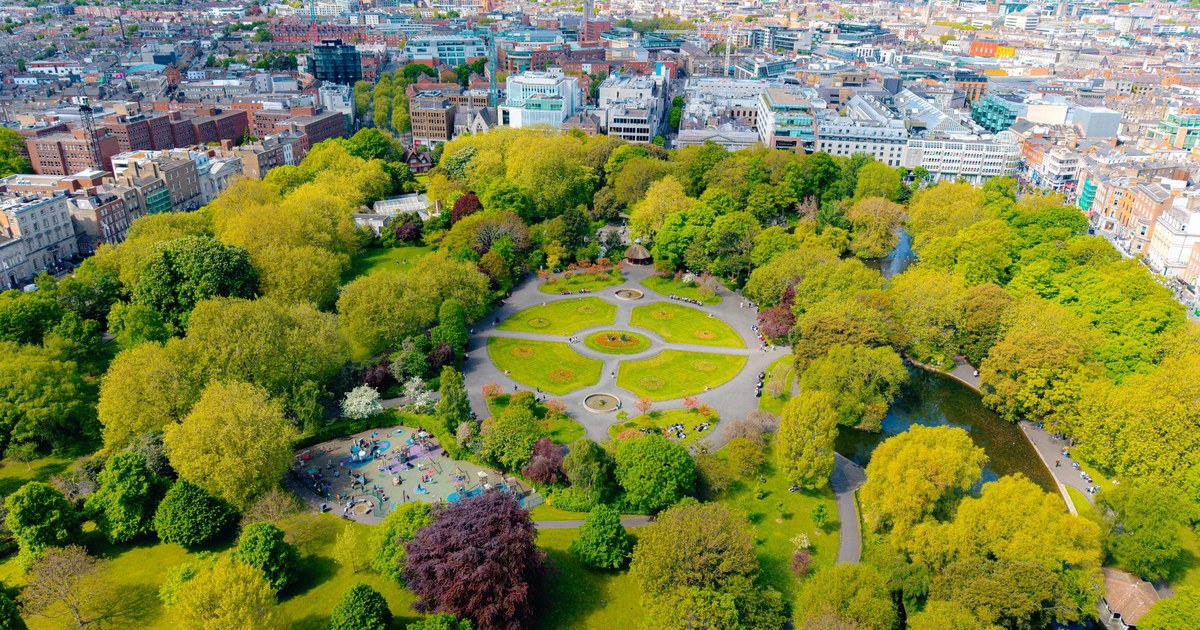
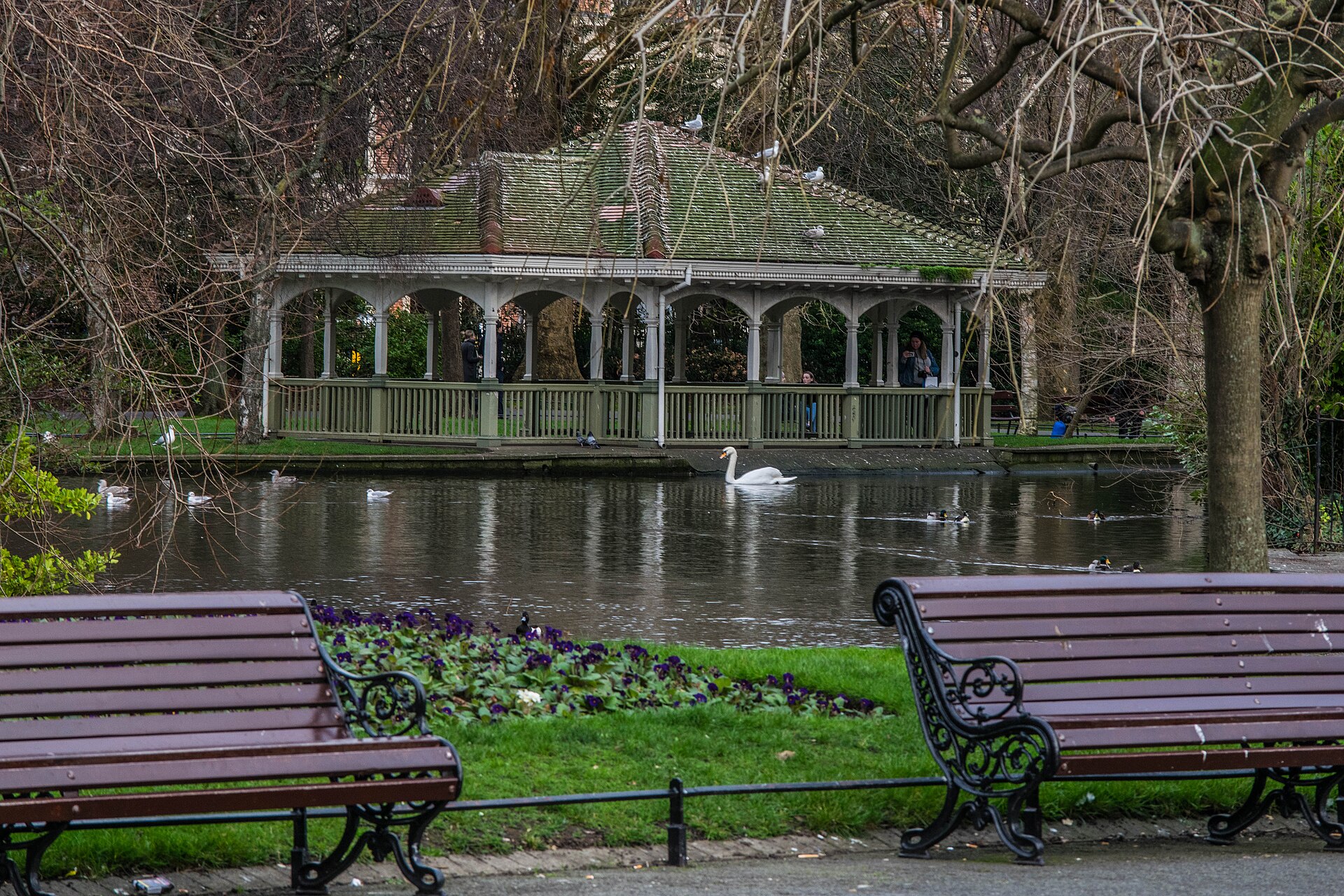
St. Stephen’s Green is the most central green space in Dublin, covering 22 acres just off the top of Grafton Street. It was enclosed as a park in 1664 and reopened to the public in 1880 after Sir Arthur Guinness (later Lord Ardilaun) paid for its redesign. Our St Stephen’s Green guide has the full history. The layout has remained broadly the same since: a central lake with ducks and a waterfall, a Victorian bandstand, formal gardens, and a series of sculptures and monuments throughout.
The park has several entry points. The main gate on the north side is closest to the shops and most transport, but the south side near the National Concert Hall is quieter. On a sunny afternoon the park fills up quickly — it’s one of the few large outdoor spaces in central Dublin — so arriving before noon gives you a better choice of spot. There’s a children’s playground near the west side if you’re visiting with young ones.
Coffee options are strong on the surrounding streets, including the Grafton Street end of the Green and the Harcourt Street corner, so picking up a takeaway before you settle on a bench is straightforward.
Eyre Square, Galway
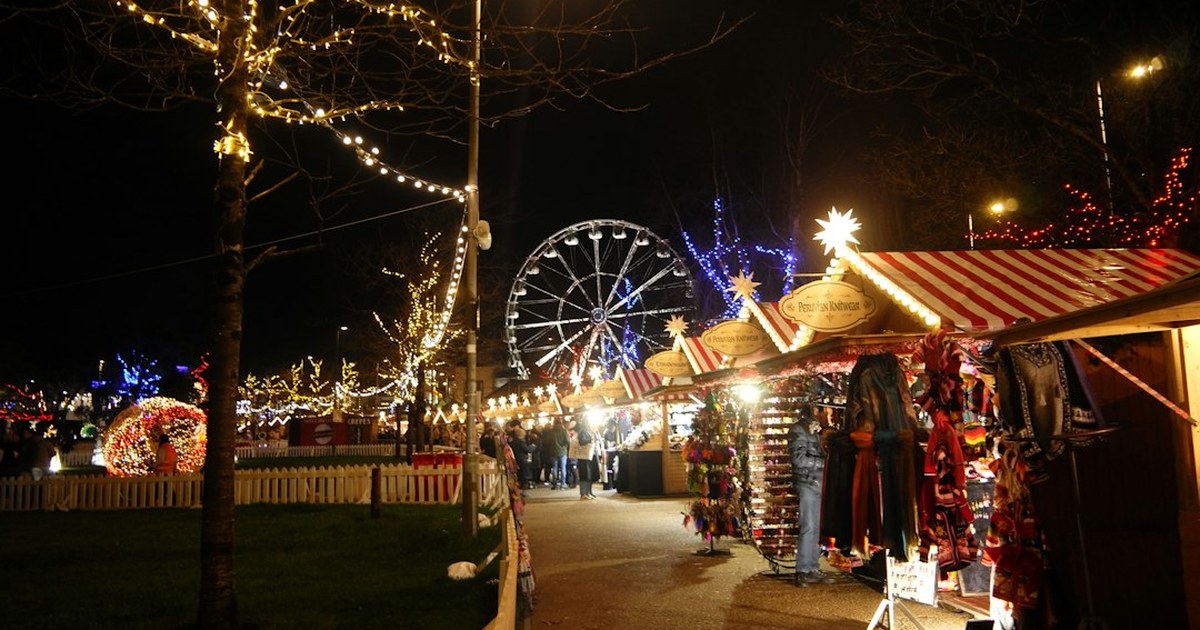
Eyre Square is the heart of Galway city — a compact, flat public square that acts as the city’s main gathering point. Mayor Edward Eyre presented the land to the city in 1710, and it has functioned as a public space ever since. It was renamed the John F. Kennedy Memorial Park in 1965, following the American president’s visit to Galway in 1963, though almost no one calls it that.
The square has benches arranged around grassed areas and a few points of interest worth noting: the Browne Doorway is a carved stone gateway from a 17th-century merchant family’s house on Lower Abbeygate Street, moved to the square in 1905 and now displayed in the park as a piece of civic sculpture. The Quincentennial Fountain, installed in 1984, marks 500 years since Galway’s charter and takes the form of a Galway hooker’s sails. Neither is a major landmark in itself, but together they give the square a bit of texture beyond plain grass and paths.
Galway’s position on the coast means the square can be breezy even when it’s sunny. On a still day, though, it’s one of the liveliest outdoor spots in the country. The surrounding streets — Shop Street, Quay Street — are immediately adjacent, so food and coffee are right there. Grab something from one of the nearby cafés or food stalls and bring it back. More ideas in our guide to the best things to do in Galway.
Like the sound of a sunny afternoon in Galway? Sign up for our free Ireland newsletter for travel ideas, local tips, and hidden spots across every county.
People’s Park, Limerick
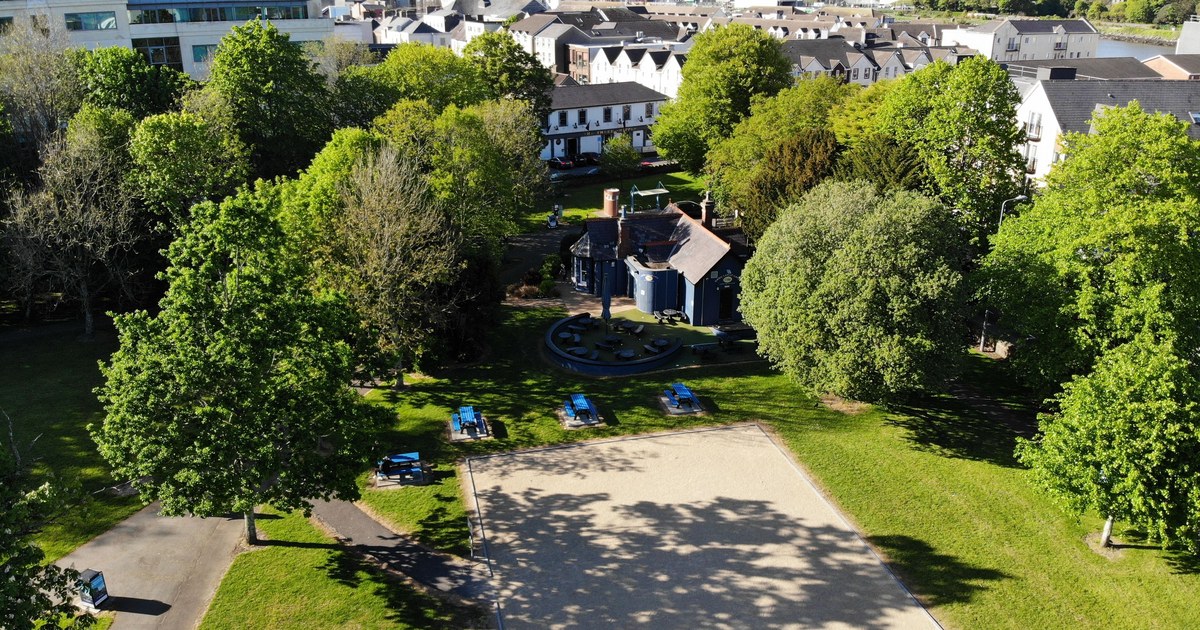
The People’s Park in Limerick opened in 1877 beside Pery Square, just south of the city centre and west of Colbert railway station. It’s a well-kept Victorian park with an ornate drinking fountain, a bandstand and the Thomas Spring Rice memorial column. The surroundings are notable: the Limerick City Gallery of Art sits at the park’s northern edge, with a café and an entrance onto the park, and the Georgian terrace of Pery Square faces it.
Because Limerick doesn’t draw the same tourist volumes as Dublin or Galway, this park tends to be quieter than equivalents in larger cities. You’re more likely to find an empty bench here on a Saturday afternoon than you are in Merrion Square. There’s decent open lawn for sitting on the grass, and a playground if you have children with you.
Worth combining with a visit to the Limerick Milk Market on Mungret Street, roughly a 10–15 minute walk away. The main food and craft market runs on Saturdays (8am–3pm at the time of writing; the market’s outdoor café and shops are also open on Fridays and Sundays, so check its website first). It has food producers, bakers, and coffee — good fuel before settling in the park. For more, see things to do in Limerick.
Bishop Lucey Park, Cork
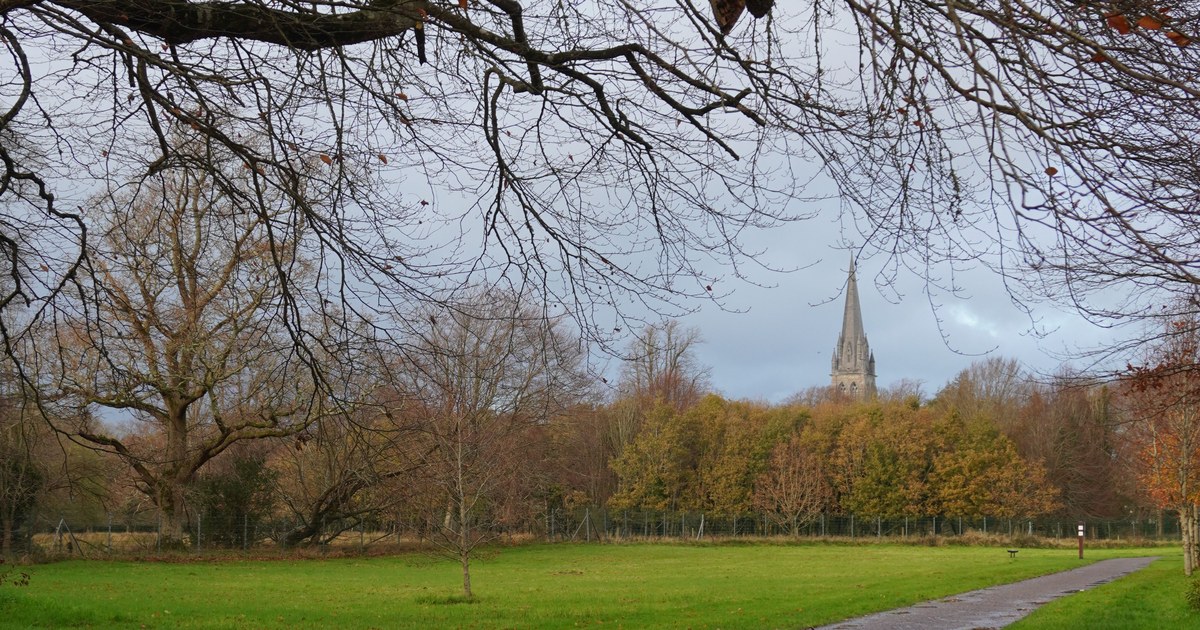
Bishop Lucey Park first opened in December 1985, to mark the 800th anniversary of Cork’s first charter, on a site between Grand Parade and South Main Street in the city centre that had been built over for centuries. The park incorporates surviving sections of Cork’s medieval city wall, uncovered when the site was cleared. It closed in December 2023 for a €7 million redevelopment and reopened in November 2025 with the old boundary walls and fencing removed, so the wall is now visible from the street. For a small urban park, it has an unusual amount of history underfoot.
The park is roughly 150 metres by 50 metres, so it is small, but it sits right beside the English Market, Cork’s famous indoor food hall and one of the best in the country (see what the English Market has been selling since 1788). The obvious approach on a sunny day is to stop at the English Market first, pick up something to eat, and then take it to a bench in Bishop Lucey Park. That’s what Cork people do, and it works well.
Entry is free; check Cork City Council for current opening hours, as the park has only recently reopened and some works were still being finished at the time of writing. It doesn’t have the scale of Dublin’s parks, but its central position and the combination of medieval stonework and open space makes it one of the more distinctive city parks in the country. More in our guide to the best things to do in Cork. Official info: en.wikipedia.org/wiki/Bishop_Lucey_Park.
The Diamond, Donegal Town
Not every Irish public square is in one of the main cities. Donegal Town’s central square — known as The Diamond, a name common to many Ulster town centres — is one of the most historically interesting public spaces in the country.
The Diamond is a triangular market square at the meeting point of the town’s main streets. At its centre stands a tall stone obelisk, unveiled in 1938, commemorating the Four Masters — Franciscan brother Mícheál Ó Cléirigh and three lay historians — who compiled the Annals of the Four Masters in the 1630s, with the nearby Franciscan friary at the heart of the project. The Annals are one of the most important records of early Irish history, and the obelisk gives the square a significance beyond its size.
The surrounding buildings include independent shops, traditional pubs, and a few small cafés. It functions as a genuine working market square rather than a landscaped park, so the atmosphere is more commercial and community-focused than somewhere like Merrion Square. But on a sunny afternoon the light catches the old stone buildings well, and Donegal Castle is just off the square. For more of the county, see the best things to do in Donegal.
Practical Tips for Sunny Day Visits
Irish weather is unpredictable enough that it pays to make the most of good conditions quickly. A few practical points:
- Go early. Morning light is often clearer and the best-known spots (St. Stephen’s Green, Eyre Square) fill up by midday on warm weekends.
- Bring a layer. Shade can be noticeably cold even on warm days in Ireland. A light jacket means you can stay out longer when the sun ducks behind a cloud.
- Check for markets. Several of these spots are close to a market. Limerick’s Milk Market (main market on Saturdays), Galway’s markets on weekends, Cork’s English Market (Monday to Saturday) — combining food shopping with outdoor sitting is a good use of an afternoon.
- Cafés nearby matter. Every location above has cafés close by. Takeaway coffee and a bench is often the best version of this activity.
- Weekdays are calmer. If you’re visiting outside school terms and can go on a Tuesday or Wednesday, most of these squares are noticeably less busy than at weekends.
Which City Has the Best Squares?
It depends on what you’re after. Dublin has the greatest number of formal Georgian squares — Merrion Square and St. Stephen’s Green are both excellent and within walking distance of each other. Galway has the most animated atmosphere at Eyre Square, but it’s a smaller space. Limerick and Cork tend to be quieter, so you have a better chance of a bench largely to yourself. Donegal Town is the most distinctive if you’re passing through the north-west.
Sunny afternoons are never guaranteed in Ireland. These city parks and squares are good places to make the most of them.
Planning a visit to Ireland? Subscribe to our free newsletter for weekly guides, practical travel tips, and local recommendations from across the island.
☘️ Join 64,000+ Ireland Lovers
Every weekday morning, get Ireland’s hidden gems, local secrets, and travel inspiration — the kind you won’t find in any guidebook.
Subscribe free — enter your email:
Already subscribed? Download your free Ireland guide (PDF)
📲 Know someone who’d love this? Share on WhatsApp →
Love more? Join 43,000 Scotland lovers → · Join 29,000 Italy lovers → · Join 7,000 France lovers →
Free forever · Unsubscribe anytime
Tours & experiences you might love


Powered by Viator. Some links are affiliate links — we may earn a small commission at no extra cost to you.
Secure Your Dream Irish Experience Before It’s Gone!
Planning a trip to Ireland? Don’t let sold-out tours or packed attractions spoil your journey. Iconic experiences like visiting the Cliffs of Moher, exploring the Rock of Cashel, or enjoying a guided walk through Ireland’s ancient past often sell out quickly—especially during peak travel seasons.

Booking in advance guarantees your place and ensures you can fully immerse yourself in the rich culture and breathtaking scenery without stress or disappointment. You’ll also free up time to explore Ireland’s hidden gems and savour those authentic moments that make your trip truly special.
Make the most of your journey—start planning today and secure those must-do experiences before they’re gone!