

It is one of the most-shared lines in the Irish blessing tradition:
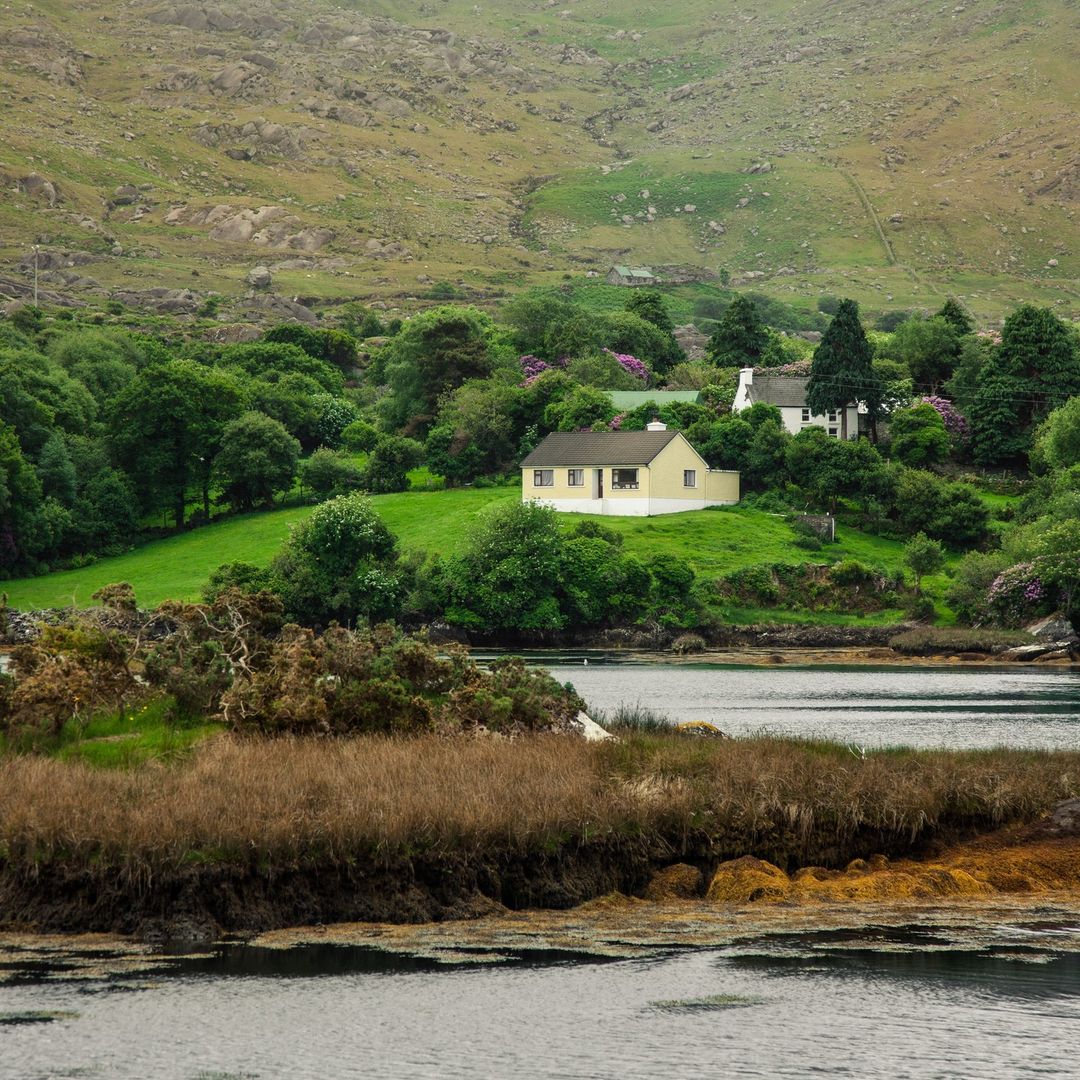
“May luck be your friend in whatever you do, and may trouble be always a stranger to you.”
You have likely seen it somewhere — on a card, in a social media post, on a tea towel in a gift shop in Galway, or in a message from a relative overseas. It is short, warm, and direct. But where does it come from, and why does it keep travelling?
Love Irish culture and history? Get our free weekly newsletter — stories, blessings, places, and people from across the island. Subscribe to Love Ireland here.
What Is an Irish Blessing?
An Irish blessing is a short spoken or written wish for someone’s wellbeing. Unlike a prayer, which is directed at a higher power, a blessing is directed at a person. You are not asking God to help them — you are declaring a hope that good things will find them.
The format is almost always the same. It begins with “May…” and then names something good: luck, health, laughter, peace, a warm fire, a road that rises. The tone is warm but practical. The language is plain. You do not need to read between the lines.
That directness is part of what makes them work. There is no elaborate metaphor and no religious requirement. Anyone can receive an Irish blessing and feel the intention behind it clearly.
Where Do Irish Blessings Come From?
☘️ Join 64,000+ Ireland Lovers
Every weekday morning, get Ireland’s hidden gems, local secrets, and travel inspiration — the kind you won’t find in any guidebook.
Subscribe free — enter your email:
Already subscribed? Download your free Ireland guide (PDF)
📲 Know someone who’d love this? Share on WhatsApp →
Free forever · Unsubscribe anytime
The tradition of spoken blessings in Ireland stretches back well over a thousand years. In early Gaelic society, words carried real social weight. A poet’s curse could damage a king’s reputation. A blessing from a respected elder carried genuine community meaning. Words were not merely decorative — they were transactional.
The Celts, who settled across Ireland from around 500 BC, had a rich oral tradition. Bards and druids were professional keepers of language. They composed verse for every occasion: battle, harvest, birth, death. When Christianity arrived in Ireland in the 5th century, it layered a new form of spiritual expression on top of that older tradition. The result was a distinctive blend — Christian in some ways, but rooted in something older and more earthly.
Some blessings in circulation today are explicitly Christian in origin; others carry no religious reference at all. The exact author and date of the luck-and-trouble wording are not recorded, so it cannot be traced to a single period or source. It fits the second group: it is not a prayer. It is a wish.
What the Words Actually Mean
“May luck be your friend in whatever you do.”
The word luck here is not about chance in the casino sense. Read this way, luck means the sense that circumstances align for you, that things work out, that the world is not against you. To wish someone luck was to wish them a smooth passage through life, not a winning ticket.
“And may trouble be always a stranger to you.”
This line is the more unusual one. Rather than wishing for something positive, it wishes away something negative. Trouble stays at a distance. It does not know your name. It does not knock on your door.
That framing — trouble as a stranger — is carefully chosen. A stranger is not an enemy. You do not fear a stranger the way you fear a known threat. But a stranger does not come close either. They pass by. They have no claim on you. By calling trouble a stranger, the blessing puts distance between the person and whatever hardships life might bring, without pretending those hardships do not exist.
This is a realistic blessing. It does not promise a perfect life. It simply says: may the bad things not find you.
How Irish Blessings Spread Around the World
Between 1845 and 1855, around one million people died in Ireland during the Great Famine, and another million emigrated. In the decades that followed, millions more left for the United States, Canada, Australia, Britain, and Argentina. Over the following century, millions more left, and today far more people of Irish descent live overseas than on the island.
Those emigrants took their language, their music, their food — and their blessings — with them.
In the United States especially, Irish-American culture developed its own identity. Blessings and toasts became a way of maintaining a connection to a homeland that many families had never seen in person. They were passed down at dinner tables. They were printed in newspapers. They were spoken at weddings and wakes across New York, Boston, Chicago, and beyond.
The diaspora gave Irish blessings their global reach. When you see a blessing on a card in New York or hear one at a christening in Melbourne, you are witnessing something that was carried out of Ireland across generations and thousands of miles of ocean.
Today, the internet has accelerated that spread considerably. A line like “may luck be your friend” can be shared in seconds to someone on the other side of the world. The form is ancient. The medium is new. The impulse — to send someone a good wish — is as old as language itself.
Other Well-Known Irish Blessings
The luck and trouble blessing is one of dozens that circulate widely. A few others you may recognise:
“May the road rise up to meet you, may the wind be always at your back.” This is probably the most widely known Irish blessing in the English-speaking world. For the story behind this one, see The Irish Blessing Everyone Knows — and the Story Nobody Ever Tells, or our guide to May the Road Rise Up to Meet You. It uses the image of a journey — a road, a wind, the sun at your back — to wish someone ease in whatever path they take.
“May your pockets be heavy and your heart be light.” Practical and cheerful. It covers both financial and emotional wellbeing in a single short line.
“May you always have a clean shirt, a clear conscience, and enough coins in your pocket to buy a pint.” This one is more humorous. Irish blessings are not always solemn. Many are delivered with a grin.
“May you be in heaven a full half-hour before the devil knows you’re dead.” This is a toast rather than a blessing, but it shows the full range of the tradition — from the sincere to the sardonic.
What these lines share is the same underlying impulse: to take a feeling of goodwill towards another person and give it a form that can be passed on.
When People Share Blessings Today
Irish blessings still serve a practical social function. They give people something to say at moments when ordinary words feel inadequate — at a leaving party, a hospital visit, a new year, a wedding, a birth, or a loss.
They also travel well by text and social media. They are short enough to share directly. They carry genuine warmth without demanding a response. When someone sends you “may luck be your friend,” they are not asking you to do anything. They are just sending a thought in your direction.
That is what makes the form so durable. An Irish blessing is low-stakes and high-warmth. It costs nothing to give and asks nothing in return. And in an age when most digital messages are requests, advertisements, or arguments, a blessing is something different — a small act of generosity with words.
Who in Your Life Could Use This One?
The blessing that sparked this article ends with a question worth sitting with: who in your life could do with this one right now?
Think about it for a moment. Most people can name someone. A friend going through a difficult patch. A relative starting something new. A colleague dealing with something they have not told anyone about. A parent getting older. A young person setting out.
Irish blessings were never meant to be abstract. They were always directed at real people in real situations. The tradition works because it takes something universal — the hope that things go well for someone you care about — and gives it a form you can actually pass on.
If you have got someone in mind right now, send it to them. That is what it is for.
Tours & experiences you might love


Powered by Viator. Some links are affiliate links — we may earn a small commission at no extra cost to you.
Secure Your Dream Irish Experience Before It’s Gone!
Planning a trip to Ireland? Don’t let sold-out tours or packed attractions spoil your journey. Iconic experiences like visiting the Cliffs of Moher, exploring the Rock of Cashel, or enjoying a guided walk through Ireland’s ancient past often sell out quickly—especially during peak travel seasons.

Booking in advance guarantees your place and ensures you can fully immerse yourself in the rich culture and breathtaking scenery without stress or disappointment. You’ll also free up time to explore Ireland’s hidden gems and savour those authentic moments that make your trip truly special.
Make the most of your journey—start planning today and secure those must-do experiences before they’re gone!