

If you want to say Merry Christmas in Irish, the phrase most people reach for is Nollaig shona duit. It means “Happy Christmas to you”, and it works for one person. For a group, we change the last word to daoibh. That is the short answer. The longer one matters if you are writing a Christmas card to family at home in Ireland, or to anyone who might notice a mistake.
This guide covers each greeting we could confirm in more than one real source, what it means, and when we would use it. Where we could not confirm a phrase twice, we left it out.
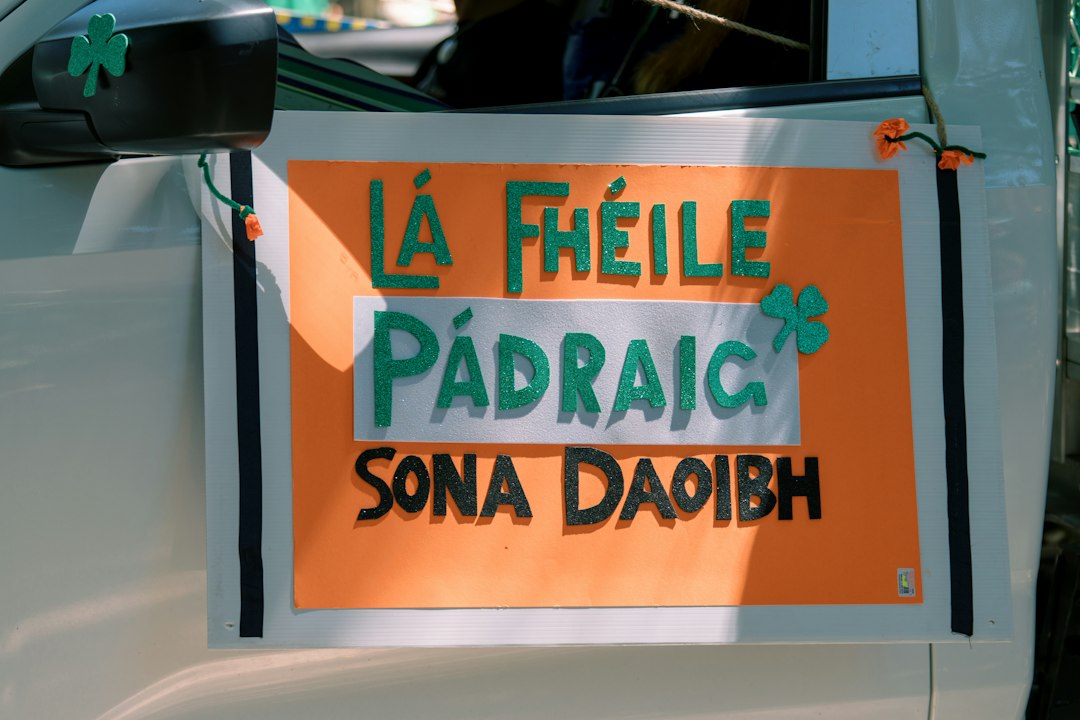
Nollaig shona duit: Happy Christmas to one person
Nollaig is the Irish word for Christmas, and shona means happy. The standard dictionary of Irish, Foclóir Gaeilge-Béarla, lists “Nollaig shona” as “a happy Christmas” (teanglann.ie entry for Nollaig). Add duit, which means “to you” when we speak to one person, and we have the full greeting: Nollaig shona duit.
Writing your Christmas cards?
Real Irish Christmas lines, free to copy or send on WhatsApp. Pop in your email and we will send you the link.
Free. We will email you a link to your lines, plus a short note before dates worth a card. Unsubscribe in one click.
Several Irish-language teaching sites describe it the same way, and the Irish Post calls the Nollaig shona duit/daoibh pair “the most common Christmas greeting” in its own list of seasonal phrases (Irish Post). We would use it for a friend, a cousin, a neighbour, a teacher or a colleague. It suits nearly every card we write.
To hear how it sounds, open the dictionary entry above and play the audio. We have not printed a phonetic spelling, because a clumsy English respelling teaches the wrong sound.
Nollaig shona daoibh: Happy Christmas to more than one person
When we write to a household, a class or a whole family, we swap duit for daoibh. Nollaig shona daoibh means “Happy Christmas to you” in the plural. One teaching blog explains that the words for “you” are built into the endings: duit for one person and daoibh for several (All About Irish). The Family Edit also lists Nollaig shona daoibh for groups and families (The Family Edit).
The dictionary shows the same pattern in a related phrase. It lists “Nollaig faoi mhaise daoibh” with the meaning “a happy Christmas to you” (teanglann.ie entry for faoi mhaise). The ending daoibh carries the plural in both.
Nollaig faoi shéan agus faoi shonas duit: a prosperous and happy Christmas
This is the fuller, more formal wish. The Foclóir Gaeilge-Béarla entry for séan gives the phrase as “Nollaig faoi shéan agus faoi shonas (duit)” and translates it as “a prosperous and happy Christmas (to you)” (teanglann.ie entry for séan). The dictionary defines séan as “good luck, prosperity, happiness”.
You will also see a version that ends in maise instead of shonas: “Nollaig faoi shéan is faoi mhaise duit”. All About Irish gives that form and describes it as the equivalent of wishing someone a prosperous Christmas. The two versions share the same opening and the same idea. If we are copying the dictionary, we use shonas. Either is a warm choice for an older relative or a card with a little more ceremony.
Notice the lenition, the softening of a first letter after faoi. That is why séan becomes shéan. If you type the phrase with a plain “s”, the card will carry a spelling mistake.
Beannachtaí na Nollag: Christmas blessings
Beannachtaí na Nollag means “Christmas blessings”. The Family Edit says it is often used in cards, and All About Irish gives the longer form “Beannachtaí na Nollag ort”, “the blessings of Christmas on you”. It is a good heading for a card, with a personal line underneath.
Athbhliain faoi mhaise duit: Happy New Year
Most Christmas cards also wish a good new year, so this one earns its place. Athbhliain means “new year” (the dictionary lists it as “coming, following, year”, via teanglann.ie). The usual wish is Athbhliain faoi mhaise duit, which sources translate as “a prosperous new year” or the Irish equivalent of “Happy New Year”. Family Edit gives it that meaning too, and the Irish Language Blog from Transparent Language gives the fuller “Athbhliain faoi shéan agus faoi mhaise duit” for Happy New Year (Transparent Language).
For a group, the same rule applies: Athbhliain faoi mhaise daoibh. TU Dublin used a longer wish in its own Irish-language seasonal message: “Athbhliain faoi Shéan is faoi Mhaise daoibh go léir”, a prosperous new year to you all (TU Dublin).
Happy Christmas: the plain English line
Nollaig shona translates literally as “happy Christmas”, so “Happy Christmas” is the closest English match to the Irish. It is also the line we would put underneath the Irish on a card. For more on how the season is kept at home, see our guide to Irish Christmas traditions and the Irish Christmas pudding recipe. We have not found a reliable source on whether people in Ireland prefer “Happy” to “Merry” in everyday English, so we will not make a claim about it. Either is fine in a card.
Practical advice for writing your Christmas card
- Pick the right ending. Use duit for one person and daoibh for two or more. A card to a couple, a family or a house takes daoibh.
- Keep the fadas. Write Athbhliain, shéan, Beannachtaí and Nollag with the accents shown here. On a phone, hold the vowel key to find the accented version.
- Pair Irish with English. Lead with the Irish greeting, then add a line in English such as “Happy Christmas, and we are thinking of you.” Relatives who do not speak Irish still get the message, and the Irish still lands.
- Keep it short. One correct Irish phrase beats three half-remembered ones.
- Do not guess at grammar. If you want to build your own sentence, check each word in a dictionary first. We stuck to phrases already printed in dictionaries and teaching sources.
We do not know the origin of these exact greeting formulas, and we have not found a source we trust to tell us, so we will not guess.
Frequently asked questions
How do you say Merry Christmas in Irish?
The usual way is “Nollaig shona duit” to one person and “Nollaig shona daoibh” to more than one. Literally, it means “Happy Christmas to you”.
What is the difference between Nollaig shona duit and Nollaig shona daoibh?
The only difference is the last word. Duit means “to you” for a single person. Daoibh means “to you” for two or more people.
How do you say Happy New Year in Irish?
Say “Athbhliain faoi mhaise duit” to one person and “Athbhliain faoi mhaise daoibh” to a group. It translates as “a prosperous new year”.
Is there a longer, more formal Christmas greeting in Irish?
Yes. Foclóir Gaeilge-Béarla gives “Nollaig faoi shéan agus faoi shonas (duit)”, meaning “a prosperous and happy Christmas (to you)”.
Ten more Irish Christmas lines for your cards
Greetings are a start, but a card needs a few real lines of its own. We have collected ten verified Irish Christmas lines on one free page, ready to copy into a card or message. Browse the free Irish Christmas lines and pick the one that sounds like the person you are writing to.
If you are planning your timing, our countdown to Christmas shows how many days are left. Cards posted to Ireland from abroad take time to arrive, so we would start early.
Nollaig shona daoibh, from all of us at Love Ireland. ☘️
☘️ Join 64,000+ Ireland Lovers
Every Friday, get Ireland’s hidden gems, local secrets, and travel inspiration — the kind you won’t find in any guidebook.
Already subscribed? Download your free Ireland guide (PDF)
Free forever · One email per week · Unsubscribe anytime
Tours & experiences you might love


Powered by Viator. Some links are affiliate links — we may earn a small commission at no extra cost to you.
Secure Your Dream Irish Experience Before It’s Gone!
Planning a trip to Ireland? Don’t let sold-out tours or packed attractions spoil your journey. Iconic experiences like visiting the Cliffs of Moher, exploring the Rock of Cashel, or enjoying a guided walk through Ireland’s ancient past often sell out quickly—especially during peak travel seasons.

Booking in advance guarantees your place and ensures you can fully immerse yourself in the rich culture and breathtaking scenery without stress or disappointment. You’ll also free up time to explore Ireland’s hidden gems and savour those authentic moments that make your trip truly special.
Make the most of your journey—start planning today and secure those must-do experiences before they’re gone!