

Newgrange was built around 3200 BC — older than Stonehenge and the Great Pyramid of Giza — and once a year, at dawn, it still does exactly what it was built to do. Five thousand years on, we’re still working out how they actually did it.
Watch the full episode, then read on below for the complete story and practical visiting details.
Five thousand years ago — five hundred years before the first stone was laid at Stonehenge, five centuries before the Great Pyramid rose from the Egyptian desert — farmers in Ireland’s Boyne Valley were engineering something the modern world still can’t fully explain.
They dragged 200,000 tonnes of stone and earth to this hillside. They carved spirals into granite with tools we’ve never found. And they aligned the entire structure so precisely that on one morning each year — the winter solstice — sunlight travels nineteen metres down a narrow passage and illuminates a chamber that sits in total darkness the other 364 days.
No written language. No metal tools. No wheels.
This is Newgrange. And after five millennia, we’re still working out how they did it.
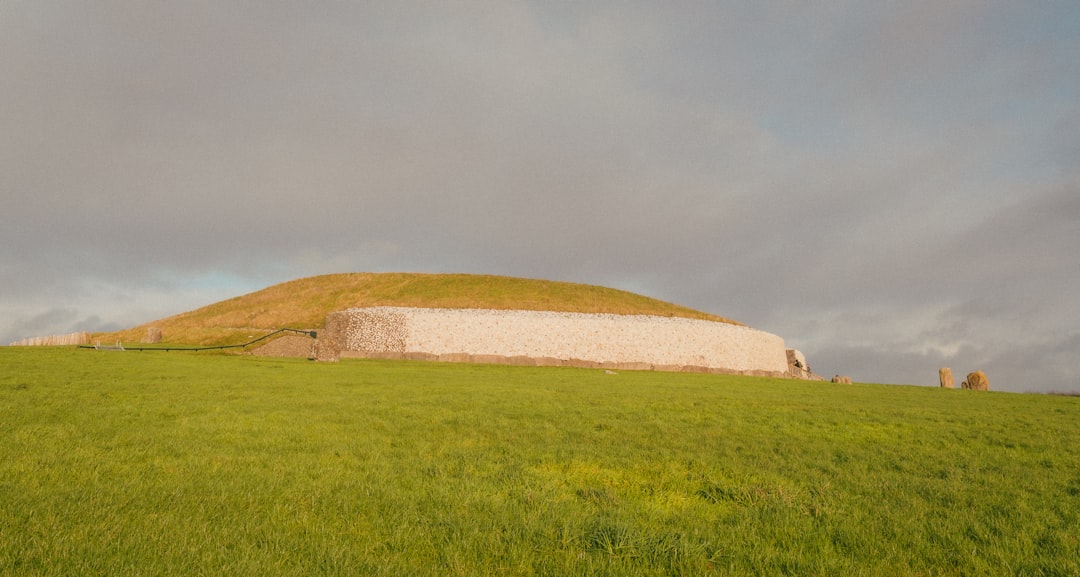
Newgrange sits in County Meath, about fifty kilometres north of Dublin, in a bend of the River Boyne the Irish call Brú na Bóinne — the palace of the Boyne. It’s part of a complex that includes two other massive passage tombs, Knowth and Dowth, but Newgrange is the one that draws 200,000 visitors a year, and there’s a reason for that.
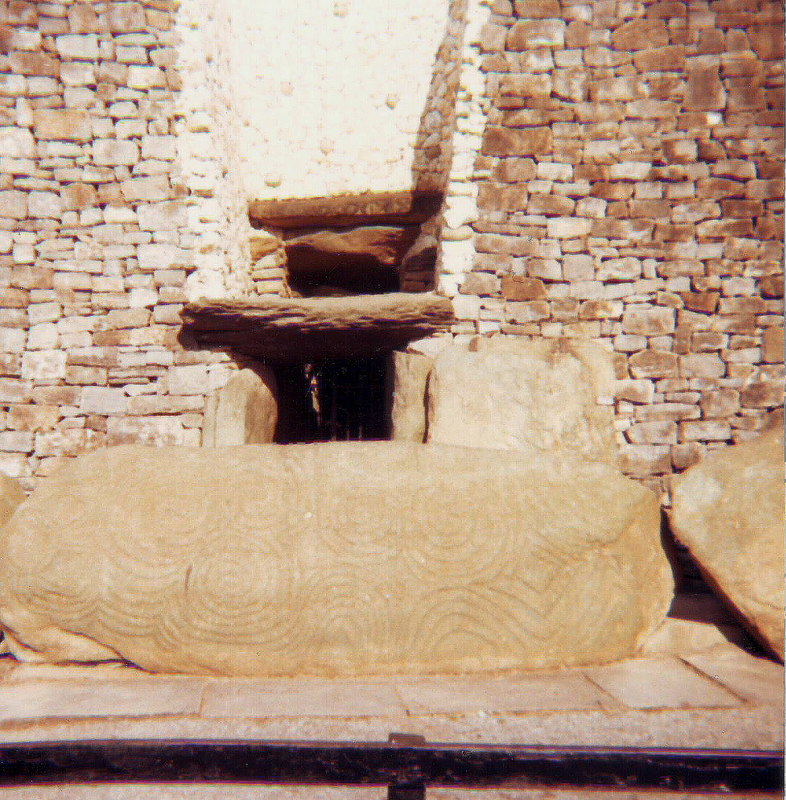
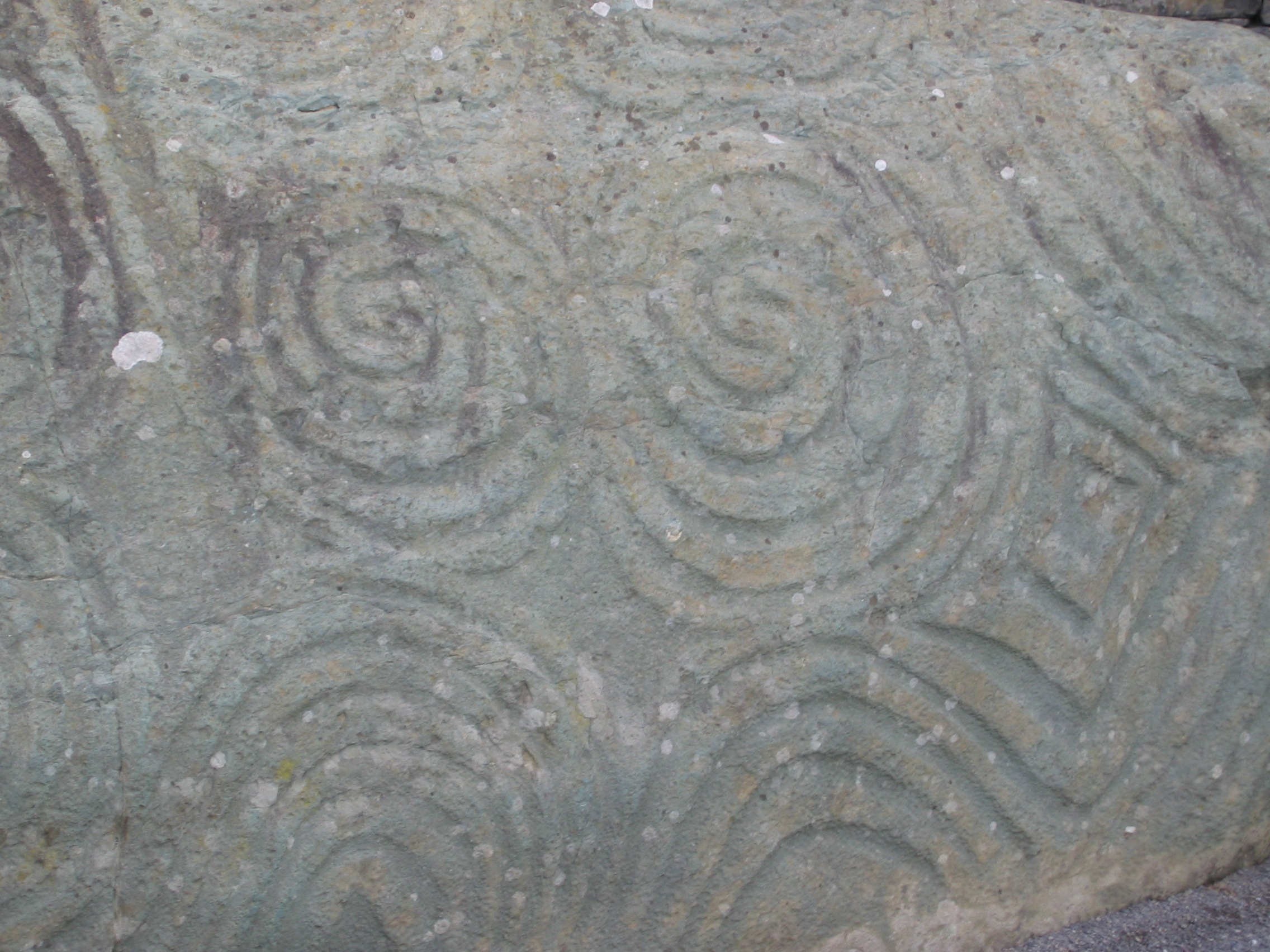
The numbers alone are staggering. The mound is 85 metres across and 13 metres high — roughly the footprint of a football pitch, stacked four storeys tall. Ninety-seven kerbstones ring the base, each weighing between one and five tonnes. The entrance stone alone — that famous carved boulder you’ve probably seen in photographs — is three metres wide and covered in some of the most intricate megalithic art on Earth: spirals, lozenges, concentric circles, patterns that appear nowhere else in the Neolithic world.
But here’s what separates Newgrange from every other ancient monument in Europe: it was built to do something. This isn’t a tomb that happens to face east. This is a precision instrument, constructed by people who understood solar geometry well enough to engineer a seventeen-minute window of light that only occurs once a year — and built a structure to capture it that’s remained waterproof for fifty centuries.
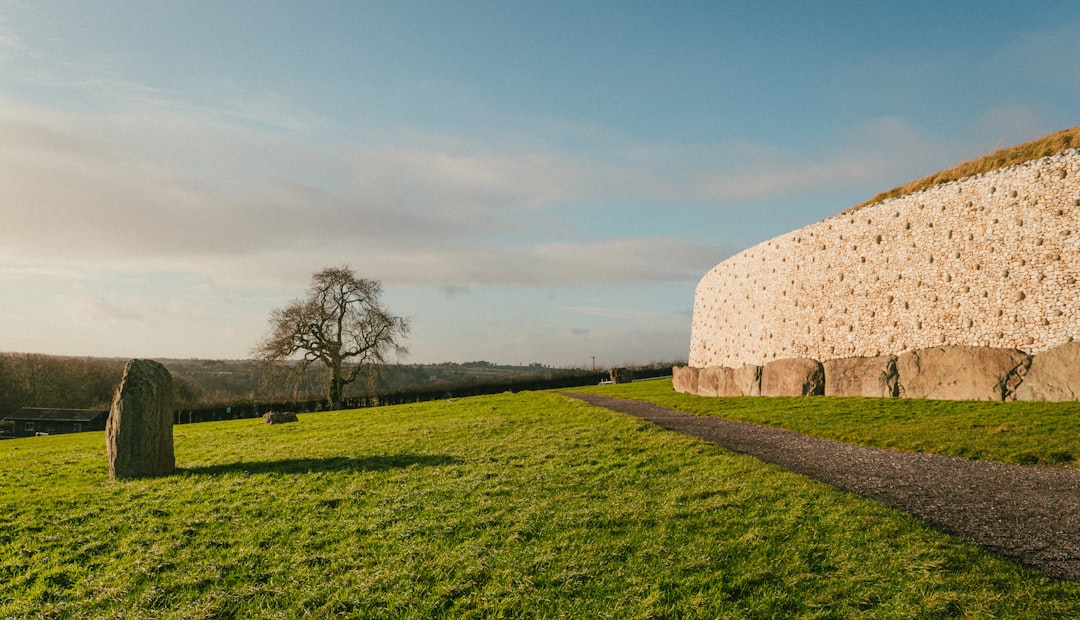
The passage runs nineteen metres into the heart of the mound. It’s narrow — barely a metre wide in places — and the floor rises as you walk, so you’re climbing slightly uphill in near-darkness. At the end, it opens into a cruciform chamber with three recessed alcoves and a corbelled roof that peaks six metres above your head.
That roof is the engineering marvel. It’s built from overlapping stone slabs, each one angled slightly inward so rainwater runs outward, away from the chamber. No mortar. No waterproofing compound. Just geometry. And it hasn’t leaked in five thousand years.
The people who built this — and we don’t know what they called themselves — had no metal. Their tools were stone, bone, antler. They quarried greywacke from Clogher Head on the coast, twenty kilometres away, and hauled granite cobbles from the Mourne Mountains, much further north. They hauled white quartz from Wicklow, seventy kilometres south. They moved all of it by hand, on wooden rollers or sledges, across a landscape with no roads.
Archaeologists estimate the project took decades. Generations of families would have been born, grown old, and died during construction. The people who saw it finished weren’t the people who started it.
So why? What was worth that kind of commitment?
Here’s the detail that changed how I think about Newgrange.
Above the main entrance, there’s a small opening called the roof box. It’s a rectangular slot, about twenty centimetres high and a metre wide, carved into the lintel stone and topped with a second decorated slab. For most of the year, it does nothing visible.
But at 8:58 on the morning of December 21st — the winter solstice — the sun rises over a ridge called Red Mountain, four kilometres to the southeast. A beam of light enters the roof box, travels the full length of the passage, and for seventeen minutes, floods the inner chamber with direct sunlight.
The alignment is accurate to within a single degree. At the solstice, the sun is at its lowest point on the horizon, its most southern rising position. The builders didn’t just know where the sun rose on that day — they knew the exact angle, the exact elevation, and they built a nineteen-metre-long light cannon to prove it.
This wasn’t a happy accident. They oriented the passage to within one-fiftieth of a degree of perfect solstice alignment. Modern surveying equipment struggles to do better.
Every year, about 30,000 people enter a lottery for sixty places in that chamber on solstice morning. If the sky is clear — and Irish December skies often aren’t — they watch a golden beam creep across the floor and climb the back wall, exactly as it did when their ancestors’ ancestors were alive.
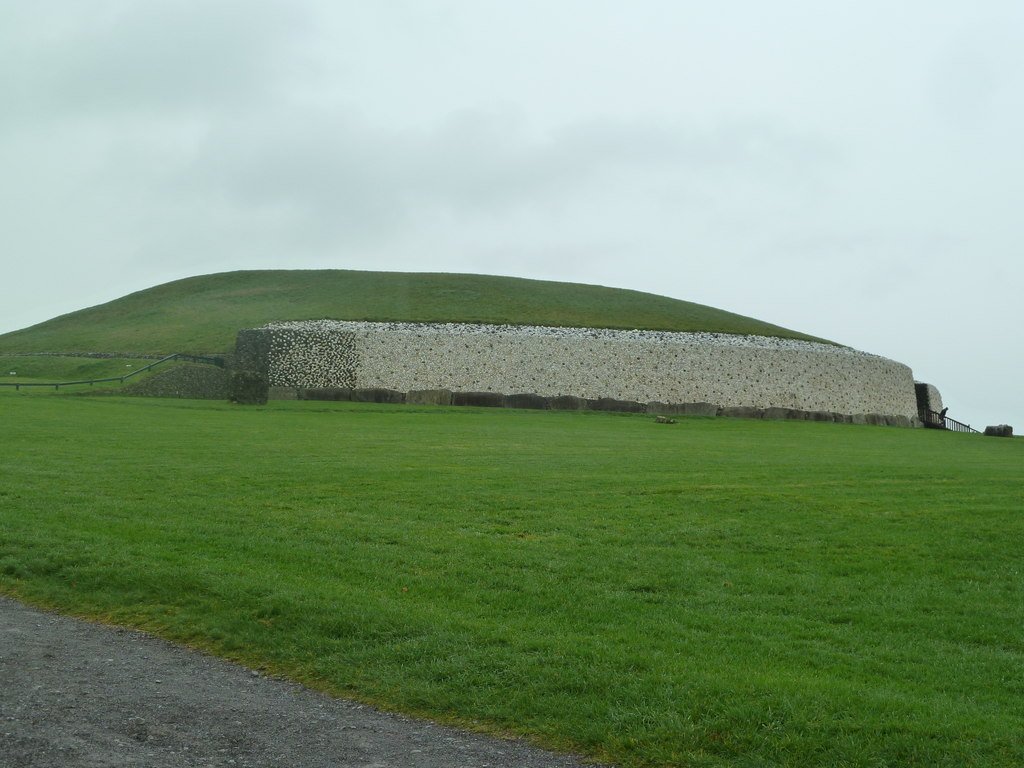
Visiting Newgrange today means starting at the Brú na Bóinne Visitor Centre, about two kilometres from the mound itself. You can’t drive to the site or walk up unaccompanied — all access is by guided shuttle bus, and tours are timed.
Book ahead. Especially in summer. The site limits numbers to protect the chamber, and tours sell out days in advance. The visitor centre has excellent exhibits on Neolithic Ireland, but the real reason you’re here is the mound, so don’t get caught without a tour slot.
The tour itself takes about an hour and twenty minutes, including the bus ride. Groups of about twenty people enter the passage together. It’s a tight squeeze — watch your head on the low stones — and the guide will stop you in the chamber to simulate the solstice effect with electric light. It’s theatrical, but effective. You understand immediately why people camp out in December weather for a chance to see the real thing.
One practical note: if you’re interested in the carved kerbstones, the best ones are at the entrance. Kerbstone 1, with its famous triple spiral, and Kerbstone 52 on the opposite side of the mound — both visible without entering the passage.
If you can visit Knowth as well, do. It has more carved stones than Newgrange, Dowth, and every other Irish passage tomb combined — roughly a third of all Western European megalithic art in one location. Same ticket, same shuttle system.
Newgrange isn’t just old. It’s a five-thousand-year-old proof that people we’ll never know, whose names we’ll never learn, understood light and stone and time well enough to build something we still can’t entirely explain.
It’s an hour from Dublin. It’s a UNESCO World Heritage Site. And it’s been standing since before the pharaohs.
Full guide linked below. See you next Monday.
Never miss an episode. Bob’s next long-form episode drops every Monday on our YouTube channel. Subscribe to the free Love Ireland newsletter and we’ll let you know the moment a new one is live: https://loveireland.substack.com/subscribe
The Boyne Valley, where Newgrange stands, was the heartland of prehistoric Ireland — and for many families in the diaspora, it is also the landscape their Irish ancestors farmed for generations before emigrating. County Meath records trace families as far back as the 1800s. If you have Meath roots or Irish ancestry of any kind, our free Irish Ancestral Heritage Guide walks you through county-specific emigration records, passenger lists, and townland maps. Trace your Irish family roots — free.
☘️ Join 64,000+ Ireland Lovers
Every weekday morning, get Ireland’s hidden gems, local secrets, and travel inspiration — the kind you won’t find in any guidebook.
Subscribe free — enter your email:
📲 Know someone who’d love this? Share on WhatsApp →
Love more? Join 43,000 Scotland lovers → · Join 29,000 Italy lovers → · Join 7,000 France lovers →
Free forever · Unsubscribe anytime
Tours & experiences you might love


Powered by Viator. Some links are affiliate links — we may earn a small commission at no extra cost to you.
Secure Your Dream Irish Experience Before It’s Gone!
Planning a trip to Ireland? Don’t let sold-out tours or packed attractions spoil your journey. Iconic experiences like visiting the Cliffs of Moher, exploring the Rock of Cashel, or enjoying a guided walk through Ireland’s ancient past often sell out quickly—especially during peak travel seasons.

Booking in advance guarantees your place and ensures you can fully immerse yourself in the rich culture and breathtaking scenery without stress or disappointment. You’ll also free up time to explore Ireland’s hidden gems and savour those authentic moments that make your trip truly special.
Make the most of your journey—start planning today and secure those must-do experiences before they’re gone!