

Most people who visit the Cliffs of Moher do so once, spend an hour or two, take photographs, and leave. That is a perfectly reasonable way to see one of Ireland’s most iconic natural landmarks. But there is a different way to approach a visit — one that reveals just how dramatically this place changes depending on the light, the weather, and the hour of the day.
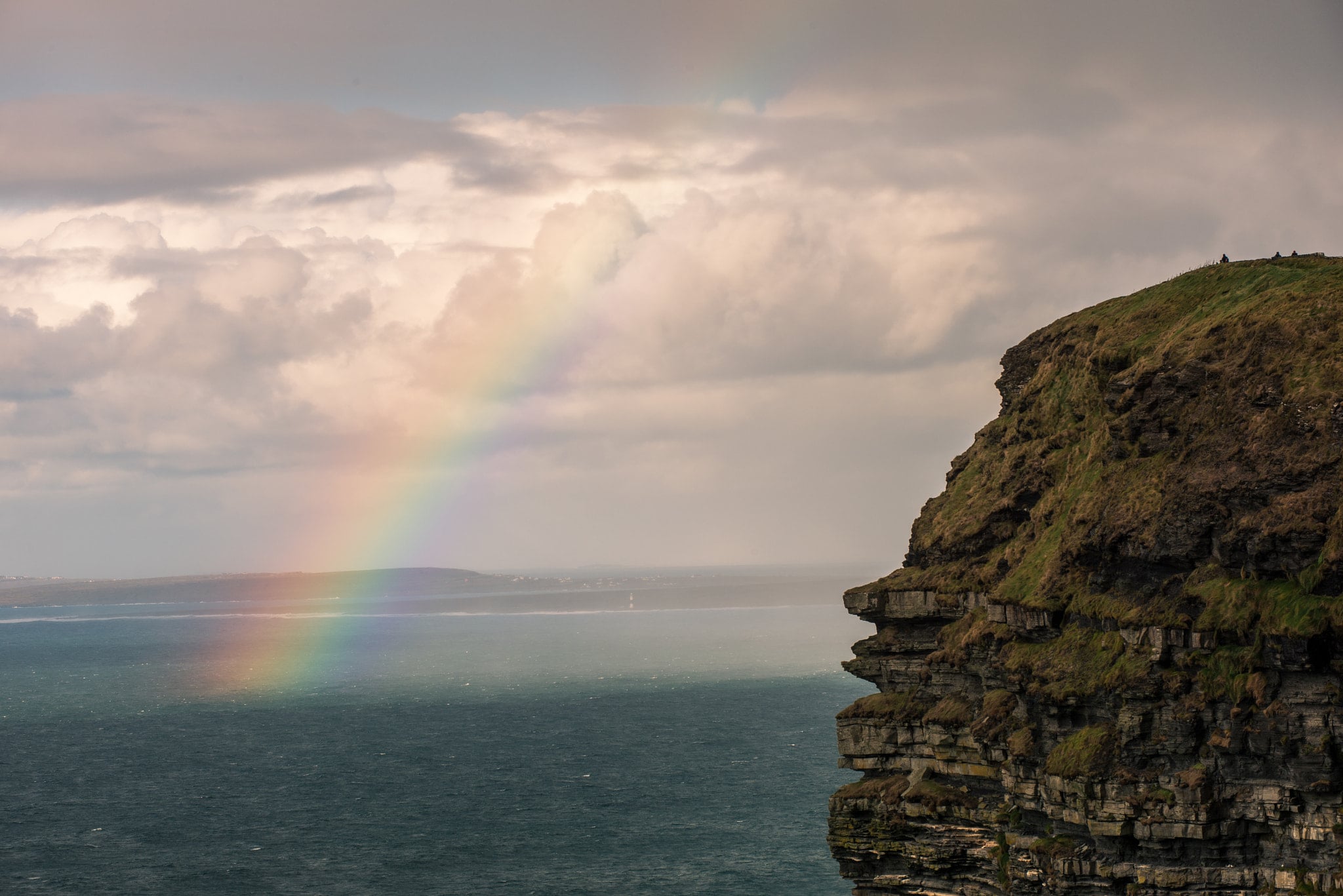
The Facebook post that prompted this article asked a simple question: have you ever visited the Cliffs twice in one trip, once for sunrise and once for sunset? The responses were striking. People who had done it described two almost entirely separate experiences at the same location. That deserves a proper explanation.
This article covers what sunrise and sunset actually look like at the Cliffs of Moher, the practical logistics of pulling off both visits in a single day, and whether it is genuinely worth the effort. No romanticising — just the facts.
The Cliffs of Moher: A Quick Orientation
The Cliffs of Moher run for approximately 14 kilometres along the Atlantic coast of County Clare in the west of Ireland. At their highest point — near Knockardakin, above O’Brien’s Tower — they reach 214 metres (702 feet) above sea level. They face due west, straight into the Atlantic Ocean.
That westward orientation is the key fact that makes the sunrise-and-sunset strategy work. At sunrise, the cliffs themselves are lit from the east — meaning the rock face catches the early morning light beautifully, while the ocean remains relatively dark and calm. At sunset, the sun descends directly in front of you, into the Atlantic, and the sky above the water turns extraordinary colours. Two completely different visual experiences, same location.
The main visitor centre — the Cliffs of Moher Visitor Experience — sits at the central section of the cliffs, roughly 8 kilometres south of Doolin. There is a car park here, ticketed entry, and access to the cliff-top paths in both directions. O’Brien’s Tower, a round stone observation tower built in 1835 by local landlord Sir Cornelius O’Brien, stands at the highest viewpoint roughly a five-minute walk north of the visitor centre.
What Sunrise at the Cliffs of Moher Actually Looks Like
Arriving at the Cliffs of Moher for sunrise means getting there before most people are awake. In summer (June through August), sunrise occurs between approximately 5:15am and 5:45am. In late spring and early autumn, it shifts to roughly 6:00am–7:00am. Winter sunrises arrive much later — mid-December sunrise in Clare is around 8:45am.
The practical advantage of a sunrise visit is obvious: almost nobody else is there. The Cliffs typically attract 1.5 million visitors per year, with the bulk arriving between 10am and 4pm. At 5:30am on a summer morning, you may share the cliff top with a handful of other early risers — possibly none at all.
What does the light look like? The limestone and shale cliff face catches the early morning sun from behind you (the east), so the rock glows in warm orange and amber tones for roughly 20–30 minutes around sunrise. The Atlantic is usually calm and dark blue at this hour. If there is any sea mist, it often burns off within an hour of sunrise, which can create layered views across the water toward the Aran Islands.
The wildlife is also more active. Puffins nest in the cliffs from April through to August. In the early morning, they are considerably more visible than mid-afternoon, when boat traffic and visitor noise pushes them away from accessible viewpoints. Razorbills and guillemots are also present through much of the nesting season.
One thing to know: the visitor centre gates open at 8:00am from March through October, but not until 9:00am during November to February (confirming current hours before you go is sensible, as they do change seasonally). For a genuine sunrise visit, you will need to park on the verge of the R478 road and walk in — a short distance, and entirely manageable. Some visitors also approach via the cliff walk from Doolin to the north, which adds roughly 7 kilometres to the walk.
What Sunset at the Cliffs of Moher Actually Looks Like
Sunset at the Cliffs of Moher is the more famous of the two experiences, and for good reason. Because the cliffs face west, the sun sets directly over the Atlantic — straight in front of you when you are standing on the cliff top. On a clear evening, the sky above the water turns through yellow, orange, red, and purple. On an overcast evening, the cloud formations above the horizon can be equally dramatic, lit from below by the setting sun.
In high summer, sunset does not occur until around 9:30pm–10:00pm in County Clare, which means the evening crowd at the cliffs has thinned considerably by the time the best light arrives. Most coach tours and day-trippers have departed by 6pm. If you can stay until 8:30pm or 9:00pm, you will find significantly fewer people on the cliff path.
In spring and autumn, sunset shifts earlier — by October it is around 7:00pm, which coincides more closely with the afternoon visitor peak. The winter months bring sunset as early as 4:30pm, which means the visitor centre is still open and the car park is likely to be busy. The clearest skies for Atlantic sunsets tend to occur in September and October, once the summer heat breaks and the air becomes more stable.
The view from O’Brien’s Tower at sunset is frequently cited as the best single vantage point. The tower itself costs a small additional fee to climb, but the elevated position — roughly 214 metres above sea level — gives a broader sweep of both the cliff face and the horizon than the main path. The Aran Islands (Inis Mór, Inis Meáin, and Inis Oírr) are visible to the northwest on clear evenings, silhouetted against the fading light.
How to Plan Both Visits in a Single Trip
Combining a sunrise and a sunset visit in one day is physically possible — the gap between them in summer is around 16 hours — but requires sensible logistics. Most people who do this successfully stay in Doolin the night before, wake before 5am, drive to the cliffs for sunrise, sleep for a couple of hours, spend the day exploring the Burren or Doolin itself, and return to the cliffs in the evening.
Doolin is the most convenient base. It sits approximately 7 kilometres north of the visitor centre, with the R479 connecting the village directly to the cliff top road. Accommodation ranges from basic hostels to mid-range guesthouses and B&Bs. The village has a small number of pubs that serve food — Gus O’Connor’s Pub on the harbour is a well-established option. Book accommodation well in advance in July and August; Doolin fills up quickly.
Liscannor, approximately 3 kilometres to the south of the visitor centre on the R478, is a quieter alternative base. Ennistymon (12 kilometres inland) offers slightly more accommodation options for those who prefer a town setting.
If you are not staying locally but are visiting from Galway or Limerick, a sunrise-and-sunset day trip is harder to manage. Galway is approximately 65 kilometres to the north — about an hour’s drive. Doing a 5am drive, a full day of activities, and a late evening drive back is tiring but doable for those who plan it carefully.
Practical Information: Entry, Timing, and Access
The Cliffs of Moher Visitor Experience charges entry. Adult tickets currently range from about €8 online in advance for off-peak visits, to €12 for peak-hours (11am–4pm) online booking, or €15 if you pay at the gate on the day — prices can change seasonally. The ticket includes access to the visitor centre (with its exhibitions on the geology, wildlife, and history of the cliffs) and the cliff-top paths. O’Brien’s Tower is an additional charge. Children aged 12 and under enter free — check the official site for current pricing before you visit.
For a sunrise visit before the gates open, you do not pass through the ticketed entrance — you simply walk up from the road. Some people take this as meaning no ticket is needed for any pre-opening visit. In practice, the site asks that visitors who arrive early pay when the gates open or on a subsequent visit. It is worth bearing this in mind.
The cliff-top path is well-maintained but uneven in sections. Wear proper footwear — trail runners or walking shoes with grip are adequate, though full walking boots are more comfortable for longer stretches. The path extends southward toward Hag’s Head (approximately 5 kilometres one way from the visitor centre) and northward toward the end of the cliff section at Doolin. Both directions offer different perspectives.
Weather is the biggest variable. The west coast of Ireland can be overcast, rainy, and windy for stretches at any time of year. A clear sunrise or sunset at the Cliffs of Moher is genuinely special — but it is not guaranteed. If you build two visits into your schedule, you have a better statistical chance of at least one being in good conditions. Checking a local weather forecast (Met Éireann is the Irish national meteorological service and is more accurate for western Ireland than international apps) in the 24 hours before your visit is sensible.
What to Do Between the Two Visits
The Burren — a vast limestone plateau stretching across north County Clare — is directly accessible from the Cliffs of Moher. The Burren National Park covers approximately 1,500 hectares and includes Poulnabrone Dolmen (a 5,000-year-old portal tomb and one of Ireland’s most photographed prehistoric monuments), Caherconnell Stone Fort, and the Ailwee Cave. Most of these are within 20–30 minutes’ drive of the visitor centre.
Doolin itself is worth a couple of hours. The village is regarded as a hub of traditional Irish music, with sessions running most evenings in the local pubs. The pier at Doolin is the departure point for ferries to the Aran Islands — both day trips and longer stays. The ferry to Inis Mór (the largest island) takes approximately 35–40 minutes.
For those who want to stay close to the cliffs, the cliff walk toward Hag’s Head is quieter than the stretch north of the visitor centre and offers views back toward the full length of the cliffs from the south. The lighthouse at Hag’s Head is a distinctive landmark at the southern end of the walk.
Is It Worth Visiting the Cliffs Twice in One Trip?
The honest answer is: yes, if you are already staying nearby, and if you are genuinely interested in landscape photography or simply want a quieter experience than the midday crowds allow.
The sunrise visit and the sunset visit are different enough — in light quality, crowd levels, wildlife activity, and atmosphere — that they do not feel repetitive. The two-visit approach is not about seeing the same thing twice. It is about seeing two different versions of the same place.
If you are on a tight schedule and can only fit one visit, late afternoon — roughly 4pm to 7pm in summer — offers a reasonable compromise. The worst of the midday crowds have thinned, the light is warmer than noon, and you have time to walk a decent stretch of the cliff path before it gets too dark.
The Cliffs of Moher are one of those places that reward patience. An extra hour at the right time of day — whether that is first light or the final minutes before sunset — is worth more than three hours in the middle of the afternoon. Plan accordingly.
County Clare — the county these cliffs call home — was one of the hardest-hit during the Great Famine of the 1840s. Hundreds of thousands of Clare families emigrated to America, Australia, and Britain in the years that followed. If your family has Clare roots, or anywhere in the west of Ireland, our free Irish Ancestral Heritage Guide includes county-specific emigration records, Griffith’s Valuation data, and townland maps for every county. Find your Clare ancestors here — free.
☘️ Join 64,000+ Ireland Lovers
Every weekday morning, get Ireland’s hidden gems, local secrets, and travel inspiration — the kind you won’t find in any guidebook.
Subscribe free — enter your email:
📲 Know someone who’d love this? Share on WhatsApp →
Love more? Join 43,000 Scotland lovers → · Join 29,000 Italy lovers → · Join 7,000 France lovers →
Free forever · Unsubscribe anytime
Tours & experiences you might love


Powered by Viator. Some links are affiliate links — we may earn a small commission at no extra cost to you.
Secure Your Dream Irish Experience Before It’s Gone!
Planning a trip to Ireland? Don’t let sold-out tours or packed attractions spoil your journey. Iconic experiences like visiting the Cliffs of Moher, exploring the Rock of Cashel, or enjoying a guided walk through Ireland’s ancient past often sell out quickly—especially during peak travel seasons.

Booking in advance guarantees your place and ensures you can fully immerse yourself in the rich culture and breathtaking scenery without stress or disappointment. You’ll also free up time to explore Ireland’s hidden gems and savour those authentic moments that make your trip truly special.
Make the most of your journey—start planning today and secure those must-do experiences before they’re gone!