

Powerscourt House Fire 1974: The Night It Burned Down After Its Grand Reopening
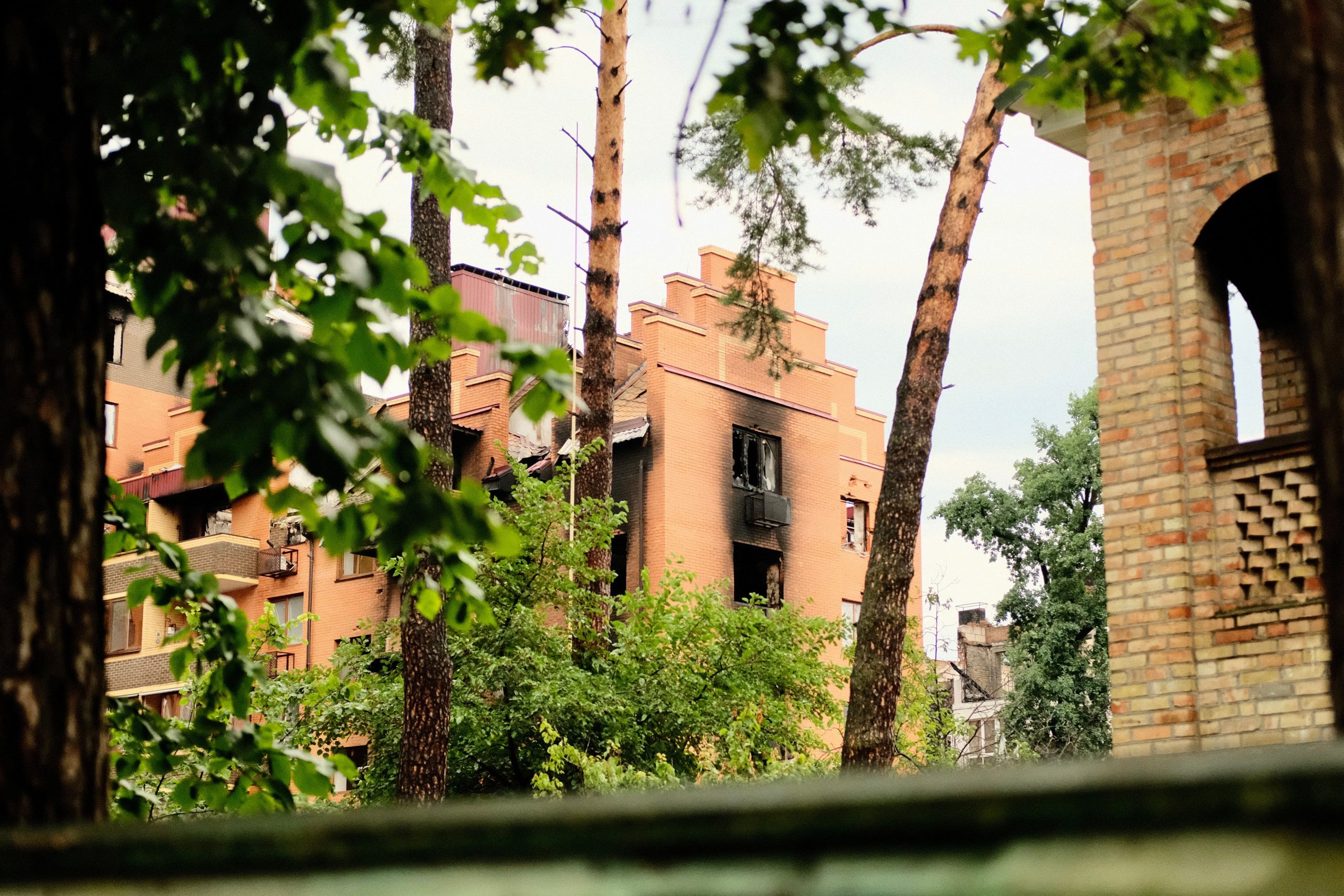
In early November 1974, a group of journalists made their way to Enniskerry in County Wicklow for a private press preview of Powerscourt House. The Slazenger family, who had owned the estate since the early 1960s, had spent over a decade restoring and preparing the great 18th-century mansion to open alongside its already-famous gardens. The journalists toured the rooms, wrote their notes, and left. That night, a chimney fire broke out in the morning room. Fanned by high winds, it tore through the upper floors. By the morning of November 4th, the central part of Powerscourt’s roof had fallen in. One of the finest Georgian interiors in Ireland — perhaps the finest — was a roofless shell.
The house never did open to the public the following day. It would take another twenty-three years.
What Richard Castle Built
The story of Powerscourt House begins in the early 18th century, when Richard Wingfield, the 1st Viscount Powerscourt, commissioned Richard Castle — a German-born architect then reshaping the face of Anglo-Irish country house design — to transform a crumbling medieval castle on the site into something worthy of the Wicklow landscape. Castle began work around 1730 and finished by 1741, producing a 68-room Palladian mansion set above terraced gardens that descended in stages toward the Sugar Loaf mountain.
The result was formidable by any measure, but the centrepiece was the Saloon: a double-cube room measuring sixty feet by forty, situated above the main entrance hall, decorated with coffered ceilings, rococo plasterwork by craftsmen including Hugh Kelly, and a mosaic lunette by the Venetian firm Salviati positioned above a principal doorway. It had been described, by those who saw it intact, as the grandest room in any Irish house — a claim that is easier to credit when you know that King George IV was entertained within it in 1821, and that Princess Grace of Monaco danced there at a ball in the 1960s. To walk into the Saloon at Powerscourt in 1974 was to be standing inside one of the great private interiors of Georgian Europe.
Successive Viscounts Powerscourt added to and altered the estate over the following century. The 7th Viscount oversaw the most dramatic transformation of the gardens from the 1840s onwards, bringing in architect Daniel Robertson and importing statuary, laying out Italian terraces, a Japanese garden, a walled kitchen garden, and planting specimen trees on a scale that would eventually give the grounds a character quite distinct from the house above them. The gardens became famous in their own right. The house was merely where the family lived.
The Slazengers Arrive
By the mid-20th century, the Wingfield family’s finances had become untenable — a story repeated across Irish country houses in the same period. In the early 1960s, the 9th Viscount sold Powerscourt to Ralph Slazenger and his wife Gwendoline. The Slazenger name was already well known: the family had built the Slazenger sports equipment company into a major British brand before selling it to Dunlop, and Ralph had moved his family from England to Ireland in 1953, initially settling at Durrow Abbey in County Offaly before acquiring Powerscourt following the sale of the business.
The Slazengers opened the gardens to paying visitors and began the long work of stabilising and preparing the house itself. By 1974, that work was complete enough to take the next step: opening the mansion alongside the gardens and making Powerscourt a serious tourist destination. The press tour in early November was the announcement. Public opening would follow shortly after.
November 4th, 1974
The fire started in the morning room — a chimney fire, most likely, fanned by the kind of autumn gale that moves through County Wicklow with considerable force. It caught in the early hours of November 4th, worked its way upward through the building, and by the time it was brought under control, the central block of the house was gone. The principal reception rooms and bedrooms — the Saloon, the dining room, the drawing rooms, the bedrooms above — had been gutted. The stone exterior walls stood, as they still stand, but the roof had collapsed through the floors beneath it. The east wing survived. No one was injured. The Slazenger family moved into the surviving wing and began assessing what remained.
Ralph and Gwendoline’s son Michael, who would eventually take over management of the estate, later described the scene in terms that have stayed with the story ever since: “Just like Gone With The Wind,” he said, “except that I didn’t believe we could ever rebuild it.”
The Irish Times later reported that what had been destroyed included paintings by Sir Joshua Reynolds — works that one observer called “a great loss to our national collection.” Centuries of furniture, ornaments, and accumulated contents went with them. Christie’s eventually held a sale of the rescued contents in 1984, a decade after the fire, but what was salvaged represented only a fraction of what had been assembled in the house over three centuries of occupation.
The Accidental Archive
There is one unexpected reason we know exactly what the Saloon looked like on the night it burned. In the months before November 1974, Stanley Kubrick was in Ireland filming Barry Lyndon — his adaptation of the Thackeray novel, released in 1975. The Powerscourt Saloon served as a stand-in for the interior of a German Baroque palace. Kubrick’s cameras moved through the room with his characteristic precision, capturing the coffered ceiling, the plasterwork, the mosaic above the doorway, the quality of candlelight on stonework. The film crew left. Months later, the room was gone.
Barry Lyndon is now, inadvertently, the most complete visual record of one of Ireland’s lost interiors. The room Kubrick dressed as a German palace was the same room that had hosted King George IV and Princess Grace, and it is preserved on celluloid in more detail than any architectural survey managed before the fire. The 1955 film Captain Lightfoot, with Rock Hudson, had also used the house — another accidental document of what existed and then didn’t.
If you want to see what the Powerscourt Saloon looked like before November 4th, 1974, you have to watch a period drama about an 18th-century Irish rogue’s adventures in Europe. There is no other way to do it.
Twenty-Three Years as a Shell
The gardens reopened to visitors in March 1975, with a safety fence installed around the damaged house and a team of architects commissioned to assess what remained of the structure. The Slazengers announced plans to spend significant sums preventing the facade from collapsing. For the next two decades, that facade — intact, impressive, and entirely hollow — became its own kind of spectacle: a great house reduced to a stone frame above some of the most celebrated gardens in Europe.
A development plan proposed in 1992 attempted to fund a full restoration by pairing it with planning permission for a hotel, two golf courses, and 350 houses on the estate lands. That plan was controversial and ultimately replaced. By 1996, with new conditions in place requiring the house to be opened to the public, restoration work finally began in earnest. The house was re-roofed. Floors were installed. Windows were restored. The estimated cost of the work ran to somewhere between £5 million and £7 million, depending on which assessment you consult.
President Mary Robinson officially reopened Powerscourt House in 1997 — twenty-three years after the fire, and twenty-three years after the journalists drove back to Dublin with their notes and their photographs of a house that no longer existed by the time their articles ran.
The Mall Question
What came back in 1997 was not quite what had burned in 1974, and the gap between the two things became a running argument in Irish conservation circles. Only two rooms in the restored house are preserved in anything like their pre-fire state. The rest of the ground floor and much of the first floor was converted into retail units — a visitor centre, a restaurant, a café, and a series of shops. The ballroom space, where the Saloon had stood, was reinstated but without the original decorative scheme, its structure supported by plain steel columns rather than the restored plasterwork of the Georgian original. One prominent critic described the new hardwood staircase, which replaced the lost late 18th-century mahogany original, as “little short of a travesty.” The Irish Times ran a piece asking whether Powerscourt had become a mansion or a mall.
The Slazenger family’s position was that a full restoration to pre-fire condition was never the intention, and that the conversion had made the estate financially viable in a way that a purely historic restoration could not. Two golf courses now operate on the estate lands. A five-star hotel opened in 2007. A whiskey distillery, the Powerscourt Distillery, has been producing Irish whiskey on the estate since 2018. The annual visitor numbers that had stood at around 50,000 in 1975 have grown significantly across all of those operations.
What gets argued about, still, is the price paid. The Saloon that Kubrick filmed — the room that people called the finest interior in Ireland — is gone. Not damaged and recovered. Gone. The space where it stood sells knitwear and gifts and serves lunch.
The Gardens That Outlasted Everything
In 2014, National Geographic ranked the Powerscourt gardens third on its list of the world’s top ten gardens, in its book The 10 Best of Everything. Versailles was first. The Royal Botanic Gardens at Kew were second. Powerscourt’s 47 acres of formal terraces, statuary, ancient trees, Japanese gardens, and Italian stonework — the accumulation of nearly three centuries of deliberate design — came in ahead of everything else on the list except those two.
The gardens that earned that ranking had survived everything: changes of ownership, financial collapse, and a fire that destroyed the house sitting above them. The 7th Viscount’s terraces, the imported stone figures, the view down toward the Sugar Loaf — none of that burned. It had been laid into the earth over the course of a century and a half, and the earth held it.
Which leaves Powerscourt today in an unusual position. It is home to what National Geographic considered the third-greatest garden in the world, and to a building that contains one of the saddest footnotes in Irish architectural history. The two things exist on the same site, separated by a few hundred metres of those famous terraces — one of them fully intact, the other a partial reconstruction of something that was lost in the early hours of a November morning, the night after the press came to see what the Slazengers had been building.
The fire was never fully explained. The chimney in the morning room, the high winds, the timing: these are the facts that remain. The rest — the Reynolds paintings, the Salviati mosaic, the plasterwork ceiling, the room where Princess Grace danced — exists now only in photographs, in the archive of a Stanley Kubrick period film, and in the kind of institutional memory that Irish country houses carry for a very long time.
☘️ Join 64,000+ Ireland Lovers
Every Friday, get Ireland’s hidden gems, local secrets, and travel inspiration — the kind you won’t find in any guidebook.
Already subscribed? Download your free Ireland guide (PDF)
Free forever · One email per week · Unsubscribe anytime
Tours & experiences you might love


Powered by Viator. Some links are affiliate links — we may earn a small commission at no extra cost to you.
Secure Your Dream Irish Experience Before It’s Gone!
Planning a trip to Ireland? Don’t let sold-out tours or packed attractions spoil your journey. Iconic experiences like visiting the Cliffs of Moher, exploring the Rock of Cashel, or enjoying a guided walk through Ireland’s ancient past often sell out quickly—especially during peak travel seasons.

Booking in advance guarantees your place and ensures you can fully immerse yourself in the rich culture and breathtaking scenery without stress or disappointment. You’ll also free up time to explore Ireland’s hidden gems and savour those authentic moments that make your trip truly special.
Make the most of your journey—start planning today and secure those must-do experiences before they’re gone!