

Before the Great Famine, most Irish rural families did not own land the way we think of it today. They lived under the rundale system — a way of sharing land where several households farmed strips of a common field together. Understanding rundale is one of the fastest ways to understand how your Irish ancestors actually lived, and why so many of them ended up on emigrant ships.
What Was the Rundale System?
The Irish word is roinnt dáileadh — “shared distribution.” Rundale was a way of farming that spread land fairly across a group of related families. Each family held scattered strips in a large common field. The strips rotated periodically. This meant no one family got stuck with the worst ground forever.
By the early 19th century, the majority of the Irish rural population lived under rundale or something close to it. The system was strongest in the west — in Connacht, Ulster, and parts of Munster. These were the poorest parts of Ireland, where families needed cooperation most.
English landlords who encountered it often condemned it as chaotic. In fact, it was the opposite. Scattered strips reduced risk. If one patch of ground flooded or failed, the family held other strips elsewhere. The rotation made sure everyone shared both the good years and the bad ones.
The Clachan: The Irish Village Nobody Talks About
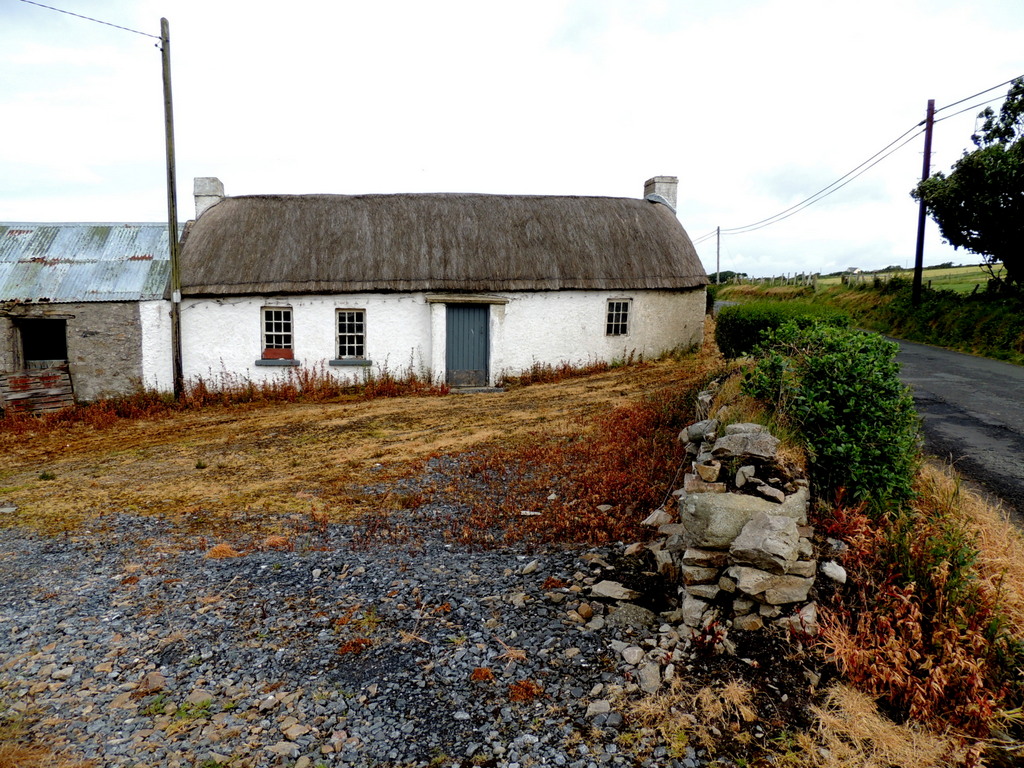
Rundale families did not live in isolated farmhouses. They lived in a clachan — a tight cluster of cottages, built close together at the centre of the shared land. A small clachan might have four or five houses. A large one might have thirty.
The clachan was almost always a kin group. The families inside it were cousins, brothers, uncles, and nephews. They held strips of the common field together and helped each other with ploughing, harvesting, and cutting turf from the shared bog.
This matters a great deal for family history research. The 1841 Census — taken four years before the Famine — recorded tens of thousands of clachans across Ireland. Each one sat in a specific townland. If you can find your ancestors’ townland, you can often find the clachan they lived in. And through the clachan, you can find the wider kin group around them.
What a typical clachan looked like:
- A cluster of 5 to 30 whitewashed stone cottages, often sharing walls or built in pairs
- A common “infield” close to the cottages, farmed intensively for potatoes and oats
- An “outfield” of rougher ground beyond the infield, used for grazing cattle and cutting turf
- Shared booley pastures on higher ground, where cattle spent the summer
Lazy Beds: How Pre-Famine Families Fed Themselves
On the strips of shared infield, rundale families grew potatoes using a technique called lazy beds. Despite the name, lazy beds were not easy. Families cut drainage channels by hand and mounded the soil into raised ridges. On waterlogged ground — which covered most of the west of Ireland — they were the only way to grow a crop at all.
A lazy bed was typically 1.2 to 2 metres wide. Families dug the channels, mounded the soil, and planted seed potatoes into the ridges. They added seaweed, turf ash, or animal dung to improve thin soil. Half an acre of lazy beds could feed a family of six or seven — provided the potato harvest did not fail.
☘️ Researching your Irish roots?
Our free step-by-step guide walks you through every record, database, and DNA tool to trace your Irish family — no experience needed.
How the Rundale System Ended
Rundale did not fade out naturally. The Famine, landlord policy, and the government combined to destroy it.
It happened in three stages:
- The Famine broke up the kin groups (1845–1852). When four of eight brothers in a clachan died or emigrated, the shared labour pool collapsed. The surviving families could not maintain the strips alone. The system fell apart from inside.
- Landlords consolidated the land (from 1849). The Encumbered Estates Act let bankrupt landlords sell their land at auction. New owners replaced rundale with consolidated tenant farms of 10 to 30 acres. The old strip system vanished almost overnight.
- The government cleared what remained (from 1891). The Congested Districts Board paid rundale families to leave their clachans and move to individual holdings. By 1900, the system had disappeared from almost the entire island.
The result was a landscape transformed in less than sixty years. Landlords cleared, resettled, or simply abandoned the clachans that had housed most of rural Ireland.
☘️ Enjoying this? 64,000+ Ireland lovers get stories like this every week. Subscribe free →
Where You Can Still See Rundale Landscapes in Ireland
The traces of rundale are still visible in the Irish landscape, if you know what to look for. You can find them in three main places:
- Connemara National Park, County Galway — the hillsides above the visitor centre carry clearly visible lazy bed ridges from pre-Famine cultivation. Former lazy beds survive across large stretches of the Connemara uplands. Best seen after a drought or frost, when the ridges show as stress marks on the grass.
- The Mullet Peninsula, County Mayo — this remote Atlantic headland kept elements of rundale longer than almost anywhere else. Walking the coastal paths, you can trace the outlines of former clachans in the stone ruins scattered across the fields.
- Slievemore Village, Achill Island, County Mayo — an abandoned clachan settlement deserted during the Famine. The cottage ruins and surrounding field patterns give a near-complete picture of what a rundale community looked like before clearance.
Why Rundale Matters for Irish Family History Research
Rundale and the clachan system are some of the most useful tools in Irish genealogy research. Here is why:
- Clachans sat in specific townlands. If Griffith’s Valuation (published 1847–1864) lists six households in the same townland with the same surname, they were almost certainly a rundale kin group — cousins and brothers who farmed together.
- Emigrant ships often carried whole clachans. Three or four families from the same townland on the same ship is not a coincidence. It is a clachan community leaving together, as they had farmed together.
- Comparing the 1841 and 1851 Census records for the same townland tells you exactly what the Famine cost a specific community. Same townland: 8 households in 1841, 2 in 1851 — six families dead or gone.
Civil registration records in Ireland start in 1864 for births, 1845 for marriages, and 1864 for deaths. Parish records often go back to the 1820s. But knowing that your ancestor’s townland contained a specific kin cluster helps you work out which records belong to your family — especially when several families in the same townland share the same surname.
For the 70 million people worldwide with Irish roots, October is Family History Month. If your ancestors farmed under the rundale system — living in a clachan, sharing strips of land before the Famine drove them out — our free Irish Ancestry Guide can help you trace them back to their exact townland: our free Irish Ancestry Guide
Frequently Asked Questions
What was the rundale system in Ireland?
The rundale system was a shared form of land use where groups of related Irish families farmed strips of a common field together, rotating them periodically so no one family held the best or worst ground permanently. It covered the majority of the Irish rural population in the early 19th century and was the dominant farming arrangement in the west of Ireland before the Great Famine.
What was a clachan in Ireland?
A clachan was the cluster of cottages at the centre of a rundale community. It typically held 5 to 30 related families, all sharing the surrounding land. The 1841 Census recorded tens of thousands of clachans across Ireland before the Famine destroyed most of them through deaths, emigration, and landlord consolidation.
How does the rundale system help with Irish genealogy research?
Rundale clachans sat in specific townlands, and their families were usually related. If Griffith’s Valuation lists several households with the same surname in one townland, they were likely a rundale kin group. Comparing the 1841 and 1851 Irish Census returns for the same townland shows exactly how the Famine hit that community.
Where can I see rundale landscape traces in Ireland today?
The best places are Connemara National Park in County Galway, the Mullet Peninsula in County Mayo, and the abandoned village of Slievemore on Achill Island. In Connemara, the hillside lazy bed ridges are clearest after a frost or drought, when they appear as faint stress patterns in the grass.
☘️ Join 64,000+ Ireland Lovers
Every weekday morning, get Ireland’s hidden gems, local secrets, and travel inspiration — the kind you won’t find in any guidebook.
Subscribe free — enter your email:
Already subscribed? Download your free Ireland guide (PDF)
📲 Know someone who’d love this? Share on WhatsApp →
Love more? Join 43,000 Scotland lovers → · Join 29,000 Italy lovers → · Join 7,000 France lovers →
Free forever · Unsubscribe anytime
Tours & experiences you might love


Powered by Viator. Some links are affiliate links — we may earn a small commission at no extra cost to you.
Secure Your Dream Irish Experience Before It’s Gone!
Planning a trip to Ireland? Don’t let sold-out tours or packed attractions spoil your journey. Iconic experiences like visiting the Cliffs of Moher, exploring the Rock of Cashel, or enjoying a guided walk through Ireland’s ancient past often sell out quickly—especially during peak travel seasons.

Booking in advance guarantees your place and ensures you can fully immerse yourself in the rich culture and breathtaking scenery without stress or disappointment. You’ll also free up time to explore Ireland’s hidden gems and savour those authentic moments that make your trip truly special.
Make the most of your journey—start planning today and secure those must-do experiences before they’re gone!