

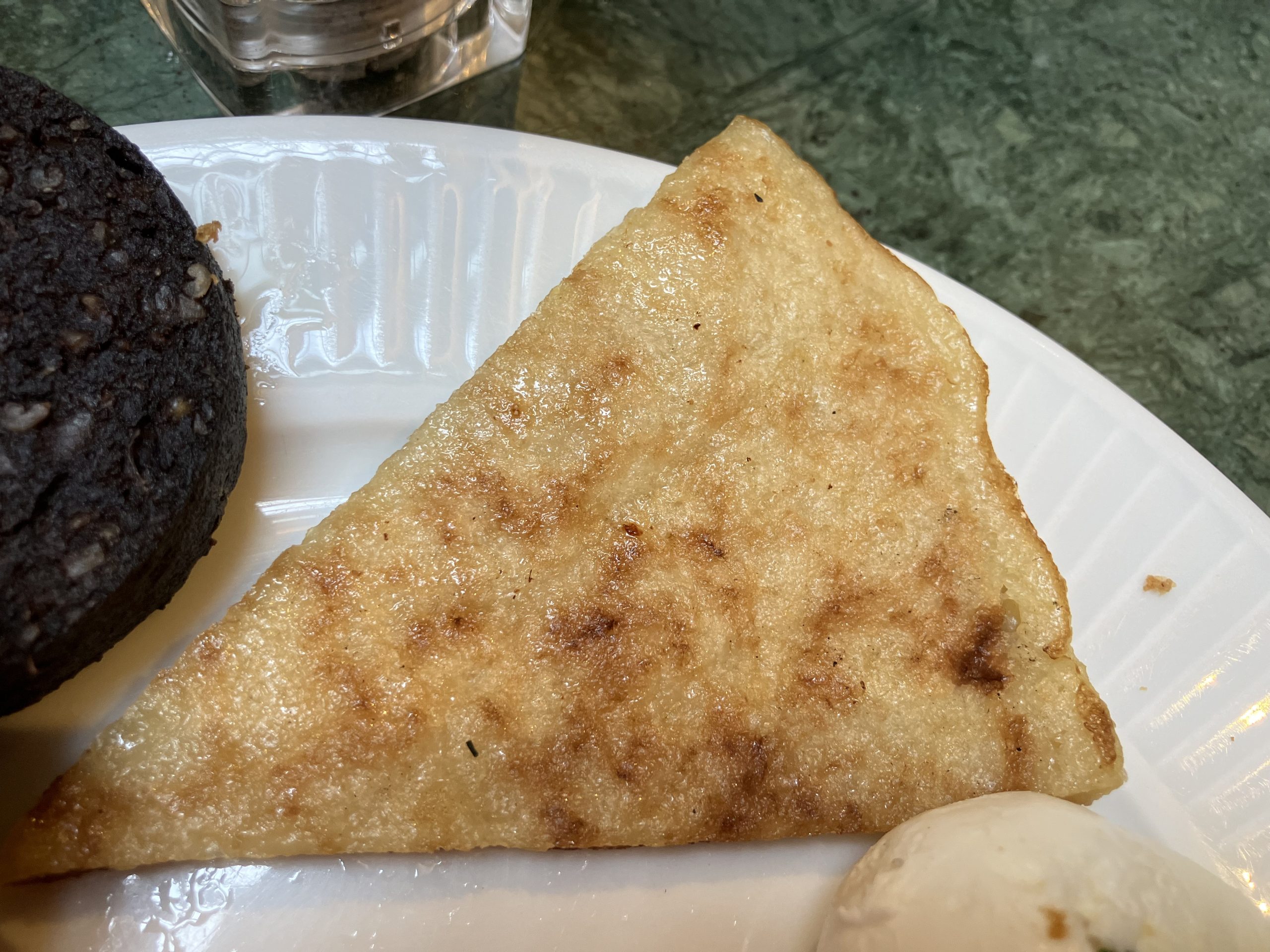
Pratie Oaten: A Traditional Irish Griddle Cake Recipe from the Hearths of County Antrim
There are few foods that speak so honestly of a place and its people as Pratie Oaten. Born out of the northern counties of Ireland — County Antrim in particular — this humble griddle cake is made from just two of the most enduring staples of the Irish larder: potatoes and oatmeal. The name itself tells the whole story. Pratie is the old Ulster word for potato, borrowed warmly into everyday speech from the Irish práta, while oaten simply means made with oats. Together, they produced something far greater than the sum of their modest parts.
Pratie Oaten belonged to the rhythm of the harvest table. When the potato crop came in and oats were dried and milled in the autumn, farm kitchens across Antrim and the wider Ulster counties would produce batches of these flat, golden cakes on the iron griddle that hung over the hearth fire. They were filling, economical, and quick to make — virtues that mattered enormously to families working long days in the fields. Eaten hot from the griddle with a generous smear of salted butter, they were a meal in themselves. Cold, they travelled well in a pocket or a wrapped cloth to the fields for the midday break.
What sets Pratie Oaten apart from the better-known potato bread or fadge found across Ulster is the prominent role of oatmeal in the dough. Rather than flour, it is fine or medium pinhead oatmeal that binds the mashed potato into a workable cake, giving it a slightly nutty flavour and a pleasingly coarse, earthy texture on the outside while the inside stays soft and yielding. It is a genuinely ancient combination — oats thrived in the cool, damp Ulster climate long before wheat ever did — and every bite carries that quiet sense of landscape and long memory.
Ingredients
- 450 g (1 lb) floury potatoes, such as Rooster or Kerr’s Pink, peeled and boiled
- 100 g (3½ oz) fine or medium oatmeal, plus extra for dusting
- 25 g (1 oz) salted butter, plus extra for greasing the griddle and serving
- ½ tsp fine salt
- A pinch of white or black pepper (optional, but traditional in many households)
Method
- Boil the peeled potatoes in well-salted water until completely tender — around 20 to 25 minutes depending on size. Drain thoroughly and leave to steam dry in the pot for a couple of minutes. This is important: excess moisture will make the dough sticky and difficult to handle.
- While the potatoes are still hot, mash them very smoothly with the butter. There should be no lumps. Season with the salt and pepper if using. Allow the mash to cool until it is warm but comfortable to handle — roughly 10 minutes.
- Add the oatmeal to the warm mash and mix together with your hands or a wooden spoon until a soft, pliable dough forms. It should hold together without being sticky. If it feels too wet, add a little more oatmeal, a tablespoon at a time.
- Lightly dust a clean surface with oatmeal and turn the dough out onto it. Gently press or roll it out to a round approximately 5–6 mm (¼ inch) thick. Do not overwork it.
- Cut the round into four farls (triangles) or use a round cutter to stamp out individual cakes roughly 8 cm (3 inches) in diameter.
- Heat a dry cast-iron griddle or heavy-based frying pan over a medium heat. Lightly grease it with a small scrape of butter on a piece of kitchen paper — you want just the barest film, not pooling fat.
- Cook the Pratie Oaten in batches for 4 to 5 minutes per side, turning once, until each side is golden brown with lightly crisped edges and the cakes are cooked through. They should feel firm to a gentle press. Do not rush the heat — too high and the outside will colour before the centre is warm.
- Serve immediately, straight from the griddle, with plenty of cold salted butter melting over the top.
Tips
- Use only floury potato varieties — waxy types hold too much moisture and will result in a soft, unworkable dough that won’t hold its shape on the griddle.
- Fine oatmeal gives a smoother, more delicate texture; medium oatmeal gives a slightly more rustic, hearty bite. Both are entirely authentic — it simply comes down to what you prefer.
- Any leftover Pratie Oaten can be wrapped and stored in the fridge for up to two days, then re-crisped in a dry pan over a medium heat for a few minutes each side.
- These are wonderful alongside a traditional Ulster fry, or simply eaten warm with a bowl of soup on a cold evening.
- Never use a non-stick pan at high heat — cast iron or a good heavy steel pan gives you the authentic colour and slight crust that defines a proper griddle cake.
There is something genuinely moving about making Pratie Oaten at home. You are working with the same two ingredients, in very nearly the same way, as generations of Ulster families did before electricity, before supermarkets, before the world changed beyond all recognition. The griddle still hisses in just the same way. The butter still melts in just the same slow, golden puddle. And the taste — warm, earthy, deeply satisfying — is exactly what honest food should be: uncomplicated, rooted, and quietly perfect. If you’d like to explore more of Ireland’s potato-griddle family, our Boxty Recipe covers the raw-and-mashed-potato cousin from County Leitrim.
☘️ Join 64,000+ Ireland Lovers
Every weekday morning, get Ireland’s hidden gems, local secrets, and travel inspiration — the kind you won’t find in any guidebook.
Subscribe free — enter your email:
Already subscribed? Download your free Ireland guide (PDF)
📲 Know someone who’d love this? Share on WhatsApp →
Love more? Join 43,000 Scotland lovers → · Join 29,000 Italy lovers → · Join 7,000 France lovers →
Free forever · Unsubscribe anytime
Tours & experiences you might love


Powered by Viator. Some links are affiliate links — we may earn a small commission at no extra cost to you.
Secure Your Dream Irish Experience Before It’s Gone!
Planning a trip to Ireland? Don’t let sold-out tours or packed attractions spoil your journey. Iconic experiences like visiting the Cliffs of Moher, exploring the Rock of Cashel, or enjoying a guided walk through Ireland’s ancient past often sell out quickly—especially during peak travel seasons.

Booking in advance guarantees your place and ensures you can fully immerse yourself in the rich culture and breathtaking scenery without stress or disappointment. You’ll also free up time to explore Ireland’s hidden gems and savour those authentic moments that make your trip truly special.
Make the most of your journey—start planning today and secure those must-do experiences before they’re gone!