

Grace O’Malley, known in Irish as Gráinne Mhaol, sailed into Greenwich in 1593, walked into the presence of Queen Elizabeth I of England, and refused to bow. She left with everything she had asked for. It remains one of the most audacious diplomatic encounters in Irish history — a self-made chieftain of Connacht who commanded a fleet of galleys and an army of fighting men, facing down the most powerful ruler in Europe and emerging undefeated.
Who Was Grace O’Malley?
Born around 1530 on Clare Island off the coast of County Mayo, Grace O’Malley was the daughter of Eoghan Dubhdara Ó Máille, chieftain of the O’Malley clan — a family whose power rested entirely on the sea. They controlled the fishing and trading routes along the west coast of Ireland, collecting tolls from ships that passed through their waters. From childhood, Grace understood that whoever ruled the waves ruled Connacht.
She married twice. Her first husband, Dónal O’Flaherty, was chieftain of the O’Flaherty clan in Connemara. When he died in the 1560s, she did not retreat into widowhood — she took his fleet and used it as the foundation of her own power base. Her second marriage, to Richard an Iarainn (Richard of the Iron) Burke, was reportedly conducted under a one-year Brehon Law trial arrangement. At the end of the year, she is said to have locked him out of Rockfleet Castle and declared the marriage dissolved, keeping the castle for herself. Whether or not the story is entirely true, it captures the spirit of the woman perfectly.
A Fleet of 20 Ships and an Army of 200 Men
By the 1570s and 1580s, Grace O’Malley commanded a fleet of approximately 20 galleys and a standing force of around 200 soldiers — an extraordinary military resource for any chieftain in sixteenth-century Ireland. She used this force in ways that the English crown found deeply inconvenient: raiding rival clans, charging tolls on fishing boats off the Mayo coast, and allying herself with whichever side best served her interests at any given moment.
She came to the attention of the Tudor authorities early. In 1577, the Earl of Desmond captured her and held her prisoner for about 18 months before letting her go. In 1586, the Governor of Connacht, Sir Richard Bingham, arrested her again, held her for several months, and reportedly intended to hang her. Each time, she survived. Each time, she returned to Clew Bay and her galleys.
The Letter That Changed Everything
In 1593, events conspired to push Grace O’Malley into taking the most dangerous gamble of her life. Bingham had captured both her son Tibbot-ne-Long and her half-brother Dónal-na-Píopa. English forces had seized her lands. She was in her early sixties, her powerbase under severe pressure, and conventional options had run out.
She wrote directly to Elizabeth I. The letter, preserved in the State Papers of Ireland, is a masterpiece of strategic self-presentation. She described herself as a “most faithful subject” who had spent her life maintaining order in Connacht — a description that required considerable creative latitude — and asked for the release of her family members and the restoration of her lands. To make the request harder to refuse, she offered to raise troops to serve the Crown against Elizabeth’s enemies.
Elizabeth, intrigued, sent back a list of 18 questions — known as the Articles of Interrogatory — requiring Grace to answer them before any meeting could take place. The answers, again in the State Papers, reveal a woman with a precise command of detail and the tactical intelligence to emphasise exactly what Elizabeth needed to hear.
☘️ Enjoying this? 64,000+ Ireland lovers get stories like this every week. Subscribe free →
The Meeting at Greenwich, 1593
Grace O’Malley sailed to England in the summer of 1593 and presented herself at Greenwich Palace. Contemporary accounts suggest the meeting lasted approximately two hours — remarkable in itself, given that Elizabeth I rarely granted such audiences to Irish chieftains, and never to a woman. The two are said to have conversed in Latin, since Grace spoke no English and Elizabeth no Irish.
What did each woman make of the other? We have no direct record. What we do know is the outcome. Elizabeth issued a letter patent granting Grace O’Malley the following:
- The release of her son Tibbot-ne-Long and her half-brother Dónal-na-Píopa from English custody
- The right to wage war on Elizabeth’s behalf against any Irish chieftain she deemed a threat
- Permission to continue maintaining a fighting force in Connacht
- Freedom from interference by Governor Bingham for the remainder of her life
It was, by any standard, an extraordinary result. Grace had arrived in England with nothing but her own nerve and a well-argued petition. She left with formal Crown authorisation for the very activities she had been practising — and being arrested for — for three decades.
Why This Meeting Matters to Irish Heritage
The encounter between Grace O’Malley and Elizabeth I sits at an unusual intersection in Irish history. It was not a surrender, not a capitulation, and not simply a transaction. It was a negotiation between two women of exceptional political intelligence — one of whom held the formal apparatus of state, the other of whom held the real power on the ground in Connacht.
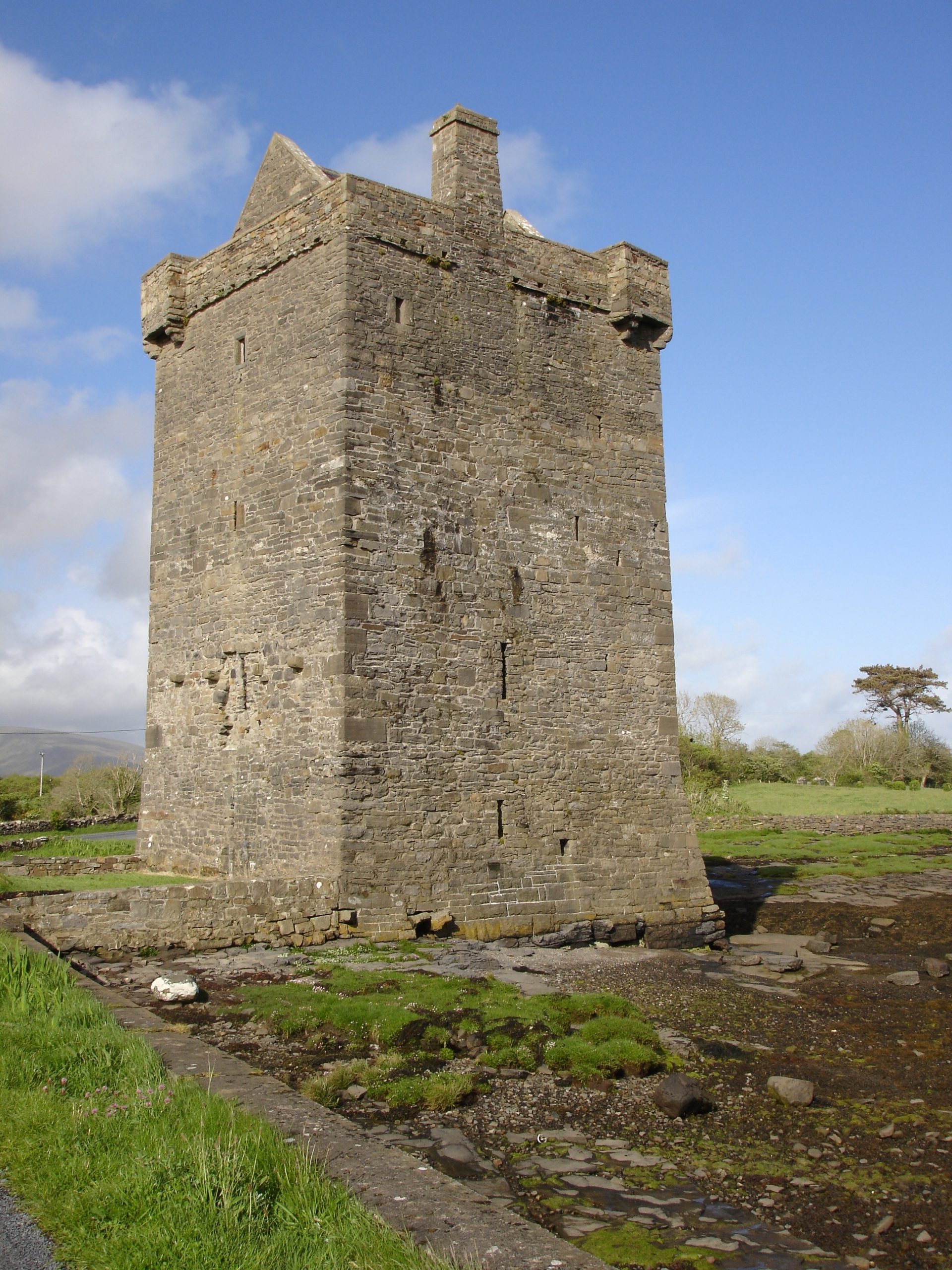
For those tracing Irish heritage from the west of Ireland — particularly County Mayo and County Galway — the O’Malley name carries particular resonance. The clan’s history is inseparable from the landscape of Clew Bay, Clare Island, and the Atlantic approaches to Connacht. Rockfleet Castle, on the north shore of Clew Bay near Newport in County Mayo, still stands today and was Grace O’Malley’s principal stronghold in her later years.
What Happened After the Meeting?
The agreement held for a while — but not entirely. Bingham continued to interfere, and Grace continued to resist. Her son Tibbot-ne-Long eventually submitted to English authority and received a baronetcy, becoming the first Viscount Mayo in 1627, more than two decades after his mother’s death. The O’Malley power on the sea gradually gave way to the altered political landscape of early seventeenth-century Ireland.
Grace O’Malley died around 1603 — the same year as Elizabeth I. The timing is almost too apt. The two women who had faced each other across a table at Greenwich a decade earlier went to their graves in the same season, as if the chapter they had written together required a simultaneous conclusion.
The Historical Record and Where to Follow Her Trail
Grace O’Malley left behind an unusually rich documentary record for a sixteenth-century Irish chieftain — in part because her activities were so troublesome to the English administration that they wrote about her constantly. The State Papers of Ireland contain dozens of references. Anne Chambers‘s biography, first published in 1979 and revised several times since, remains the standard account and is widely available in Irish bookshops.
In County Mayo, her memory is kept vigorously alive. The Clare Island abbey, where tradition holds she lies buried, contains a tomb traditionally attributed to her, though scholars dispute its true provenance. The island’s annual festival celebrates her legacy. In Westport, a large bronze statue of Grace O’Malley commissioned in 2003 stands as a focal point for heritage tourism in the county.
For those with O’Malley, Bourke, Burke, O’Flaherty, or related surnames in their family tree, the west of Ireland — particularly the coastline from Clifden north to Killala Bay — represents one of the richest areas for ancestral research in the country. Parish records, estate papers, and the 1911 and 1901 censuses all cover this region comprehensively. Key sites for a heritage visit include:
- Rockfleet Castle (Carrigahowley), Newport, Co. Mayo — the tower house Grace O’Malley held until her death, on the shore of Clew Bay; freely accessible to visitors.
- Clare Island Friary — the Cistercian abbey containing the tomb traditionally attributed to Grace, with remarkable medieval ceiling paintings.
- Westport House — the stately home of the Browne family, descendants of Grace O’Malley’s son Tibbot-ne-Long, set in extensive grounds above Clew Bay.
- The Museum of County Mayo, Castlebar — holds local records, artefacts, and interpretive material on the O’Malley clan and the history of the region.
Planning a Visit to Grace O’Malley Country
The route from Westport to Clare Island forms a natural Grace O’Malley pilgrimage. Westport itself is one of the most attractive small towns in Ireland — planned in the eighteenth century, with a tree-lined canal walk and a bustling main street. From Roonagh Quay, about 25 kilometres south-west of Westport, a ferry crosses to Clare Island in approximately 25 minutes. The crossing operates year-round, weather permitting.
Rockfleet Castle, 14 kilometres north-east of Westport on the R318 road, is harder to find but worth the effort. It sits directly at the water’s edge on Clew Bay — a small, square tower house that looks entirely inadequate for the stature of its most famous resident. That disproportion is, in its way, the whole point. Grace O’Malley’s power came not from stone but from the sea around it.
October is Family History Month — if you have Irish ancestry and want to trace your own roots back to this corner of Connacht, the free ancestry guide at the link below is the best starting point we know of, covering everything from online record databases to DNA matching tools specific to Irish families.
☘️ Join 64,000+ Ireland Lovers
Every weekday morning, get Ireland’s hidden gems, local secrets, and travel inspiration — the kind you won’t find in any guidebook.
Subscribe free — enter your email:
Already subscribed? Download your free Ireland guide (PDF)
📲 Know someone who’d love this? Share on WhatsApp →
Free forever · Unsubscribe anytime
Frequently Asked Questions
What did Grace O’Malley ask Elizabeth I for?
Grace O’Malley’s petition to Elizabeth I in 1593 had three core requests: the release of her son Tibbot-ne-Long and her half-brother from English imprisonment, the return of her seized lands in Connacht, and relief from the harassment of the Governor of Connacht, Sir Richard Bingham. Elizabeth granted all three, issuing a letter patent that also authorised Grace to continue maintaining troops — effectively legalising her private army.
Where is Grace O’Malley buried?
Tradition holds that Grace O’Malley lies buried in Clare Island Friary, the Cistercian abbey on Clare Island off the coast of County Mayo, which served as the spiritual home of the O’Malley clan. A tomb in the north wall of the chancel carries her name, though historians note they cannot prove the attribution conclusively. The abbey’s interior also features remarkable medieval wall paintings that survived the Reformation.
How did Grace O’Malley communicate with Queen Elizabeth I?
According to contemporary accounts, the two women communicated at their 1593 meeting in Latin — the common diplomatic language of educated Europeans at the time. Grace O’Malley spoke Irish and had no English; Elizabeth I spoke English and French but no Irish. Latin served as the neutral ground. The meeting lasted approximately two hours, which was unusually long for an audience with the English queen.
Is Rockfleet Castle open to visitors?
Yes. Rockfleet Castle (also known as Carrigahowley Castle) on the shore of Clew Bay near Newport in County Mayo is freely accessible to the public. The tower house, which dates from the sixteenth century, is one of the best-preserved examples of a Mayo tower house and was Grace O’Malley’s principal stronghold in her later years. You’ll find it approximately 14 kilometres north-east of Westport on the R318 road.
When did Grace O’Malley die?
Grace O’Malley died around 1603, though the precise date and location are not recorded. The same year saw the death of Queen Elizabeth I, her old negotiating partner. Grace was approximately 73 years old at the time of her death — a remarkable age for a sixteenth-century chieftain who had spent much of her life at sea, in conflict, and repeatedly in English custody.
Tours & experiences you might love


Powered by Viator. Some links are affiliate links — we may earn a small commission at no extra cost to you.
Secure Your Dream Irish Experience Before It’s Gone!
Planning a trip to Ireland? Don’t let sold-out tours or packed attractions spoil your journey. Iconic experiences like visiting the Cliffs of Moher, exploring the Rock of Cashel, or enjoying a guided walk through Ireland’s ancient past often sell out quickly—especially during peak travel seasons.

Booking in advance guarantees your place and ensures you can fully immerse yourself in the rich culture and breathtaking scenery without stress or disappointment. You’ll also free up time to explore Ireland’s hidden gems and savour those authentic moments that make your trip truly special.
Make the most of your journey—start planning today and secure those must-do experiences before they’re gone!