

Few events in Irish history are as dramatic — or as little known — as the night the Girona went down.
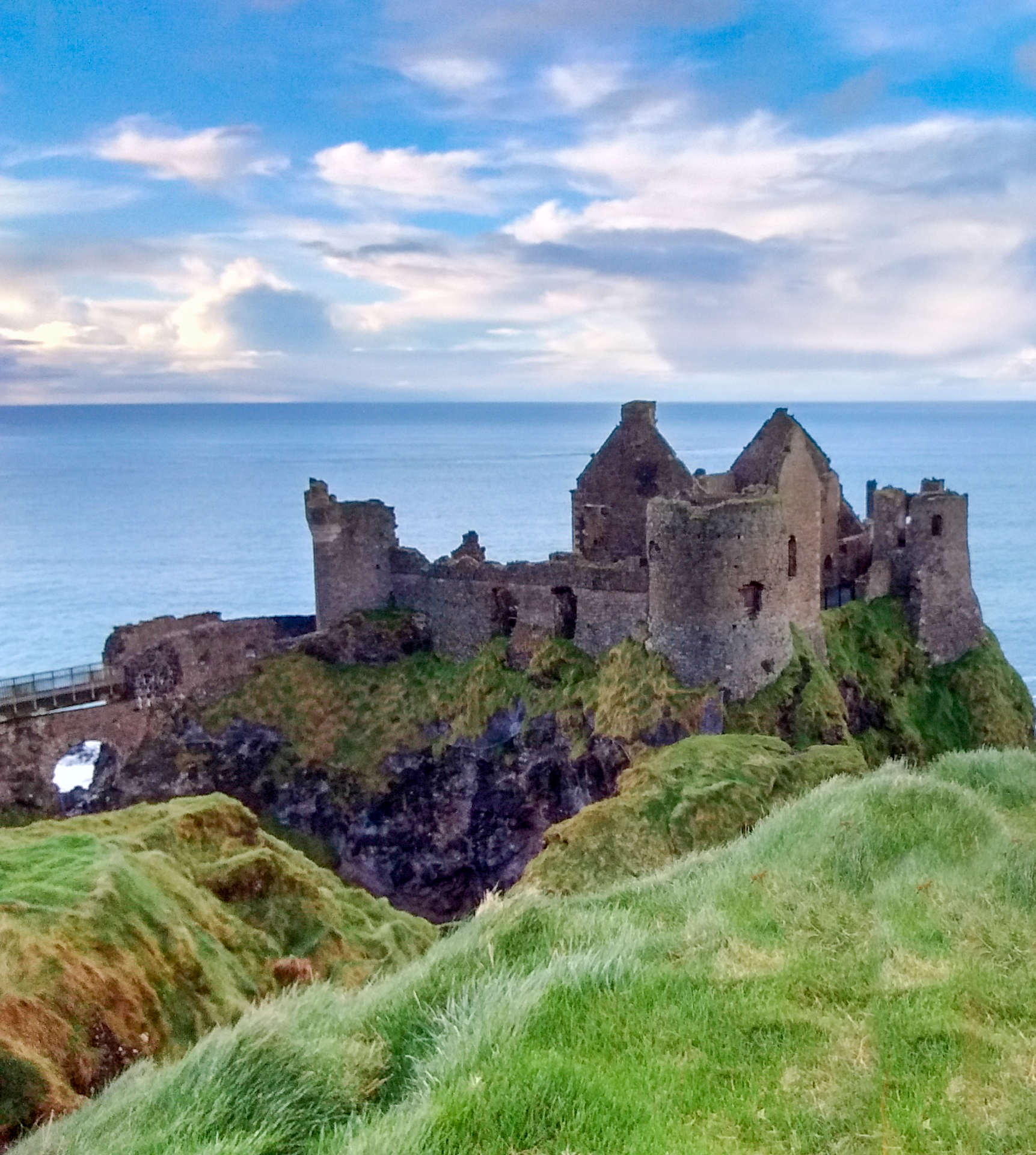
In October 1588, a Spanish galleass carrying over 1,300 men struck rocks off the County Antrim coast. A storm was driving the ship toward the cliffs. Of all the men aboard, only nine survived. They made their way ashore at one of the most striking locations in Ireland — directly below Dunluce Castle.
That castle still stands today. The gold recovered from the wreck is on free display in Belfast. And the story of what happened on that coastline is one of the most remarkable chapters in the history of the Spanish Armada.
The Armada’s Disastrous Return Journey
The Spanish Armada set sail in 1588 with the aim of invading England, overthrowing Queen Elizabeth I, and restoring Catholic rule. It failed badly. The English fleet, under Francis Drake and Lord Howard, pushed the Spanish through the English Channel. After a decisive engagement near Gravelines, off the coast of Flanders, the Armada was driven northward. Unable to fight back south through the English ships and prevailing winds, they had no choice: sail north, around Scotland, down past Ireland, and all the way home to Spain.
That route was brutal. The North Atlantic in autumn offers no mercy to large warships already damaged in battle. Storms struck the fleet repeatedly. Ship after ship was driven onto the coastlines of Scotland and Ireland. Around 24 Armada vessels are thought to have wrecked on Irish shores alone, from Donegal to Kerry.
The Girona: One Ship, Far Too Many Men
The Girona was not a standard galleon. She was a galleass — a hybrid vessel combining oars with sail. Fast, well-armed, and capable of moving in calm conditions, she was one of the most capable ships in the entire fleet. She was also badly damaged from the Channel fighting.
What made the Girona’s situation extraordinary was how many men she was carrying. As the Armada broke apart along the Irish coast, survivors from other wrecked ships had been taken aboard. By October 1588, the Girona was attempting to reach Scotland — specifically the island of Islay, where the Catholic MacDonnell family had strong connections — carrying well over 1,300 men. Her normal complement would have been far fewer.
She was overloaded, storm-damaged, and running out of options.
The Night She Struck at Lacada Point
On the night of 26 October 1588, the Girona struck rocks at Lacada Point — a jagged outcrop on the County Antrim coast. The sea was rough. The rocks offered no mercy. The ship broke up fast.
Of more than 1,300 men, only nine survived.
The rocky cove below Dunluce Castle is now known in Irish as Port na Spaniagh — the Port of the Spaniards. That name has held for over four centuries.
The survivors who made it ashore were exhausted and half-drowned. They had survived a wreck in freezing Atlantic waters in late October. The nearest substantial structure — and one of the few places where they could expect a sympathetic welcome — was Dunluce Castle, visible on the cliffs above them.
Dunluce Castle and the MacDonnell Family
Dunluce Castle sits on a basalt rock outcrop above the sea in County Antrim, connected to the mainland by a narrow bridge, with sheer cliffs dropping to the ocean on three sides. It is one of the most dramatic castle settings in Ireland — dramatic enough that, decades after the Girona wreck, part of its kitchen collapsed into the sea mid-meal.
In 1588, Dunluce was the seat of Sorley Boy MacDonnell — Somhairle Buidhe Mac Domhnaill in Irish. Buidhe means yellow or golden, giving him his English nickname “Sorley Boy” — fair-haired Sorley. He was one of the most powerful Gaelic lords in Ulster. He was also Catholic, no friend to the English crown, and entirely sympathetic to the Spanish cause.
The MacDonnells were already familiar with Armada wreckage. English authorities had ordered that any surviving Spaniards found on Irish shores be killed, since sheltering them was treason. Sorley Boy ignored this. He had been giving refuge to Armada survivors from other wrecks in the months before the Girona went down.
The small number of Girona survivors were taken in at Dunluce.
What the MacDonnells Salvaged from the Wreck
Sorley Boy was a practical man. While he sheltered the survivors, he also organised salvage operations on the Girona’s remains. His men recovered bronze cannons from the wreck — guns that were subsequently installed in Dunluce Castle’s own defences. The castle was, in effect, upgraded using weapons from a Spanish warship.
The bulk of what was lost remained on the seabed, however. Coins, jewellery, navigational instruments, personal items belonging to Spanish noblemen — all of it sank with the ship and lay undisturbed on the floor of the Atlantic for nearly four centuries.
The Gold Recovered Four Centuries Later
In 1967, a Belgian diver named Robert Sténuit located the wreck of the Girona. He had spent years researching historical records before diving, and when he found Lacada Point, the artefacts were still there — buried in sediment, but remarkably preserved.
What he recovered was extraordinary. Gold chains. Gold coins. Rings. Religious medals. Navigational instruments. Jewellery belonging to Spanish aristocrats and knights. Much of it carried personal inscriptions. One famous piece is a gold salamander pendant set with rubies. Another is a gold ring engraved with the words No tengo mas que darte — I have nothing more to give you.
These were not the possessions of ordinary sailors. The Girona was carrying some of the highest-ranking survivors of the entire Armada fleet. Their personal belongings went down with them at Lacada Point and spent nearly four centuries on the seabed off County Antrim.
The artefacts were acquired by the Ulster Museum in Belfast through a public fundraising appeal in 1972, where they remain on permanent free display.
Visiting Dunluce Castle and the Girona Collection
The Ulster Museum on Stranmillis Road in Belfast holds the complete Girona collection. Admission is free. The display includes gold jewellery, coins, weapons, navigational equipment, and personal items from the men who died below Dunluce Castle. It is one of the finest collections of Armada artefacts anywhere in the world.
Dunluce Castle itself is open to visitors throughout most of the year. It sits off the A2 coastal road between Bushmills and Portrush, a short drive from the Giant’s Causeway. The view from the cliff edge is striking — and knowing what happened in the cove below adds a different dimension to standing there. Fans of a certain fantasy series may also recognise the silhouette: Dunluce Castle inspired Pyke, the seat of House Greyjoy in Game of Thrones.
Port na Spaniagh is accessible on foot from near the castle. At low tide, the rocks at Lacada Point are visible. It does not look like a place where over 1,300 men lost their lives. It looks like any other stretch of the Antrim coast — exposed, wind-cut, and completely indifferent to the history that unfolded there.
The gold, however, remembers everything.
Thinking about it seriously?
If you’ve started actually planning a move, our complete the full Move to Ireland guide walks through every step, every cost, and the paperwork that catches most people out.
Tours & experiences you might love


Powered by Viator. Some links are affiliate links — we may earn a small commission at no extra cost to you.
Secure Your Dream Irish Experience Before It’s Gone!
Planning a trip to Ireland? Don’t let sold-out tours or packed attractions spoil your journey. Iconic experiences like visiting the Cliffs of Moher, exploring the Rock of Cashel, or enjoying a guided walk through Ireland’s ancient past often sell out quickly—especially during peak travel seasons.

Booking in advance guarantees your place and ensures you can fully immerse yourself in the rich culture and breathtaking scenery without stress or disappointment. You’ll also free up time to explore Ireland’s hidden gems and savour those authentic moments that make your trip truly special.
Make the most of your journey—start planning today and secure those must-do experiences before they’re gone!