

On a stormy evening sometime in the late 1630s, the kitchen at Dunluce Castle fell into the sea. The floor gave way without warning. The cooks fell with it. The only person to survive was a young kitchen boy who had been sitting in a window recess when the rock beneath the castle’s edge finally gave out.
It is one of the most remarkable moments in Irish castle history — and one of the least known.
A Castle Built on the Wrong Side of Reason
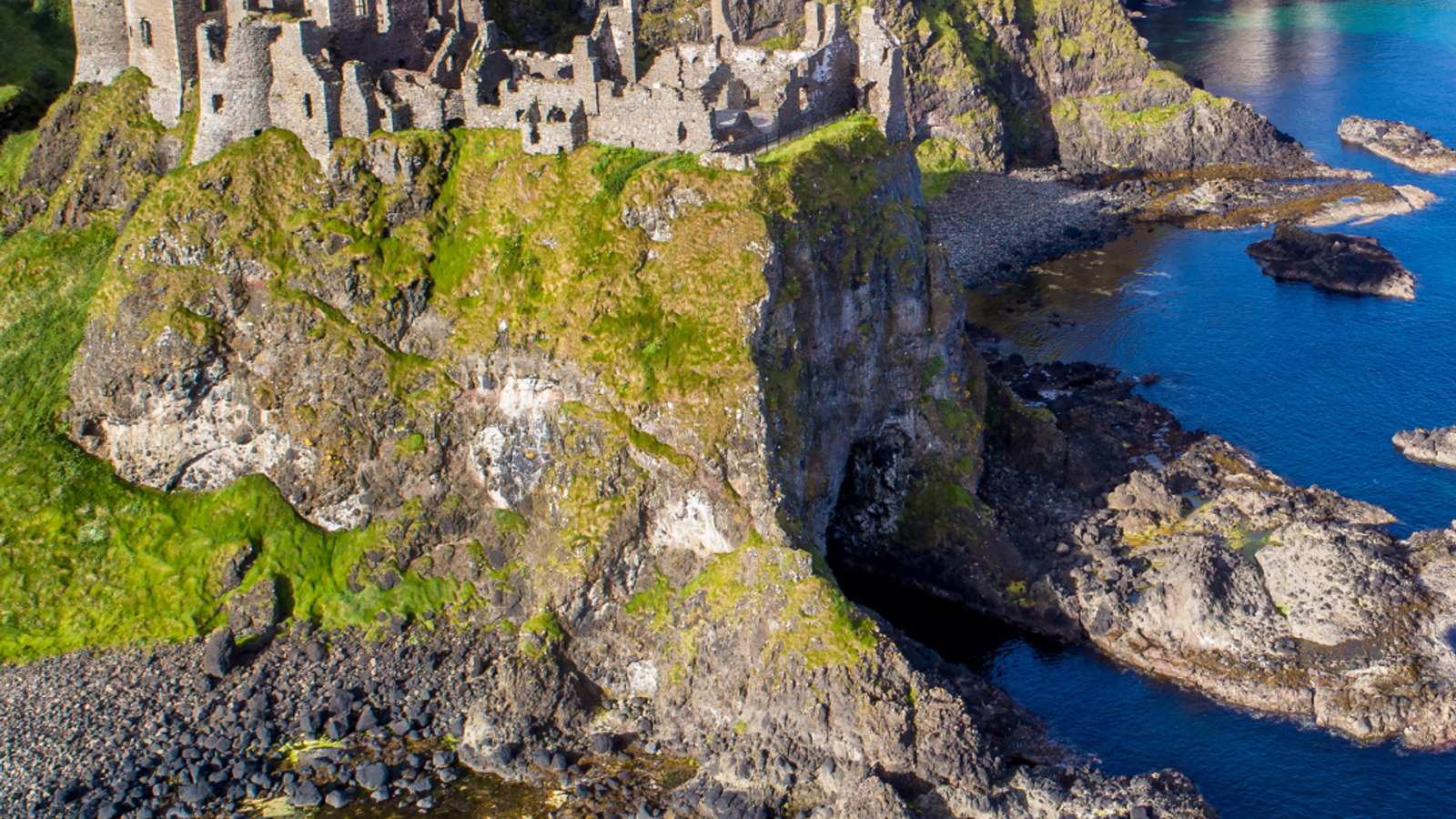
Dunluce Castle stands on a basalt rock stack on the north Antrim coast, separated from the mainland by a narrow ravine and connected by a wooden bridge that has been rebuilt more times than anyone can count.
The location is dramatic to the point of seeming impossible. Waves batter the cliffs below. The Atlantic wind has few barriers between here and Canada. On a grey day, the ruins look like something from another world — jagged walls and turrets floating above a pewter sea.
It was the stronghold of the MacDonnell clan from the late 1400s onwards. They were Scots-Irish lords — powerful, ambitious, and willing to build where no one else dared. Dunluce became the seat of their power on the northern coast.
The Kitchen at the Edge
Medieval castles always kept their kitchens away from the main living quarters. Fire was the greatest threat to stone and timber alike, and a blaze in the kitchen could destroy a castle from the inside out.
At Dunluce, the kitchen was positioned at the furthest seaward edge of the complex — as far from the main hall as the site would allow. It was practical for ventilation too. The heat, the smoke, and the noise of cooking all went straight out into the Atlantic air.
What nobody fully accounted for was what the Atlantic was quietly doing to the chalk and basalt beneath that kitchen floor. The sea does not announce itself. It just keeps working.
The Night the Floor Disappeared
The account that has survived describes a dinner in progress. The kitchen staff — cooks, scullery workers, servants — were at their posts below when the floor of the kitchen simply disappeared.
The rock shelf underneath had been hollowed out from below by centuries of waves. When it finally collapsed, it took the kitchen, its contents, and almost everyone inside it down into the sea cave beneath the castle.
The kitchen boy survived because he had moved to a window ledge at just the right moment. Everyone else was lost.
☘️ Enjoying this? 64,000+ Ireland lovers get stories like this every week. Subscribe free →
Why the Family Left
The MacDonnells’ castle had been home to some of the most influential families on the northern coast. The 1st Marquis of Antrim, Randal MacDonnell, had married into English nobility, and Dunluce had been updated to reflect its new social ambitions.
After the kitchen collapse, his wife reportedly refused to spend another night there. The psychological weight of the ground vanishing beneath you — inside your own home — would be difficult to overstate.
The family moved to more conventional accommodation. Dunluce was never again used as a primary residence in the same way. The castle that had survived clan wars and English cannons was undone by the patient erosion of its own foundations.
What the Ruins Tell You Now
The gap where the kitchen once stood is still visible. Walk through the ruins towards the seaward edge and you will reach the point where the structure simply stops — not eroded, not tumbled, but gone, as though someone removed a piece from a puzzle.
Below, a sea cave known as the Mermaid’s Cave runs beneath the castle rock. On calm days you can hear the water moving through it. On rough days the sound is something else entirely.
The cave carries its own ghost story — Maeve Roe, a young woman said to have been locked in a tower by her father. Her legend is older than the kitchen collapse, and over centuries the two tales have woven themselves together until it is hard to know where one ends and the other begins.
Still Standing at the Edge
Dunluce is one of Ireland’s most-visited castle ruins, and County Antrim rewards any visit with dramatic scenery at every turn. The castle sits just off the coastal road between Bushmills and Portrush, easy to reach and impossible to forget.
Most visitors come for the photographs. Few know about the night the kitchen fell. Fewer still stand at the seaward edge, looking down into the cave below, and think about a kitchen boy who moved to a window at exactly the right moment.
If you are planning a trip to the north coast, start here to plan your Ireland trip. And if Dunluce has caught your interest, there is plenty more to discover — the secret rooms hidden inside Irish castles reveal another layer of what life behind castle walls was really like.
Dunluce survived four centuries of Atlantic storms, clan warfare, and siege cannons. In the end it was the quiet persistence of the sea — patient and indifferent — that took its kitchen and sent it into the dark below. The castle is still there. The kitchen is still gone. The waves are still working.
☘️ You Might Also Love
☘️ Join 64,000+ Ireland Lovers
Every Friday, get Ireland’s hidden gems, local secrets, and travel inspiration — the kind you won’t find in any guidebook.
Love more? Join 43,000 Scotland lovers → · Join 30,000 Italy lovers → · Join 7,000 France lovers →
Free forever · · Unsubscribe anytime
Tours & experiences you might love


Powered by Viator. Some links are affiliate links — we may earn a small commission at no extra cost to you.
Secure Your Dream Irish Experience Before It’s Gone!
Planning a trip to Ireland? Don’t let sold-out tours or packed attractions spoil your journey. Iconic experiences like visiting the Cliffs of Moher, exploring the Rock of Cashel, or enjoying a guided walk through Ireland’s ancient past often sell out quickly—especially during peak travel seasons.

Booking in advance guarantees your place and ensures you can fully immerse yourself in the rich culture and breathtaking scenery without stress or disappointment. You’ll also free up time to explore Ireland’s hidden gems and savour those authentic moments that make your trip truly special.
Make the most of your journey—start planning today and secure those must-do experiences before they’re gone!