

An Irish townland is a small geographical unit of land — the most basic division of the Irish countryside — that has been in continuous use for over 1,000 years. There are 61,098 townlands across the island of Ireland, each with its own unique name, most derived from the Irish language. For anyone tracing Irish roots, the townland is the single most important piece of information your ancestor ever had as an address.
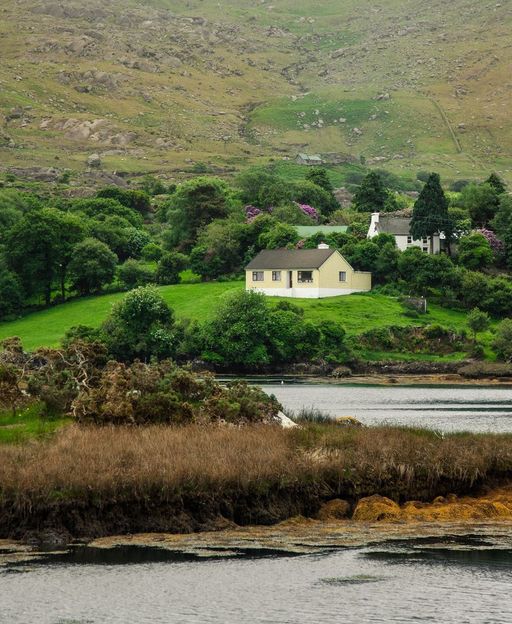
If your great-grandmother left Ireland in 1885 and told people she came from “County Mayo,” she wasn’t being imprecise — she was giving you only part of her address. Her full address, recorded in census returns and church registers, would have included her townland: a named patch of land, often no larger than a few hundred acres, that functioned as the address for every Irish rural family since the early medieval period. Finding that townland is the moment genealogy research clicks into place.
Watch: Do You Qualify for an Irish Passport?
Tracing your Irish family? If one of your grandparents was born in Ireland, you may be able to become an Irish citizen. This 14-minute guide explains who qualifies, what it costs and how long it takes. Thinking of making the move? Get the free Moving to Ireland checklist.
What Exactly Is an Irish Townland?
The townland — baile in Irish, meaning “homestead” or “settlement” — is Ireland’s oldest form of land division. Unlike parishes or counties, which were largely shaped by English administration after the Norman invasion of 1169, townlands pre-date the Norman arrival. Most historians believe the system was fully established by the 10th century, and many townland names have roots in even earlier periods, some reaching back to the 5th century.
Here is what makes townlands unique as an address system:
- They are small. The average Irish townland covers about 120 hectares (roughly 300 acres), although sizes vary from under one hectare in parts of Connacht to over 2,800 hectares in upland mountain regions (Sheskin, County Mayo, the largest, covers roughly 7,000 acres).
- They have ancient names. Most townland names describe the original landscape — a hill, a bog, a ring fort, a woodland, or a feature that gave early settlers their bearings. These names have been in continuous daily use for a millennium.
- There are 61,098 of them. This figure, maintained today in Ireland’s official Placenames Database, covers every corner of the island from Donegal to Cork and from Mayo to Dublin.
- They are still the address. Even today, rural Irish addresses often include the townland. An Garda Síochána, An Post, and the Irish Land Registry all use townlands as the foundation of rural addressing.
Townlands are the geographical unit that census-takers recorded on every doorstep in the 19th and 20th centuries. They are what tax collectors surveyed. They are the address written beside your ancestor’s name in every surviving record from the years before civil registration began.
Why Townlands Are Essential for Irish Genealogy
If you are one of the estimated 70 million people worldwide with Irish heritage, finding the townland your family came from transforms your research. Here is why it matters so much.
☘️ Researching your Irish roots?
Our free step-by-step guide walks you through every record, database, and DNA tool to trace your Irish family — no experience needed.
Get the Free Ancestry Guide →The two most important genealogy resources for Ireland — Griffith’s Valuation (surveyed between 1847 and 1864) and the Tithe Applotment Books (1823–1837) — are both organised by townland. When you search these databases for your ancestor by name, the townland is the result you receive. Without a townland, a surname like Murphy or Kelly is hopelessly common across hundreds of parishes. With a townland, it becomes a precise location on a real map.
The townland also unlocks parish records. Irish Catholic church registers — the primary source for baptism, marriage, and burial records before civil registration began in 1864 — were organised by parish, but within each parish the priest listed the townland beside every name. Find the townland, find the church, find the register. Our guide to tracing civil records and parish registers walks through this process step by step.
The four most useful free resources that list townland addresses are:
- Griffith’s Valuation (1847–1864) — Available free at askaboutireland.ie. Lists every household in rural Ireland by townland, including the householder’s name, the land they occupied, and their landlord.
- 1901 and 1911 Census of Ireland — Available free at nationalarchives.ie/collections/search-the-census/. Records every person in every household, organised by townland and district electoral division.
- 1926 Census of Ireland — Released online in April 2026 at nationalarchives.ie, this census covers the Irish Free State. Over three million people are listed alongside their townland addresses — the most complete surviving snapshot of Ireland before mass emigration reshaped the countryside entirely.
- Townlands.ie — A free digital map of every Irish townland. Use it to locate any townland on a modern map, see its precise boundaries, and understand its geographical context before you visit.
☘️ Enjoying this? 64,000+ Ireland lovers get stories like this every week. Subscribe free →
How to Find Your Ancestor’s Townland
Most families know the county their ancestors came from but not the specific townland. The following steps work for the vast majority of Irish ancestry searches.
Start with what you already know
Search any family papers, letters, or documents you hold. American obituaries from the 19th and early 20th centuries frequently mention a specific parish or townland. Gravestones in Irish-American cemeteries sometimes record the birthplace in Ireland. Naturalisation papers filed in American courts between 1790 and 1906 sometimes include the exact townland of origin. Ship passenger records from the 1890s onward can list a specific place of origin beyond the county.
Search Griffith’s Valuation by county
Go to askaboutireland.ie and search your surname within the county you believe your family came from. Where the same surname appears in multiple townlands, note all of them. Cross-reference with the 1901 or 1911 census to see whether the family was still in the same townland two generations later. Stability is common — Irish farming families often held the same townland for several generations.
Use the 1926 Census
Released in April 2026 at nationalarchives.ie, the 1926 Irish Census is fully searchable and free. If your family came from the 26 counties of the Republic of Ireland, this is the most comprehensive tool now available. It covers every household in the state and records names, ages, occupations, and the townland address. It fills a significant gap between the 1911 census and the beginning of comprehensive civil records for the new Irish state.
Use DNA testing as a geographical guide
If paper records are thin, DNA matching tools such as AncestryDNA or MyHeritage can indicate which counties or regions your closest genetic matches come from. This narrows the search to the right county, and then Griffith’s Valuation does the rest. Many Irish-Americans have found their townland this way when no paper trail survived.
Visiting Your Ancestral Townland
Once you know the townland, you can visit it. This is the part that surprises many visitors — and the part that stays with them longest.
Townlands are not towns or villages. Most are open farmland, bog, or coastline. There will usually be no sign. But the land is real, the name is real, and the fields your great-great-grandparents farmed are still there. Use townlands.ie to pinpoint the location on a satellite map before you travel. Many counties now have local genealogy researchers who specialise in walking visitors to their specific ancestral holdings, particularly in Clare, Mayo, Donegal, Cork, and Kerry. For a full itinerary, see our 7-day Irish ancestry itinerary.
In some townlands — particularly in the west of Ireland — the descendants of the families who farmed there 200 years ago still live nearby. A local knowledge network, often accessible through the county genealogy centres, can sometimes connect visiting diaspora with local families who share their townland history. The Love Ireland planning guide covers how to build a roots trip around a specific county and region.
It is possible to stand in the field where your family lived, look at the same hills and coastline, and understand in a way that no document quite captures how Ireland shaped the people who left it.
How Townlands Got Their Names
Understanding what a townland name means makes it more than a grid reference. Most Irish townland names fall into a small number of categories:
- Landscape features: Cnoc (hill), Loch (lake), Coill (wood), Móin (bog), Gleann (valley) — names that describe what the first settlers found when they cleared the land
- Fortifications: Ráth (ring fort), Dún (fort), Caiseal (stone fortress) — thousands of ring forts that once marked the Irish landscape are now preserved only in townland names, long after the physical structures vanished
- Personal names: Many townlands carry the name of the family that first settled or cleared that land — giving you the oldest layer of genealogy available, names of families who lived there before written records begin
- Ecclesiastical names: Cill (church), Domhnach (Sunday church), Mainistir (monastery) — reflecting the deep influence of early Christianity on how Ireland was organised and named
The name of your ancestral townland is a 1,000-year-old message from the people who first mapped it. It tells you what the land looked like, who controlled it, or what once stood there in an era long before written records. When you say the townland name aloud, you are pronouncing something that Irish people have spoken in the same place for forty or fifty generations.
Frequently Asked Questions About Irish Townlands
How many townlands are there in Ireland?
There are 61,098 townlands across the island of Ireland. This figure is maintained today in Ireland’s official Placenames Database and covers all 32 counties, including both the Republic of Ireland and Northern Ireland. It makes Ireland one of the most finely sub-divided countries in the world at the level of basic land units.
What is the difference between a townland and a town in Ireland?
A townland is a land division, not a settlement. The vast majority of Irish townlands contain no town or village — they are simply a named area of countryside, typically covering about 120 hectares (300 acres). The word “town” in “townland” comes from the Irish word baile, meaning “homestead” or “place,” not an English-language settlement. A townland might contain several scattered farmhouses or just one — the boundaries define the land, not any built-up area within it.
Where can I find the townland my Irish ancestors came from?
The best starting point is Griffith’s Valuation at askaboutireland.ie (free), which lists every rural Irish household by townland between 1847 and 1864. The 1901 and 1911 census records at nationalarchives.ie/collections/search-the-census/ and the 1926 census at nationalarchives.ie (released April 2026) also record townland addresses. If you know your county, cross-referencing your surname across these three sources usually identifies the specific townland with a high degree of confidence. Our free Irish Ancestry Guide walks through each step in detail.
Are Irish townlands still used today?
Yes. Townlands remain part of the official Irish address system, particularly in rural areas. An Post (the Irish postal service), the Land Registry, and many local councils still use townland addresses for rural properties. The system survived centuries of administrative change and remains the most precise way to locate a rural Irish address on official maps and land records.
October is Family History Month — if you are ready to trace your own ancestors to a specific Irish townland, our free Irish Ancestry Guide at the link below takes you through every resource, step by step.
☘️ Join 64,000+ Ireland Lovers
Every weekday morning, get Ireland’s hidden gems, local secrets, and travel inspiration — the kind you won’t find in any guidebook.
Subscribe free — enter your email:
Already subscribed? Download your free Ireland guide (PDF)
📲 Know someone who’d love this? Share on WhatsApp →
Love more? Join 43,000 Scotland lovers → · Join 29,000 Italy lovers → · Join 7,000 France lovers →
Free forever · Unsubscribe anytime
Tours & experiences you might love


Powered by Viator. Some links are affiliate links — we may earn a small commission at no extra cost to you.
Secure Your Dream Irish Experience Before It’s Gone!
Planning a trip to Ireland? Don’t let sold-out tours or packed attractions spoil your journey. Iconic experiences like visiting the Cliffs of Moher, exploring the Rock of Cashel, or enjoying a guided walk through Ireland’s ancient past often sell out quickly—especially during peak travel seasons.

Booking in advance guarantees your place and ensures you can fully immerse yourself in the rich culture and breathtaking scenery without stress or disappointment. You’ll also free up time to explore Ireland’s hidden gems and savour those authentic moments that make your trip truly special.
Make the most of your journey—start planning today and secure those must-do experiences before they’re gone!