

Every autumn, before the final days of harvest, Irish farmers deliberately left a portion of their crop standing in the field. They didn’t forget it. They didn’t run out of time. They left it on purpose — for the púca.
What the Púca Actually Is
The púca (pronounced POO-kah) is one of the most misunderstood creatures in Irish folklore. It is not a ghost. It is not quite a demon. It exists somewhere in between — a shapeshifting spirit that moves through the Irish landscape with its own agenda.
Unlike the dulláhan, which is a messenger of death, the púca makes choices. It can guide a lost traveller to safety or dump them in a ditch. It can bless a farmer’s land or blight it. The difference often came down to a single question: had you shown it respect?
It is a creature with personality, and that is what sets it apart from every other spirit in the Irish tradition.
The Many Faces of the Púca
Most accounts describe the púca as a sleek black horse. It appears without warning on dark country roads, eyes glowing faintly yellow, standing perfectly still as if waiting for you to decide. Some who climbed on its back were taken on wild rides across the countryside before being left — muddy, shaken, but alive — at their own doorstep. Others were said to have never returned.
But the horse is only one form. The púca has appeared as a large black goat with twisted horns, a hare bounding across moonlit fields, a hulking black dog, and occasionally as a tall, dark-featured man who moves with the stillness of an animal preparing to strike.
What every account has in common is the colour — always black. Always slightly too large to be natural. Always watching. The púca does not hide. It simply waits to see what you will do.
The Harvest That Belonged to the Spirit
This is where tradition becomes specific — and where it survived well into living memory in rural Ireland.
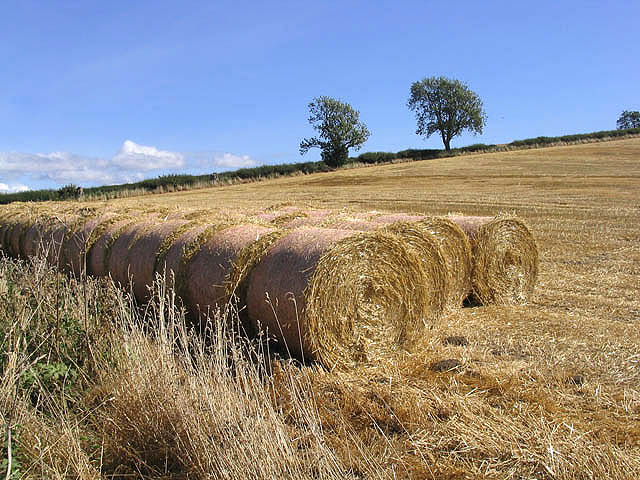
On the night of 31st October — known in older Irish as Oíche Shamhna (Samhain) — farmers would stop harvesting before clearing the field entirely. The last sheaf of grain was always left standing. Depending on the county, it was called the Púca’s share or the luck sheaf. The logic was clear: the spirit had watched over the crop all season and was owed something for the work.
To take everything was to invite consequences. Livestock might be found dead without explanation. Milk might refuse to churn. The following year’s crop might fail entirely. These were not idle fears — they were the practical understanding of people who knew the land could turn against them at any time.
In parts of Munster and Connacht, the same principle extended to blackberries left on the bushes after Samhain. Everyone understood they had been contaminated — touched by the púca’s breath as it moved through the hedgerows in the night. Nobody picked them. You did not eat what belonged to the spirit.
This careful, practical respect for invisible forces runs through much of Irish folk tradition — and the púca sits near the centre of it.
☘️ Enjoying this? 64,000+ Ireland lovers get stories like this every week. Subscribe free →
The Places That Remember
You can trace the púca’s presence through the Irish landscape itself. Poll an Phúca — the Hole of the Púca — is a waterfall on the River Liffey in Wicklow, now dammed to form Poulaphouca Reservoir. Locals once said you could hear the spirit in the roar of the falls before the water was tamed.
Cró Pháca (the Púca’s Enclosure) appears on Wicklow hillsides. In County Down, local folklore names a rock formation “the púca’s bed”. These are not simply colourful names. They mark the places where the presence was felt most clearly — where the ordinary world and something far older shared the same ground.
The Púca Today
The tradition never fully disappeared. Each October, the Púca Festival draws tens of thousands of people to Trim and Athboy in County Meath to celebrate Irish mythology, music, and the older stories of the land. The name is taken seriously. This is not fancy dress or commercial Halloween. It is a public acknowledgement that some things in the Irish countryside still deserve attention.
If you are planning a visit to Ireland in autumn, the festival is worth timing your trip around.
Still Out There
The púca has never quite left. It is there in the old place names, in the November blackberries nobody picks, in the habit some farmers still have of leaving a small corner of the field untouched at harvest time.
Ireland has always had a practical relationship with the unseen. You do not need to believe in the púca to understand what it meant: the land feeds you, and the land has terms. Respect them, and you will be fine.
Ignore them at your own risk.
☘️ You Might Also Love
☘️ Join 64,000+ Ireland Lovers
Every Friday, get Ireland’s hidden gems, local secrets, and travel inspiration — the kind you won’t find in any guidebook.
Free forever · Unsubscribe anytime
Tours & experiences you might love


Powered by Viator. Some links are affiliate links — we may earn a small commission at no extra cost to you.
Secure Your Dream Irish Experience Before It’s Gone!
Planning a trip to Ireland? Don’t let sold-out tours or packed attractions spoil your journey. Iconic experiences like visiting the Cliffs of Moher, exploring the Rock of Cashel, or enjoying a guided walk through Ireland’s ancient past often sell out quickly—especially during peak travel seasons.

Booking in advance guarantees your place and ensures you can fully immerse yourself in the rich culture and breathtaking scenery without stress or disappointment. You’ll also free up time to explore Ireland’s hidden gems and savour those authentic moments that make your trip truly special.
Make the most of your journey—start planning today and secure those must-do experiences before they’re gone!