

Ireland has thirty-two counties, but only one can claim to be the smallest of them all. County Louth, tucked into the north-east corner of Leinster, covers barely 826 square kilometres — yet within that compact frame lies a concentration of history, myth, and beauty that rivals counties many times its size. The locals know it as the Wee County, and they say it with unmistakable pride.
Louth sits on the border between the Republic and Northern Ireland, its eastern edge washed by the Irish Sea. To the north, the Cooley Peninsula pushes out into Carlingford Lough like a muscular arm. To the south, the River Boyne marks the county boundary with Meath. Between those landmarks lie two proud towns — Drogheda and Dundalk — and a landscape that has witnessed some of the most consequential events in Irish history.
How many of Ireland’s 32 counties can you name? ☘️
Counties of Ireland — the geography-quiz tool. Place all 32 on the map and see if you can beat the average.
Carlingford — A Medieval Jewel on the Lough
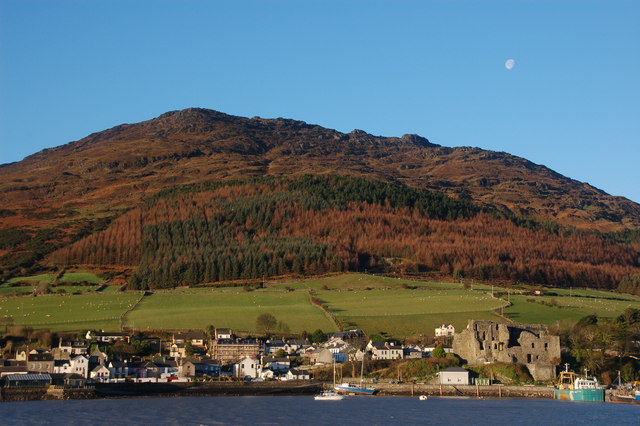
If you visit only one place in County Louth, make it Carlingford. This tiny medieval village, pressed between the slopes of Slieve Foy and the shimmering waters of Carlingford Lough, is one of the most enchanting places in Ireland. Its narrow streets are lined with heritage buildings that span nearly a thousand years: the Mint, a fortified townhouse from the fifteenth century; Taaffe’s Castle, standing guard over the harbour; and above them all, the imposing ruins of King John’s Castle, perched on a rocky outcrop overlooking the lough since the twelfth century.
But Carlingford is no museum piece. It is a living, breathing village with an extraordinary food scene — the lough’s famous oysters are celebrated each August at the Carlingford Oyster Festival, one of Ireland’s longest-running food festivals. The village pubs are warm, the traditional music is excellent, and on a clear evening, watching the sun set over the Mourne Mountains across the water is one of those moments that stays with you long after you have left.
The Cooley Peninsula — Land of the Cattle Raid
The Cooley Peninsula is the wild, mountainous backbone of County Louth, and it carries one of the greatest stories in Irish mythology. This is the landscape of the Tain Bo Cuailnge — the Cattle Raid of Cooley — the great epic of Irish literature in which the warrior hero Cu Chulainn single-handedly defended Ulster against the armies of Queen Medb of Connacht, who sought the legendary Brown Bull of Cooley.
The Tain Trail, a waymarked walking route, takes you through the peninsula’s dramatic scenery — over Slieve Foy (the highest point in the county at 589 metres), along cliff paths with views across Carlingford Lough to the Mournes, and through ancient forests where you can almost hear the clash of bronze-age swords. The landscape is raw and beautiful: gorse-covered hillsides, hidden glens, and rocky coastline where seals bask on the rocks below.
Near the village of Ballymascanlon, you will find the Proleek Dolmen — a remarkable portal tomb whose massive capstone, weighing an estimated 35 tonnes, appears to balance impossibly on three upright stones. Local tradition says that if you can throw a stone onto the capstone and it stays, your wish will come true. The ground around it is littered with optimistic attempts.
Love discovering Ireland’s hidden gems? Join over 64,000 readers who get our favourite Irish stories, stunning photography, and insider travel tips delivered straight to their inbox — completely free.
Monasterboice — Ireland’s Finest High Crosses
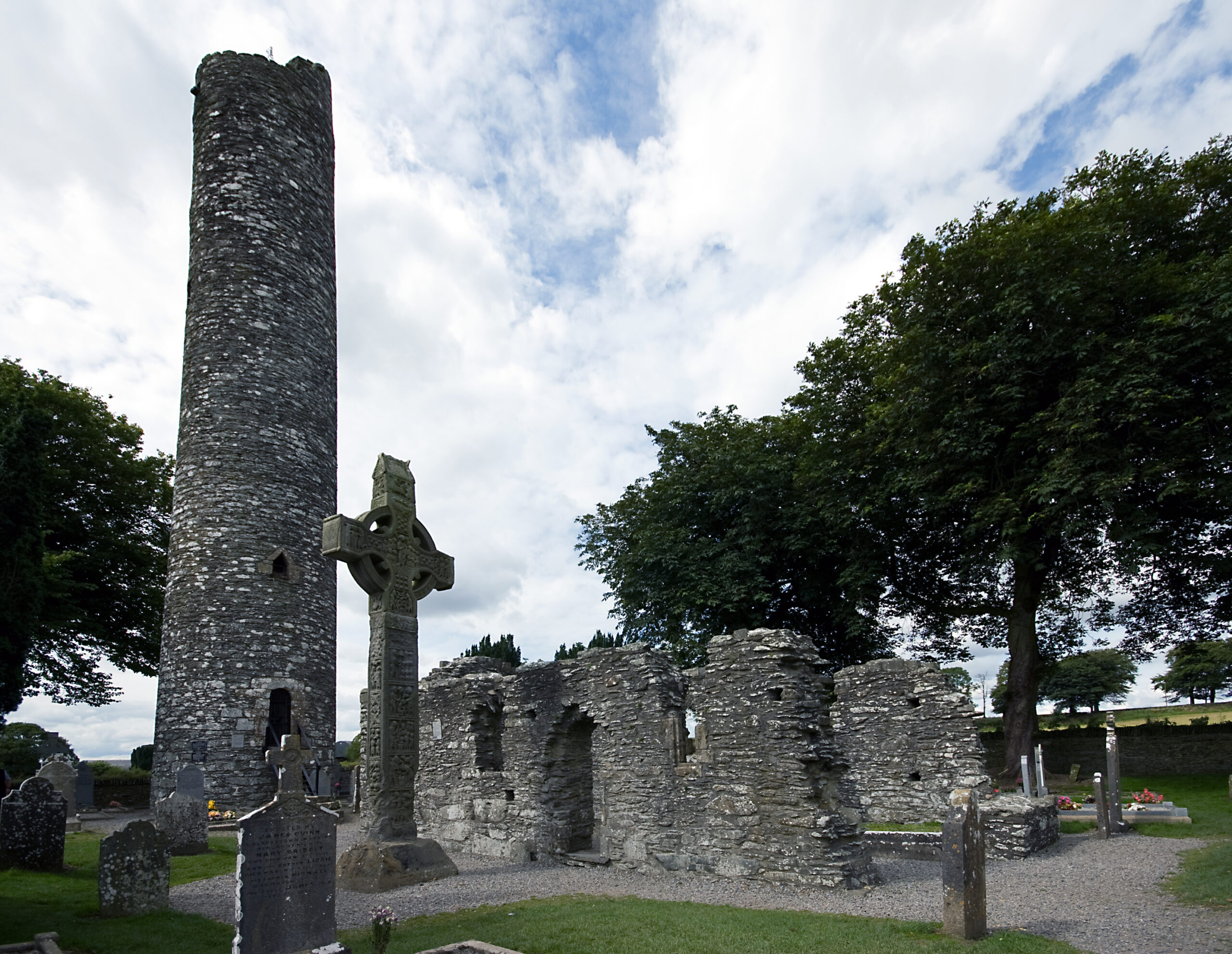
A few miles north of Drogheda, in a quiet churchyard surrounded by farmland, stands one of Ireland’s most important early Christian sites. Monasterboice was founded in the fifth century by Saint Buite, a disciple of Saint Patrick, and though the monastery itself is long gone, what remains is extraordinary.
☘️ Enjoying this? 64,000+ Ireland lovers get stories like this every week. Subscribe free →
The site is home to two of the finest high crosses in Ireland — and arguably in the world. Muiredach’s Cross, standing over five metres tall, is covered with intricate biblical carvings that have survived more than a thousand years of Irish weather: scenes of Adam and Eve, the Last Judgement, David and Goliath, and dozens more, all rendered with astonishing skill. The West Cross, taller still at nearly seven metres, is one of the tallest high crosses ever erected in Ireland. Beside them stands a round tower, its cap long since lost, rising like a stone finger pointing to the heavens.
There is no admission fee, no visitor centre, no turnstile. You simply walk through a gate into a graveyard where twelve centuries of history are laid out before you. It is one of Ireland’s most moving experiences.
Drogheda — A Town of Layers
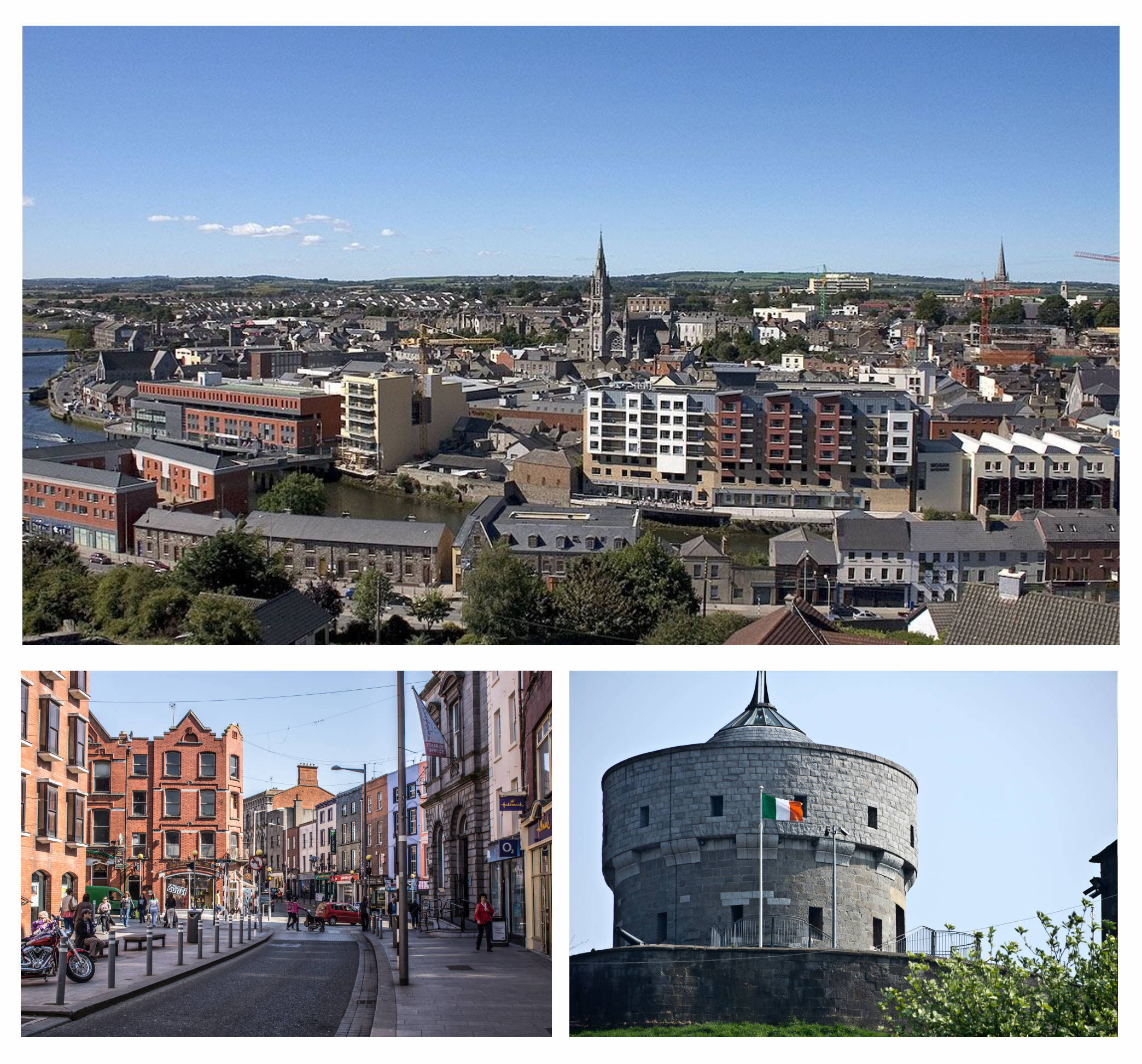
Drogheda is a town that has been at the centre of Irish history for nearly a thousand years. Straddling the River Boyne, it was one of the most important Norman towns in medieval Ireland, and its strategic position made it a prize fought over by armies from the twelfth century onwards. The most notorious chapter came in 1649, when Oliver Cromwell’s forces stormed the town in a siege that left deep scars on Irish memory.
Today, Drogheda is a vibrant, growing town with a rich architectural heritage. St Laurence’s Gate, a magnificent barbican gateway from the thirteenth century, is one of the finest surviving medieval town gates in Ireland. The Millmount complex, a martello tower and former military barracks on a hill overlooking the town, houses an excellent museum telling the story of Drogheda from prehistory to the present. Nearby, St Peter’s Church holds a saint’s relic still on display in Drogheda — the preserved head of St Oliver Plunkett.
And just upstream lies the site of the Battle of the Boyne, where in 1690 the armies of William of Orange and the deposed James II clashed in the engagement that shaped the political destiny of Ireland and Britain for centuries to come. The Boyne Valley is one of the most historically significant landscapes in the whole of these islands.
Dundalk — Gateway to the North
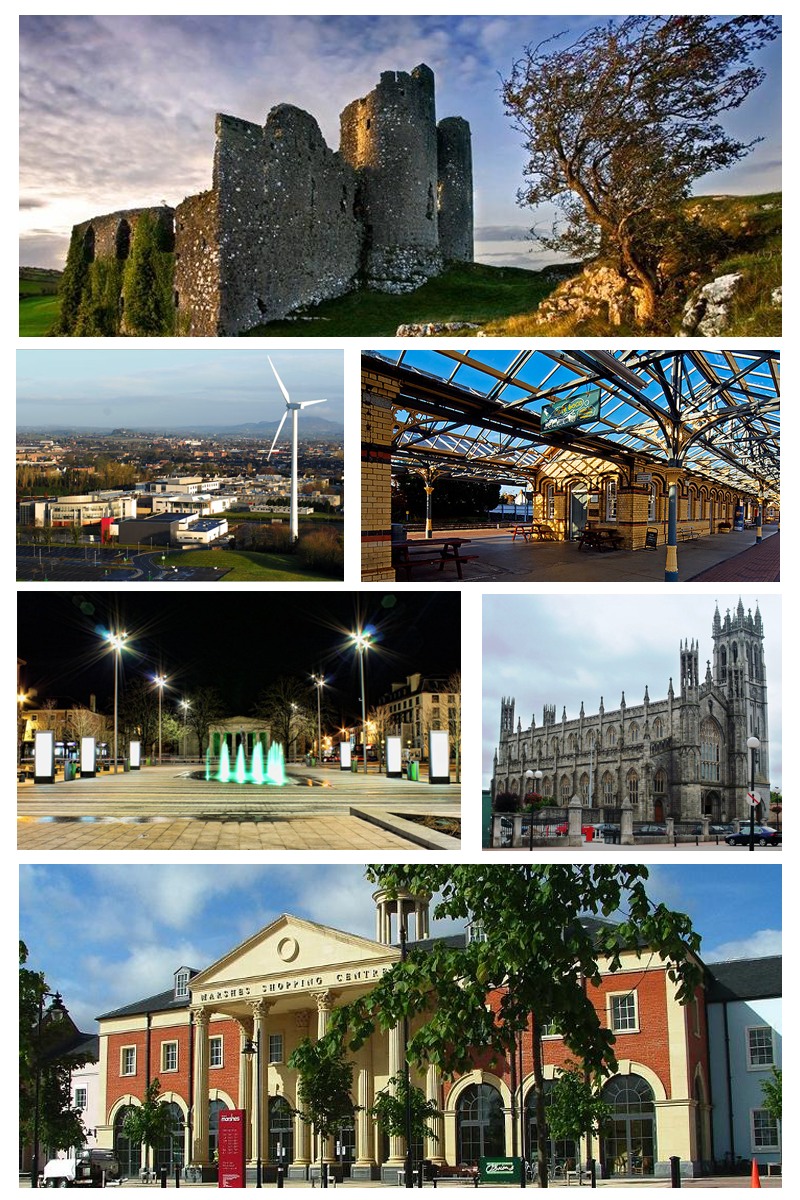
Dundalk, the county town of Louth, sits close to the border with Northern Ireland and has long served as a gateway between north and south.
The town’s heritage includes the striking St Patrick’s Cathedral, modelled on King’s College Chapel in Cambridge, and the impressive County Museum housed in a restored eighteenth-century warehouse. But Dundalk’s greatest asset may be its position: it is the perfect base for exploring the Cooley Peninsula to the east and the rolling drumlin countryside to the west, where quiet lanes wind between small lakes and ancient ring forts.
Small County, Immense Story
County Louth may be the smallest county in Ireland, but it has never let size define it. From the mythic mountains of Cooley to the medieval magic of Carlingford, from the sacred high crosses of Monasterboice to the storied streets of Drogheda, this is a county where every turn in the road reveals another layer of the Irish story. The Wee County has a giant heart — and it is waiting to share it with you. For a full county-wide itinerary of sights, restaurants, and seasonal highlights, see our complete guide to the best things to do in County Louth.
Featured image: Carlingford Harbour, County Louth. Photo by Eric Jones / Geograph (CC BY-SA 2.0)
Never Miss an Irish Story
Join 64,000+ readers who wake up to the best of Ireland every morning. Culture, travel, history — all free.
☘️ You Might Also Love
☘️ Want More Hidden Ireland?
Join 64,000+ subscribers who discover Ireland’s best-kept secrets every week.
Subscribe Free — Join the Community →
Free forever · Unsubscribe anytime · No spam
📥 Free Download: Ireland Travel Planning Guide
Our most popular resource — itineraries, insider tips, and the 50 places you must not miss.
Tours & experiences you might love


Powered by Viator. Some links are affiliate links — we may earn a small commission at no extra cost to you.
Secure Your Dream Irish Experience Before It’s Gone!
Planning a trip to Ireland? Don’t let sold-out tours or packed attractions spoil your journey. Iconic experiences like visiting the Cliffs of Moher, exploring the Rock of Cashel, or enjoying a guided walk through Ireland’s ancient past often sell out quickly—especially during peak travel seasons.

Booking in advance guarantees your place and ensures you can fully immerse yourself in the rich culture and breathtaking scenery without stress or disappointment. You’ll also free up time to explore Ireland’s hidden gems and savour those authentic moments that make your trip truly special.
Make the most of your journey—start planning today and secure those must-do experiences before they’re gone!