

Some counties in Ireland announce themselves with a single image, and for Sligo, that image is unmistakable: the flat-topped, cliff-faced massif of Ben Bulben rising from the green fields like the prow of a great stone ship. It is one of the most recognisable silhouettes in Ireland, and once you have seen it — whether from the road, the beach, or the graveyard at Drumcliffe where W.B. Yeats lies buried beneath it — you will never forget it.
County Sligo sits on Ireland’s north-west Atlantic coast, in the province of Connacht. It is a county of extraordinary contrasts: wild surf beaches and calm inland lakes, prehistoric tombs older than the pyramids and a vibrant contemporary arts scene, brooding mountains and gentle river valleys. The Irish name, Sligeach, means “abounding in shells,” and the county’s long coastline has been drawing people to its shores for thousands of years.
How many of Ireland’s 32 counties can you name? ☘️
Counties of Ireland — the geography-quiz tool. Place all 32 on the map and see if you can beat the average.
Ben Bulben — Ireland’s Table Mountain
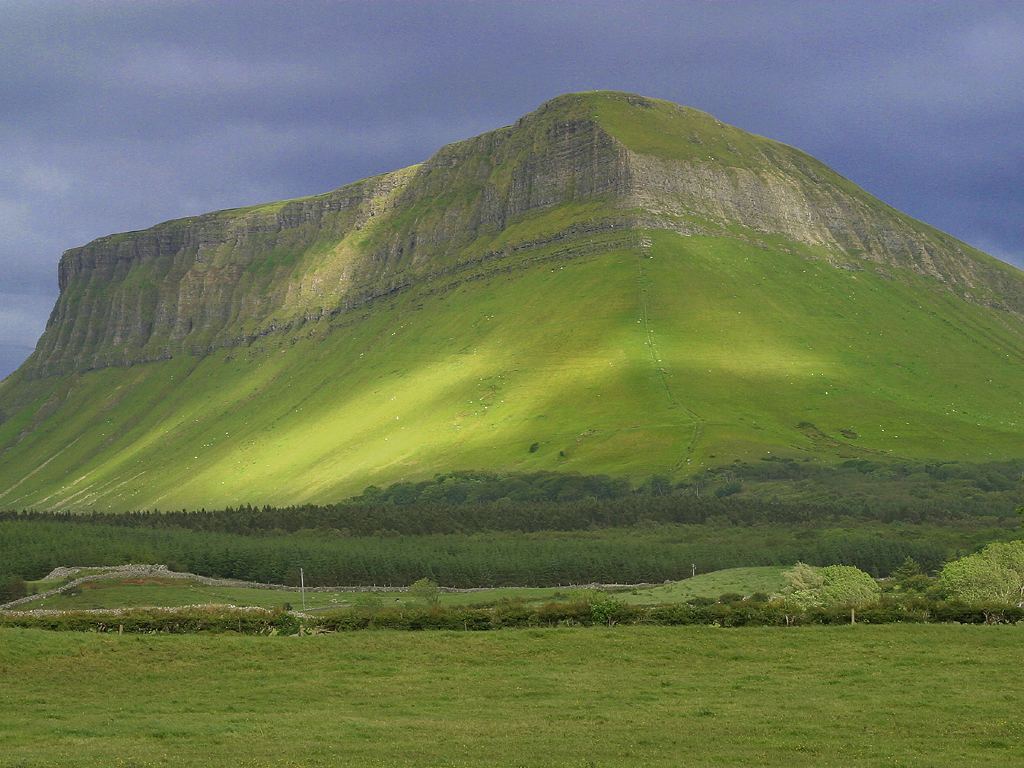
Ben Bulben dominates the Sligo skyline like no other landmark in the county. Rising to 526 metres, this extraordinary flat-topped mountain was carved by glaciers during the last Ice Age, leaving sheer limestone cliffs on its northern face and a dramatic stepped profile that has inspired artists, poets, and walkers for centuries.
The mountain is steeped in mythology. In Irish legend, it was on the slopes of Ben Bulben that the great warrior Diarmuid met his death, gored by an enchanted boar in the tale of Diarmuid and Grainne — one of the most passionate love stories in Irish folklore. Today, walkers tackle the mountain from several routes, the most popular ascending from the south side through farmland before reaching the extraordinary plateau summit with its views across Donegal Bay and the Dartry Mountains.
Yeats Country — Where Poetry Became Landscape
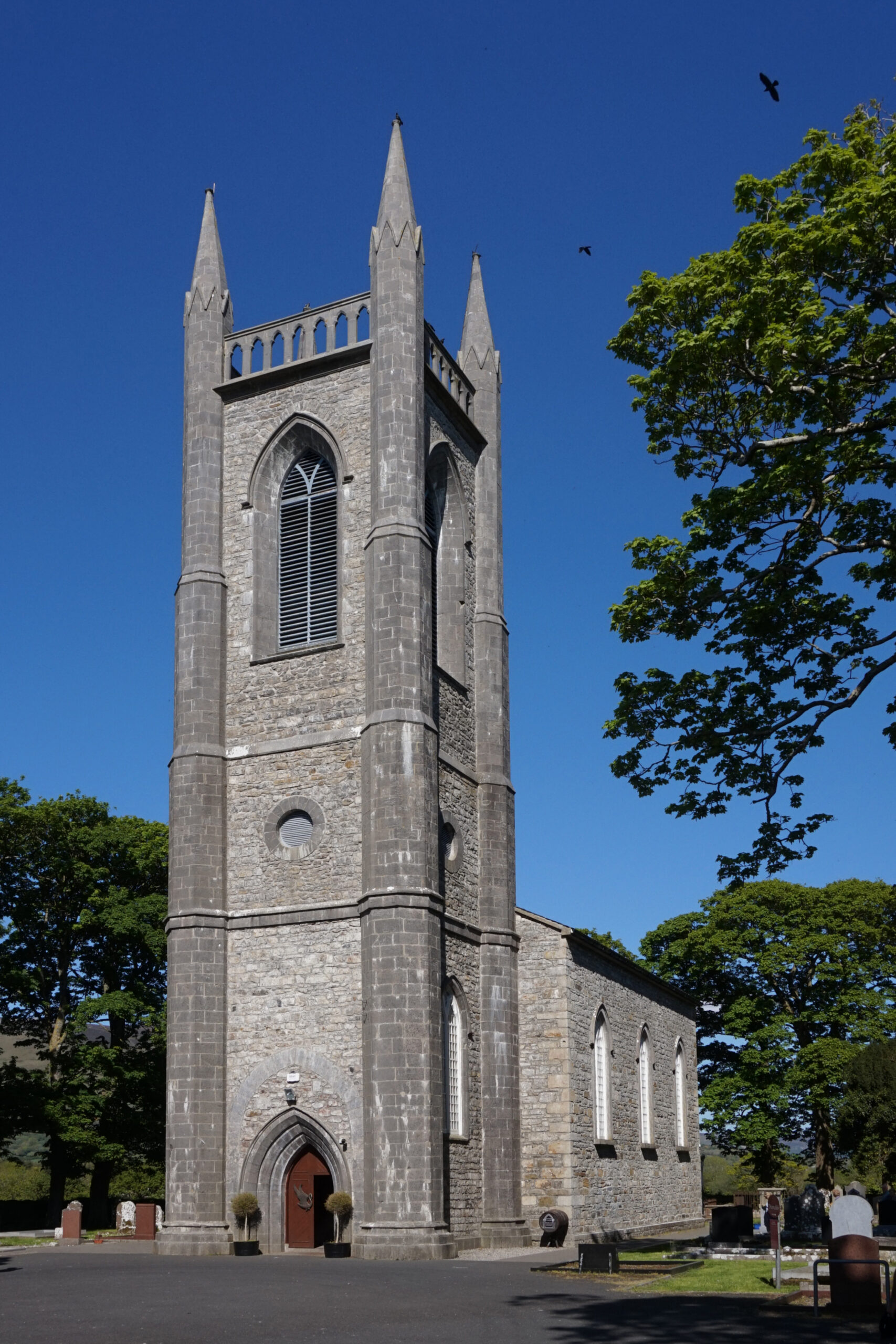
No county in Ireland is more closely associated with a single literary figure than Sligo is with William Butler Yeats. The Nobel Prize-winning poet spent much of his childhood here, and the landscapes of Sligo — its lakes, mountains, and ancient sites — became the living canvas of his greatest work.
Yeats is buried at Drumcliffe churchyard, beneath bare Ben Bulben’s head, as he requested. His epitaph, carved in stone, bears the famous words he composed himself: “Cast a cold eye / On life, on death. / Horseman, pass by!” The small Protestant church, with its ancient high cross and round tower stump, is one of the most visited literary pilgrimage sites in the world.
But Yeats Country extends far beyond Drumcliffe. Lough Gill, the beautiful lake that straddles the Sligo-Leitrim border, contains the tiny Innisfree island that inspired “The Lake Isle of Innisfree” — arguably the most famous poem ever written about Ireland. You can see the island from the shore road, or take a boat trip across the lake to get closer to “the bee-loud glade.”
Love discovering Ireland’s hidden gems? Join over 64,000 readers who get our favourite Irish stories, stunning photography, and insider travel tips delivered straight to their inbox — completely free.
Strandhill — Ireland’s Surfing Capital
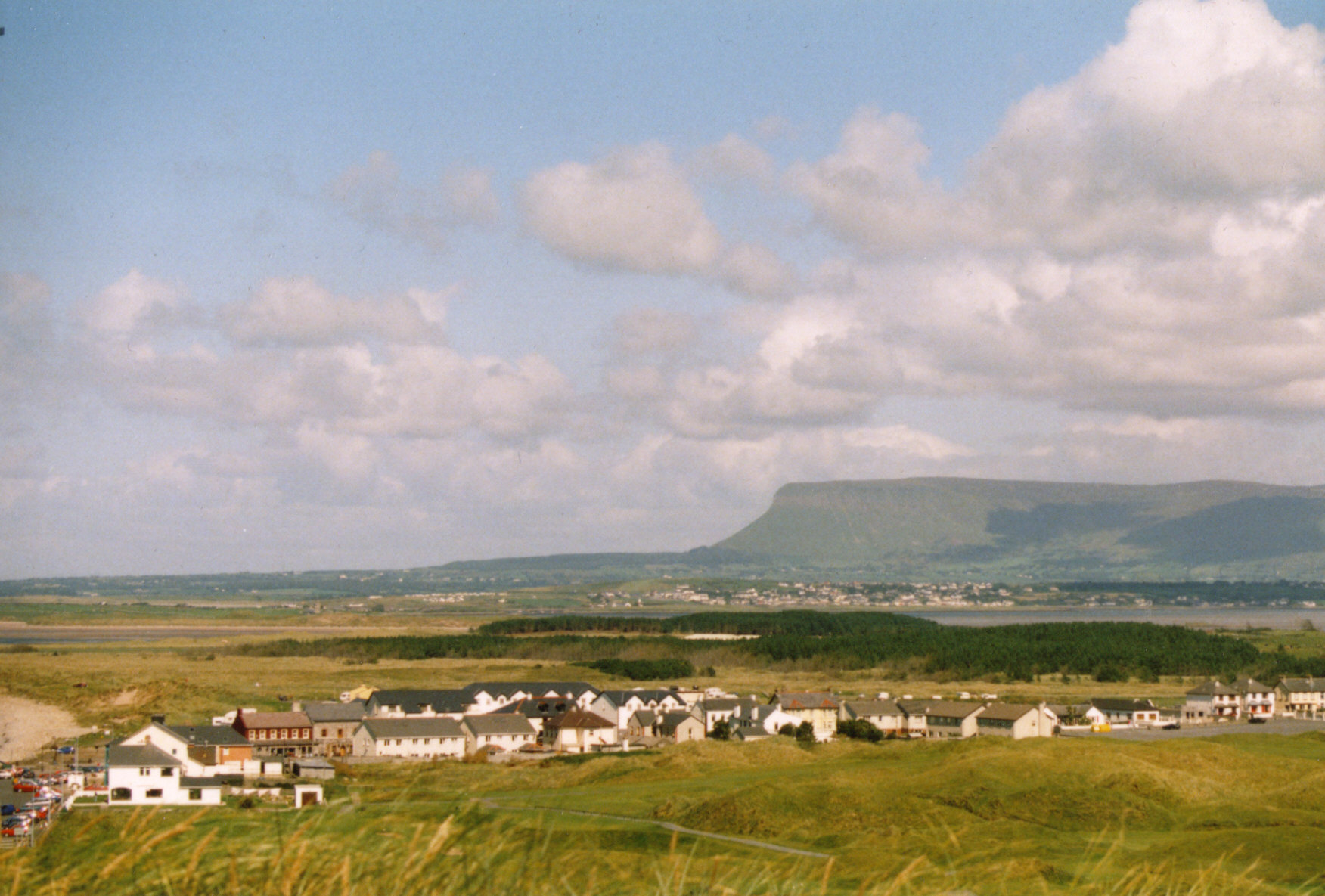
If Ben Bulben is Sligo’s soul, then Strandhill is its heartbeat. This small seaside village on the Atlantic coast has become synonymous with surfing in Ireland. The beach break at Strandhill produces consistent, powerful waves that attract surfers from across Europe, and the village itself has transformed into a vibrant hub of cafes, restaurants, and surf schools.
☘️ Enjoying this? 64,000+ Ireland lovers get stories like this every week. Subscribe free →
But Strandhill is far more than surf. The seaweed baths here are legendary — hot saltwater and hand-harvested seaweed in old-fashioned Victorian-style tubs, an experience that is both deeply relaxing and uniquely Irish. The village hosts a thriving food scene, with the Strandhill People’s Market every Sunday drawing crowds for artisan produce, street food, and live music.
The beach itself is spectacular, a long sweep of sand backed by dunes with Knocknarea mountain rising to the south and the Ox Mountains stretching inland. Swimming is not recommended here — the Atlantic currents are fierce — but for walking, surfing, and simply watching the waves roll in, Strandhill is hard to beat.
Knocknarea — Queen Maeve’s Cairn
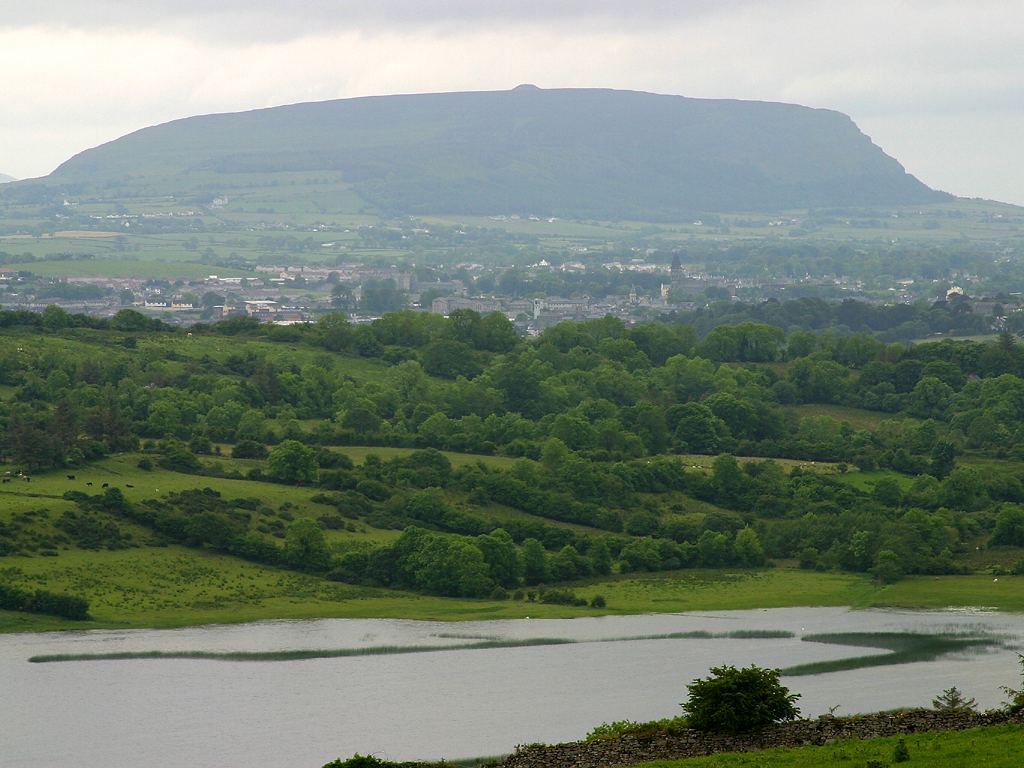
Overlooking Strandhill and the entire Sligo coastline stands Knocknarea, a limestone hill crowned by one of the most impressive unexcavated cairns in Europe. Miosgan Medhbha — Queen Maeve’s Cairn — is a massive stone mound some 55 metres in diameter and 10 metres high, dating to approximately 3000 BC. Tradition holds that the legendary warrior queen of Connacht, Meabh (Maeve), is buried here standing upright in full armour, facing her enemies in Ulster.
The walk to the summit of Knocknarea takes about 45 minutes from the car park and rewards you with one of the finest panoramic views in the west of Ireland. On a clear day, you can see Ben Bulben to the north, the Ox Mountains to the south, Coney Island in Sligo Bay, and the distant blue mountains of Donegal. It is customary to carry a stone to the top and add it to the cairn — a tradition that has endured for centuries.
Sligo Town — Culture, Music, and the Garavogue
Sligo town itself is an underrated gem. Straddling the Garavogue River between Lough Gill and the sea, it is a lively, walkable town with a rich cultural life that belies its modest size. The Model, Sligo’s contemporary arts centre, houses the Niland Collection — one of the finest collections of modern Irish art outside Dublin, including major works by Jack B. Yeats, brother of the poet.
Traditional music thrives in Sligo. The county has its own distinctive fiddle style — the Sligo style — characterised by ornamentation and rhythmic drive, and the influence of Michael Coleman, the Sligo-born fiddler who revolutionised Irish music through his recordings in 1920s New York, is still felt in every session. Pubs like Shoot the Crows and Hargadon’s are essential stops for anyone who loves the sound of Irish music played well.
Sligo Abbey, founded in 1253 by the Dominicans, is the only medieval building still standing in the town centre. Despite being sacked and burned several times, the abbey retains remarkable carvings, a beautifully preserved cloister, and an altar sculpture that is considered one of the finest examples of medieval stone carving in Ireland.
Beyond the Headlines — Sligo’s Hidden Treasures
Sligo’s wonders do not end with its famous landmarks. Mullaghmore, a tiny village on the coast north of Ben Bulben, has a harbour, a stunning beach, and the fairy-tale turrets of Classiebawn Castle perched on the headland. The coastline here is world-class for big-wave surfing, with Prowlers — an offshore reef break — drawing the most fearless surfers on the planet when winter swells arrive.
Carrowmore, on the outskirts of Sligo town, is one of the largest and oldest megalithic cemeteries in Europe, with over 60 tombs dating back more than 5,000 years. Walking among these ancient stone circles and passage tombs, with Knocknarea watching over you from across the valley, is a profoundly moving experience.
Rosses Point, where Yeats spent his summers, offers two beautiful beaches, a championship golf links, and views across to Coney Island and the Metal Man — a cast-iron sailor on a pillar who has guided ships into Sligo Bay since 1822.
The Spirit of Sligo
Sligo is not the biggest county in Ireland, nor the most visited. But those who come here invariably fall under its spell. There is something in the quality of the light, the way the mountains meet the sea, the sound of a fiddle playing the “Sligo Maid” in a crowded pub, or the silence of standing alone on Knocknarea at sunset, that gets under your skin and does not let go.
Yeats understood it. He wrote about Sligo’s landscapes with such intensity that his poetry became inseparable from the county itself. When he asked to be buried “under bare Ben Bulben’s head,” he was choosing to lie for eternity in the place that had given him everything — his imagination, his mythology, and his art.
County Sligo gives generously to those who take the time to know it. Come for Ben Bulben. Stay for the surf, the sessions, and the sunsets. Leave knowing that a small county on Ireland’s Atlantic edge can hold an entire world within its borders.
Never Miss an Irish Story
Join 64,000+ readers who wake up to the best of Ireland every morning. Culture, travel, history — all free.
This is part 15 of our 32 Counties series — a journey through every county in Ireland. Previously: Kerry | Cork | Galway | Clare | Donegal | Wicklow | Wexford | Waterford | Limerick | Tipperary | Kilkenny | Meath | Dublin | Mayo
☘️ You Might Also Love
☘️ Want More Hidden Ireland?
Join 64,000+ subscribers who discover Ireland’s best-kept secrets every week.
Subscribe Free — Join the Community →
Free forever · Unsubscribe anytime · No spam
📥 Free Download: Ireland Travel Planning Guide
Our most popular resource — itineraries, insider tips, and the 50 places you must not miss.
Tours & experiences you might love


Powered by Viator. Some links are affiliate links — we may earn a small commission at no extra cost to you.
Secure Your Dream Irish Experience Before It’s Gone!
Planning a trip to Ireland? Don’t let sold-out tours or packed attractions spoil your journey. Iconic experiences like visiting the Cliffs of Moher, exploring the Rock of Cashel, or enjoying a guided walk through Ireland’s ancient past often sell out quickly—especially during peak travel seasons.

Booking in advance guarantees your place and ensures you can fully immerse yourself in the rich culture and breathtaking scenery without stress or disappointment. You’ll also free up time to explore Ireland’s hidden gems and savour those authentic moments that make your trip truly special.
Make the most of your journey—start planning today and secure those must-do experiences before they’re gone!