

Scattered across the lakes and loughs of Ireland, there are small islands that don’t appear on any map. They weren’t formed by geology. They were built by hand — patiently, deliberately, and for a very good reason.

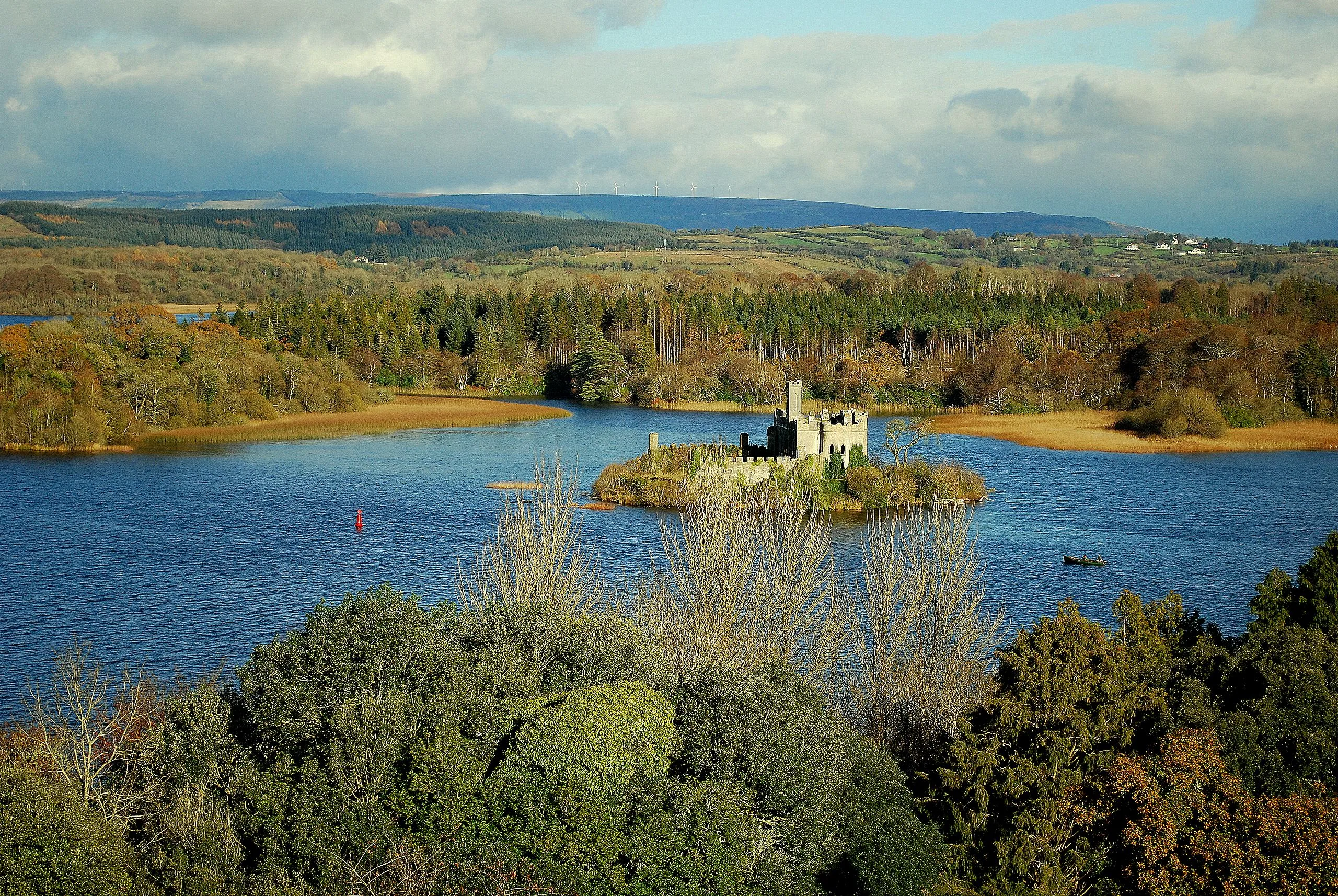
Built to Last, Built to Hide
For thousands of years, Irish families built artificial islands in the middle of their local lakes. These structures, known as crannógs, are one of the most remarkable feats of ancient engineering in Irish history.
Wooden stakes driven into the lake bed, topped with layers of peat, brush, stones, and compacted clay — all held together by hand and expanded over generations. The word crannóg itself comes from the Old Irish crann, meaning tree or timber.
Archaeologists have identified more than 1,200 crannógs across Ireland and Scotland. Some were built as far back as 4,000 years ago. Others were still occupied as late as the seventeenth century — which means they span more human history than the pyramids of Egypt have stood.
Why Would Anyone Build a Home on a Lake?
The answer is protection. Ireland’s early history was a constant churn of rival kingdoms, cattle raids, and territorial disputes. A family living on a crannóg had one enormous advantage: a moat that never ran dry.
A single wooden causeway — removable at a moment’s notice — was all that connected the island to shore. Approaching enemies had to swim or find a boat. Defenders simply pulled up the bridge and waited.
The water also provided food: fish, waterfowl, reeds for thatching. Neighbouring farms remained close enough to trade with, yet far enough that danger had to swim first. Life on the crannóg wasn’t about isolation. It was about security entirely on one’s own terms.
What Life Actually Looked Like
The typical crannóg island was small — perhaps 20 to 30 metres across. Families lived in circular wooden houses, their walls woven from wattle and daub, their roofs thatched with reed or straw. Animals were sometimes kept in smaller enclosures built onto the platform’s edge.
Evidence recovered from excavations paints a vivid domestic picture: butter preserved in bog conditions for decades, iron tools and glass beads, finely worked leather shoes, the bones of cattle and pigs. These weren’t people living in desperate hiding. They were farming, trading across the water, raising children, and growing old in homes their grandparents had built.
One excavation at Ballinderry Crannóg in County Westmeath unearthed a decorated wooden gaming board — a beautiful piece of craftsmanship that tells you everything about what people valued. They weren’t simply surviving. They were living well.
The Discovery That Rewrote the Timeline
In 1999, a crannóg was discovered at Lough Boora in County Offaly that dated back more than 7,000 years — placing it in the Mesolithic period, and making it one of the oldest known human settlements in Ireland.
Archaeologists uncovered fish traps, worked timber, and evidence of a community quietly living on an Irish lake long before farming had arrived in Ireland, long before bronze or iron, long before any structure we might call a monument. Just people, water, and wood.
It reframed the entire story of early Ireland. The lake island wasn’t a later innovation born of conflict. It was, for some communities, simply the first and most natural way to live.
They Are Still There
Many crannógs have been absorbed into the surrounding land as lake levels dropped over the centuries. Others remain as small, tree-covered mounds sitting just offshore — easy to miss entirely, extraordinary once you know what you’re seeing.
Ireland’s loughs hold some of the most remarkable hidden heritage in Europe, and crannógs are woven through nearly all of them. If you drive along the shore of any sizeable Irish lake and spot a small wooded island sitting just a little too perfectly in the water, it might not be natural at all.
Experimental archaeologists have rebuilt a full crannóg at Craggaunowen in County Clare, where visitors can step inside a reconstructed Iron Age lake dwelling. It’s a rare thing — an ancient structure you can walk into, touch the walls of, and feel exactly how sheltered the water made you.
The same lake tradition that shaped crannóg life also fed centuries of mythology. Every swan on an Irish lake carries a legend, and that’s no accident — for millennia, those lakes were where people lived and loved and kept their secrets.
Somewhere beneath the trees of a quiet lough island, if you know what to look for, there may still be the timbers of a house where a family once pulled up their bridge and listened to the water all night. Protected. Rooted. Entirely their own.
That instinct — to build something lasting in a complicated world, surrounded by water, on terms that could not be taken from you — is as Irish as anything carved in stone.
Love Ireland? So do 65,000 of us.
Join the Love Ireland newsletter — free stories of Irish heritage, hidden gems, and the magic of the Emerald Isle delivered to your inbox.
☘️ Want More Hidden Ireland?
Join 64,000+ subscribers who discover Ireland’s best-kept secrets every week.
Subscribe Free — Join the Community →
Free forever · Unsubscribe anytime · No spam
📥 Free Download: Ireland Travel Planning Guide
Our most popular resource — itineraries, insider tips, and the 50 places you must not miss.
Tours & experiences you might love


Powered by Viator. Some links are affiliate links — we may earn a small commission at no extra cost to you.
Secure Your Dream Irish Experience Before It’s Gone!
Planning a trip to Ireland? Don’t let sold-out tours or packed attractions spoil your journey. Iconic experiences like visiting the Cliffs of Moher, exploring the Rock of Cashel, or enjoying a guided walk through Ireland’s ancient past often sell out quickly—especially during peak travel seasons.

Booking in advance guarantees your place and ensures you can fully immerse yourself in the rich culture and breathtaking scenery without stress or disappointment. You’ll also free up time to explore Ireland’s hidden gems and savour those authentic moments that make your trip truly special.
Make the most of your journey—start planning today and secure those must-do experiences before they’re gone!