

If you have ever watched a pair of white swans gliding across a still Irish lake at dusk, you may have felt something you couldn’t quite name — a flicker of recognition, a sadness that doesn’t quite belong to you. According to one of the oldest and most beloved legends in Irish mythology, that feeling has a name. It is the memory of four children who were never allowed to come home.
The Family That Was Torn Apart
Long before Christianity came to Ireland, when the divine race known as the Tuatha Dé Danann still walked the land, there lived a king called Lir. He had four children — a daughter named Fionnuala and three sons, Aodh, Fiachra, and Conn — and he loved them with a ferocity that lit up his great hall in every season.
When their mother died, Lir’s grief was immense. He eventually remarried a woman called Aoife, a druidess of great power. But power, as it so often does, brought its own kind of darkness. Aoife watched the depth of Lir’s love for his children and felt something cold take root inside her.
She could not destroy that love. So she decided to remove the children instead.
The Curse at the Water’s Edge
One morning, Aoife led the four children to the shores of Loch Dairbhreach — Lake Derravaragh in what is now County Westmeath — under the pretence of bathing. As they waded into the clear water, she raised her druidic wand and cast a spell that the world could not undo.
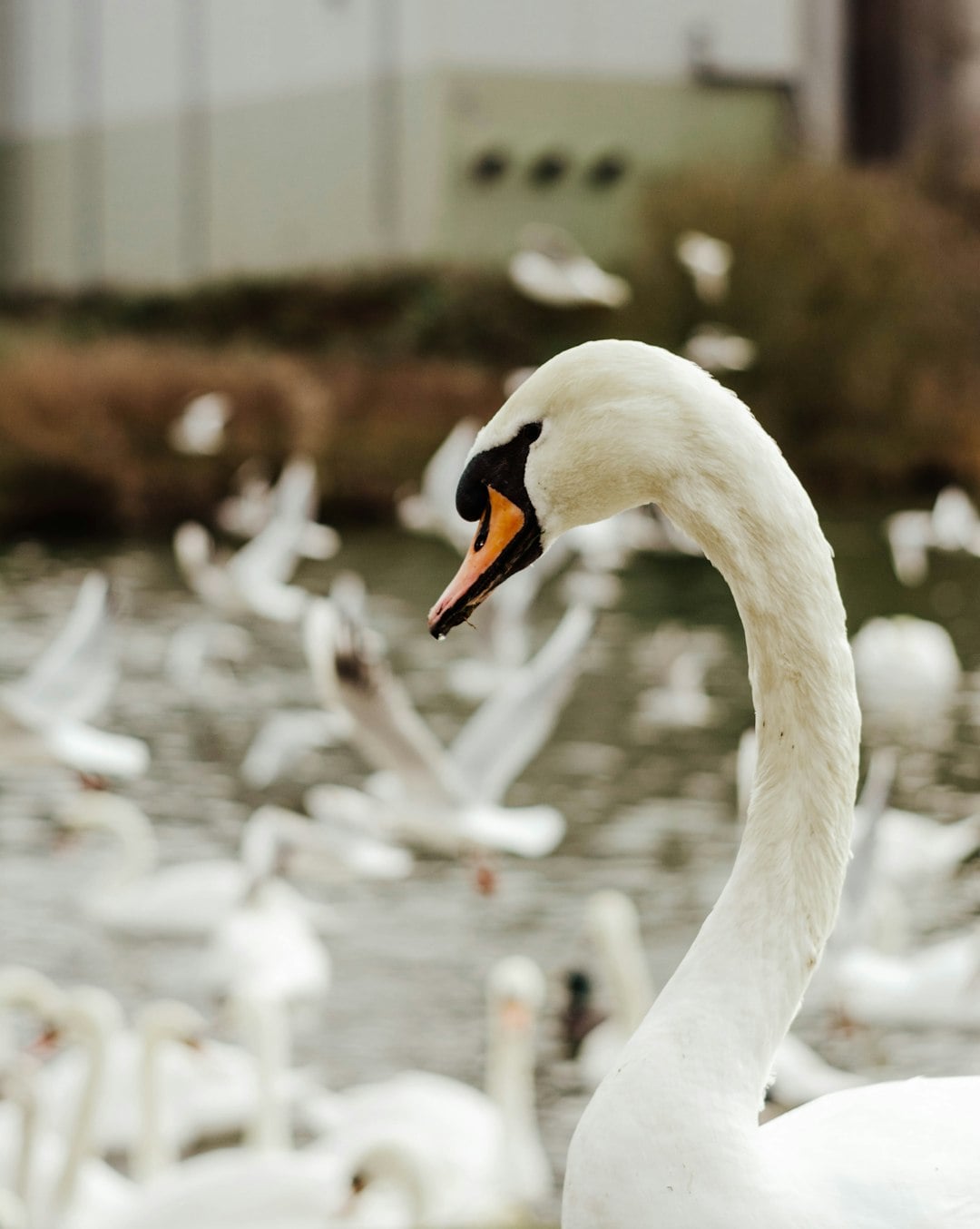
The four children became swans.
Fionnuala, the eldest, immediately understood what had happened. She begged Aoife to end the enchantment. Aoife refused — but even she could not silence the children’s voices, which remained human and hauntingly beautiful. The four swans would spend three hundred years on this lake, three hundred on the wild Straits of Moyle between Ireland and Scotland, and three hundred on the storm-lashed waters off the west coast of Mayo.
Nine hundred years. When it was over, they would hear the sound of a bell — and only then would they be free.
Three Lakes, Nine Hundred Years
The first three centuries were the kindest. On Loch Dairbhreach, the people of Ireland could still visit the swans, listen to their singing, and grieve with them. Their father Lir spent the rest of his days walking its shores, refusing to leave.
The second three centuries on the Straits of Moyle were brutal. Fierce Atlantic storms battered the swans, separating them for long stretches. Fionnuala, the eldest sister, would gather her three brothers beneath her wings to warm them when the frost came, sheltering them as their mother never could.
The final centuries on the Isle of Inishglora off the coast of Mayo were the loneliest of all — far from any shore, far from any memory of the world they had known. They sang to the waves and the waves gave nothing back.
Their songs were said to be so beautiful that anyone who heard them forgot all sorrow for a time. But the swans themselves never forgot.
The Bell That Ended the Curse
When nine hundred years had finally passed, a monk built a small church on the shores near Inishglora. One morning, the four swans heard the peal of his bell ringing out across the water — clear and pure — and the spell began to break.
They came ashore as human beings again. But centuries had not been gentle. They were ancient, frail, and white-haired — all the years they had been denied catching up with them at once. The monk baptised them before they died, and they were buried together in a single grave, Fionnuala with her arms stretched out around her three brothers, just as she had sheltered them through those frozen nights on the Straits of Moyle.
Why the Story Still Matters
The Children of Lir is one of the Three Sorrows of Irish Storytelling — the trio of legendary tragedies considered the most devastating in the entire Irish mythological tradition. It has been retold in song, poem, sculpture, and dance for over a thousand years.
You will find the four swans immortalised in bronze at the Garden of Remembrance in Dublin, where they represent the souls of those who gave their lives for Irish freedom. The image was chosen deliberately — not for its sadness alone, but for what follows it: transformation, endurance, and the impossible wait that ends in something new.
Ireland is full of stories that carry grief inside them without collapsing under its weight. This is one of them. And if you want to understand something essential about the Irish spirit — that capacity to endure, to sing through the cold, to hold one another through the long dark — the Children of Lir will tell you everything.
If you want to explore Ireland’s rich mythology further, the fairy beliefs that shaped everyday Irish life are just as extraordinary. And the ancient fairy forts that still dot the Irish landscape show how seriously this world of legend has always been taken. When you are ready to plan your own journey through this storied island, our Ireland travel planning guide is the perfect place to start.
Some legends do not fade with time. They settle deeper into the land, into the water, into the particular quality of light on an Irish lake at dusk. The Children of Lir are still out there — if you know how to look.
☘️ You Might Also Love
64,000 Ireland lovers can’t be wrong.
Every week, our free newsletter delivers hidden gems, seasonal guides, local stories, and practical travel tips — straight to your inbox. Join the community that loves Ireland as much as you do.
☘️ Want More Hidden Ireland?
Join 64,000+ subscribers who discover Ireland’s best-kept secrets every week.
Subscribe Free — Join the Community →
Free forever · Unsubscribe anytime · No spam
📥 Free Download: Ireland Travel Planning Guide
Our most popular resource — itineraries, insider tips, and the 50 places you must not miss.
Tours & experiences you might love


Powered by Viator. Some links are affiliate links — we may earn a small commission at no extra cost to you.
Secure Your Dream Irish Experience Before It’s Gone!
Planning a trip to Ireland? Don’t let sold-out tours or packed attractions spoil your journey. Iconic experiences like visiting the Cliffs of Moher, exploring the Rock of Cashel, or enjoying a guided walk through Ireland’s ancient past often sell out quickly—especially during peak travel seasons.

Booking in advance guarantees your place and ensures you can fully immerse yourself in the rich culture and breathtaking scenery without stress or disappointment. You’ll also free up time to explore Ireland’s hidden gems and savour those authentic moments that make your trip truly special.
Make the most of your journey—start planning today and secure those must-do experiences before they’re gone!