

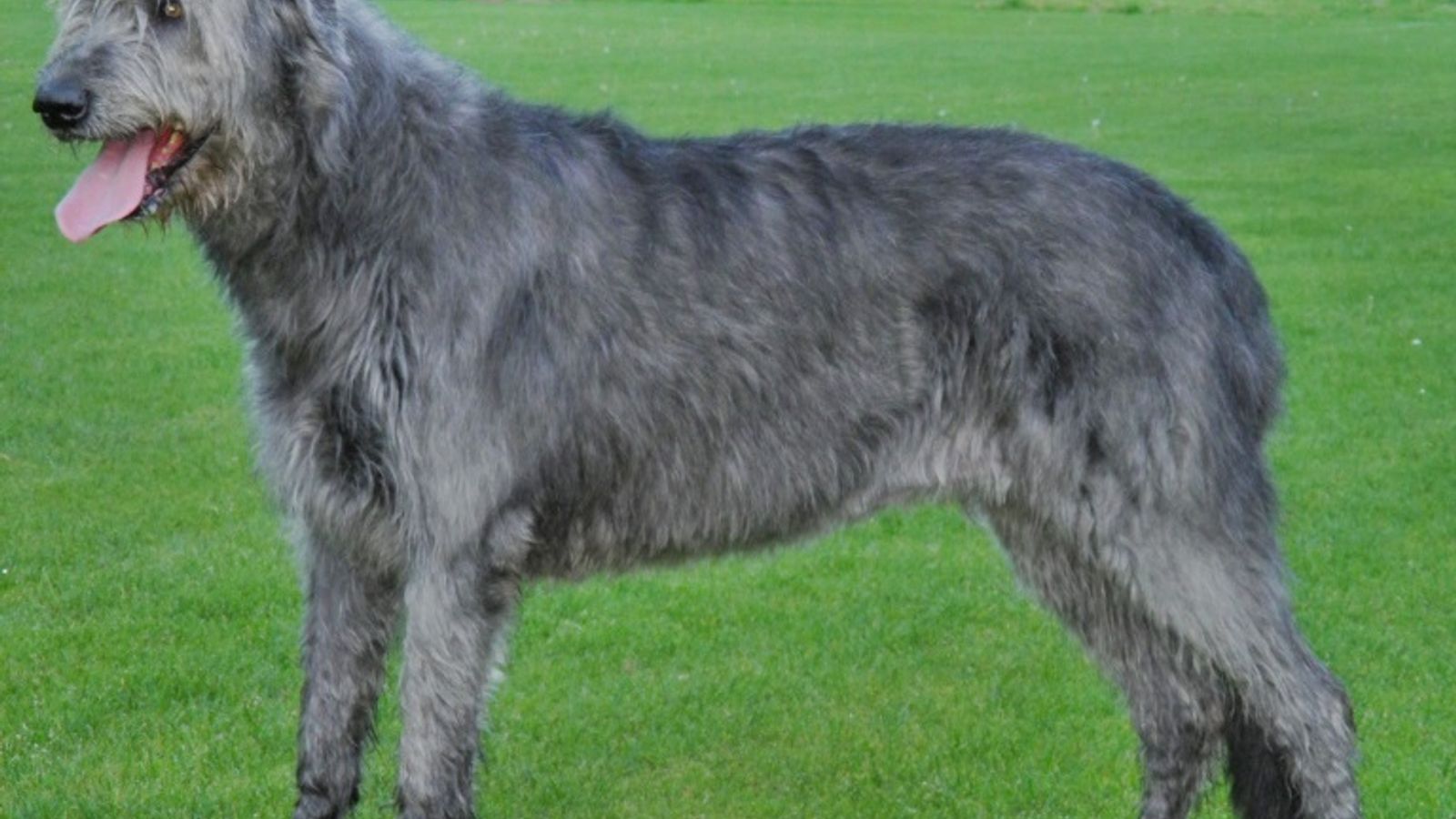
When the Roman Emperor’s envoy received seven Irish hounds in 391 AD, he wrote home saying that all of Rome had been struck dumb with astonishment. Nothing quite like them had ever been seen before — creatures from the very edge of the known world that looked, to Roman eyes, like something between a wolf and a force of nature.
The Irish Wolfhound was never just a dog. It was a declaration of power, a symbol of honour, and — under ancient Irish law — one of the most protected and prized creatures in the land.
A Creature with Legal Rights
In ancient Ireland, everything had its price — and the Brehon Laws, the remarkably sophisticated legal code that governed Irish society for over a thousand years, made no exception for the wolfhound.
Under these laws, the cú — the great hound — was ranked among the most valuable possessions a person could own. Killing or injuring an Irish Wolfhound without just cause carried significant legal penalties, comparable to harming a horse or destroying a craftsman’s tools.
Only kings, nobles, and poets — the filí — were permitted to keep them. A chieftain’s standing in his community could be measured, in part, by the quality of the hounds at his side. To arrive at a gathering without a fine hound was to arrive diminished.
You can read more about these remarkable ancient laws in this piece on the Brehon Laws that shaped early Irish society.
The Highest Gift a King Could Give
To present someone with an Irish Wolfhound was no casual gesture. It was, in the language of the time, the most serious of compliments.
When an Irish chieftain gave one of these hounds to a foreign ruler, he was offering something close to sacred. They were sent to kings in Scotland, Wales, England, and across Europe — gifts of peace, of alliance, or of supreme respect between powers.
In the 16th century, Irish wolfhounds were dispatched to the courts of Spain and France. One such gift to a French nobleman reportedly caused a sensation at court, where no one had encountered a dog of such extraordinary stature and bearing.
Consider what was being offered: a creature that could bring down a full-grown wolf, run with breathtaking speed across open moorland, and stand taller than any other breed on earth. This was not a pet. It was a living testament to Irish mastery of the natural world.
The Hound in Myth and Legend
The wolfhound is threaded through the oldest stories in Irish mythology — present at the great feasts, the battles, and the moments that shaped the Irish imagination.
Cú Chulainn — Ireland’s greatest mythological hero — earned his very name, meaning “the hound of Culann,” when as a boy he killed the fierce guard dog of the smith Culann, and pledged to take the animal’s place himself until a replacement could be trained. Even in death, the great hound left a mark that shaped a legend.
The warrior Fionn Mac Cumhaill kept a famous wolfhound named Bran, said to be part-fairy — a creature that moved between two worlds. In every tale, the Irish hound is always loyal, always fierce, and always impossible to replace.
There is an old Irish saying: ar scáth a chéile a mhaireann na daoine — people live in one another’s shelter. The wolfhound, it seems, was Ireland’s most loyal and ancient expression of that idea.
The Long Walk Towards Extinction
By the mid-19th century, the Irish Wolfhound had almost vanished from the earth entirely.
Centuries of war, famine, and the systematic erosion of Irish cultural life had taken their toll. The great wolf population of Ireland — the animal these hounds were bred to pursue across bog and mountain — had been hunted to extinction. Without wolves, the purpose of the wolfhound disappeared. The breed faded almost to nothing.
By the 1860s, fewer than a handful of genuine Irish Wolfhounds could be found anywhere on the island.
One man refused to accept that loss. Captain George Graham, a British Army officer with a deep passion for Irish heritage, spent nearly two decades tracking down the last surviving bloodlines. He crossed them carefully with Scottish Deerhounds, Great Danes, and other giant breeds, working with painstaking patience to recreate the ancient hound as faithfully as he could. His extraordinary dedication over twenty years saved the breed from the edge of extinction. Without Graham, there would be no Irish Wolfhound today.
Where the Wolfhound Lives Today
The Irish Wolfhound is once again a living, breathing piece of Irish identity.
The breed serves today as the regimental mascot of the Irish Guards in the British Army — a tradition honouring the ancient bond between these hounds and the highest levels of power. Dedicated breeders across Connacht, Munster, and Leinster take enormous pride in keeping the bloodline as true as possible to Graham’s careful standards.
They are still, as they always have been, the tallest breed of dog in the world — gentle giants with an unhurried, dignified bearing that feels almost aristocratic. Despite their enormous size, they are known for extraordinary gentleness and a calm that seems, at times, almost meditative.
If you visit Ireland and have the opportunity to meet one — at a heritage event, a country estate, or a show — take a moment. You can even meet the historic wolfhounds still kept at Ashford Estate. You are standing beside one of the oldest living symbols of the island itself: a creature that astonished Roman emperors, honoured kings, and very nearly vanished from the world before one man’s stubborn love brought it back.
Planning a visit to Ireland and hoping to discover more of her hidden heritage? Start with our complete Ireland travel planning guide — everything you need to make your trip unforgettable.
☘️ Want More Hidden Ireland?
Join 64,000+ subscribers who discover Ireland’s best-kept secrets every week.
Subscribe Free — Join the Community →
Free forever · Unsubscribe anytime · No spam
📥 Free Download: Ireland Travel Planning Guide
Our most popular resource — itineraries, insider tips, and the 50 places you must not miss.
Tours & experiences you might love


Powered by Viator. Some links are affiliate links — we may earn a small commission at no extra cost to you.
Secure Your Dream Irish Experience Before It’s Gone!
Planning a trip to Ireland? Don’t let sold-out tours or packed attractions spoil your journey. Iconic experiences like visiting the Cliffs of Moher, exploring the Rock of Cashel, or enjoying a guided walk through Ireland’s ancient past often sell out quickly—especially during peak travel seasons.

Booking in advance guarantees your place and ensures you can fully immerse yourself in the rich culture and breathtaking scenery without stress or disappointment. You’ll also free up time to explore Ireland’s hidden gems and savour those authentic moments that make your trip truly special.
Make the most of your journey—start planning today and secure those must-do experiences before they’re gone!