

There is a place in the west of Ireland that looks, at first glance, like the surface of the moon. Grey limestone stretches as far as the eye can see — cracked, fissured, and apparently lifeless. No hedgerows. No thick turf. Just rock. And yet, in the crevices of that rock, something extraordinary is happening.
A Desert That Defies Belief
The Burren covers roughly 250 square kilometres of County Clare, spilling towards the Atlantic in the north-west of Ireland. Its name comes from the Irish Boireann, meaning “rocky place” — and the description is accurate enough to be almost funny.
What the name doesn’t tell you is that this rocky place contains nearly 70 per cent of Ireland’s entire wildflower species. It hosts more rare plants per square kilometre than almost anywhere else in Europe. And it does so in a way that botanists struggled to explain for decades.
The Flowers That Have No Right to Be Here
Walk the Burren in spring or early summer and you’ll encounter one of nature’s stranger puzzles. Mediterranean orchids grow beside Arctic mountain avens. Pyrenean plants bloom next to species more commonly found in the Alps. All of them flowering together, in the same cracks and gullies of the same Irish limestone.
These plants should not coexist. Their natural habitats are thousands of kilometres apart. And yet here they are, apparently unbothered by the contradiction.
The reason lies beneath the surface. The limestone absorbs heat during the day and releases it slowly at night, keeping ground temperatures mild even through winter. The deep fissures — known locally as grykes — shelter plants from the Atlantic wind while trapping moisture and warmth. The Burren has created its own climate, on its own terms, regardless of what geography says should be possible.
Ten Thousand Years of History Underfoot
The flowers are remarkable. What lies beneath them is even older. The Burren is one of the most densely monument-rich landscapes in Ireland — and Ireland is not short of ancient monuments.
Poulnabrone portal dolmen has stood on the limestone plain for over 5,000 years. When archaeologists excavated it in the 1980s, they found the remains of up to 33 people interred beneath it. Whoever built it organised their society well enough to create a communal tomb on an enormous scale — centuries before the pyramids of Egypt.
More than 500 ring forts are scattered across the Burren. Some are simple enclosures. Others tell more specific stories. If you’re planning a trip to the west of Ireland, the Burren deserves at least a full day — and ideally more.
Where Ireland’s Lawyers Came to Learn the Law of the Land
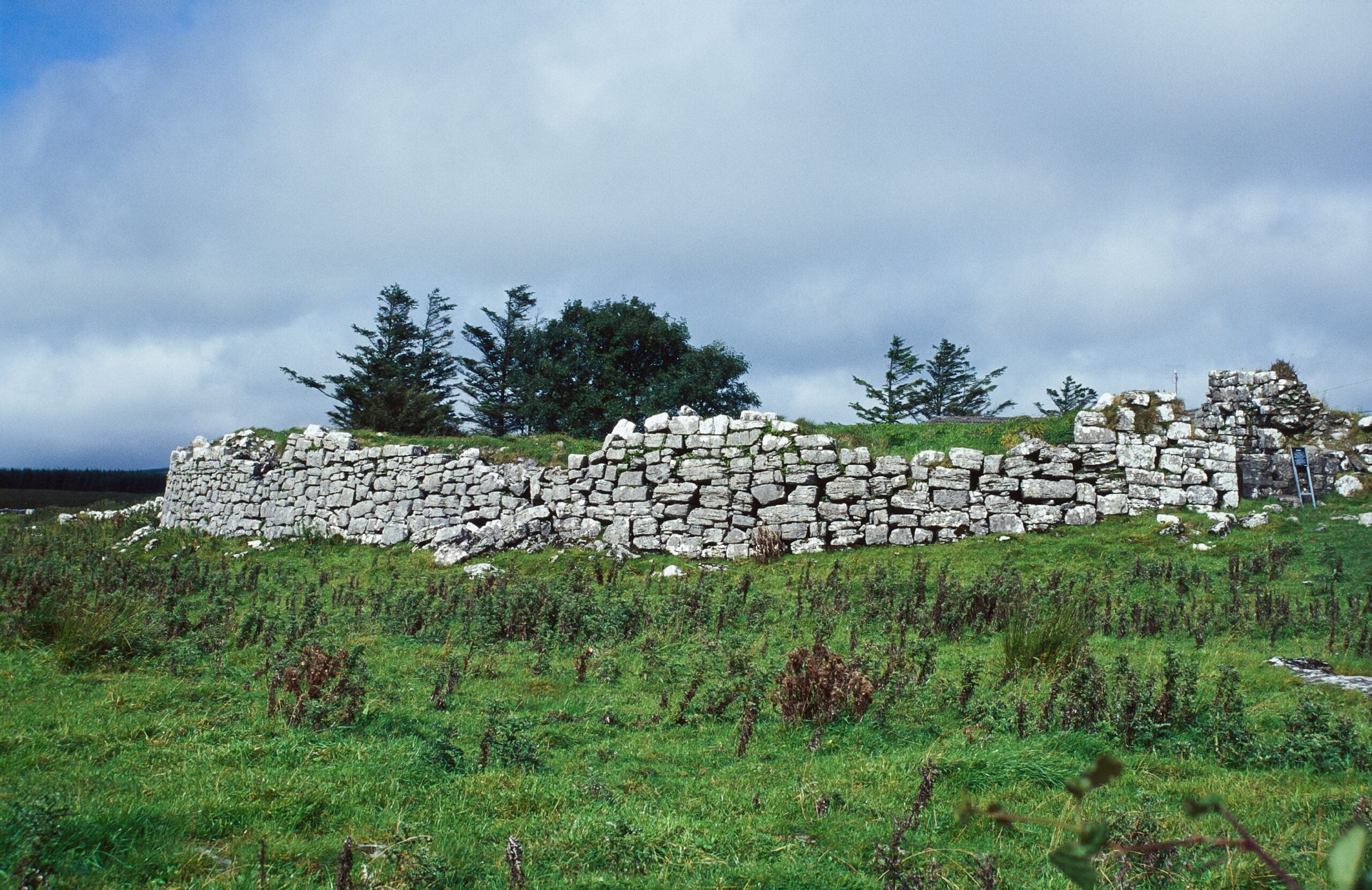
One of the Burren’s most extraordinary sites sits quietly above a valley near the village of Carron. Cahermacnaghten is a stone ring fort that, for centuries, served as a school of Brehon law — the ancient legal system that governed Ireland long before the arrival of English common law.
The O’Davoren family ran the school here from at least the fourteenth century until the seventeenth. Students came from across Ireland to study a legal tradition that predated Christianity on the island. The Brehon system dealt with property rights, marriage contracts, compensation for injury, and the rights of poets — a remarkably sophisticated body of law preserved in manuscripts and in the memories of trained lawyers.
To stand inside Cahermacnaghten is to stand in the classroom where generations of Irish lawyers committed those laws to memory. The stones have not moved since the school fell silent. The Burren kept them exactly where they were left.
Why Visitors Are Often Surprised
Most people drive through the Burren on their way to the Cliffs of Moher. The cliffs are magnificent — there’s no argument about that. But those who stop and walk the Burren often find themselves staying far longer than intended.
There is no grand entrance or visitor queue. You simply leave the car and walk, and the landscape reveals itself at whatever pace you choose. The closer you look, the more you find — a rare orchid in a gryke, a fort on a hilltop, a dolmen silhouetted against the Atlantic sky.
The west of Ireland has always rewarded those who look beyond the obvious. The terrifying beauty of the coastline is well documented — those who follow the ancient seafaring traditions of the west will understand why this stretch of Atlantic coast has shaped the Irish character for thousands of years. But the Burren sits apart from even that.
Going There Yourself
The Burren is in north County Clare, roughly an hour from Galway city and ninety minutes from Shannon Airport. The village of Ballyvaughan is a good base. The Burren National Park has marked walking routes, but the best moments tend to happen off the official paths — beside a ring fort you hadn’t expected, at the edge of a field that turns out to be ancient farmland.
It looks like nothing. It turns out to be everything.
The Burren will remind you, quietly and without fanfare, that the most extraordinary places on earth rarely announce themselves. They simply wait for the people willing to stop and look.
Love Ireland? So do 65,000 of us.
Join the Love Ireland newsletter — free stories of Irish heritage, hidden gems, and the magic of the Emerald Isle delivered to your inbox.
☘️ Want More Hidden Ireland?
Join 64,000+ subscribers who discover Ireland’s best-kept secrets every week.
Subscribe Free — Join the Community →
Free forever · Unsubscribe anytime · No spam
📥 Free Download: Ireland Travel Planning Guide
Our most popular resource — itineraries, insider tips, and the 50 places you must not miss.
Tours & experiences you might love


Powered by Viator. Some links are affiliate links — we may earn a small commission at no extra cost to you.
Secure Your Dream Irish Experience Before It’s Gone!
Planning a trip to Ireland? Don’t let sold-out tours or packed attractions spoil your journey. Iconic experiences like visiting the Cliffs of Moher, exploring the Rock of Cashel, or enjoying a guided walk through Ireland’s ancient past often sell out quickly—especially during peak travel seasons.

Booking in advance guarantees your place and ensures you can fully immerse yourself in the rich culture and breathtaking scenery without stress or disappointment. You’ll also free up time to explore Ireland’s hidden gems and savour those authentic moments that make your trip truly special.
Make the most of your journey—start planning today and secure those must-do experiences before they’re gone!