

In every old Irish cottage, before electricity came to the west, there was a fire. And the one rule everyone understood without being told: it never went out.
What the Hearth Actually Was
The fireplace in a traditional Irish cottage was not decoration. It was the centre of everything — cooking, warmth, drying wet clothes after a day in the fields, telling stories, saying prayers.
In Irish, the house was sometimes called tigh na tine: the house of fire. The fire was tended the way you tend something precious. At night, it was smoored — covered with a layer of ash to hold the embers until morning. A well-managed hearth could stay warm from one day to the next without adding new turf.
The seating around the hearth had its own unwritten rules. The man of the house had a specific chair; the woman of the house had hers. Neighbours who visited in the evenings — the old tradition of rambling — would sit in fixed spots around the fire. Everyone knew where they belonged.
Letting the fire go completely cold was considered deeply unlucky. Some believed the warmth of the hearth held the spirit of the household. To douse it was to lose something that could not easily return.
Why Thatch Made Sense
Thatched roofs were not chosen for romance. They were chosen because they worked.
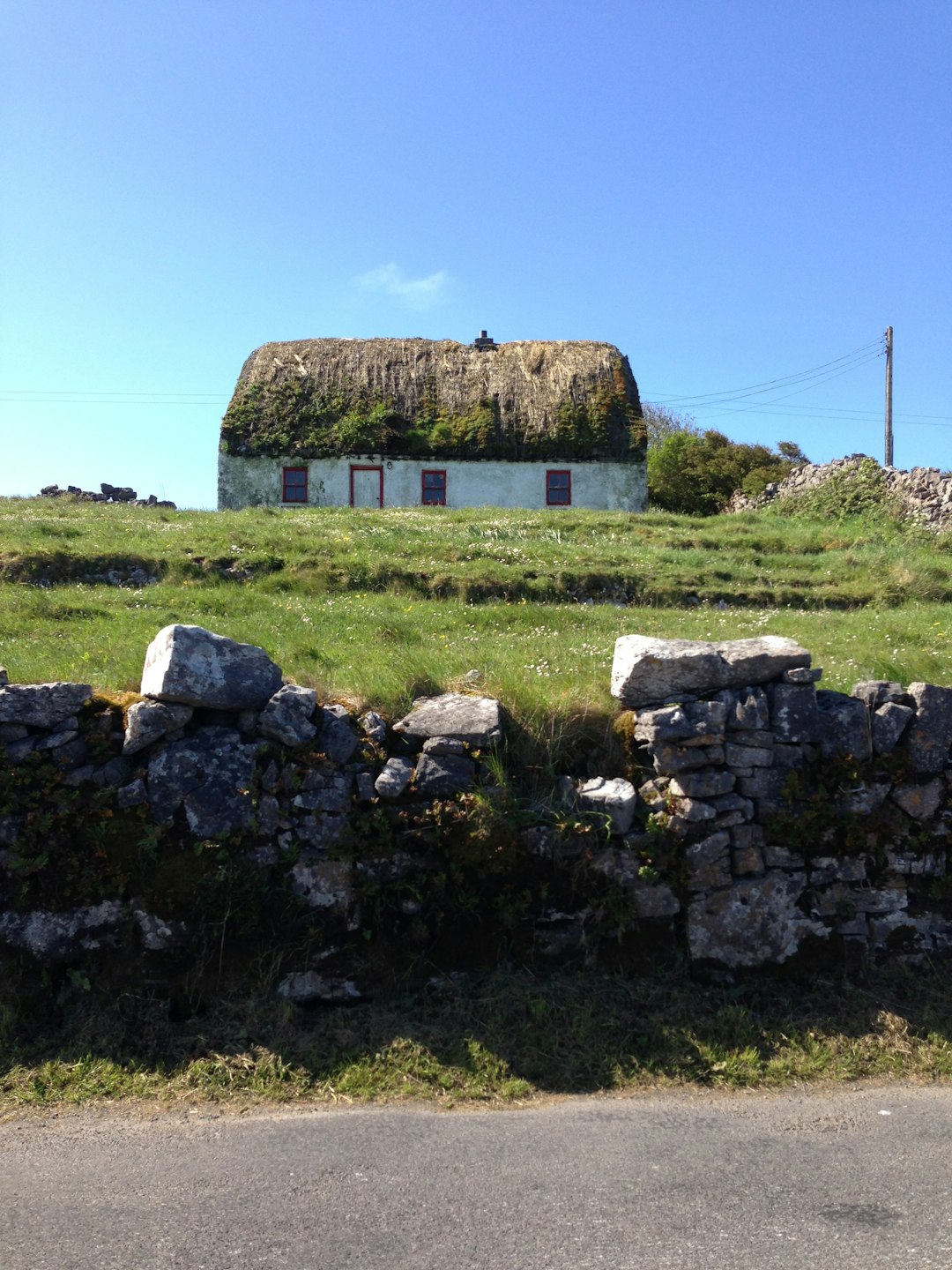
Rye straw, barley, or water reed was locally available and cheap. Thatch insulates far better than slate — warm in winter, cool in what passes for an Irish summer. In Atlantic storms, a thatched roof bends and flexes rather than shattering. It was the right material for a wet, windy island.
Before chimneys were standard, smoke from the central hearth drifted up and out through the thatch itself. The darkened roof above the fire was a sign of life, not neglect. The smoke kept the thatch dry and pest-free — a natural cycle that worked for centuries.
The White Walls and What They Meant
Lime wash was not purely decorative. Ground limestone mixed with water created a paste that was waterproof, naturally antiseptic, and cheap to apply.
Families whitewashed their cottages before the big festivals — St Brigid’s Day in February, Easter, Lúnasa in harvest time. A freshly whitewashed cottage was a signal of care and readiness. Over generations, the bright white wall against green became, without anyone planning it, the visual identity of Ireland itself.
☘️ Enjoying this? 65,000 Ireland lovers get stories like this every week. Subscribe free →
The Day the Fire Went Out
During and after the Great Famine of the 1840s, millions of Irish people emigrated. Most went to America, England, or Australia — and most left for ever.
In every cottage where a family departed permanently, the fire was allowed to die. It was a quiet, final act. The hearth that had never been cold now sat grey and still. Some emigrants took a handful of ash from the fireplace when they left — something to carry from the old home into the new world.
This is part of what made the American Wake so devastating. It was not just a farewell to a person. It was a farewell to a house, a fire, and a way of life that everyone in the room understood would not return.
Across rural Ireland today, you can still find the ruins of those cottages — roofless now, their hearths open to the sky. Some were abandoned after emigration. Some were cleared by landlords. All of them held a fire, once.
Thatching Today
There are only a few hundred trained thatchers left in Ireland. The craft is listed as a threatened traditional skill, and Government grants exist to help homeowners restore thatched roofs where they survive.
Some villages have made their thatched cottages a point of pride. Adare in County Limerick is often called the prettiest village in Ireland — its row of estate cottages, still thatched, still whitewashed, still drawing visitors from across the world.
In parts of County Kerry, County Galway, and along the Wild Atlantic Way, thatched cottages still stand occupied — some sensitively renovated, others original. If you are planning a trip to Ireland, they are worth seeking out. Not behind a rope in a folk park, but lived in, maintained, proof that the tradition has not entirely gone.
The fire is mostly gone now. Central heating came, and the old hearths were bricked up or replaced. But in the whitewashed walls and the low doorways of the cottages that remain, there is still something of that warmth. Something that says: this is where we came from. This is what it meant to leave. And this, somehow, is still what people cross the Atlantic to find.
☘️ You Might Also Love
☘️ Your Irish family has a story waiting to be found.
Discover where your Irish ancestors came from — their county, their name, their story. Our free step-by-step guide walks you through every record, DNA tool, and ancestry archive. Join 64,000+ readers staying connected to Ireland.
Tours & experiences you might love


Powered by Viator. Some links are affiliate links — we may earn a small commission at no extra cost to you.
Secure Your Dream Irish Experience Before It’s Gone!
Planning a trip to Ireland? Don’t let sold-out tours or packed attractions spoil your journey. Iconic experiences like visiting the Cliffs of Moher, exploring the Rock of Cashel, or enjoying a guided walk through Ireland’s ancient past often sell out quickly—especially during peak travel seasons.

Booking in advance guarantees your place and ensures you can fully immerse yourself in the rich culture and breathtaking scenery without stress or disappointment. You’ll also free up time to explore Ireland’s hidden gems and savour those authentic moments that make your trip truly special.
Make the most of your journey—start planning today and secure those must-do experiences before they’re gone!